RWA

RWA (Real World Assets) refers to the tokenization of tangible assets—such as real estate, private credit, and government bonds—on the blockchain. By bringing traditional financial instruments on-chain, RWA protocols like Ondo and Centrifuge provide DeFi users with stable, real-yield opportunities. In 2026, the RWA sector is a multi-trillion-dollar bridge between TradFi and DeFi, enabling fractional ownership and global liquidity for previously illiquid assets. Follow this tag for insights into on-chain credit markets, regulatory compliance, and asset-backed security innovations.

42347 Articles
Created: 2026/02/02 18:52
Updated: 2026/02/02 18:52
Satoshi’s Bitcoin Website: 17 Years Later

Satoshi’s Bitcoin Website: 17 Years Later

The post Satoshi’s Bitcoin Website: 17 Years Later appeared on BitcoinEthereumNews.com. This month of August marks 17 years since the Bitcoin. org domain was registered. Bitcoin’s first website, Bitcoin.org, was registered on Aug. 18, 2008, according to information from the platform. Bitcoin.org was originally registered and owned by Bitcoin pseudonymous creator Satoshi Nakamoto and Martti Malmi, an early BTC developer. When Satoshi exited the scene, he transferred ownership of the domain to people other than Bitcoin developers in order to distribute responsibilities and prevent any single person or organization from taking control of the Bitcoin project. It should be recalled that Satoshi exited the scene in April 2011, sending an email to other Bitcoin developers that he had moved on to other things and that Bitcoin was in good hands. Since then, the site has been developed and maintained by members of the Bitcoin community. You Might Also Like From 2011 to 2013, the website was largely used to release new versions of the software currently known as Bitcoin Core. The site was redesigned in 2013, with more pages, additional Bitcoin software listings and the creation of a translation system, followed by developer documentation in 2014. Currently, the Bitcoin.org site is an independent open source project having contributors from around the world. Bitcoin advances Bitcoin launched in 2009, with Satoshi Nakamoto mining the genesis block or block 0. You Might Also Like At first, Bitcoin was technically worthless. In early 2010, one Bitcoin was worth less than a cent in the United States. During the first quarter of 2011, it surpassed one dollar. In late 2017, its value increased, reaching about $20,000. Bitcoin was valued at about $7,500 at the end of 2019 and $64,899 in November 2021. Fast forward to the present, and Bitcoin has advanced into six figures, currently trading at $115,650, having reached an all-time high of $124,457…

Author: BitcoinEthereumNews
Best Crypto to Buy: Top XRP Alternatives as SEC Delays Decision on Spot XRP ETFs

Best Crypto to Buy: Top XRP Alternatives as SEC Delays Decision on Spot XRP ETFs

SEC delays spot XRP ETF ruling to October, pausing momentum. Traders eye Bitcoin Hyper, WEMIX, and meme coin TOKEN6900 as top XRP alternatives.

Author: Blockchainreporter
Home Depot Warns Prices Could Change As It Misses Earnings and Revenue Estimates

Home Depot Warns Prices Could Change As It Misses Earnings and Revenue Estimates

The post Home Depot Warns Prices Could Change As It Misses Earnings and Revenue Estimates appeared on BitcoinEthereumNews.com. Topline Home Depot could see “some modest price movement” after previously saying they would not raise prices due to tariffs, the Wall Street Journal reported Tuesday, as the retailer missed estimates for earnings and revenue—a possible indication consumers are spending less, which will become clearer this week after other big box retailers like Lowe’s, Target, and Walmart also report earnings. Retailers including Lowe’s and Walmart will hold earnings calls this week, which could indicate the impact of tariffs on spending. Getty Images Key Facts Home Depot reported net earnings at $4.6 billion—slightly below expectations of $4.71 billion, with second quarter revenue also slightly down from projections—the company reported $45.2 billion in net sales, down from an expected $45.3 billion, according to data reported by Reuters. However, these lower sales were still higher than the company’s first quarter revenue of $39.8 billion. The retailer’s president and CEO Ted Dinker said in a statement the results were still “in line with our expectations,” and the company reaffirmed its fiscal guidance, including a 2.8% growth in sales for the year. CFO Richard McPhail warned that higher tariff rates for “some imported goods” could impact prices, but also noted that these adjustments “won’t be broad based,” in comments also confirmed by CNN. McPhail said customers were avoiding larger home improvement projects in favor of smaller ones, which he said was due to “a result of general uncertainty and higher borrowing costs in the form of interest rates.” Home Depot imports less than half of its inventory from outside the U.S., executive vice president for merchandising Billy Bastek said at the call on Tuesday. Key Background Home Depot said in May the retailer did not plan to raise prices in response to tariffs. “We don’t see broad-based price increases for our customers at all going…

Author: BitcoinEthereumNews
U.S. Treasury considers equity stake in Intel to boost domestic chip production

U.S. Treasury considers equity stake in Intel to boost domestic chip production

Scott Bessent, the U.S. Treasury Secretary, said today that any investment made by the U.S. government in Intel would be used to stabilize the chipmaker.

Author: Cryptopolitan
Nemo.money’s Nicholas Scott on AI-guided investing, truthful data, and where regulation really leads

Nemo.money’s Nicholas Scott on AI-guided investing, truthful data, and where regulation really leads

The post Nemo.money’s Nicholas Scott on AI-guided investing, truthful data, and where regulation really leads appeared on BitcoinEthereumNews.com. On this SlateCast episode, Nemo.money CEO Nicholas Scott joined CryptoSlate’s Liam “Akiba” Wright and Nate Whitehill to discuss AI-guided investing grounded in verified data. Scott outlined Nemo’s portfolio-insight engine, privacy safeguards, and thematic discovery features, while contrasting progressive UAE regulations with slower UK oversight and highlighting stablecoins’ promise for frictionless settlements. The conversation underscored guidance over advice and the future of personalized, compliant fintech innovation. From slideware to a live, award-winning product Nemo.money began life in 2021 in a crowded field of investing apps. Scott explained that the team quickly had to choose which core user problem to solve. Rather than building primarily for education, Nemo focused on surfacing actionable opportunities aligned to a user’s goals and risk appetite—helping people decide what to buy and when, without recommending a single security to any individual. “We don’t have permission to give … advice,” Scott noted, emphasizing that Nemo presents options and context while leaving decisions to the user. Guidance, not advice: how Nemo frames AI A centerpiece is Nemo’s daily, AI-driven “portfolio insight.” With a tap, users receive a concise brief on what moved in their holdings over the last 24 hours—stitched together from relevant headlines and price action—plus ideas to improve diversification. The experience is designed to save time and surface “interesting stories,” not just the biggest movers, so users learn why their portfolio behaved the way it did and explore adjacent assets or ETFs that might rebalance risk. Wright underscored the point that any AI summary must be grounded: “And it’s amazing writing that back, but it needs the fact to begin with. You cannot get trust.” Scott agreed, explaining Nemo’s strict separation between facts and language models: the team licenses fundamentals, volumes, and sentiment from tier‑one financial data vendors, then feeds that truth set into the LLM to…

Author: BitcoinEthereumNews
Most Voters Say He’s Too Close To Russia After Putin Meeting

Most Voters Say He’s Too Close To Russia After Putin Meeting

The post Most Voters Say He’s Too Close To Russia After Putin Meeting appeared on BitcoinEthereumNews.com. Aug. 18-14 net approval rating: Trump’s 40% approval rating in the latest Reuters/Ipsos poll taken Aug. 13-18 is equal to his approval rating in the previous Reuters/Ipsos poll taken in late July, representing a low point for his second term, though his disapproval rating has increased two points from July, to 54% (the August poll has a two-point margin of error). The Reuters/Ipsos poll—taken after Trump’s meeting with Russian President Vladimir Putin Friday but before his sitdown with Ukrainian President Volodymyr Zelenskyy on Monday—found 54%, including one in five Republicans, say Trump is too closely aligned with Russia as Trump left the meeting supporting Putin’s call for an end to the war, instead of a cease-fire, and backed off his promise to impose consequences on Russia if it did not agree to a cease-fire. Aug. 18-4: Morning Consult’s weekly survey found Trump’s approval rating has improved two points since last week, to 47%, while 51% disapprove of his job performance (the Aug. 15-18 survey of 2,201 registered voters has a two-point margin of error). In a contrast with this week’s Reuters/Ipsos poll, voters’ perception of Trump’s foreign policy has improved from -18 net approval last week to -13 net approval in this week’s Morning Consult poll. Aug. 12-12: Trump’s net approval rating improved slightly in the latest Economist/YouGov survey conducted Aug. 9-11, compared to its Aug. 1-4 poll, with the latest findings showing 42% approve of his job performance and 54% disapprove, a two-point uptick (the latest poll of 1,635 U.S. adults has a margin of error of 3.5). Aug. 11-6: Trump’s approval rating was stagnant for the second week in a row at a 45% record low for his second term in Morning Consult’s latest weekly survey, with 51% disapproving of his job performance, a one-point decrease in his…

Author: BitcoinEthereumNews
Stablecoin Zuid-Korea: banken bereiden lancering voor

Stablecoin Zuid-Korea: banken bereiden lancering voor

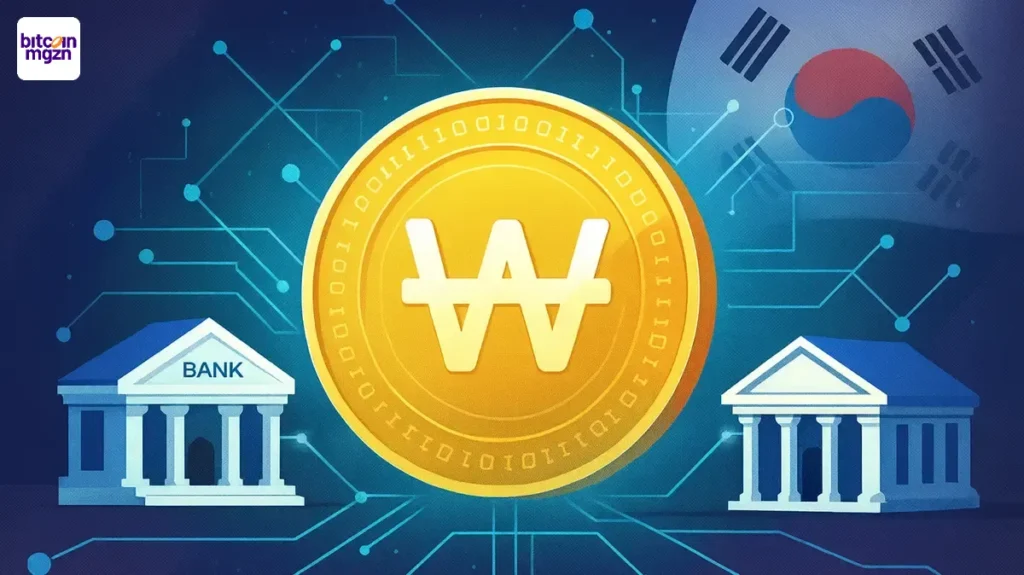
Snelle crypto updates? Connect op Instagram! Check onze Instagram   De Zuid-Koreaanse overheid werkt aan duidelijke regels voor stablecoins. Grote banken en internationale partijen zoals Circle bereiden zich voor op de lancering van een eigen won-stablecoin. Een nieuwe wetgeving moet duidelijkheid scheppen en innovatie stimuleren binnen het gereguleerde digitale financiële landschap. Wetgeving stablecoin Zuid-Korea in voorbereiding De Zuid-Koreaanse Financial Services Commission (FSC) is bezig met een wetsvoorstel dat de uitgifte van stablecoins moet reguleren. Deze wet vormt onderdeel van de tweede fase van de Virtual Asset User Protection Act en wordt in oktober 2025 aan het parlement voorgelegd. De regelgeving moet onder meer richtlijnen bieden voor collateralbeheer, interne controlemechanismen en risicobeheersing. De focus ligt op won-gedekte stablecoins, waarmee Zuid-Korea zijn afhankelijkheid van buitenlandse stablecoins zoals USDT en USDC wil verkleinen. De FSC wil met deze wet zorgen voor duidelijkheid en stabiliteit op de markt. Er worden strikte voorwaarden gesteld aan uitgiftepraktijken, waaronder transparantie in reserves en naleving van compliance-eisen. Deze stap plaatst Zuid-Korea in de voorhoede van landen die stablecoins binnen het reguliere financiële systeem proberen te integreren zonder de risico’s van ongecontroleerde adoptie. South Korea to Roll Out Won-Based Stablecoin Law This Octoberhttps://t.co/hjR2IjwUOZ — John Morgan (@johnmorganFL) August 19, 2025 Grote banken staan klaar voor stablecoin uitgifte Institutionele interesse en strategische positionering Vier van de grootste banken van Zuid-Korea: KB Kookmin, Shinhan, Hana en Woori hebben hun interesse kenbaar gemaakt in het uitgeven van eigen won-stablecoins. Ze hopen met hun gevestigde naam het vertrouwen van het publiek in digitale valuta te versterken. Ze willen zo hun rol in het digitale betalingsverkeer versterken. Met innovatieve producten spelen ze in op de groeiende vraag naar snelle, grensoverschrijdende betalingen. Daarbij hopen ze marktaandeel te behouden in een financiële sector die snel digitaliseert. In voorbereiding op de uitgifte van stablecoins zijn deze banken al gestart met het opzetten van testomgevingen, het ontwikkelen van blockchaingebaseerde betalingsoplossingen en het trainen van interne compliance-teams. Ze nemen hiermee een proactieve rol aan binnen het kader dat de FSC zal opstellen, en bereiden zich voor op integratie van traditionele en digitale financiën onder toezicht van de FSC waarin traditionele en digitale financiën samenkomen onder toezicht van één regelgevend regime. Hybride modellen en concurrentiepositie ten opzichte van DeFi Naast technologische ontwikkeling spelen ook strategische overwegingen mee. De betrokken banken willen voorkomen dat decentrale stablecoins, zoals DAI of algoritmische tokens, terrein winnen in de Koreaanse markt. Door vroeg in te stappen met gereguleerde alternatieven kunnen zij voldoen aan de toenemende vraag naar digitale activa en tegelijk hun concurrentiepositie als gecentraliseerde instellingen behouden. Dit heeft geleid tot discussies over hybride modellen, waarbij traditionele banken digitale stablecoins uitgeven die opereren op publieke blockchainnetwerken, maar onder centrale controle blijven. Volgens analisten kan deze aanpak Zuid-Korea positioneren als pionier in een gematigd gereguleerd stablecoin-ecosysteem. Het combineert de technologische voordelen van blockchain met de betrouwbaarheid van gevestigde financiële instellingen. Volgens analisten kan dit niet alleen de binnenlandse markt stabiliseren, maar ook buitenlandse investeerders aanspreken die op zoek zijn naar compliant toegang tot Aziatische cryptomarkten. Chinese tech giants pushing the country’s central bank for currency backed stable, South Korea payment firm planning to launch a korean pegged stable coin. Bhutan and Kazakhstan working on their BTC reserve. I wonder will India ever embrace crypto? — sandeeponchain (@sandeeppaths) July 28, 2025 Samenwerkingen met Circle en fintechs in opkomst Om de stap naar stablecoins mogelijk te maken, zoeken de banken actief samenwerking met buitenlandse partijen zoals Circle, de uitgever van USDC. Deze partnerschappen kunnen technologische kennis en operationele schaalbaarheid bieden. Circle werkt al internationaal samen en weet hoe je een compliant stablecoin-infrastructuur opzet die past binnen lokale regels. Voor banken biedt dit de mogelijkheid om snel betrouwbare systemen op te zetten, terwijl fintechs via deze brug toegang krijgen tot gereguleerde financiële netwerken. Vooral voor kleinere fintechs betekent dit een kans om mee te bouwen aan innovatie binnen een gecontroleerd kader, zonder direct zelf de volle verantwoordelijkheid voor regelgeving te dragen. Zuid-Koreaanse banken werken samen met Circle om internationale standaarden en betere aansluiting op wereldwijde netwerken te realiseren. Tegelijkertijd stellen ze duidelijke grenzen. Buitenlandse stablecoins mogen alleen functioneren in overeenstemming met de nieuwe wetgeving. Hierdoor ontstaat een gecontroleerde integratie van globale technologie met lokaal toezicht. Voor fintechs biedt dit kansen, maar ook uitdagingen. De nieuwe regelgeving vereist uitgebreide compliance, wat voor kleinere partijen lastig kan zijn. Samenwerking met gevestigde banken kan hier uitkomst bieden. Zo ontstaat een speelveld waarin banken richting geven en startups de ruimte krijgen om vernieuwend te werken. Op termijn kan dit model dienen als voorbeeld voor andere landen. Kansen en risico’s voor kleine spelers in de markt Hoewel de ontwikkelingen rond stablecoin Zuid-Korea positieve vooruitzichten bieden voor efficiënt betalingsverkeer en financiële inclusie, waarschuwen experts voor mogelijke uitsluiting van kleinere spelers. Voor zelfstandige fintechs zonder bankpartner kan de regelgeving een flinke hobbel zijn. Toch betekent dit niet dat innovatie stil hoeft te staan. Door strategische partnerschappen en gezamenlijke innovatielabs kunnen startups profiteren van de ervaring en infrastructuur van banken. Bovendien houdt de FSC toezicht op markttoegang en concurrentie, om te voorkomen dat enkel grote instellingen profiteren van de nieuwe wetgeving. Zuid-Korea zet koers naar gereguleerde stablecoin-markt Met de introductie van een won-gedekte stablecoin en duidelijke wetgeving, positioneert Zuid-Korea zich als koploper in de wereldwijde stablecoin-ontwikkeling. De samenwerking tussen banken, toezichthouders en internationale partijen zoals Circle zorgt voor betrouwbare randvoorwaarden voor het gebruik van stablecoins op grote schaal. Voor kleinere spelers blijven er hobbels, maar het model kan leiden tot een stabielere en inclusieve digitale betaalinfrastructuur. Koop je crypto via Best Wallet Best wallet is een topklasse crypto wallet waarmee je anoniem crypto kan kopen. Met meer dan 60 chains gesupport kan je al je main crypto coins aanschaffen via Best Wallet. Best wallet - betrouwbare en anonieme wallet Best wallet - betrouwbare en anonieme wallet Meer dan 60 chains beschikbaar voor alle crypto Vroege toegang tot nieuwe projecten Hoge staking belongingen Lage transactiekosten Best wallet review Koop nu via Best Wallet Let op: cryptocurrency is een zeer volatiele en ongereguleerde investering. Doe je eigen onderzoek. Het bericht Stablecoin Zuid-Korea: banken bereiden lancering voor is geschreven door Sebastiaan Krijnen en verscheen als eerst op Bitcoinmagazine.nl.

Author: Coinstats
SEC Moves Forward With Crypto Regulation Following Ripple Settlement — Here’s What’s Coming

SEC Moves Forward With Crypto Regulation Following Ripple Settlement — Here’s What’s Coming

Soon after the Ripple settlement, the U.S. Securities and Exchange Commission (SEC) began taking new steps to set crypto rules in the country. With a focus on proactive oversight and clearer standards for companies and investors, SEC Chair Paul Atkins says the agency is following President Donald Trump’s plan to make America the world’s crypto […]

Author: Bitcoinist
Cold Wallet Leads With $6.2M Presale While ChainLink and Ethereum Strengthen Long-Term Outlook

Cold Wallet Leads With $6.2M Presale While ChainLink and Ethereum Strengthen Long-Term Outlook

Success in digital assets often comes down to timing. Projects that move early can set standards before larger players catch up. ChainLink’s latest breakout points to renewed strength in its long-term chart, while Ethereum’s updated forecasts highlight confidence in its future role. Cold Wallet’s presale, however, is carving out its own path by merging privacy-first […]

Author: Tronweekly
Knots Revolt: Nearly 4,000 Nodes Aim to Defy Bitcoin Core’s New Rules

Knots Revolt: Nearly 4,000 Nodes Aim to Defy Bitcoin Core’s New Rules

Over the past two months, debate has flared over Bitcoin Knots as an alternative to Bitcoin Core, with tensions building ahead of the Core v30 release (planned for Oct. 2025). The update removes certain data caps, drawing criticism for allowing more non-financial entries often described as “spam.” The Great Bitcoin Client Divide At its core, […]

Author: Bitcoin.com News