Oracle

Oracles are essential infrastructure components that feed real-time, off-chain data (such as price feeds, weather, or sports results) into blockchain smart contracts. Without decentralized oracles like Chainlink and Pyth, DeFi could not function. In 2026, oracles have evolved to support verifiable randomness and cross-chain data synchronization. This tag covers the technical evolution of data availability, tamper-proof price feeds, and the critical role oracles play in ensuring the deterministic execution of complex decentralized applications.

5131 Articles
Created: 2026/02/02 18:52
Updated: 2026/02/02 18:52
Top AI Blockchain Projects Ranked By Social Engagement

Top AI Blockchain Projects Ranked By Social Engagement

The post Top AI Blockchain Projects Ranked By Social Engagement appeared on BitcoinEthereumNews.com. Chainlink (LINK) is leading the charge for top AI projects. Artificial intelligence (AI) is quickly defining the path of blockchain innovation, and the community interest around such projects is getting stronger on daily basis. September 2, 2025 LunarCrush and Phoenix Group data pointed at the top AI blockchain projects according to social activity.  The rankings considered liked posts and all interactions revealing the level of activity of communities discussing and sharing posts as well as structuring stories about these tokens. Chainlink Dominates the Rankings Chainlink (LINK) was significantly outperforming other rivals at the top of the list. It posted 19,400 likes and an amazing 2.5 million interactions in only 24 hours. Its decentralized oracle networks have become a focus of the debate on smart contracts powered by AI and blockchain interoperability.  As AI needs specific real data feeds to remain steady, the role of Chainlink as an interface between data off-chain and on-chain is contributing to its social discussions. Bittensor and Injective Gain Momentum After Chainlink, Bittensor (TAO) gained second place having 12,500 engaged posts and 753,700 interactions. Bittensor is a decentralized machine learning network that enables many people to contribute and share AI models to earn rewards.  Injective (INJ) was ranked number three and reportedly countered 6,600 engaged posts and 287,400 interactions. Well-regarded to be interoperable and to have decentralized finance capabilities, Injective is gaining momentum as they integrate AI into their own infrastructure.  Fetch.ai, Render, and NEAR Sustain Strong Communities Fetch.asi (FET) followed with 5,400 posts engaged and 196,900 interactions. The project focuses on autonomous economic agents that run using AI and facilitate the decision-making process in decentralized markets.  Render (RNDR) also left its trace registering 4,700 engaged posts and 281,900 interactions. Render is a decentralized GPU rendering system that enables creatives and developers to harness the power…

Author: BitcoinEthereumNews
Bitcoin (BTC) Wobbles as Attention Shifts to DeFi Powerhouse Mutuum Finance (MUTM) at $0.035

Bitcoin (BTC) Wobbles as Attention Shifts to DeFi Powerhouse Mutuum Finance (MUTM) at $0.035

As Bitcoin (BTC) struggles to maintain momentum amid market fluctuations, investor attention is increasingly shifting toward Mutuum Finance (MUTM). MUTM is in the sixth stage of its presale and is expected to rise by 14.29% to $0.04 in the next stage. The project has already raised over $15.25 million and onboarded more than 15950 investors, […]

Author: Cryptopolitan
From Chainlink to DIA: Top AI Blockchain Projects Ranked by Social Engagement

From Chainlink to DIA: Top AI Blockchain Projects Ranked by Social Engagement

Chainlink (LINK) is leading the charge for top AI projects. AI is defining the path of blockchain innovation, and the community interest is getting stronger.

Author: Blockchainreporter
Ethereum Classic Breakout? Analysts Eye $21 ETC While Comparing Early LINK Cycle

Ethereum Classic Breakout? Analysts Eye $21 ETC While Comparing Early LINK Cycle

The post Ethereum Classic Breakout? Analysts Eye $21 ETC While Comparing Early LINK Cycle appeared on BitcoinEthereumNews.com. Crypto News Ethereum Classic is trading near $21 with forecasts aiming for $30 by year-end. Analysts compare ETC’s setup to early Chainlink cycles and highlight new presale plays for 2025. Analysts are once again paying attention to the price of Ethereum Classic (ETC) at $21. A recent discussion has delved not only into the potential benefits of ETC but also the possibility of similar projects. As MAGACOIN FINANCE continuously remains in the forefront of the cryptocurrency market, trust in the project has grown due to numerous audits, community growth, and projections of substantial financial returns. Ethereum Classic: Price Momentum Builds As of recent August 2025, the value of Ethereum Classic hovers nearby $21.03 there abouts. Indications show a strong short-term fluctuation up to $23.75 by the end of September as well possible rise to average prices of $29–$30 by the close of this year. A majority in the technical indicators are projecting modest rises in the value, with numerous readings crossing a line from the sell to buy during both weekly and daily time frames. The Evidence of Major Market Cycles shows that the major market of the ETC could have something that would effect it. This has been discovered to be somewhat similar to previous periods with similar growth and advancement of Chainlink. Long-term supporters continue to maintain their trust in ETC, a decentralized immutable blockchain. Chainlink: The Oracle Giant The price of link has fluctuated widely and dropped in recent months. At its beginning, the price of LINK was very low, constantly fluctuating between $1 and $3. Eventually, LINK’s price greatly increased to around $20 and above. Experts foresee ETC potentially mirroring that dynamic between 2025 and 2026. Chainlink’s infrastructure role has grown by bridging real-world data to block chains. Institutions are starting to adopt the Chainlink Interoperability…

Author: BitcoinEthereumNews
How to Use ChatGPT for Crypto Research Before Investing in Coins

How to Use ChatGPT for Crypto Research Before Investing in Coins

The post How to Use ChatGPT for Crypto Research Before Investing in Coins appeared on BitcoinEthereumNews.com. Key takeaways ChatGPT helps simplify complex crypto projects by summarizing white papers, explaining use cases and breaking down tokenomics. Researching the team, partnerships and security risks is crucial before investing in any crypto token. Comparing projects with competitors highlights strengths and weaknesses for better decision-making. ChatGPT can suggest relevant research questions, acting as a guide for beginners and experienced investors alike. Investing in cryptocurrency can be exciting and overwhelming, especially with the thousands of coins and tokens available today. From Bitcoin (BTC) and Ether (ETH) to lesser-known altcoins and memecoins, the market is flooded with opportunities and risks. Before investing your money, proper research is essential. That’s where ChatGPT can help. This article walks you through how to use ChatGPT to research cryptocurrency projects (using different projects as examples), assess their credibility, and make smarter, data-informed investment decisions. Whether you’re a beginner or a seasoned trader looking to streamline your workflow, ChatGPT can be a powerful research assistant. Why research matters in crypto investing Unlike traditional stocks backed by earnings reports and regulatory filings, crypto assets often lack standardized financial data. Instead, you must sift through white papers, GitHub repositories, community sentiment and more. Failing to do proper research can lead to investing in overhyped or even fraudulent projects. Crypto scams can take many forms, but here are a few common examples to illustrate why research is crucial: Rug pulls: These occur when developers create a new token, promote it heavily to attract investors, then suddenly withdraw all funds, leaving investors with worthless tokens. A notorious case was the “Squid Game” token in 2021, which surged in price before the creators vanished with millions. Pump-and-dump schemes: Groups artificially inflate a coin’s price by spreading false hype, only to sell off their holdings at a profit, crashing the price and leaving…

Author: BitcoinEthereumNews
Ethereum Classic Breakout? Analysts Compare $21 ETH Classic to Early LINK Cycle

Ethereum Classic Breakout? Analysts Compare $21 ETH Classic to Early LINK Cycle

Analysts are once again paying attention to the price of Ethereum Classic (ETC) at $21. A recent discussion has delved […] The post Ethereum Classic Breakout? Analysts Compare $21 ETH Classic to Early LINK Cycle appeared first on Coindoo.

Author: Coindoo
BRC-20 Indexer Upgrade Brings Ethereum-Like Features to Bitcoin

BRC-20 Indexer Upgrade Brings Ethereum-Like Features to Bitcoin

The post BRC-20 Indexer Upgrade Brings Ethereum-Like Features to Bitcoin appeared on BitcoinEthereumNews.com. In brief BRC-2.0 embeds EVM functionality directly into Bitcoin’s BRC-20 indexer. The upgrade aims to expand Bitcoin tokens beyond meme coins into programmable assets. Backers say the move positions BRC-20 ahead of Runes by enabling a DeFi ecosystem. BRC-20, the first token standard built directly on Bitcoin’s base layer and indexers, has officially launched “BRC2.0” at Bitcoin block height 912690, which took place Monday morning. The upgrade embeds EVM (Ethereum Virtual Machine) functionality directly into the BRC-20 core indexer, allowing developers to deploy Ethereum-style smart contracts on Bitcoin, without relying on bridges, oracles, or trusted intermediaries. The move enables programmability to Bitcoin-native tokens, effectively turning BRC-20 assets into composable and interoperable instruments that can interact with EVM-compatible chains and scaling layers. The BRC2.0 upgrade was developed by Best In Slot, a key infrastructure player in the Ordinals ecosystem, in collaboration with BRC20’s pseudonymous creator Domo and the Layer 1 Foundation, the governance body overseeing the protocol. “Bitcoin meta-protocols like Ordinals, Runes, and BRC20 run on indexers, which function like simple calculators,” Eril Binari Ezerel, CEO of Best In Slot, shared in a press release to Decrypt. “We upgraded this ‘calculator-style’ indexer with EVM—making BRC20 Turing complete.” From meme coins to modular apps Since its launch in early 2023, BRC-20 has seen over $3 billion in asset value traded. The milestone has been achieved without raising venture capital or receiving institutional support. Even as activity cooled in 2025, BRC-20 volumes remained dominant, registering 5,636 BTC (US$633 million) in on-chain volume over the last six months, more than double Runes and nearly five times more than traditional Ordinals inscriptions. The new smart contract functionality expands what’s possible for Bitcoin-native assets.  Until now, these tokens have been primarily used for meme coins and speculative trading, with few real-world applications due to Bitcoin’s…

Author: BitcoinEthereumNews
Two Proven Countermeasures to Oracle Attacks on EdDSA

Two Proven Countermeasures to Oracle Attacks on EdDSA

The Edwards-Curve Digital Signature Algorithm (EdDSA), which takes use of unreliable signature APIs that accept arbitrary public keys, is the target of an oracle attack in this paper. Through manipulation of these inputs, an adversary can fake signatures and recover secret signing values. The article highlights that apps that expose these APIs or improperly handle key pairs represent a danger, and it lists the libraries that are impacted. Two solutions are suggested to lessen this: either re-deriving the public key from the private key for every signature operation, or storing the public key. By strengthening implementation security and preventing key mismatches, these techniques make EdDSA more resistant to this type of attack.

Author: Hackernoon
The Dark Side of Deterministic Signatures

The Dark Side of Deterministic Signatures

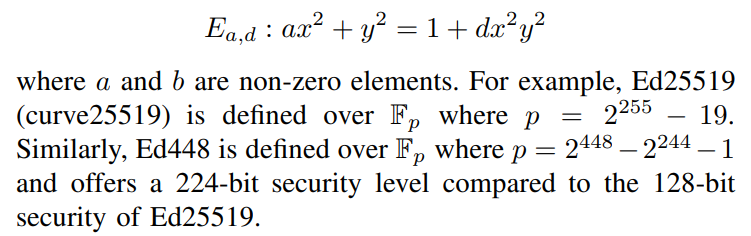
In accordance with standards like RFC 8032 and FIPS 186-5, this section describes the Edwards-Curve Digital Signature Algorithm (EdDSA), emphasizing its deterministic nature and verification procedure. Adversaries can use EdDSA's deterministic signature to recover the secret key by presenting two distinct public keys, according to a new double public key signing oracle attack that the authors have discovered. Because of this, EdDSA's strong unforgeability guarantees are effectively broken, allowing for arbitrary message signing. This vulnerability's wide range and importance are highlighted by the fact that many popular cryptographic libraries are among the affected implementations.

Author: Hackernoon
How EdDSA Vulnerability Exposed Private Keys in Popular Libraries

How EdDSA Vulnerability Exposed Private Keys in Popular Libraries

In this research, a serious weakness in the standardized EdDSA digital signature technique that had not been previously reported is revealed. By employing the signing function as a public key oracle, the attack takes advantage of the scheme's deterministic character. An adversary can forge signatures for any message by simply recovering the server's whole private key if they can provide the signing API with an arbitrary public key. At the time of publication, 45 well-known cryptographic libraries' APIs were found to be susceptible to this attack by the authors. The paper offers two practical solutions to protect EdDSA signature routines from this oracle attack, along with a thorough description of the exploit and a list of affected implementations.

Author: Hackernoon