NFT

NFTs are unique digital identifiers recorded on a blockchain that certify ownership and authenticity of a specific asset. Moving past the "PFP" craze, 2026 NFTs emphasize utility, representing everything from IP rights and digital fashion to RWA titles and event ticketing. This tag explores the technical standards of digital ownership, the growth of NFT marketplaces, and the integration of non-fungible tech into the broader Creator Economy and enterprise solutions.

12953 Articles
Created: 2026/02/02 18:52
Updated: 2026/02/02 18:52
Sui’s Storage Fund: Driving Deflation and Sustainability in Blockchain

Sui’s Storage Fund: Driving Deflation and Sustainability in Blockchain

The post Sui’s Storage Fund: Driving Deflation and Sustainability in Blockchain appeared on BitcoinEthereumNews.com. Caroline Bishop Sep 23, 2025 01:49 Sui’s storage fund strategically reduces SUI supply, enhancing scarcity and sustainability through permanent and temporary removal of tokens, aligning network growth with long-term value. Sui’s storage fund is a pivotal component of its blockchain network, transforming every transaction into a catalyst for both sustainability and scarcity, according to Sui Foundation. This mechanism is designed to permanently remove tokens from circulation, while also covering the long-term costs of onchain data storage. Understanding Sui’s Storage Fund The storage fund is a reserve of SUI tokens that subsidizes the long-term storage of data on the Sui network. It is distributed across active validators in proportion to their stake, generating rewards that alleviate the storage burden. This system ensures that the cost of maintaining data is borne by those who need it, thus bolstering the sustainability of Sui’s infrastructure. When users create or modify objects, they pay a storage fee comprising two parts: a refundable deposit, which is returned if the object is deleted or reduced in size, and a non-refundable fee, which is permanently absorbed by the storage fund, removing that portion of SUI from circulation indefinitely. The Deflationary Impact The design of Sui’s storage fund is a robust deflationary mechanism. Non-refundable storage fees ensure that part of every transaction’s payment is permanently held in the fund, while mutable and immutable object deposits keep significant amounts of SUI locked away. The immutable deposits, in particular, mean that the fees and deposits for these objects are never returned, effectively removing them from active circulation. Moreover, as the decentralized storage network Walrus gains traction, each stored blob creates a mutable object on Sui, further drawing SUI into the storage fund. This dynamic creates additional deflationary pressure as the adoption of both…

Author: BitcoinEthereumNews
Best Crypto Presales to Buy: How Best Wallet Is Transforming Crypto Storage

Best Crypto Presales to Buy: How Best Wallet Is Transforming Crypto Storage

Enjoy the videos and music you love, upload original content, and share it all with friends, family, and the world on YouTube.

Author: Blockchainreporter
Top Altcoins to Watch as SEC Considers Retirement Plan Access

Top Altcoins to Watch as SEC Considers Retirement Plan Access

US lawmakers have sent a letter urging the SEC to enforce President Trump’s August executive order, which directs regulators to […] The post Top Altcoins to Watch as SEC Considers Retirement Plan Access appeared first on Coindoo.

Author: Coindoo
$SUI Struggles at $4, $TAP Presale Smashes $150K

$SUI Struggles at $4, $TAP Presale Smashes $150K

The post $SUI Struggles at $4, $TAP Presale Smashes $150K appeared on BitcoinEthereumNews.com. Every cycle brings winners and laggards, and right now a project finds itself on the wrong side of that divide. Sui has slowed down near $4 as it struggles to keep the energy that pushed it higher earlier in the year. Traders now wonder if momentum has run out.  At the same time, a new project is starting to grab attention. Digitap ($TAP) has been named one of the best altcoins to watch after its presale crossed $150,000 in early funding. This is why many see it as a fresh alternative to older, slower-moving tokens. Strong Tech, Weak Momentum Sui came into the market with big expectations. It runs on the Move programming language and promises fast settlement. Its network is designed for gaming, NFTs, and DeFi, with a system that can process many transactions at the same time. The technology works well on paper. Sui’s unique consensus model delivers finality in seconds and aims to solve the scaling problems that slowed older chains. Developers like the flexibility, and the project has built a reputation for speed. Yet the token has struggled to hold value. The total supply of 10 billion tokens, combined with regular unlocks, keeps many traders cautious. Investors worry that new tokens entering the market could weigh on price for a long time. That is why many traders are looking at smaller projects with stronger upside potential.  Digitap Brings Privacy and Utility Together Digitap is a platform that combines crypto and cash in one app. Their mission is to make money easy to spend, send, and save without borders. What sets it apart is its emphasis on privacy and practical application in the real world. The project offers a Visa card that works worldwide with no mandatory KYC. A user can set up a virtual card in…

Author: BitcoinEthereumNews
Who Will Win & Why $BEST Stands to Gain

Who Will Win & Why $BEST Stands to Gain

The post Who Will Win & Why $BEST Stands to Gain appeared on BitcoinEthereumNews.com. Stablecoins are setting the stage for the next big shift in payments. Some of the newest ones vying for dominance include Metamask’s $mUSD, the digital euro, and Hong Kong’s $AxCNH. Given this large amount of capital, safe crypto wallets that support stablecoins – like Best Wallet – are all the more critical. $USDT & $USDC Dominate the Stablecoin Market By market cap, dollar-pegged tokens lead in the stablecoin race: In first place is $USDT at $172B, followed by $USDC at $74B. Source: CoinGecko MetaMask’s $mUSD, launched on Ethereum and Linea in September 2025, is also backed 1:1 with US dollars. However, it’s issued directly inside the MetaMask wallet via Stripe’s Bridge. Doing so streamlines settlements, spending, and on/off-ramps into a single interface. Better yet, $mUSD is supported by the US GENIUS Act, which requires liquid reserves and monthly disclosures. The US has the most credible path toward the first trillion-dollar stablecoin. And it’s all thanks to its distribution through wallets, bank-grade licensing, and integration into existing merchant networks. So, this could work in $mUSD’s favor. Then there’s Europe, advocating for legislation of a digital euro in 2026. It’ll serve as central-bank-issued electronic cash. Already, German banks are all for it, with the help of MiCA steering merchants toward euro-based payments. And in Asia, Hong Kong sets its sights on $AxCNH, an offshore yuan-pegged token. It’s part of China’s ploy to boost its financial influence. Across these regions, the race to the first trillion stablecoin is shaping up as an East-West financial contest. Dollar rails like $USDT and $USDC still hold the lead. Naturally, they shine a light on Best Wallet, as the mobile app’s a great way to buy, sell, manage, and swap these stablecoins, plus 1K+ other digital assets. Best Wallet Simplifies Stablecoin & Crypto Management Best Wallet is…

Author: BitcoinEthereumNews
Top 9 Viral Crypto Tokens To Watch

Top 9 Viral Crypto Tokens To Watch

The post Top 9 Viral Crypto Tokens To Watch appeared on BitcoinEthereumNews.com. Selecting the right meme coin in today’s shifting crypto landscape has become more than just a gamble. The market is saturated with projects that capture attention through community hype and viral culture, yet only a handful will secure long-term momentum. With new meme coin launches arriving rapidly, investors face one crucial challenge: identifying tokens that deliver not only excitement but also rewards, exclusivity, and strong ecosystems. Missing the next breakthrough could mean sitting on the sidelines while others ride explosive gains. This year, one project has captured the spotlight with its bold entry: MoonBull ($MOBU). Alongside established names such as Dogecoin (DOGE), Shiba Inu (SHIB), Pepe (PEPE), Useless Coin (USELESS), Notcoin (NOT), Official Melania (MELANIA), ANDY (ANDY), and Tutorial (TUT), MoonBull stands out by offering early backers exclusive staking rewards, secret token drops, and presale benefits. As excitement builds around its whitelist, the new coin launch in 2025 positions MoonBull as the must-watch opportunity for meme coin enthusiasts aiming to secure an early edge in the upcoming crypto wave. 1.MoonBull ($MOBU) MoonBull ($MOBU) has quickly ignited excitement with its presale launch. Built on Ethereum, it combines the reliability of smart contracts with the viral power of meme culture. Designed for degens and meme coin enthusiasts, MoonBull offers unique features that differentiate it from other upcoming meme coin projects in 2025. Whitelist members hold a significant edge. This first-come, first-served opportunity is limited, ensuring only early registrants enjoy its benefits. Once spots are gone, they will never reopen. By joining the whitelist, participants secure the lowest entry price, unlock bonus allocations, and gain exclusive insights into MoonBull’s roadmap before public release. MoonBull isn’t just another meme token. Its whitelist offers: Entry at the lowest price before the public sale. Secret staking rewards for whitelisted members. Bonus token allocations are unavailable elsewhere.…

Author: BitcoinEthereumNews
A Reality Check Pi Holders Might Not Want to Hear

A Reality Check Pi Holders Might Not Want to Hear

The post A Reality Check Pi Holders Might Not Want to Hear appeared on BitcoinEthereumNews.com. Crypto News 23 September 2025 | 17:10 Recent Pi Network price predictions are disheartening. Once praised as a mobile-driven crypto revolution, Pi Network has left many holders with significant losses, with prices still over 65% below their peak. Growing doubts about its viability stem from its limited utility. As uncertainty about Pi Network’s future increases, traders are turning their attention to presale opportunities with actual potential, such as Layer Brett ($LBRETT), which is gaining momentum. Pi Network Price Predictions Point to a Possible Setback The Pi Network price prediction has been a topic of intense discussion among crypto enthusiasts. Recent analyses suggest that the token is poised for a correction, challenging the optimistic outlooks held by many holders. Experts say that by October 22, 2025, Pi Network’s price will drop by about 25%, to $0.259345. Another negative Pi Network price prediction suggests the price will drop to $0.2597 in 2025 and then slowly rise to $0.4939 in 2026. Based on these predictions, investors would have to deal with a time of no growth and possibly losses. Source: CoinMarketcap Some long-term estimates are still positive, saying that prices might reach $2.09 by 2030, but the near future is not certain. Pi Network’s growth potential is still limited by the fact that it hasn’t been widely adopted or used in the real world. Investors should be careful because recent Pi Network price predictions show there is a chance that prices will drop again soon. How Layer Brett Breaks the Mold Layer Brett stands out for several key reasons. Currently in presale at just $0.0058, having already raised over $3.9 million, it offers far more than Pi Network ever did. Staking is live, boasting an impressive 660%+ APY, though this yield decreases as more wallets join, creating an inherent sense of urgency. Unlike…

Author: BitcoinEthereumNews
Stablecoins Could Fuel $4T in Payments Yearly – Best Wallet Token to Ride the Surge

Stablecoins Could Fuel $4T in Payments Yearly – Best Wallet Token to Ride the Surge

Stablecoins are setting the stage for the next big shift in payments. Some of the newest ones vying for dominance include Metamask’s $mUSD, the digital euro, and Hong Kong’s $AxCNH.

Author: Brave Newcoin
Fintel’s Strategic $100M SOL Investment: What It Means for Crypto

Fintel’s Strategic $100M SOL Investment: What It Means for Crypto

BitcoinWorld Fintel’s Strategic $100M SOL Investment: What It Means for Crypto The cryptocurrency world is buzzing with significant news: Nasdaq-listed Fintel Corporation (FTEL) has secured a substantial $100 million financing facility. This isn’t just any corporate financing; the company plans to use these funds for strategic purchases of SOL, the native cryptocurrency of the Solana blockchain. This Fintel SOL investment marks a notable move, highlighting growing institutional interest in the digital asset space. What does this bold step mean for Fintel, Solana, and the broader crypto market? Let’s dive in. What Does Fintel’s $100M SOL Investment Entail? Fintel Corporation, known for its data analytics and financial technology services, is making a definitive push into the crypto arena. GlobeNewswire reported that the $100 million financing facility is earmarked specifically for acquiring SOL tokens. This move signifies more than just a treasury allocation; it represents a deliberate strategy to engage with and potentially benefit from the burgeoning Solana ecosystem. Such an explicit Fintel SOL investment from a Nasdaq-listed entity provides a strong signal to the market. Company: Nasdaq-listed Fintel Corporation (FTEL) Funding: $100 million financing facility Purpose: Strategic purchases of SOL (Solana) Source: GlobeNewswire report This action by Fintel demonstrates a clear belief in the long-term value and potential of Solana. It positions Fintel not just as a technology provider but also as a direct participant in the digital asset economy. Why Solana? The Strategic Rationale Behind This Fintel SOL Investment Solana has emerged as a prominent blockchain, celebrated for its high transaction speeds and low costs. These technical advantages make it an attractive platform for various decentralized applications (dApps), NFTs, and DeFi projects. Fintel’s decision to specifically target SOL for its investment reflects a calculated assessment of Solana’s ecosystem and future prospects. Scalability: Capable of processing thousands of transactions per second. Cost-Effectiveness: Extremely low transaction fees. Developer Activity: A growing and vibrant developer community. Ecosystem Growth: Rapid expansion of DeFi, NFT, and Web3 projects. This strategic Fintel SOL investment suggests that the corporation sees Solana as a key player in the evolving digital infrastructure. It’s not merely buying a digital asset; it’s investing in a foundational technology. What Are the Broader Implications of Fintel’s Strategic Move? An institutional Fintel SOL investment of this magnitude carries significant weight for the entire cryptocurrency market. It could potentially: Boost Solana’s Credibility: A Nasdaq-listed company’s backing adds a layer of legitimacy and institutional validation to Solana. Attract More Institutional Capital: Other traditional finance entities might view Fintel’s move as a precedent, encouraging their own exploration of crypto investments. Influence Market Sentiment: Positive news from a publicly traded company can create a ripple effect, potentially driving up demand and price for SOL. Diversify Corporate Portfolios: It highlights a growing trend among corporations to consider digital assets as part of their treasury management or strategic growth initiatives. This development underscores a shift in how mainstream finance perceives cryptocurrencies, moving beyond speculative trading to strategic asset allocation. Potential Challenges and Opportunities for Fintel’s SOL Investment While the Fintel SOL investment presents exciting opportunities, it also comes with inherent challenges. The cryptocurrency market is known for its volatility, and regulatory landscapes are still evolving. Opportunities: Capital Appreciation: Potential for significant returns if Solana’s value increases. Ecosystem Integration: Fintel could explore integrating its financial data services with the Solana blockchain. Innovation: Position itself at the forefront of digital asset adoption. Challenges: Market Volatility: SOL’s price can experience rapid fluctuations, impacting the investment’s value. Regulatory Uncertainty: The evolving legal framework for cryptocurrencies poses risks. Technological Risks: Potential for network outages or security vulnerabilities, though Solana has improved. Fintel’s leadership will undoubtedly navigate these factors, aiming to maximize the benefits while mitigating the risks associated with such a substantial digital asset holding. Looking Ahead: The Future of Fintel’s SOL Investment This initial $100 million Fintel SOL investment could be just the beginning. Depending on market performance and strategic objectives, Fintel might choose to expand its holdings or integrate Solana more deeply into its business operations. This bold move positions Fintel as an early institutional adopter of a major blockchain, potentially paving the way for future innovations in the intersection of traditional finance and decentralized technology. It will be fascinating to observe how this investment unfolds and what strategic partnerships or product developments might emerge from it. Conclusion: Fintel Corporation’s $100 million financing facility dedicated to purchasing SOL is a landmark event. It not only demonstrates a strong belief in Solana’s potential but also signifies a broader trend of institutional confidence in the cryptocurrency market. This strategic Fintel SOL investment highlights the ongoing convergence of traditional finance and digital assets, promising exciting developments for investors and the wider crypto community. As Fintel embarks on this new chapter, the industry will be watching closely to see the long-term impact of this significant institutional embrace of Solana. Frequently Asked Questions (FAQs) 1. What is Fintel Corporation? Fintel Corporation (FTEL) is a Nasdaq-listed company specializing in financial technology and data analytics, providing insights and tools for investors and financial professionals. 2. Why is Fintel investing in SOL? Fintel is making a strategic Fintel SOL investment due to Solana’s high transaction speeds, low costs, and growing ecosystem, which they believe offers significant long-term value and potential for integration with their services. 3. What is Solana (SOL)? Solana is a high-performance blockchain platform designed for decentralized applications and crypto projects, known for its scalability and efficiency. SOL is its native cryptocurrency, used for transactions and network governance. 4. How does this investment impact the broader crypto market? An institutional Fintel SOL investment of this scale can boost Solana’s credibility, attract more institutional capital to the crypto space, and positively influence overall market sentiment by demonstrating mainstream corporate adoption of digital assets. 5. Are there risks associated with Fintel’s SOL investment? Yes, like all cryptocurrency investments, it carries risks such as market volatility, potential regulatory changes, and technological vulnerabilities inherent in blockchain platforms. Fintel will need to manage these risks carefully. If you found this insight into Fintel’s strategic move illuminating, share this article with your network! Help us spread the word about significant institutional shifts in the cryptocurrency landscape and spark further discussions on the future of digital assets. To learn more about the latest crypto market trends, explore our article on key developments shaping institutional adoption of digital assets. This post Fintel’s Strategic $100M SOL Investment: What It Means for Crypto first appeared on BitcoinWorld.

Author: Coinstats
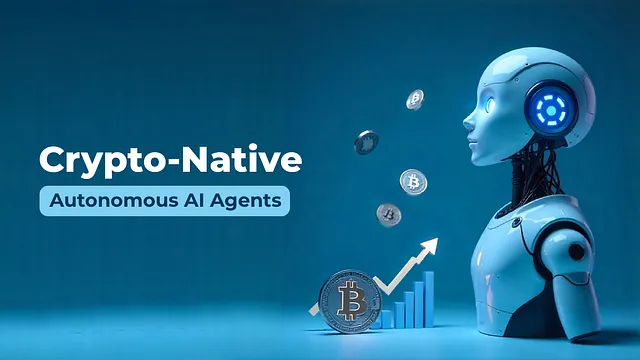
Crypto-Native Autonomous Agents: A New Era of Decentralized AI

Crypto-Native Autonomous Agents: A New Era of Decentralized AI

Crypto-Native Autonomous Agents: A New Era of Decentralized AI The evolution of artificial intelligence (AI) and blockchain technology has paved the way for a new paradigm in decentralized systems: crypto-native autonomous agents (CNAAs). These agents combine the intelligence of AI with the transparency, security, and decentralization of blockchain, enabling automated decision-making, asset management, and transaction execution in crypto ecosystems. This intersection is creating opportunities for smarter decentralized finance (DeFi), autonomous marketplaces, and efficient blockchain-based governance. In this blog, we explore what crypto-native autonomous agents are, how they operate, their real-world applications, and why they are poised to redefine decentralized systems. Understanding Crypto-Native Autonomous Agents A crypto-native autonomous agent is an AI-powered program designed to operate natively within blockchain networks. Unlike traditional AI agents, which often rely on centralized servers, CNAAs execute tasks, make decisions, and interact with decentralized networks without centralized oversight. This decentralization ensures that these agents are trustless, transparent, and resistant to manipulation. Key characteristics of CNAAs include: Autonomy: They can perform tasks and make decisions independently based on predefined rules and learning algorithms. Crypto-native integration: They operate directly within blockchain ecosystems, utilizing tokens, smart contracts, and decentralized data. Interoperability: CNAAs can communicate with other agents, protocols, and dApps across multiple blockchains. Transparency and immutability: All actions and decisions are recorded on-chain, making their behavior verifiable and auditable. By combining AI decision-making with blockchain-based verification, these agents reduce the need for human oversight while increasing trust in decentralized operations. How Crypto-Native Autonomous Agents Work? Crypto-native autonomous agents function through a combination of AI algorithms, smart contracts, and blockchain infrastructure. Their workflow typically involves the following steps: Data Acquisition CNAAs continuously gather data from decentralized sources such as on-chain transactions, decentralized oracles, and crypto market feeds. Decision Making Using machine learning models, CNAAs analyze the data to make informed decisions. For example, an agent could determine the optimal time to trade a token or execute a staking strategy. Smart Contract Execution Once a decision is made, the agent interacts with smart contracts to perform actions automatically. These actions are verifiable and irreversible on the blockchain. Learning and Adaptation Advanced CNAAs incorporate reinforcement learning, allowing them to adapt strategies based on previous outcomes, market changes, and network conditions. This autonomous workflow enables decentralized systems to function efficiently without central authorities, enhancing security, reducing costs, and improving transaction speeds. Applications in Decentralized Finance (DeFi) One of the most significant use cases for crypto-native autonomous agents is in DeFi. Here, CNAAs can automate complex financial strategies, offering both efficiency and intelligence.

  1. Automated Trading AgentsCNAAs can act as autonomous trading bots, executing buy and sell orders across decentralized exchanges (DEXs) based on AI-driven predictions. Unlike traditional bots, these agents operate directly on-chain, reducing reliance on centralized intermediaries and improving trust.
  2. Liquidity Provision and Yield FarmingAutonomous agents can manage liquidity pools, optimize yield farming strategies, and rebalance portfolios dynamically. By analyzing market trends, these agents ensure maximum returns while minimizing risks for users.
  3. Risk Assessment and ManagementAI algorithms embedded in CNAAs can assess market volatility, smart contract vulnerabilities, and token risks in real-time. This predictive capability helps users make safer investment decisions and reduces the likelihood of losses due to unforeseen events. Enhancing Decentralized Marketplaces CNAAs are also transforming decentralized marketplaces by automating bidding, pricing, and trading processes. For example: NFT Marketplaces: Agents can evaluate NFT values, execute trades, and manage collections automatically. Tokenized Assets: CNAAs facilitate trading and management of tokenized real-world assets such as real estate or commodities, ensuring transparency and efficiency. Automated Auctions: Crypto-native agents can conduct on-chain auctions, adjusting bids and allocations dynamically based on demand and supply. This level of automation reduces friction in decentralized markets, encourages participation, and increases overall market efficiency. Governance and Decentralized Organizations Crypto-native autonomous agents play a crucial role in Decentralized Autonomous Organizations (DAOs). By automating governance functions, these agents ensure decisions are executed fairly and transparently: Voting Automation: CNAAs can tally votes, execute proposals, and distribute rewards automatically, minimizing human error. Resource Allocation: Agents manage treasury funds and project allocations based on predefined rules or AI-optimized strategies. Proposal Evaluation: Advanced CNAAs can assess the potential impact of governance proposals using predictive analytics, enabling informed decision-making. This automation strengthens trust in decentralized governance, as all actions are recorded and verifiable on-chain. Cross-Chain Interoperability Modern blockchain ecosystems are often fragmented, with assets and protocols spread across multiple networks. CNAAs facilitate cross-chain operations by: ✦Executing transactions across different blockchain networks seamlessly. ✦Bridging liquidity and ensuring arbitrage opportunities are optimized. ✦Monitoring cross-chain token performance and responding autonomously to market changes. This interoperability ensures that decentralized agents can operate efficiently in a multi-chain environment, enhancing liquidity and user experience. Security and Trust in Autonomous Agents Security is a critical concern for autonomous systems. CNAAs address this challenge through several mechanisms: Smart Contract Verification: Actions are executed via verified smart contracts, reducing the risk of manipulation. On-Chain Transparency: Every transaction and decision is recorded on the blockchain, making it auditable and immutable. AI-Driven Threat Detection: Some agents incorporate AI models to detect anomalies, identify potential exploits, and respond proactively. Decentralized Architecture: By operating in a decentralized manner, CNAAs reduce single points of failure and increase system resilience. These measures make crypto-native autonomous agents more secure than traditional centralized automation solutions. Real-World Use Cases Decentralized Asset Management: CNAAs manage crypto portfolios automatically, optimizing returns and balancing risk without human intervention. NFT Valuation Agents: AI-powered agents analyze NFT marketplaces to determine fair pricing, detect trends, and suggest optimal purchase or sale strategies. Yield Optimization: CNAAs automatically reallocate funds across liquidity pools to maximize yield, taking into account gas fees and market conditions. Cross-Chain Arbitrage: Agents monitor price discrepancies across chains and execute profitable trades autonomously. Governance Automation in DAOs: CNAAs ensure proposals are executed efficiently, funds are allocated correctly, and governance rules are enforced. These examples demonstrate how CNAAs are enabling smarter, faster, and more secure operations in the decentralized ecosystem. The Future of Crypto-Native Autonomous Agents As blockchain and AI technologies evolve, CNAAs are expected to become more sophisticated and widely adopted. Key trends include: Integration with AI-Powered Prediction Markets: Agents will analyze complex datasets to forecast trends and opportunities across DeFi and NFT markets. Enhanced Personalization: CNAAs will offer custom strategies tailored to individual user preferences and risk profiles. Decentralized AI Marketplaces: Agents will collaborate in marketplaces to buy, sell, and trade AI services autonomously. Self-Improving Algorithms: Reinforcement learning will allow CNAAs to continuously improve their decision-making capabilities. Broader Adoption in Traditional Finance: Financial institutions may integrate CNAAs for asset management, compliance, and risk assessment. The combination of AI intelligence and decentralized execution positions CNAAs as a critical component in the next generation of blockchain-based systems. Challenges and Considerations Despite their potential, CNAAs face several challenges: Regulatory Uncertainty: Cross-border operations and financial automation may face legal hurdles. Algorithmic Bias: AI models may inherit biases from training data, impacting decision-making. Scalability: High transaction costs and network congestion on some blockchains can limit agent performance. Interoperability: Ensuring seamless operation across multiple blockchains remains a technical challenge. Security Risks: While blockchain adds security, vulnerabilities in smart contracts or AI models can still be exploited. Addressing these challenges will be crucial for the broader adoption and success of crypto-native autonomous agents. Conclusion Crypto-native autonomous agents represent a new era of decentralized AI, combining intelligence, autonomy, aemond blockchain security. From DeFi trading and yield optimization to NFT marketplaces and DAO governance, these agents are redefining the possibilities of decentralized systems. By enabling autonomous decision-making, transparent operations, and cross-chain interoperability, CNAAs reduce the need for centralized oversight while increasing trust and efficiency. While challenges such as regulatory uncertainty and scalability remain, the ongoing evolution of AI and blockchain technologies promises to address these issues, paving the way for broader adoption. The era of crypto-native autonomous agents has arrived, offering a glimpse into a future where decentralized AI empowers users, businesses, and networks to operate smarter, faster, and more securely. Those who embrace these innovations today are likely to be at the forefront of blockchain’s next transformation.
Crypto-Native Autonomous Agents: A New Era of Decentralized AI was originally published in Coinmonks on Medium, where people are continuing the conversation by highlighting and responding to this story

Author: Medium