NFT

NFTs are unique digital identifiers recorded on a blockchain that certify ownership and authenticity of a specific asset. Moving past the "PFP" craze, 2026 NFTs emphasize utility, representing everything from IP rights and digital fashion to RWA titles and event ticketing. This tag explores the technical standards of digital ownership, the growth of NFT marketplaces, and the integration of non-fungible tech into the broader Creator Economy and enterprise solutions.

13007 Articles
Created: 2026/02/02 18:52
Updated: 2026/02/02 18:52
Why CBDCs Risk Inheriting Blockchain’s Worst Flaws

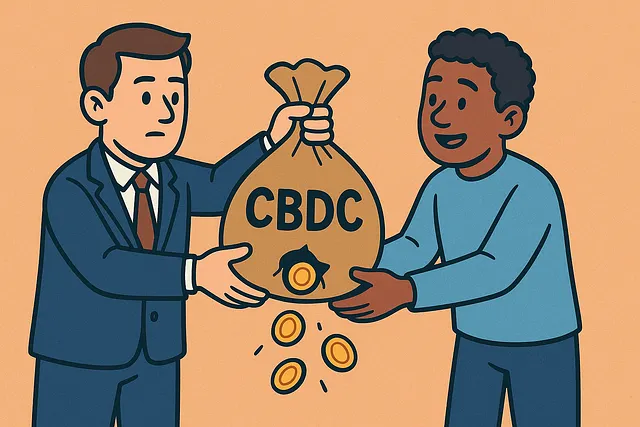
Why CBDCs Risk Inheriting Blockchain’s Worst Flaws

Governments developing CBDCs risk repeating the same architectural mistakes made by early public blockchains — especially by adopting flawed standards like ERC-20. What is a CBDC? CBDC — Central bank digital currency, digital money issued by the central banks of states. CBDC has backing by assets that are legitimate for the country’s economy with two-way convertibility, most often the backing asset is the national currency and precious metals, for example: US Dollar, Euro, gold, etc. CBDC is not new money, but only a new form of money supply already issued into the economy and, as a consequence, has the same legal status as fiat money supply. The history of experiments with CBDC dates back to the 1990s, long before the debut of the first public blockchain — Bitcoin. The first working project is considered to be prepaid Avant debit cards in Finland. CBDCs can be based on traditional architecture without using a distributed ledger, for example, E-CNY (China’s digital yuan). But with the arrival of the blockchain industry, CBDC received a new wave of interest from national governments and central banks. By target audience, CBDCs are divided into two main types:Wholesale CBDCs: Used by financial institutions for settlements among themselves, helping with liquidity management and monetary policy implementation.Retail CBDCs: Intended for businesses and consumers, providing direct use of central bank digital money. Advantages of CBDCs based on distributed ledgers Faster payments. The use of blockchain implies a reliable system of transaction validation between participants and the use of a single unified system, which reduces intermediary nodes and speeds up the transaction effectively to the time set for the creation and finalization of a block. For example, the average block creation time of Ethereum is 12 seconds, block finalization reaches 13–15 minutes (2 epochs). 15 minutes is relatively fast for most national financial systems. Block finalization on EOS takes only 1 second. While a transfer through the SWIFT system can take several days. Lower transaction costs. Architecturally, a peer-to-peer distributed ledger system is simpler and cheaper than the current variety of hardware and software of payment services. For example, one can review the fee schedule page of the Wise service. Fault tolerance. Blockchain systems have a distributed structure and no single point of failure; each archival node stores the entire history of transactions, which also allows abandoning a large amount of backup equipment. Centralization and enhanced control. Blockchain implies transparency of transactions and a single ledger. A CBDC system implies full identification of the end user. Government authorities receive broader and more operational control over transfers than the current system with intermediaries in the form of commercial banks. If we compare CBDC with cash, the degree of control can be assessed as total control. From the point of view of the state, the following increase: efficiency of the tax system; national security; a number of financial crimes become impossible. In 2021 reports showed that 86% of central banks were studying CBDCs, 60% were experimenting, and 14% were in the stage of launching a pilot project. In 2023, a report by the Organization for Economic Cooperation and Development (OECD) showed that 94 central banks were already showing interest in CBDCs. According to an article by the International Monetary Fund (IMF) from 2024, the share of interested banks grew to 94%, and by 2030 up to 15 CBDC systems may be operational.State of CBDCs around the world: VISA In addition to CBDCs, commercial banks are also considering issuing their own stablecoins and RWA assets for interbank exchange, effectively competing not only with commercial stablecoins such as USDT but also with CBDCs. The Moral Dilemma of CBDCs The main claim against CBDCs from society is the risk of increased control and restriction of civil rights. And this is a fairly reasonable concern. CBDCs have quite a lot of critics, and if politicians among them are simply hypocrites while in opposition, the words of crypto enthusiasts and technical experts are actually worth considering. Edward Snowden, a former NSA employee known for his revelations, wrote a rather interesting publication criticizing CBDCs. Here is what Snowden writes on his social network X:Edward Snowden However, Edward Snowden’s post can safely be attributed to the already existing financial system, from which it follows that it is already too late to sound the alarm. The financial system existing today also operates with digital money, the only difference being that it is issued by commercial banks through issuing debit and credit cards, opening accounts, which are backed by funds received from central banks. Most of the population with official employment receive their salaries into bank accounts. In order to work with these financial instruments, users are fully identified. And as practice shows, even with nominal banking secrecy, government authorities can gain access to the information they are interested in. For example, Ukraine’s legislation is moving toward abolishing banking secrecy without CBDCs. User accounts are frozen at the slightest suspicion even now, one of the latest cases occurred in Thailand, where 3 million accounts were frozen. In fact, CBDC is an analogue of private corporate stablecoins such as USDT or USDC. Stablecoins, without exaggeration, are the type of cryptocurrency without which today’s cryptocurrency market is unthinkable, and they are also issued in a way far from the philosophy of true “blockchain money,” which Satoshi Nakamoto and other crypto punks preached. But everyone loves stablecoins, and CBDCs evoke unpleasant associations with a concentration camp. Ultimately, it all comes down to who and how will use such an instrument as CBDC. History shows that many instruments intended to improve society can be directed against it. Edward Snowden himself, although he told the world about crimes against civil liberties by a leading intelligence agency, in fact contributed to these crimes himself. The Slippery Slope of CBDC ERC-20 Technically, a CBDC can be a token (smart contract) at the application level. Or a CBDC can be in the form of the native currency of the blockchain used. However, the token option today looks like the only correct path, since it offers a more flexible implementation of the token contract itself, broader functionality, and simpler support, since for an upgrade or fix of the token it is not necessary to hard fork the entire blockchain. For the choice of platform for implementing CBDCs, there are two opposite concepts: The choice of a private corporate-level blockchain. The blockchain remains closed for public use and independent connection. Such a system is characterized by: flexible configuration of transaction speed and choice of consensus; transaction execution fees (gas) may be absent; increased security due to restricted access to the system. Perfectly suitable for wholesale CBDCs. An example of such a private blockchain is mBridge, later transformed into BRICS Bridge, intended for cross-border payments between BRICS countries as a replacement for the SWIFT system. The choice of a public blockchain is rational for retail CBDCs. Since it allows: covering a large user base; integrating CBDCs into existing applications and services; and also attracting crypto market liquidity into the national economy. Platforms such as Polygon and Ethereum are often chosen for testing CBDCs based on smart contracts, and Ripple even launched the “Ripple CBDC Platform,” subsequently signing agreements with a number of countries. However, when choosing a public blockchain for implementing CBDCs, one has to accept all its architectural features, as well as the fact that in a public blockchain smart contracts are also accessible to citizens with ill intent. As can be seen from the above characteristics, each approach to implementing CBDCs is perfectly suited for its niche. And if we have no particular questions about existing private blockchain implementations, at least due to the closed nature of the system and documentation, then with CBDC implementations, even in experimental mode, questions already arise. In particular, the choice of the ERC-20 token standard. In May, the Federal Reserve Bank of New York and the Bank for International Settlements (BIS) conducted transactions within the program “Central Bank Open Market Operations with Smart Contracts.” Ethereum was chosen as the blockchain environment, and ERC-20 was chosen as the token standard for CBDCs with all the resulting problems when sending to smart contracts, which led to multimillion-dollar losses.Project Pine scheme “The token arrangement sits at the center of the system. It includes a programmable platform that houses the smart contracts making up the central bank toolkit and the tokens with which they interact “ ,BISSystem components: BIS UBS, Sygnum Bank and PostFinance in September are also conducting testing on the public Ethereum blockchain using ERC-20 tokens as the basis of CBDCs.Delegation to a smart contract of the role of escrow agent: Swiss BankingSystem interaction diagram based on deposit tokens: Swiss Bankinghttps://medium.com/media/ea80a11be8b636dce1d855e68289b864/href The two largest banking systems use in the core of their system a standard with a long-known vulnerability, when an error in an address consisting of 42 characters can simply lead to the loss of funds. For now, the public has no code of any CBDC, but surely, like most stablecoins, the smart contract design of CBDCs will provide for: a blacklist; the possibility of freezing; burning and reissuing tokens. However, despite the same capability of corporate stablecoins, lost USDT, USDC and others still exist in the networks. For example, USDT restores only large sums. Formally, Tether can restore funds lost by mistake, but for a 10% fee or $1000, whichever is greater. Already from this condition, it is clear that requests are accepted if the amount of funds is above $1000. Who will solve issues with lost CBDCs and why even allow the possibility of such errors still remains a mystery? Since 2017, there has been the ERC-223 standard for fungible tokens, which applies a communication model preventing the sending of tokens to a non-target smart contract. The same communication model is used by the NFT standard ERC-721. According to the design of the reference ERC-223, it lacks transferFrom and approve, however, hybrid ERC-223 tokens that have these functions for compatibility with existing DeFi feel great and at the same time are protected from direct transfers to old versions of contracts unable to communicate with ERC-223 tokens. Thus, it cannot be said that there is no alternative to ERC-20 in the cryptocurrency space. Conclusion CBDCs, like any new tools, cause fear of possible consequences, both from the moral aspect and from the security side. Meanwhile, it is worth recognizing that the introduction of debit cards also caused concerns about the possibility of abolishing cash and tightening control. As for security aspects, the existing system is also flooded with various fraud schemes, and even the SWIFT system is subject to multimillion-dollar hacks: the incident with the Bank of Bangladesh; theft of funds from Banco del Austro; the hacker group Shadow Brokers accused the NSA of gaining unauthorized access to the SWIFT system. According to a report published by FinCEN in August, only US banks laundered $312 billion over 4 years. According to Chainalysis estimates, over the same time, $189 billion was laundered through digital assets in total. According to UN data, more than $2 trillion is laundered annually worldwide. If CBDCs are meant to represent the future of money, then their foundations must not be built on outdated and flawed standards like ERC-20. Choosing safer, more modern architectures like ERC-223 is not just a technical upgrade — it’s a necessity for trust, resilience, and fairness in tomorrow’s financial system. Why CBDCs Risk Inheriting Blockchain’s Worst Flaws was originally published in Coinmonks on Medium, where people are continuing the conversation by highlighting and responding to this story

Author: Medium
The Best Crypto To Invest In Ignites With Presale Going Live Now As FLOKI And Pudgy Penguins Heat Up

The Best Crypto To Invest In Ignites With Presale Going Live Now As FLOKI And Pudgy Penguins Heat Up

The post The Best Crypto To Invest In Ignites With Presale Going Live Now As FLOKI And Pudgy Penguins Heat Up appeared on BitcoinEthereumNews.com. Crypto News 29 September 2025 | 08:15 Discover MoonBull. Explore presale rewards, early access meme tokens, and top crypto to invest opportunities. Also know about FLOKI and Pudgy Penguins. What if the next explosive crypto run is already underway, and the chance to claim ground-floor gains is slipping away? Every investor dreams of spotting a coin before it goes mainstream, and MoonBull is creating waves that are impossible to ignore. The presale is structured, strategic, and packed with opportunity. Chasing the best crypto to invest requires timing and insight. MoonBull is capturing attention while other meme coins, including FLOKI and Pudgy Penguins, continue to innovate and maintain strong communities. FLOKI recently secured a key partnership with a digital entertainment company, expanding its reach beyond the meme coin niche. Pudgy Penguins is entering new markets with exclusive NFTs and interactive community features, keeping its followers engaged. While these coins grow steadily, MoonBull’s presale offers early access meme tokens with the kind of structured momentum that rewards quick and informed action. Why MoonBull Is The Best Crypto To Invest Now MoonBull, the best crypto to invest in, combines mechanics designed for sustainability with a presale model that maximizes early investment advantages. Two standout features define its appeal. MoonBull’s burn mechanism is a cornerstone of its deflationary design, ensuring that scarcity increases naturally as adoption grows. With 1% of every transaction permanently removed from circulation, the supply consistently contracts, creating upward pressure on value over time. This automatic reduction works hand in hand with community empowerment, as an additional 3.66 billion $MOBU tokens, equivalent to 5% of the total supply, has been allocated for community-driven burns and incentives. By giving holders the ability to participate in shaping the token’s deflationary path, MoonBull combines transparency, sustainability, and investor trust in a way that very…

Author: BitcoinEthereumNews
Quit The Daily Grind, Ride MoonBull: The Best Crypto To Invest In Ignites With Presale Going Live Now As FLOKI And Pudgy Penguins Heat Up

Quit The Daily Grind, Ride MoonBull: The Best Crypto To Invest In Ignites With Presale Going Live Now As FLOKI And Pudgy Penguins Heat Up

What if the next explosive crypto run is already underway, and the chance to claim ground-floor gains is slipping away? […] The post Quit The Daily Grind, Ride MoonBull: The Best Crypto To Invest In Ignites With Presale Going Live Now As FLOKI And Pudgy Penguins Heat Up appeared first on Coindoo.

Author: Coindoo
DOGE ETF Buzz, SOL Breakout, BlockDAG Shines

DOGE ETF Buzz, SOL Breakout, BlockDAG Shines

The post DOGE ETF Buzz, SOL Breakout, BlockDAG Shines appeared on BitcoinEthereumNews.com. Crypto News 29 September 2025 | 08:00 Discover DOGE’s ETF approval buzz, SOL’s breakout rally, and BlockDAG’s $410M+ presale with live X1-X10 demos proving unmatched adoption and mining utility. The search for market leaders is heating up as traders weigh speculative narratives against projects that are already showing real-world adoption. Dogecoin (DOGE) is building hype around the possibility of an ETF approval, while Solana (SOL) continues to show strength with a breakout setup that has traders watching closely. These stories highlight how markets respond to institutional and ecosystem signals, but they also remain tied to uncertain factors like regulatory timelines and sentiment shifts. In contrast, BlockDAG (BDAG) is executing differently. With Batch 30 priced at $0.0013, over $410 million raised, and 26.5+ billion coins sold, the project has combined measurable financial growth with live demonstrations of its mining hardware. The X1 and X10 demo showed a practical, scalable mining utility that many say sets it apart from other presales. This is why BlockDAG is increasingly seen as the standout among contenders for the best crypto presale in 2025. DOGE’s ETF Ambitions Could Change Everything The Dogecoin (DOGE) ETF story has quickly become one of the most-discussed institutional narratives of the quarter. After Bitcoin ETFs broke records in 2024, speculation has turned toward DOGE being the next in line. Such approval could introduce new capital from institutional traders and give the meme coin legitimacy that has often been missing from its journey. Currently trading near $0.26, analysts say an ETF approval could help DOGE break through resistance at $0.29, setting the stage for a run toward $0.33 or even $0.35. However, the process remains uncertain, with regulatory hurdles likely to delay immediate progress. Without approval, DOGE may remain reliant on retail-driven cycles rather than benefiting from consistent institutional inflows. For traders,…

Author: BitcoinEthereumNews
DOGE Eyes ETF Approval, SOL Targets Breakout, BlockDAG’s $410M+ Presale and X1-X10 Demo Prove Real Utility

DOGE Eyes ETF Approval, SOL Targets Breakout, BlockDAG’s $410M+ Presale and X1-X10 Demo Prove Real Utility

The search for market leaders is heating up as traders weigh speculative narratives against projects that are already showing real-world […] The post DOGE Eyes ETF Approval, SOL Targets Breakout, BlockDAG’s $410M+ Presale and X1-X10 Demo Prove Real Utility appeared first on Coindoo.

Author: Coindoo
The founder of Pastel Alpha revealed that he has increased his holdings by 8 Hypurr NFTs

The founder of Pastel Alpha revealed that he has increased his holdings by 8 Hypurr NFTs

PANews reported on September 29 that Pastel Alpha founder Cooker posted on the X platform that he had purchased another 8 Hypurr NFTs, including Hypurr#4087, #236, #3181, #4258, #4324, #4216, #2755, and #280. He currently holds a total of 16 Hypurr NFTs with a total value of over US$1 million. According to previous news, the founder of Pastel Alpha spent about US$500,000 to buy 8 Hypurr NFTs.

Author: PANews
Hyperliquid unveils 4,600 Hypurr NFTs, floor price surges past $60,000

Hyperliquid unveils 4,600 Hypurr NFTs, floor price surges past $60,000

The collection has seen around $45 million worth of trade volume, with the NFT floor price currently set near $68,900.

Author: Coinstats
Crypto Influencer Purchases $500K Worth of Hypurr NFTs

Crypto Influencer Purchases $500K Worth of Hypurr NFTs

Detail: https://coincu.com/nfts-news/crypto-influencer-buy-hypurr-nfts/

Author: Coinstats
CryptoPunks Price Jumps 9.5% as Trade Volume Skyrockets

CryptoPunks Price Jumps 9.5% as Trade Volume Skyrockets

CryptoPunks price jumped 9.5% in 24 hours to $197,159, with $1.87M trading volume signaling renewed NFT activity.]]>

Author: Crypto News Flash
BlockchainFX Raises $8M, Ozak AI Hits $3.4M, But BlockDAG Awakening Testnet Brings Developers Real Working Tools

BlockchainFX Raises $8M, Ozak AI Hits $3.4M, But BlockDAG Awakening Testnet Brings Developers Real Working Tools

In 2025, crypto presales have become battlegrounds for investor attention. Projects like BlockchainFX and Ozak AI are attracting millions based on potential, but there’s one name separating itself not by promises, but by production, BlockDAG.  While many crypto teams build hype with whitepapers and pitch decks, BlockDAG is releasing live testnet infrastructure, real-time dApps, and an ecosystem users can interact with today.  Its Awakening Testnet, which supports 1,400 transactions per second and full EVM compatibility, allows developers to build smart contracts, mint NFTs, and deploy live decentralised applications using a dedicated IDE and smart contract faucet. The difference between speculating on an idea and interacting with a functioning network is what makes this comparison matter.  BlockchainFX Presale Surpasses $8M With Strong Market Buzz BlockchainFX has captured the attention of presale hunters across the market by surpassing $8 million in early fundraising. Analysts, including those at BlockchainReporter, have already described it as the best crypto presale to watch this quarter.  What drives its appeal is not just the money raised but how effectively it creates market excitement. Its messaging leans on projected value growth, detailed roadmap milestones, and the promise of future exchange listings. The project is still in the presale phase, which means participants are buying at the earliest stage of development, making it a speculative play with potentially high risk and high reward. Ozak AI Secures $3.4M But Lacks Live Tools Ozak AI, priced at just $0.012, is capitalising on the AI sector’s pull. Backed by $3.4 million in presale funding, the project rides the current popularity of artificial intelligence integration into blockchain systems. As Blockzeit recently highlighted, Ozak AI is quickly becoming a popular choice among retail investors looking for the top crypto to invest in with a tech-oriented angle.  Still, at its core, Ozak AI is presenting a narrative, a compelling one, but not yet a deployable product. The website and roadmap provide projections and outlines, but the tools for developers or users to engage with the token ecosystem are either still in progress or unavailable. BlockDAG: From Testnet to Real-Time Access BlockDAG Network is not selling a pitch; it’s offering a platform. With over $410 million raised and 26.5 billion coins sold, the project is in its 30th batch, priced at $0.0013, delivering a massive ROI since batch 1. This contrast between fundraising scale and low entry price is driving large-scale adoption, but what sets BlockDAG apart is not just capital raised but its capability delivered. The Awakening Testnet introduces live infrastructure, featuring 1400 TPS, a complete account-based model that aligns with Ethereum standards, and integration of account abstraction. These features enable smart wallets, social recovery, and gasless transactions, advanced utilities that are typically seen only in mature networks.  Through the BlockDAG IDE, developers can build, debug, test, and deploy smart contracts instantly. Additional modules, such as the Reflection DApp and Lottery DApp, provide users with on-chain, trustless utilities that demonstrate how BDAG coins function in a real-world environment. Beyond development, the platform offers NFT explorer tools, WalletConnect, CSV exports, and real-time analytics via a dashboard covering metrics like gas usage, fees, and active addresses.  A testnet faucet provides users with BDAG coins for experimentation, further encouraging ecosystem engagement. Most importantly, BlockDAG’s network doesn’t exist behind a “coming soon” banner; it’s usable now, allowing investors and developers to interact directly with what they’re buying into. In an environment where presales often lead to months or years of waiting, BlockDAG’s emphasis on shipping usable components signals a deeper commitment to delivery. It changes the user’s role from passive investor to active participant. Real Product vs Future Pitch The contrast between these three projects is clear. BlockchainFX and Ozak AI are gathering momentum on the strength of sector narratives and speculative potential. They are appealing options for those who want to take positions early in the hope of long-term gains. However, they still depend on future development cycles to prove their utility. BlockDAG, on the other hand, is already proving itself. Its testnet is live. Its tools are available. It has not only raised over $410 million but has built a functioning infrastructure that supports developers, users, and builders alike.  While the others promise possibilities, BlockDAG is delivering presence. For anyone serious about finding the best crypto presale that goes beyond hype, BlockDAG’s Awakening Testnet demonstrates what execution looks like and why infrastructure matters more than intention. Presale: https://purchase.blockdag.network Website: https://blockdag.network Telegram: https://t.me/blockDAGnetworkOfficial Discord: https://discord.gg/Q7BxghMVyu  Disclaimer: This content is a sponsored post and is intended for informational purposes only. It was not written by 36crypto, does not reflect the views of 36crypto and is not a financial advice. Please do your research before engaging with the products.The post BlockchainFX Raises $8M, Ozak AI Hits $3.4M, But BlockDAG Awakening Testnet Brings Developers Real Working Tools appeared first on 36Crypto.

Author: Coinstats