NFT

NFTs are unique digital identifiers recorded on a blockchain that certify ownership and authenticity of a specific asset. Moving past the "PFP" craze, 2026 NFTs emphasize utility, representing everything from IP rights and digital fashion to RWA titles and event ticketing. This tag explores the technical standards of digital ownership, the growth of NFT marketplaces, and the integration of non-fungible tech into the broader Creator Economy and enterprise solutions.

13270 Articles
Created: 2026/02/02 18:52
Updated: 2026/02/02 18:52
HumidiFi Overtakes Solana DEX Leaders in Silent $34B Breakout

HumidiFi Overtakes Solana DEX Leaders in Silent $34B Breakout

The post HumidiFi Overtakes Solana DEX Leaders in Silent $34B Breakout appeared on BitcoinEthereumNews.com. Solana’s DeFi landscape has a new heavyweight. @HumidiFi_ has quietly surged to the top, overtaking every major decentralized exchange on the network. According to data from @DefiLlama, the platform logged $1.1 billion in 24-hour volume, $9.7 billion over the past week, and a massive $34 billion in 30 days, surpassing established giants like Meteora, Raydium, and Pump. That makes HumidiFi not just a rising player, but the largest DEX on Solana. The Silent Giant of Solana DeFi HumidiFi operates differently. It has no public frontend. Trades are executed privately through aggregators using a quoting model that conceals order details. In other words, it runs as a “dark pool”, a private liquidity venue where large orders can be executed without revealing size, price, or direction. While this structure keeps it largely out of public sight, it has made HumidiFi the preferred choice for whales, market makers, and professional traders who value execution quality and privacy over transparency. This quiet dominance has shifted the narrative of Solana DeFi. It’s no longer just about open liquidity pools, it’s about efficient execution behind the curtain. Dark Pools: Solana’s New Trend A new wave is forming across Solana’s DeFi ecosystem. Dark pool AMMs, or “private automated market makers”, are capturing an increasing share of the chain’s total trading activity. Data from Blockworks Research shows that last week alone, Solana’s dark AMMs processed over $6 billion, accounting for nearly 30% of all on-chain trading. HumidiFi led the charge, handling $3 billion of that total, roughly 15% of all Solana trading volume. This marks a major cultural shift: from full transparency to trade efficiency and privacy. For traders, that’s a significant evolution. In traditional AMMs, every order is public, visible to bots and front-runners, exposing traders to slippage and copy-trading risks. Dark pools solve that by hiding…

Author: BitcoinEthereumNews
Solana Founder Tests Percolator, A New PERP DEX Experiment on Solana

Solana Founder Tests Percolator, A New PERP DEX Experiment on Solana

The post Solana Founder Tests Percolator, A New PERP DEX Experiment on Solana appeared on BitcoinEthereumNews.com. Solana co-founder Anatoly Yakovenko (@aeyakovenko) appears to be building a new perpetual exchange protocol called Percolator, according to public code activity on his GitHub. The project, which is being developed using Claude AI, has sparked wide speculation across the Solana community. In typical Anatoly fashion, the move wasn’t announced with fanfare. Instead, sharp-eyed developers noticed new commits referencing a “sharded perpetual exchange protocol for Solana.” A Quiet Experiment, or the Start of Solana’s Next Breakthrough? Responding to the reports, Yakovenko downplayed the speculation, explaining that he’s simply “experimenting with Claude AI to test ideas.” He added that he wanted to see if a prop AMM-style competition for perps could work on a decentralized exchange, using one memory slab for liquidity provider (LP) risk management and trade matching, plus a router to rebalance positions efficiently. Despite his modest description, the community views this as a significant hint of what may come next for Solana DeFi. Percolator’s GitHub framework outlines a scalable architecture for on-chain perpetual futures, emphasizing speed, composability, and deep liquidity, traits that perfectly match Solana’s high-performance design. Solana’s Deepening Push Into Derivatives Percolator’s emergence underscores a broader trend within the Solana ecosystem, a growing focus on derivatives trading. The blockchain already supports several high-performing perpetual DEXs, including Drift Protocol and Jupiter Perps, both of which have seen consistent trading growth. According to on-chain data, derivatives now account for over 30% of Solana’s total trading volume. With that backdrop, Yakovenko’s involvement could mark a turning point. His technical leadership has historically accelerated Solana’s core innovations, from validator optimizations to proof-of-history mechanisms. The Percolator repository is open-source, allowing developers to explore, fork, and contribute, a move that invites community participation and faster iteration. The Technical Vision Behind Percolator At its core, Percolator appears to test a sharded architecture for perpetual trading.…

Author: BitcoinEthereumNews
Coinbase revives UpOnly podcast by buying $25 million NFT in surprise deal

Coinbase revives UpOnly podcast by buying $25 million NFT in surprise deal

TLDR Coinbase paid $25 million for the UpOnly NFT, $5 million over its listed price. The NFT includes no sponsorship, creative control, or ad rights for Coinbase. UpOnly podcast will return with eight episodes as required by the NFT terms. Coinbase purchased major technical outages on its platform. Crypto exchange Coinbase has reignited interest in [...] The post Coinbase revives UpOnly podcast by buying $25 million NFT in surprise deal appeared first on CoinCentral.

Author: Coincentral
ZK Proofs in Bitcoin mining

ZK Proofs in Bitcoin mining

The post ZK Proofs in Bitcoin mining appeared on BitcoinEthereumNews.com. Homepage > News > Tech > Modular ASIC-GPU Hybrids: ZK Proofs in Bitcoin mining The block reward mining world is moving quickly this year. While BTC mining is all over the news due to the significant amount of energy it consumes, another development is taking place with zero-knowledge (ZK) proofs. A new hardware idea is here: modular ASIC-GPU hybrids. These mix special computer chips (ASICs) with graphics cards (GPUs) to make ZK calculations faster. By September 2025, companies like Cysic are in charge, wrapping up their Testnet Phase III on September 18 and preparing to launch their main network. This doesn’t just make things 100 times more efficient. It also enables block reward mining to perform more than just BTC hashing, with applications in zk-rollups, zkVMs, on-chain AI, and zkML. By converting spare hardware into tokens and creating compute markets that are easy to trade, these hybrids could make mining more open and sustainable. BTC mining typically uses ASICs that are built for SHA-256 hashing, which performs trillions of calculations per second to secure the network. ZK proofs, however, which verify something without revealing the underlying data, require different calculations, such as fast Fourier transforms (FFTs), multi-scalar multiplications (MSMs), and polynomial commitments. Relatively speaking, regular ASICs and GPUs aren’t good at these tasks, making ZK-based blockchains costly and slow. Modular hybrids solve this by using specialized ASICs (like Cysic’s C1 chip, ZK Air, and ZK Pro) combined with many GPUs, creating a collaborative hardware system. This setup allows easy task switching. ASICs quickly handle simple, repetitive ZK tasks (10–100x faster), while GPUs manage complex, parallel tasks like zkML models. Cysic’s approach to doing things exemplifies this hybrid model. Their hardware setup turns proof generation into a fast process, using GPUs and ASICs for real-time ZK work. During Testnet Phase III,…

Author: BitcoinEthereumNews
MetaMask Showing Zero Balances, Base Network Struggling as AWS Issues Persist

MetaMask Showing Zero Balances, Base Network Struggling as AWS Issues Persist

The post MetaMask Showing Zero Balances, Base Network Struggling as AWS Issues Persist appeared on BitcoinEthereumNews.com. In brief A major outage at Amazon Web Services continued to disrupt key crypto platforms on Monday afternoon, including Coinbase, Base, and OpenSea, with issues hitting East Coast users especially hard. The downtime even impacted decentralized apps like MetaMask, which use third-party, AWS-dependent services to fetch blockchain data for users. While the disruptions highlighted crypto’s reliance on centralized infrastructure, they also drove Ethereum gas fees below 0.1 gwei—a rare, ultra-low level. As the rest of the internet began to recover Monday afternoon from a seismic Amazon Web Services (AWS) outage, key crypto sites and service providers continued to struggle from the setback. Apps like Coinbase and OpenSea have remained partially or entirely down for many users, particularly those on the East Coast.  Meanwhile, even decentralized crypto wallets like MetaMask have been showing some panicked users zero balances, due to outages at a service provider the wallet depends on to fetch user data from numerous blockchains. Infura, which connects internet applications to blockchain data, continues to experience outages across the crypto ecosystem. The AWS outage continues to impact its ability to fetch data from blockchains including Ethereum, Base, Polygon, Optimism, Arbitrum, Linea, and Scroll. (Disclaimer: MetaMask and Infura are products of Consensys, one of 22 investors in an editorially independent Decrypt.) Base itself—the popular Ethereum layer-2 network incubated by Coinbase—has also continued to suffer limited network capacity, several hours after the AWS outages were first reported Monday.  After reporting that AWS-related issues on the network had been resolved on Monday afternoon, the network’s status page then returned to an error signal shortly thereafter, citing transaction-related latencies and inconsistencies in block production times.  Coinbase has also continued to struggle to regain full functionality for all customers, even as other crypto trading platforms impacted by the AWS outage, including Robinhood, have managed to…

Author: BitcoinEthereumNews
Coinbase Acquires ‘Up Only’ Podcast for $25M USDC

Coinbase Acquires ‘Up Only’ Podcast for $25M USDC

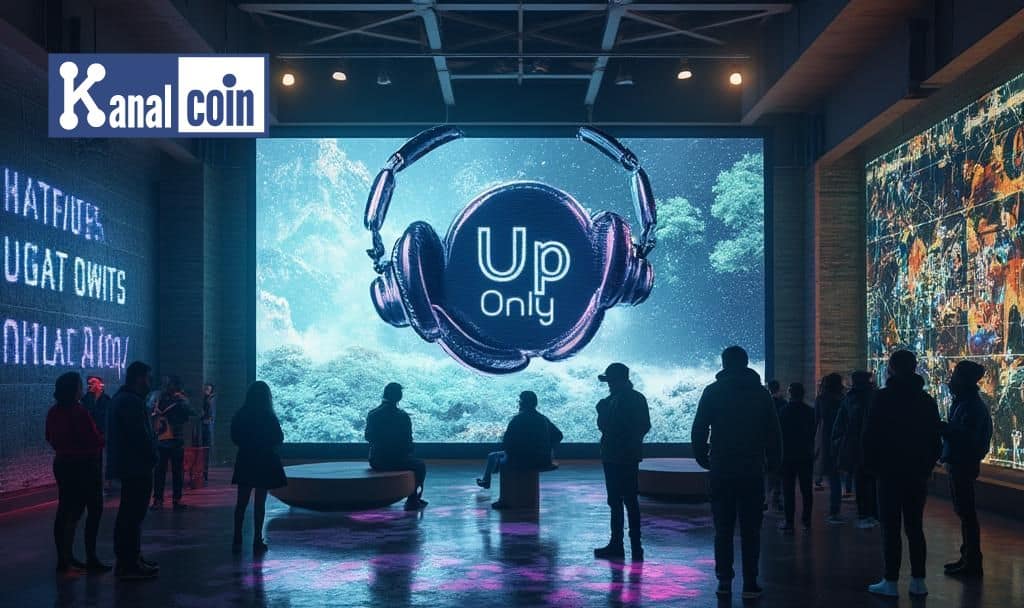
Coinbase acquires 'Up Only' podcast NFT for $25 million USDC, reigniting its influence in crypto media.

Author: Kanalcoin
Coinbase CEO Confirms Spending $25M to Buy UpOnly NFT From Cobie

Coinbase CEO Confirms Spending $25M to Buy UpOnly NFT From Cobie

Coinbase CEO Brian Armstrong on Tuesday, confirmed the purchase of $25 million UpOnly NFT from well-known crypto trader Cobie. “The rumors are true, we bought the NFT,” Armstrong wrote to his 1.6 million followers on X. “UpOnlyTV is coming back.” Per on-chain data, Coinbase paid $25 million in USDC to Cobie for the NFT, pushing him back into the host’s chair, aiming to resurrect the podcast. UpOnly NFT originated from the podcast show “UpOnly” hosted by Cobie, along with Ledger. The show invites top traders, project founders, fund managers, to discuss crypto trends. However, the program stalled roughly three years ago, following the FTX collapse in 2022 and the subsequent crypto winter. ‘When NFT is Burnt, Podcast Will Restart’: Cobie In May 2025, Cobie created a challenge that if someone burns the NFT, the program would return for another season. “OK I am no longer the decision maker on if UpOnly returns,” Cobie wrote in May. “The power is now stored within this NFT that I just minted. When the NFT is burned, the podcast will restart. Until then, please leave me alone.” The offer however limited sponsorship rights or editorial control. Given the high dollar-amount set on the NFT, Cobie said at the time, “You couldn’t set a dollar amount on OpenSea so I just kept adding 0s till the number seemed too big for anyone to buy even as a joke.” On Tuesday, not only did Coinbase purchase UpOnly’s NFT, but it apparently overpaid the asking price of the non-fungible token. Soon after the Coinbase’s purchase, Jordan Fish, aka Cobie, conveyed his disbelief quite concisely. UpOnly Podcast Returns With ‘Eight Episodes’ According to the NFT fine print, the holder of the token “can compel Cobie and Ledger Status into performing, like monkeys, 8 episodes of UpOnlyTV.” “We are allowed to call you idiots for buying it, or ignore you completely with zero mentions of your existence during our 8-episode season,” the NFT description read. In a separate post on X, Cobie joked, “Im too old to have a crypto podcast imma be out here looking like Gary V.” “It has been 3 years since up only ended. I was in my 20s when it started, now I have grey hair. We will rename it Unc Only and I will spend $25m on cosmetic surgery. See ya soon.” Coinbase’s purchase comes at the same time as it suffered intense technical difficulties linked to an outage with Amazon Web Services (AWS).

Author: CryptoNews
Crypto Missed Calls and Second Chances: BlockchainFX ($BFX) Presale vs. Aster (ASTER) Price Boom

Crypto Missed Calls and Second Chances: BlockchainFX ($BFX) Presale vs. Aster (ASTER) Price Boom

Best Cryptos to Invest in October 2025 often raise one big question — how many people ignored early crypto projects and later wished they hadn’t? The crypto market in Q4 2025 continues to create stories of fortune, yet many still hesitate. Bitcoin (BTC) trades above $66,000, Ethereum (ETH) stays near $2,980, and fresh tokens dominate […] The post Crypto Missed Calls and Second Chances: BlockchainFX ($BFX) Presale vs. Aster (ASTER) Price Boom appeared first on Live Bitcoin News.

Author: LiveBitcoinNews
Whale.io Launches Crock Dentist Game and Limited RWA NFT Series

Whale.io Launches Crock Dentist Game and Limited RWA NFT Series

The post Whale.io Launches Crock Dentist Game and Limited RWA NFT Series appeared on BitcoinEthereumNews.com. Advertisement &nbsp &nbsp Disclaimer: The below article is sponsored, and the views in it do not represent those of ZyCrypto. Readers should conduct independent research before taking any actions related to the project mentioned in this piece. This article should not be regarded as investment advice. Whale.io, the blockchain-based casino and sportsbook platform, has unveiled Crock Dentist, a new addition to its growing Whale Originals lineup.  The game transforms the classic “tooth-pulling” party challenge into a digital casino experience, bringing a mix of nostalgia, entertainment, and blockchain innovation to its global audience. Alongside the game’s release, Whale.io has also introduced a collection of 1,000 Crock Dentist NFTs, designed to bridge the gap between gaming rewards and real-world value. The collection marks Whale.io’s first step toward integrating Real World Assets (RWA) within its gaming ecosystem. This offers players a unique opportunity to earn and trade digital assets connected to game performance. Reimagining a Classic with a Blockchain Twist Crock Dentist combines simple, familiar gameplay with modern visuals and a casino-driven structure. It operates at a 97% Return to Player (RTP), where 3% of every wager contributes to a reward pool redistributed to NFT holders through airdrops. This model creates a dynamic link between player engagement and community rewards, making participation both interactive and potentially profitable. Advertisement &nbsp Each Crock Dentist NFT provides access to a share of airdrops funded by the game’s house edge. Holders receive their rewards in $WHALE, the platform’s native token, at random intervals. Users can either hold their NFTs for continuous rewards or trade them on secondary markets as the game gains traction. The initial minting phase was exclusively available to Whale.io Battlepass holders, with the public mint opening on Tuesday. Every user can mint up to five NFTs, with prices increasing daily until all…

Author: BitcoinEthereumNews
BlockDAG Builds Toward $600M Presale Target With Expanding Ecosystem, & Global Partnerships Driving Growth

BlockDAG Builds Toward $600M Presale Target With Expanding Ecosystem, & Global Partnerships Driving Growth

BlockDAG has grown into one of the biggest crypto presales in recent years by delivering working products before large-scale promotion. In just a year, it moved from concept to a live testnet, earned two independent audits, and announced a long-term deal with the BWT Alpine Formula 1® Team. Now in Batch 31, it has raised more than $425 million, sold over 27 billion coins, and priced its current batch at $0.0015.  The roadmap targets $600 million across 45 batches with a confirmed listing price of $0.05. With adoption signals already strong, including millions using its mobile miner, BlockDAG (BDAG) is preparing for a launch backed by actual usage rather than speculation. Parallel Block Structure for Speed & Security  BlockDAG’s design is different from traditional chains. It uses a Directed Acyclic Graph inside a Proof of Work model. Instead of waiting on one chain, blocks can finalize simultaneously. This lowers congestion, speeds up confirmation, and keeps the security strength that made Bitcoin reliable. The network focuses on high throughput with low fees, making it suitable for microtransactions, app-based payments, and machine-to-machine use. The testnet is live and continues to improve. Updates focus on better performance and more tools for developers. Compatibility with the Ethereum Virtual Machine (EVM) makes it easier for teams to bring over Ethereum smart contracts.  Upcoming WebAssembly (WASM) support will allow development in languages like Rust, C, and C++. With a built-in IDE, explorer, and low-code tools for NFTs and coins, BlockDAG is reducing the time it takes to bring new projects into production. Early applications, including lottery features and reflections, already show how the system works end-to-end. Security, Adoption, & TGE Code Benefits Security has been addressed directly, not assumed. CertiK reviewed vesting and distribution rules, while Halborn audited key contract features like treasury logic. Both reports included fixes and led to new safeguards such as delayed execution and multi-signature approval. These results are public, giving BlockDAG transparency that is rare in presales. Adoption signs are already visible. The X1 mobile miner has attracted millions of users on iOS and Android. Hardware miners are shipping, and holder numbers are climbing as the presale continues through 45 batches. This means the network will not launch without participants. It will launch with a ready community. In addition, BlockDAG has released a new limited-time TGE code for early launch access. Rewards depend on rank: top 300 ranks get an instant airdrop, 301–600 wait 30 minutes, 601–1000 wait an hour, 1001–1500 wait two hours, 1501–2000 wait four hours, 2001–5000 wait six hours, and rank 5001 waits 24 hours. This schedule encourages more presale engagement. Team, Partnerships, & Roadmap Toward $600M The BlockDAG leadership has deep operational and security experience. CEO Antony Turner, formerly with SPIRIT Blockchain Capital, focuses on shipping real products and securing trustworthy partnerships. CTO Jeremy Harkness works on scalability and stability across the network. CSO Youssef Khaoulaj, a skilled red team operator and smart contract auditor, runs the security program as a constant process. The team also includes project managers who have deployed payment systems across several regions, making the group capable of real delivery. The roadmap includes DeFi features such as a decentralized exchange, lending, cross-chain bridge, oracles, and an indexer layer. A launchpad supports new teams, while low-code tools make creating NFTs and coins simple. A crypto payment card will bring digital use into everyday spending. BlockDAG has also expanded its reach through hackathon partnerships with HackerEarth and SpaceDev. Sports collaborations in rugby and cricket aim to grow fan engagement through digital collectibles.  The ongoing partnership with the BWT Alpine Formula 1®  team has added global visibility through events, simulators, and developer showcases. Together, these steps show how the project is building an ecosystem where more tools attract developers, more developers bring users, and more users raise demand for blockspace and BDAG coins. Final Look BlockDAG’s presale progress shows strong momentum with more than $425 million raised, over 27 billion coins sold, and a $0.0015 price in Batch 31. Its roadmap is clear, aiming for a $600 million close with a confirmed $0.05 listing.  Analysts see potential for BDAG to reach $1 by 2026, backed not just by hype but by solid factors: live testnet, audits, user traction, and worldwide exposure through BWT Alpine F1® and other partnerships. The structured six-week launch plan reduces risk by rolling out step by step. With developer support, growing adoption, and security measures in place, BlockDAG is moving toward one of the largest Layer 1 launches in years. Presale: https://purchase.blockdag.network Website: https://blockdag.network Telegram: https://t.me/blockDAGnetworkOfficial Discord: https://discord.gg/Q7BxghMVyu  Disclaimer: This content is a sponsored post and is intended for informational purposes only. It was not written by 36crypto, does not reflect the views of 36crypto and is not a financial advice. Please do your research before engaging with the products.The post BlockDAG Builds Toward $600M Presale Target With Expanding Ecosystem, & Global Partnerships Driving Growth appeared first on 36Crypto.

Author: Coinstats