Liquidation

Liquidation occurs when a trader’s collateral is no longer sufficient to cover their leveraged position’s losses, triggering an automated forced closure by the exchange's liquidation engine. It is a critical risk-management mechanism that ensures the solvency of lending protocols and derivative platforms. In 2026, the focus has moved toward MEV-resistant liquidation models that protect users from predatory "cascades." This tag provides essential information on maintenance margins, health factors, and how to avoid liquidation in high-volatility environments.

14284 Articles
Created: 2026/02/02 18:52
Updated: 2026/02/02 18:52
$212 Million Wiped Out In An Hour

$212 Million Wiped Out In An Hour

The post $212 Million Wiped Out In An Hour appeared on BitcoinEthereumNews.com. Massive Crypto Futures Liquidation: $212 Million Wiped Out In An Hour Skip to content Home Crypto News Massive Crypto Futures Liquidation: $212 Million Wiped Out in an Hour Source: https://bitcoinworld.co.in/crypto-futures-liquidation-event/

Author: BitcoinEthereumNews
​​ChatGPT’s Bitcoin Analysis Flags $112K Support Amid $2.7B Whale Liquidation

​​ChatGPT’s Bitcoin Analysis Flags $112K Support Amid $2.7B Whale Liquidation

ChatGPT’s Bitcoin analysis has revealed that Bitcoin is testing key support at $112,398 following a massive $2.7 billion whale selloff involving 24,000 BTC across major exchanges, triggering liquidation cascades. In comparison, MicroStrategy counters with a $357 million accumulation, bringing its holdings to 632,457 BTC. ChatGPT’s Bitcoin analysis synthesizes 26 real-time technical indicators to assess BTC’s trajectory amid massive whale distribution and institutional counter-accumulation. It also assesses EMA support testing and potential trend reversal signals. Technical Analysis: Whale Selloff Tests Key EMA Support Bitcoin’s current price of $112,398.08 reflects a -0.97% decline from the opening price of $113,493.59, establishing a volatile trading range between $113,667.28 (high) and $110,588.00 (low). This 2.7% intraday range shows controlled selling pressure following the massive whale distribution event. The RSI at 42.24 approaches oversold territory, providing potential bounce conditions after the selloff-driven decline.Source: TradingView Moving averages reveal concerning bearish positioning with Bitcoin trading below the 20-day EMA at $115,656 (-2.8%) and the 50-day EMA at $114,789 (-2.1%), while testing the 100-day EMA support at $110,856 (+1.4%) with the 200-day EMA at $103,697 (+7.7%) providing deeper support. Similarly, MACD shows a strong bearish structure at -568.66, well below zero, with the signal line at -676.11 and a negative histogram at -107.45, indicating continued momentum deterioration.Source: TradingView Volume analysis shows moderate activity at 14.81K BTC, indicating steady institutional participation during the whale-driven volatility. In fact, ATR also maintains a reading of 102,285.34, suggesting massive volatility potential for continued large moves based on support test outcomes. Market Context: Whale Distribution Meets Institutional Counter-Accumulation Bitcoin’s decline follows a massive whale distribution event involving 24,000 BTC worth approximately $2.7 billion that were dumped across major exchanges. This systematic selling created liquidation cascades affecting leveraged positions and triggering broader market weakness despite no fundamental catalyst driving the selloff. The institutional response reveals divergent strategies, with MicroStrategy countering whale selling through a $357 million accumulation of 3,081 BTC, bringing its total holdings to 632,457 BTC, representing 3% of the total Bitcoin supply. Additional institutional buying includes Japanese firms adding 156.79 BTC and Metaplanet increasing its holdings with an $11.8 million purchase. Market rotation dynamics show institutional distribution pressure with BlackRock reportedly reducing positions by nearly $200 million while ETF outflows continue. The whale seller maintains 152,874 BTC worth approximately $17 billion, suggesting strategic positioning rather than a complete exit. Broader Market Liquidation Impact The crypto market experienced systematic weakness following the whale distribution event. Market analysts observe the selloff “triggered a $4K drop in minutes, causing a liquidation cascade, not a natural correction” as leveraged positions faced forced closure during rapid price movement. The timing coincided with Ethereum’s local high formation, suggesting coordinated selling across major cryptocurrencies. “Even ETH hit a local high just hours earlier yet dumped right after.” This indicates systematic distribution rather than organic market movement affecting institutional positioning. Despite the selling pressure, structural factors remain supportive, with analysts noting “no structural reason to flip bearish, just more proof whales still control the game.” Market participants identified the event as a “liquidation trap” rather than a genuine distribution, with some noting that “this wasn’t a sell-off.” It was a liquidation trap” targeting over-leveraged positions while institutional foundations remain intact. Market Fundamentals: Strong Metrics Despite Distribution Pressure Bitcoin maintains substantial positioning with a $2.23 trillion market cap despite a -1.93% decline during whale distribution phases. The market cap adjustment accompanies increased volume at $89.33 billion (+74.24%), indicating an active institutional response to whale selling pressure. Additionally, the 3.93% volume-to-market cap ratio suggests heightened trading activity during distribution events, typical of major market participants repositioning during volatility. Circulating supply of 19.91 million BTC represents 94.8% of the maximum 21 million supply, with scarcity approaching supporting long-term value despite short-term distribution pressure.Source: CoinMarketCap Similarly, market dominance of 57.8% (+1.57%) demonstrates Bitcoin’s relative strength during crypto market weakness, while the 9.87% distance from the August 14 all-time high of $124,457 represents healthy correction territory following whale manipulation events. Social Sentiment: Distribution Concerns Amid Institutional Divergence LunarCrush data reveals declining social performance with Bitcoin’s AltRank falling to 1.3K during whale distribution events. A Galaxy Score of 38 reflects cautious sentiment as participants process massive selloff implications for market structure and institutional confidence. Engagement metrics show increased activity with 97.21 million total engagements (+24.64M) and 225.54K mentions (+86.8K), demonstrating heightened attention during distribution events. Social dominance of 17.55% maintains visibility while sentiment registers at 76% positive despite selling pressure. Recent social themes focus on whale manipulation concerns, with community discussions emphasizing “liquidation trap” narratives and double-top formation warnings. Prominent analyst Crypto Caesar has identified potential CME gap fills around $94K–$96K levels. ChatGPT’s Bitcoin Analysis: Key Support Defense Required ChatGPT’s Bitcoin analysis reveals Bitcoin at a key juncture, testing the 100-day EMA support following massive whale distribution pressure. The support test at $110,856 represents institutional confidence validation versus continued selling pressure from large holders seeking strategic positioning. Immediate support emerges at today’s low around $110,588, followed by the key 100-day EMA support at $110,856.Source: TradingView The 200-day EMA at $103,697 provides major downside protection, while resistance begins at the 50-day EMA ($114,789) and the 20-day EMA ($115,656) levels. MACD deterioration and RSI approaching oversold conditions indicate potential for reversal if support holds amid counter-accumulation efforts. Three-Month Bitcoin Price Forecast: Recovery Scenarios Support Defense Recovery (40% Probability) Successful defense of $110.8K support combined with continued institutional counter-accumulation could drive recovery toward $118K–$122K, representing 5–9% upside from current levels.Source: TradingView This scenario requires whale distribution completion and oversold bounce validation. Extended Distribution (35% Probability) Continued whale selling pressure could result in consolidation between $108K–$115K, allowing distribution completion while institutional accumulation continues during discount pricing opportunities.Source: TradingView Deeper Correction (25% Probability) A break below $110.8K support could trigger selling toward $103.7K-$108K levels, representing an 8–15% downside.Source: TradingView Recovery would depend on completing major support, defense, and whale distribution. ChatGPT’s Bitcoin Analysis: Distribution Pressure Meets Institutional Resolve ChatGPT’s Bitcoin analysis reveals Bitcoin facing a key support test amid whale distribution pressure countered by strategic institutional accumulation. The breakdown below short-term EMAs represents market manipulation validation versus fundamental confidence in Bitcoin’s long-term trajectory. Next Price Target: $118K-$122K Within 90 Days The immediate trajectory requires decisive defense of $110.8K support to validate institutional confidence over whale distribution pressure. From there, selling exhaustion could propel Bitcoin toward $118K psychological resistance, with sustained institutional accumulation driving toward $122K+ recovery levels. However, failure to hold $110.8K would signal a deeper correction to $103.7K–$108K range, creating an optimal accumulation opportunity before the next institutional wave drives Bitcoin toward new all-time highs above $125K as distribution phases complete

Author: CryptoNews
Bitcoin Bears Take Control — Key $110K Barrier Shattered

Bitcoin Bears Take Control — Key $110K Barrier Shattered

Bitcoin’s price has slipped under the $110,000 mark for the first time in 47 days. Bears currently have the upper hand, with the top crypto asset struggling to regain its footing after the latest string of pullbacks. Bitcoin Crashes Below $110K — $186M Liquidated in 24 Hours Bitcoin’s week has been rocky, slipping 5.7% against […]

Author: Bitcoin.com News
Bitcoin falls below $110K, sparking $880M in liquidations

Bitcoin falls below $110K, sparking $880M in liquidations

The post Bitcoin falls below $110K, sparking $880M in liquidations appeared on BitcoinEthereumNews.com. Key Takeaways Bitcoin fell below $110K, triggering $880M in liquidations led by ETH and BTC longs. With August closing down and September averaging nearly 4% losses, traders brace for another red month in Bitcoin. Bitcoin dropped more than 3% on Monday, falling below the $110,000 mark for the first time since early July and reaching a low of $109,450. The move sparked over $880 million in liquidations in the past 24 hours, according to CoinGlass data, including $300 million from ETH longs and $180 million from BTC longs. The decline erased all of Friday’s gains, which were fueled by Federal Reserve Chair Jerome Powell’s comments suggesting that rate cuts could be on the table at the Fed’s September meeting. Ethereum had reached a new all-time high above $4,869 on Friday and climbed near the $5K mark on Sunday, but by press time had slipped to around $4,350. Altcoins were hit even harder. Solana plunged more than 8% on the day, XRP fell 6%, and smaller tokens like PENDLE, LDO, and PENGU recorded double-digit losses, with drops of up to 13%. The downturn comes as August draws to a close, with traders eyeing September cautiously. Historically, the month has been one of the worst for Bitcoin. CoinGlass data shows BTC has closed red in eight of the past twelve Septembers, averaging a monthly loss of 3.77%. Source: https://cryptobriefing.com/bitcoin-falls-110k-liquidations/

Author: BitcoinEthereumNews
ETH Crashes 9% After ATH, Market Cap Sheds $60 billion in Hours

ETH Crashes 9% After ATH, Market Cap Sheds $60 billion in Hours

On Aug. 25, ethereum plunged to $4,352 just hours after it breached the $4,900 mark for the first time. Market cap dipped from nearly $600 billion to $529 billion. Market Pullback and Major Liquidations Hours after breaking past $4,900, Ethereum ( ETH) tumbled by nearly 7% to $4,415, causing its market capitalization, which had edged […]

Author: Coinstats
Crypto Futures Liquidation: Sudden $343 Million Plunge Shocks Market

Crypto Futures Liquidation: Sudden $343 Million Plunge Shocks Market

BitcoinWorld Crypto Futures Liquidation: Sudden $343 Million Plunge Shocks Market The crypto market recently experienced a significant event: a massive crypto futures liquidation that sent ripples across major exchanges. In a single hour, an astounding $343 million worth of futures positions were liquidated. This sudden plunge naturally raises questions about market stability and the inherent risks of leveraged trading. However, this was not an isolated incident; the past 24 hours saw a staggering $852 million in total liquidations. What is Crypto Futures Liquidation and Why Does It Happen? To understand the impact of such an event, it is crucial to grasp what crypto futures liquidation truly means. Futures contracts allow traders to bet on the future price of an asset without owning it directly. Many traders use leverage, borrowing funds to amplify their potential returns. While leverage can increase profits, it also magnifies losses. When the market moves against a highly leveraged position, a trader’s margin – the capital they put up as collateral – may no longer be sufficient to cover potential losses. At this point, the exchange automatically closes the position to prevent further losses, a process known as liquidation. This protects both the trader (from going into deeper debt) and the exchange. The Immediate Impact: Unpacking the Recent Crypto Futures Liquidation The numbers from the recent crypto futures liquidation are stark. Major exchanges collectively witnessed $343 million in liquidations within just one hour. This rapid sell-off indicates a swift and significant price movement that caught many leveraged traders off guard. Moreover, the broader 24-hour figure of $852 million highlights a period of sustained market turbulence. Such large-scale liquidations often create a cascading effect. As positions are forcibly closed, it adds selling pressure to the market, which can drive prices down further. This, in turn, triggers more liquidations, creating a feedback loop that exacerbates market volatility. It’s a challenging scenario for traders, especially those with high-risk strategies. How Does Crypto Futures Liquidation Affect Traders? For individual traders, a crypto futures liquidation event can be devastating. Those holding long positions (betting on price increases) are liquidated when prices fall sharply, while those with short positions (betting on price decreases) face liquidation if prices suddenly surge. This results in the loss of their entire margin, and sometimes more, depending on the contract terms. Key challenges for traders: Capital Loss: Traders lose the capital committed to their liquidated positions. Emotional Stress: Rapid losses can lead to panic and irrational decisions. Market Uncertainty: Increased volatility makes it harder to predict future price movements. Therefore, understanding the mechanics of leverage and setting appropriate risk parameters are vital for anyone participating in futures trading. Navigating Volatility: Strategies After a Major Crypto Futures Liquidation Event While a massive crypto futures liquidation can be alarming, it also serves as a crucial reminder about prudent trading practices. Traders can implement several strategies to mitigate risks and navigate such volatile periods more effectively. Actionable insights for traders: Manage Leverage Wisely: Avoid excessively high leverage, which leaves little room for market fluctuations. Set Stop-Loss Orders: These automatically close a position if it reaches a predetermined loss level, limiting downside. Diversify Your Portfolio: Do not put all your capital into highly leveraged futures. Stay Informed: Keep abreast of market news, economic indicators, and technical analysis. Practice Risk Management: Only trade with capital you can afford to lose. These practices are essential for building resilience in your trading strategy, especially when faced with unpredictable market swings. The recent $343 million crypto futures liquidation is a stark reminder of the inherent risks and rapid shifts within the cryptocurrency market. While such events can cause significant short-term pain for many traders, they also highlight the importance of disciplined risk management and a thorough understanding of leveraged products. By learning from these occurrences, traders can refine their strategies and approach the volatile world of crypto futures with greater caution and informed decision-making. Frequently Asked Questions (FAQs) 1. What exactly is a crypto futures liquidation? A crypto futures liquidation occurs when an exchange automatically closes a trader’s leveraged position because their margin collateral falls below a required level. This happens when the market moves significantly against their bet, and they can no longer cover potential losses. 2. What typically causes massive crypto futures liquidation events? Large-scale liquidations are usually triggered by sudden and significant price movements in the underlying cryptocurrency. High market volatility, unexpected news, or large institutional trades can initiate a cascade where one liquidation triggers others, amplifying the price swing. 3. How can traders protect themselves from a crypto futures liquidation? Traders can protect themselves by using lower leverage, setting strict stop-loss orders to limit potential losses, and maintaining sufficient margin in their accounts. Diversifying one’s portfolio and avoiding over-exposure to a single asset or highly leveraged positions are also crucial. 4. Does a large crypto futures liquidation signal a market crash? Not necessarily. While a large liquidation event indicates significant volatility and often a sharp price correction, it doesn’t always lead to a sustained market crash. Markets can recover quickly, but it does highlight periods of heightened risk and uncertainty. 5. Were all crypto exchanges equally affected by this liquidation event? While the overall figures represent liquidations across major exchanges, the impact can vary. Different exchanges may have different liquidity pools and user bases, leading to slightly varied liquidation volumes and timing, though the overall market trend affects all. Did you find this article insightful? Share it with your friends and fellow crypto enthusiasts on social media to help them understand the dynamics of crypto futures liquidation and navigate the volatile market more effectively! To learn more about the latest crypto market trends, explore our article on key developments shaping Bitcoin price action. This post Crypto Futures Liquidation: Sudden $343 Million Plunge Shocks Market first appeared on BitcoinWorld and is written by Editorial Team

Author: Coinstats
Massive Crypto Futures Liquidation: $106 Million Wiped Out in Just One Hour

Massive Crypto Futures Liquidation: $106 Million Wiped Out in Just One Hour

BitcoinWorld Massive Crypto Futures Liquidation: $106 Million Wiped Out in Just One Hour The cryptocurrency market is no stranger to dramatic swings, but recent events have sent ripples across trading desks. In a stunning display of market volatility, major exchanges witnessed a massive crypto futures liquidation event, with $106 million worth of futures contracts wiped out in just the past hour. This rapid downturn is part of an even larger trend, as a staggering $606 million in futures positions were liquidated over the last 24 hours. These figures aren’t just numbers; they represent significant capital shifts and underline the inherent risks in highly leveraged trading. What Exactly is Crypto Futures Liquidation? Have you ever wondered what happens when a trade goes terribly wrong in the crypto derivatives market? Crypto futures liquidation occurs when a trader’s leveraged position is forcibly closed by an exchange. This happens because the trader’s margin — the collateral they put up — falls below a certain level required to keep the trade open. When market prices move sharply against a trader’s position, especially with high leverage, the exchange steps in to prevent further losses for both the trader and the exchange itself. It’s a protective mechanism, albeit a painful one for the traders involved. The Scale of This Recent Crypto Futures Liquidation Event The recent figures paint a stark picture of market sentiment and rapid price action. Imagine $106 million vanishing in the blink of an eye, within a single hour. This immediate impact highlights intense selling pressure or a sudden price drop that caught many traders off guard. Moreover, the broader 24-hour total of $606 million underscores a sustained period of market instability, leading to widespread forced closures. These massive crypto futures liquidation events often signal significant shifts in market dynamics, affecting trader confidence and potentially leading to further price corrections. Why Do Massive Liquidations Occur in Crypto Futures Trading? Understanding the ‘why’ behind these liquidations is crucial for any market participant. Several factors contribute to such dramatic events: High Leverage: Traders often use high leverage, borrowing significant capital to amplify potential gains. However, this also amplifies potential losses, making positions more susceptible to liquidation with even small price movements. Market Volatility: Cryptocurrencies are notoriously volatile. Sudden news, macroeconomic shifts, or even ‘whale’ movements can trigger rapid price changes, quickly eroding margin. Cascading Effect: When initial liquidations occur, they can add selling pressure to the market, causing prices to drop further. This, in turn, triggers more liquidations, creating a “liquidation cascade” that exacerbates the downturn. Lack of Risk Management: Many traders, especially newcomers, may not employ robust risk management strategies, such as setting stop-loss orders or managing their leverage levels prudently. These elements combined create a highly sensitive environment where large-scale crypto futures liquidation can become a frequent occurrence. Navigating Volatility: Protecting Yourself from Crypto Futures Liquidation Given the inherent risks, how can traders better navigate these turbulent waters and minimize their exposure to crypto futures liquidation? Manage Leverage Wisely: Avoid excessively high leverage. While tempting, it significantly increases your risk. Understand your risk tolerance and use leverage sparingly. Implement Stop-Loss Orders: These orders automatically close your position if the price hits a predetermined level, limiting potential losses and preventing full liquidation. Diversify Your Portfolio: Do not put all your capital into highly leveraged futures contracts. Balance your portfolio with less volatile assets or spot holdings. Stay Informed: Keep abreast of market news, technical analysis, and macroeconomic indicators that could impact crypto prices. Practice Risk Management: Allocate only a small percentage of your total capital to high-risk trades. Never trade with money you cannot afford to lose. By adopting these strategies, traders can build a more resilient approach to the often-unpredictable world of crypto derivatives. The recent $106 million and $606 million crypto futures liquidation events serve as a powerful reminder of the extreme volatility and inherent risks within the cryptocurrency derivatives market. While opportunities for significant gains exist, the potential for rapid losses, especially with high leverage, is equally real. Traders must approach futures trading with caution, equipped with a solid understanding of market mechanics and robust risk management strategies. Staying informed and disciplined is key to navigating these powerful market forces. Frequently Asked Questions (FAQs) 1. What causes a crypto futures liquidation? Liquidation is triggered when a trader’s margin (collateral) falls below the maintenance level due to significant price movements against their leveraged position. 2. How can traders avoid crypto futures liquidation? Traders can minimize liquidation risk by managing leverage, setting stop-loss orders, diversifying their portfolio, staying informed, and practicing sound risk management. 3. Is crypto futures trading risky? Yes, crypto futures trading is inherently risky due to high market volatility and the use of leverage, which can amplify both gains and losses. 4. What is the difference between spot trading and futures trading? Spot trading involves buying or selling cryptocurrencies for immediate delivery, while futures trading involves contracts to buy or sell an asset at a predetermined price on a future date, often with leverage. 5. Does a liquidation event always mean the market is crashing? Not necessarily. While large liquidation events often accompany significant price drops, they can also occur during rapid upward movements (short liquidations). They indicate high volatility rather than a guaranteed crash. If you found this analysis helpful, please share it with your trading community on social media. Understanding market dynamics is crucial for everyone in crypto! To learn more about the latest crypto market trends, explore our article on key developments shaping cryptocurrency price action. This post Massive Crypto Futures Liquidation: $106 Million Wiped Out in Just One Hour first appeared on BitcoinWorld and is written by Editorial Team

Author: Coinstats
Bitcoin (BTC) Price Today: Bitcoin Struggles as Whale Selling Overshadows Fed Rate Cut Optimism

Bitcoin (BTC) Price Today: Bitcoin Struggles as Whale Selling Overshadows Fed Rate Cut Optimism

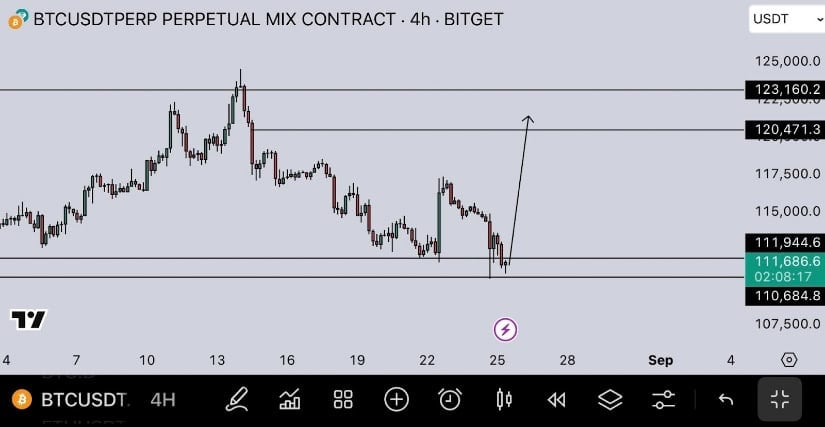
Bitcoin price today remains under heavy pressure, trading near $111,500–$112,700 after a weekend flash crash wiped billions from the crypto market.

Author: Brave Newcoin
Cap Labs attracts capital with EigenLayer-backed credit model

Cap Labs attracts capital with EigenLayer-backed credit model

The post Cap Labs attracts capital with EigenLayer-backed credit model appeared on BitcoinEthereumNews.com. Cap Labs’ new stablecoin cUSD has seen rapid adoption since launch, climbing to $67.85 million in circulation over the past week, according to DefiLlama.  Etherscan shows 2,735 holders of the token to date. The jump signals strong demand for Cap’s yield-layered digital dollar model, which combines regulated reserve assets with EigenLayer-powered credit underwriting. Built atop the newly launched Cap Stablecoin Network (CSN), cUSD is designed as a 1:1 redeemable stablecoin backed by assets like PayPal’s PYUSD, BlackRock-managed BUIDL, and Franklin Templeton’s BENJI. The yield-bearing version stcUSD — minted by staking cUSD — is enabled by a three-party system of lenders, operators, and restakers. Cap’s core innovation lies in its structure: operators borrow stablecoins to deploy yield strategies, restakers underwrite the operator’s credit risk, and lenders (stcUSD holders) earn a floating yield, currently around 12%, depending on market demand and operator performance. While restaker collateral provides protection against operator default, stcUSD holders are still exposed to fluctuating yield dynamics. cUSD’s impressive growth; Source: DefiLlama Unlike many past stablecoin launches, Cap’s model is carefully tuned to comply with the GENIUS Act, the sweeping US stablecoin legislation that prohibits interest-bearing payment tokens. Speaking at the Stablecoin Summit in Cannes in June, Cap Labs founder Benjamin Lens was blunt: “They said no yield, and it’s pretty clear — there’s no way around it. They do not want stablecoins giving yield to retail investors,” Lens said. Thus, stcUSD is a separate ERC-4626 vault token, which users can mint by staking cUSD. The yield is generated through a marketplace of borrowing and restaking, not directly from Cap Labs. “Genius Act covers companies that are generating yield on behalf of users and giving them to the users,” Lens said in Cannes, whereas Cap is “an immutable open protocol like Ethereum, like Bitcoin.” Combined with the fact that…

Author: BitcoinEthereumNews
Bitcoin Boom Could Send Strategy Stock Soaring, XRP Lawyer Claims

Bitcoin Boom Could Send Strategy Stock Soaring, XRP Lawyer Claims

John Deaton, the well-known attorney from the XRP community, believes the company’s shares could break out in spectacular fashion if […] The post Bitcoin Boom Could Send Strategy Stock Soaring, XRP Lawyer Claims appeared first on Coindoo.

Author: Coindoo