Dapp

Dapps are digital applications that run on a P2P network of computers rather than a single server, typically utilizing smart contracts to ensure transparency and uptime. In 2026, Dapps have achieved mass-market appeal through Account Abstraction, allowing for a "Web2-like" user experience with the security of Web3. This tag covers the entire ecosystem of decentralized software—from social media and productivity tools to governance platforms and identity management.

4931 Articles
Created: 2026/02/02 18:52
Updated: 2026/02/02 18:52
Bitcoin Hyper Growth Mirrored in XRP Tundra: Presale Offers Dual Token System with Significant Return Potential

Bitcoin Hyper Growth Mirrored in XRP Tundra: Presale Offers Dual Token System with Significant Return Potential

The post Bitcoin Hyper Growth Mirrored in XRP Tundra: Presale Offers Dual Token System with Significant Return Potential appeared on BitcoinEthereumNews.com. The presale market in 2025 has been dominated by headlines around Bitcoin Hyper (HYPER). Promoted as a Bitcoin Layer-2 project with ZK-rollup technology and a Solana-compatible framework, it has raised more than $18 million in just a few months. Investors are lured by promises of bringing DeFi and smart contract functions into the Bitcoin ecosystem, alongside presale staking rewards of up to 65% APY. But while Bitcoin Hyper captures attention with scale and hype, other presales are targeting long-term sustainability through more defined mechanics. One of those is XRP Tundra, a dual-token system that integrates yield, governance, and liquidity protection. For investors comparing options, Tundra offers a structure designed to give retail holders more than speculative exposure. Bitcoin Hyper’s Presale Mechanics HYPER tokens are offered across multiple blockchains (Ethereum ERC-20 and BNB Chain BEP-20) at a current presale price of roughly $0.0129. The total supply is capped at 21 billion HYPER, with allocations including 30% to development, 30% to treasury, 25% to marketing, 10% to listings, and 5% to rewards. A distinctive feature is that staking is already available during presale, advertised at 65% APY. However, tokens staked cannot be withdrawn until seven days after the Token Generation Event (TGE), leaving participants exposed to lock-up risk. Reports suggest large whale transactions—one exceeding $69,000—have entered the sale, underscoring institutional-level participation. HYPER’s roadmap promises governance rights, reduced gas fees, and wrapped BTC for use in dApps once its layer-2 is live. Still, execution of its ambitious design remains a key variable. XRP Tundra: A Dual-Token Alternative While Bitcoin Hyper focuses on extending Bitcoin’s ecosystem, XRP Tundra is built around providing retail investors with yield and stability. Its presale, currently in Phase 4, prices TUNDRA-S at $0.068. Each purchase includes a 16% bonus allocation and a free distribution of TUNDRA-X on XRPL, valued…

Author: BitcoinEthereumNews
Alpenglow and Firedancer Set the Stage for a New Era of Solana Scalability

Alpenglow and Firedancer Set the Stage for a New Era of Solana Scalability

TLDR Solana’s Alpenglow revamps consensus with 150ms finality & dynamic scaling Alpenglow + SIMD-0370 drive Solana’s leap to sub-second finality Firedancer and Alpenglow supercharge Solana with next-gen performance Solana drops compute limits, enables validator-driven block scaling Alpenglow ushers Solana into high-speed, validator-optimized future Solana is preparing to transform its performance through the Alpenglow upgrade, which [...] The post Alpenglow and Firedancer Set the Stage for a New Era of Solana Scalability appeared first on CoinCentral.

Author: Coincentral
Web3 Testers Have a Bleak Future (Unless We Fix This)

Web3 Testers Have a Bleak Future (Unless We Fix This)

In Web3 testnets, testers start as heroes, proudly called “the community.” But after TGE fills project coffers, they’re often tossed aside like trash.

Author: Hackernoon
AI Predicts Cardano ADA Could Reach $3 by 2027 with Key Upgrades

AI Predicts Cardano ADA Could Reach $3 by 2027 with Key Upgrades

TLDR Project Acropolis may push ADA to $0.95 with smoother node upgrades. Hydra adoption could lift ADA to $1.40 if dApps improve latency. Ouroboros Leios could re-rate ADA to $2.20 with successful testnet. Cardano may hit $3+ in 2027 if all upgrades ship and adoption grows. A recent AI analysis forecasts that ADA, the native [...] The post AI Predicts Cardano ADA Could Reach $3 by 2027 with Key Upgrades appeared first on CoinCentral.

Author: Coincentral
Why BlockDAG Is Outperforming on Utility

Why BlockDAG Is Outperforming on Utility

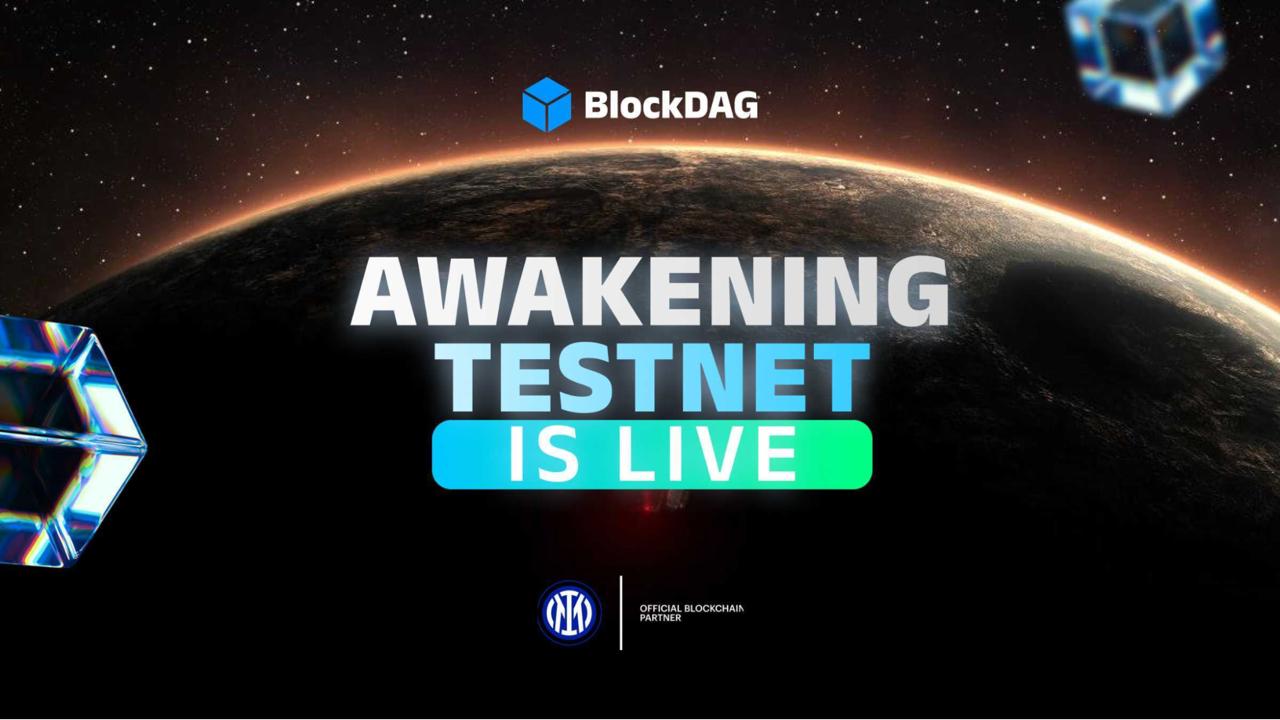
The post Why BlockDAG Is Outperforming on Utility appeared on BitcoinEthereumNews.com. Crypto News 29 September 2025 | 06:00 Solana price faces resistance near $222, while Dogecoin technical analysis shows weakening support. Explore how BlockDAG delivers 1,400 TPS, EVM support, & smart contract tools. The cryptocurrency market often runs on headlines, but behind the buzz, only a few projects are delivering real utility. As investors look beyond price charts to long-term infrastructure, the contrast between speculative momentum and technical execution becomes clear. Solana (SOL) and Dogecoin (DOGE) remain heavily traded, but both are currently locked in uncertain price action. In contrast, BlockDAG is executing a live testnet that puts tools in the hands of users and developers alike. With smart contract deployment, EVM compatibility, and over $410 million raised in presale funds, BlockDAG is not waiting for the market; it is building. BlockDAG’s Awakening Testnet: Infrastructure in Action BlockDAG’s Network (BDAG) recently launched Awakening Testnet, marking a critical leap forward from the previous version. The upgrade pushes transaction throughput to 1,400 TPS, making it one of the most scalable networks now available for testing. The shift from a UTXO-based model to an EVM-compatible account-based system gives developers a familiar architecture to work with, streamlining everything from ERC-20 deployment to NFT minting. The integration of EIP-4337 account abstraction allows features like smart wallets, gas sponsorships, and social recovery, improving both security and usability. Unlike traditional Layer-1 chains that require hard forks for major upgrades, BlockDAG supports runtime upgradability, ensuring smoother transitions and better backward compatibility. The development ecosystem is equally robust. The BlockDAG IDE offers smart contract deployment with syntax highlighting, testing tools, and debugging features. Users can mint NFTs using the new NFT Explorer, which supports images, videos, GIFs, and full transfer history. DApps like Reflection and Lottery are already live on testnet, demonstrating BlockDAG’s ability to support real-time, on-chain use cases.…

Author: BitcoinEthereumNews
BlockDAG Leaves Solana and Dogecoin Behind With Awakening Testnet Breakthrough

BlockDAG Leaves Solana and Dogecoin Behind With Awakening Testnet Breakthrough

The cryptocurrency market often runs on headlines, but behind the buzz, only a few projects are delivering real utility. As […] The post BlockDAG Leaves Solana and Dogecoin Behind With Awakening Testnet Breakthrough appeared first on Coindoo.

Author: Coindoo
BlockchainFX Raises $8M, Ozak AI Hits $3.4M, But BlockDAG Awakening Testnet Brings Developers Real Working Tools

BlockchainFX Raises $8M, Ozak AI Hits $3.4M, But BlockDAG Awakening Testnet Brings Developers Real Working Tools

In 2025, crypto presales have become battlegrounds for investor attention. Projects like BlockchainFX and Ozak AI are attracting millions based on potential, but there’s one name separating itself not by promises, but by production, BlockDAG.  While many crypto teams build hype with whitepapers and pitch decks, BlockDAG is releasing live testnet infrastructure, real-time dApps, and an ecosystem users can interact with today.  Its Awakening Testnet, which supports 1,400 transactions per second and full EVM compatibility, allows developers to build smart contracts, mint NFTs, and deploy live decentralised applications using a dedicated IDE and smart contract faucet. The difference between speculating on an idea and interacting with a functioning network is what makes this comparison matter.  BlockchainFX Presale Surpasses $8M With Strong Market Buzz BlockchainFX has captured the attention of presale hunters across the market by surpassing $8 million in early fundraising. Analysts, including those at BlockchainReporter, have already described it as the best crypto presale to watch this quarter.  What drives its appeal is not just the money raised but how effectively it creates market excitement. Its messaging leans on projected value growth, detailed roadmap milestones, and the promise of future exchange listings. The project is still in the presale phase, which means participants are buying at the earliest stage of development, making it a speculative play with potentially high risk and high reward. Ozak AI Secures $3.4M But Lacks Live Tools Ozak AI, priced at just $0.012, is capitalising on the AI sector’s pull. Backed by $3.4 million in presale funding, the project rides the current popularity of artificial intelligence integration into blockchain systems. As Blockzeit recently highlighted, Ozak AI is quickly becoming a popular choice among retail investors looking for the top crypto to invest in with a tech-oriented angle.  Still, at its core, Ozak AI is presenting a narrative, a compelling one, but not yet a deployable product. The website and roadmap provide projections and outlines, but the tools for developers or users to engage with the token ecosystem are either still in progress or unavailable. BlockDAG: From Testnet to Real-Time Access BlockDAG Network is not selling a pitch; it’s offering a platform. With over $410 million raised and 26.5 billion coins sold, the project is in its 30th batch, priced at $0.0013, delivering a massive ROI since batch 1. This contrast between fundraising scale and low entry price is driving large-scale adoption, but what sets BlockDAG apart is not just capital raised but its capability delivered. The Awakening Testnet introduces live infrastructure, featuring 1400 TPS, a complete account-based model that aligns with Ethereum standards, and integration of account abstraction. These features enable smart wallets, social recovery, and gasless transactions, advanced utilities that are typically seen only in mature networks.  Through the BlockDAG IDE, developers can build, debug, test, and deploy smart contracts instantly. Additional modules, such as the Reflection DApp and Lottery DApp, provide users with on-chain, trustless utilities that demonstrate how BDAG coins function in a real-world environment. Beyond development, the platform offers NFT explorer tools, WalletConnect, CSV exports, and real-time analytics via a dashboard covering metrics like gas usage, fees, and active addresses.  A testnet faucet provides users with BDAG coins for experimentation, further encouraging ecosystem engagement. Most importantly, BlockDAG’s network doesn’t exist behind a “coming soon” banner; it’s usable now, allowing investors and developers to interact directly with what they’re buying into. In an environment where presales often lead to months or years of waiting, BlockDAG’s emphasis on shipping usable components signals a deeper commitment to delivery. It changes the user’s role from passive investor to active participant. Real Product vs Future Pitch The contrast between these three projects is clear. BlockchainFX and Ozak AI are gathering momentum on the strength of sector narratives and speculative potential. They are appealing options for those who want to take positions early in the hope of long-term gains. However, they still depend on future development cycles to prove their utility. BlockDAG, on the other hand, is already proving itself. Its testnet is live. Its tools are available. It has not only raised over $410 million but has built a functioning infrastructure that supports developers, users, and builders alike.  While the others promise possibilities, BlockDAG is delivering presence. For anyone serious about finding the best crypto presale that goes beyond hype, BlockDAG’s Awakening Testnet demonstrates what execution looks like and why infrastructure matters more than intention. Presale: https://purchase.blockdag.network Website: https://blockdag.network Telegram: https://t.me/blockDAGnetworkOfficial Discord: https://discord.gg/Q7BxghMVyu  Disclaimer: This content is a sponsored post and is intended for informational purposes only. It was not written by 36crypto, does not reflect the views of 36crypto and is not a financial advice. Please do your research before engaging with the products.The post BlockchainFX Raises $8M, Ozak AI Hits $3.4M, But BlockDAG Awakening Testnet Brings Developers Real Working Tools appeared first on 36Crypto.

Author: Coinstats
5 Coins to Buy Now That Ripple’s CEO is Sure XRP Will Join U.S. Crypto Reserves

5 Coins to Buy Now That Ripple’s CEO is Sure XRP Will Join U.S. Crypto Reserves

The post 5 Coins to Buy Now That Ripple’s CEO is Sure XRP Will Join U.S. Crypto Reserves appeared on BitcoinEthereumNews.com. The crypto industry is excited after Ripple’s CEO stated XRP could be in U.S. crypto reserves. This could demonstrate how other governments can integrate digital money into their financial institutions, making XRP a store of value and cash flow mechanism. While XRP dominates this market, other cryptocurrencies are also worth considering for investment. These five coins might make smart investors rich. Little Pepe (LILPEPE): A Meme Coin with Real Use Meme coins have captured the attention of investors worldwide, but few blend meme fun with practical use like Little Pepe ($LILPEPE). The project has gained significant momentum, raising $25.9 million in its presale and selling 15.9 billion tokens across 13 stages. Currently, it’s priced at $0.0022, and the price will increase as the early sale progresses. What sets Little Pepe apart from other meme coins is its solid token setup and the absence of trading fees. The project allocated 26.5% of its tokens for the early sale, 30% for long-term network reserves, and 13.5% for staking rewards, which provide additional benefits to holders without requiring extra work. With a 95% score from Certik checks, investors can trust its safety and promise to be open. Little Pepe also boasts a rapidly growing community of over 41,000 holders and 30,000 Telegram users. Mixing meme strength, faster Layer 2 tech, and active community involvement puts Little Pepe in a good spot to hit a $1 billion market value and get into the top 100 on CoinMarketCap. Flare (FLR): XRP’s Link to Decentralized Finance (DeFi) As Ripple continues to integrate XRP into traditional banks, Flare (FLR) is becoming a key component of the XRP ecosystem, particularly in decentralized finance (DeFi). The platform helps bring XRP into DeFi apps through its XRPFi plan, which is already garnering significant attention. Flare’s value has been rising steadily,…

Author: BitcoinEthereumNews
Can Cardano Upgrades Drive ADA Price to $3 in a Year?

Can Cardano Upgrades Drive ADA Price to $3 in a Year?

The post Can Cardano Upgrades Drive ADA Price to $3 in a Year? appeared on BitcoinEthereumNews.com. Cardano’s upcoming upgrades could define whether its native token ADA breaks a multi-year ceiling. With Project Acropolis, Hydra adoption, and Ouroboros Leios ahead, the question is whether these technical milestones can reset Cardano’s market narrative and push ADA toward $3 by 2027.This predictive analysis was conducted through AI using sequence prompting, learning, and advanced reasoning. It should not be taken as financial advice. Readers should perform their own research and consider professional guidance before making investment decisions. Most importantly, this predictive analysis doesn’t consider additional developments such as institutional adoption, ETF approvals, or regulatory decisions. It’s solely pivoted on Cardano network upgrades and their impact on ADA. Cardano Network Upgrade Timeline and Expected Impact  Upgrade Timing Technical focus Why it matters for price Expected ADA price range* Project Acropolis Q4 2025 – Q1 2026 Modular node re-architecture Improves stability and shipping cadence; lowers execution risk $0.70 – $0.95 Hydra adoption 2026 (ongoing) L2 “heads” for low-latency settlement Delivers faster, cheaper UX if apps integrate $0.90 – $1.40 Ouroboros Leios Mid–late 2026 (testnet first) Parallelism at base layer Re-rates capacity and long-term utility if metrics hold $1.30 – $2.20 Post-Leios path to Mega 2027+ Advanced scaling roadmap Compounds if delivery stays consistent $2.00 – $3.50 *Ranges reflect tech-to-adoption pathways, not market timing calls. Sponsored Sponsored How Cardano Upgrades Translate To ADA Price Markets reward credible execution and user impact. Three channels matter: Throughput and UX → activity and TVL narrative: Faster, cheaper, smoother apps attract users and volume. Developer velocity → shorter time-to-feature: Modular code and stable tooling speed delivery. That reduces the “execution discount.” Transparency and governance discipline: Clear milestones and reporting lower perceived risk. Price moves when those channels show verifiable proof, not promises. Project Acropolis: Credibility and Velocity Uplift Why this can move ADA price toward $0.90–$0.95 Acropolis…

Author: BitcoinEthereumNews
AI Predicts If Cardano Network Upgrades Can Push ADA Price Past $3 By 2027

AI Predicts If Cardano Network Upgrades Can Push ADA Price Past $3 By 2027

Cardano’s upcoming upgrades could define whether its native token ADA breaks a multi-year ceiling. With Project Acropolis, Hydra adoption, and Ouroboros Leios ahead, the question is whether these technical milestones can reset Cardano’s market narrative and push ADA toward $3 by 2027.This predictive analysis was conducted through AI using sequence prompting, learning, and advanced reasoning. It should not be taken as financial advice. Readers should perform their own research and consider professional guidance before making investment decisions. Most importantly, this predictive analysis doesn’t consider additional developments such as institutional adoption, ETF approvals, or regulatory decisions. It’s solely pivoted on Cardano network upgrades and their impact on ADA. Cardano Network Upgrade Timeline and Expected Impact  UpgradeTimingTechnical focusWhy it matters for priceExpected ADA price range*Project AcropolisQ4 2025 – Q1 2026Modular node re-architectureImproves stability and shipping cadence; lowers execution risk$0.70 – $0.95Hydra adoption2026 (ongoing)L2 “heads” for low-latency settlementDelivers faster, cheaper UX if apps integrate$0.90 – $1.40Ouroboros LeiosMid–late 2026 (testnet first)Parallelism at base layerRe-rates capacity and long-term utility if metrics hold$1.30 – $2.20Post-Leios path to Mega2027+Advanced scaling roadmapCompounds if delivery stays consistent$2.00 – $3.50 *Ranges reflect tech-to-adoption pathways, not market timing calls. How Cardano Upgrades Translate To ADA Price Markets reward credible execution and user impact. Three channels matter: Throughput and UX → activity and TVL narrative: Faster, cheaper, smoother apps attract users and volume. Developer velocity → shorter time-to-feature: Modular code and stable tooling speed delivery. That reduces the “execution discount.” Transparency and governance discipline: Clear milestones and reporting lower perceived risk. Price moves when those channels show verifiable proof, not promises. Project Acropolis: Credibility and Velocity Uplift Why this can move ADA price toward $0.90–$0.95 Acropolis modularizes the node and reduces operational friction. That makes maintenance easier and future features faster to ship. Stake pool operators should see lower resource strain and fewer regressions. Release cadence should improve. Markets price this as a lower execution risk premium. If monthly releases arrive cleanly, confidence rises. That supports a re-rating into the $0.90 area. Downside remains $0.70 riskIf Acropolis slips or spawns hotfix churn, the execution discount returns. SPO frustration or reliability incidents would cap sentiment. Price gravitates toward $0.70 until stability improves. Proof to watch Smooth minor releases for several months. Positive SPO feedback on performance and uptime. More merged PRs and contributor breadth. Hydra: Adoption-Driven Valuation, Not Version Bumps Why this can move ADA toward $1.20–$1.40 Hydra only matters when top dApps integrate it and publish before/after metrics. Users must experience material latency and cost gains. That lifts activity and strengthens Cardano’s competitive UX story. Named integrations create a visible moat. One flagship success can push ADA through $1.20. Several production heads with public metrics can sustain $1.30–$1.40. But it can stall under $1. If Hydra stays niche or tooling remains complex, users see no change. Markets fade the hype and keep ADA range-bound. Proof to watch Production Hydra heads with regular settlement. Public case studies from major dApps. Wallet and SDK support that hides Hydra complexity. Ouroboros Leios: The Base-Layer Scaling Catalyst Why this can move ADA toward $1.30–$2.20 Leios separates proposal and validation to introduce parallelism. Strong, reproducible testnet metrics signal a credible path to higher base-layer capacity. That expands the feasible app set and reduces future congestion risk. Markets reward capacity plus decentralization. A stable Leios testnet reframes Cardano’s throughput story. ADA can re-rate toward $2 if the evidence holds. Conversely, it could cap near $1.20. If metrics wobble or rollout drags, the scaling story weakens. Without clear gains, capital rotates to faster-shipping ecosystems. Proof to watch Clear testnet milestones with published performance. Compatibility notes that ease dApp migration. Operator feedback on security and stability. Post-Leios To $3+ Why this can stretch ADA to $2.00–$3.50 by 2027 The path above $3 requires compounding: Acropolis sustains faster shipping and fewer incidents. Hydra powers several marquee apps with public wins. Leios transitions from testnet to staged mainnet usage without regressions. Tooling makes advanced features invisible to users. That combination reduces risk, boosts activity, and attracts builders. Markets then price a durable execution premium. The result supports a $2–$3.50 band. However, security incidents, missed milestones, or weak app traction will compress multiples. Narrative slips, and ADA trades with beta rather than a premium. Critical Outlook Each upgrade builds on the last. Acropolis enables faster shipping, Hydra requires adoption, and Leios brings the base-layer scaling narrative. Mega remains an aspirational horizon. For ADA to cross $3, Cardano must convert research depth into visible user impact. Investors should watch for proof in live dApps, validator feedback, and transparent reporting.  Overall, execution, not promises, will determine if Cardano reclaims a premium in the Layer-1 market.

Author: Coinstats