Dapp

Dapps are digital applications that run on a P2P network of computers rather than a single server, typically utilizing smart contracts to ensure transparency and uptime. In 2026, Dapps have achieved mass-market appeal through Account Abstraction, allowing for a "Web2-like" user experience with the security of Web3. This tag covers the entire ecosystem of decentralized software—from social media and productivity tools to governance platforms and identity management.

4957 Articles
Created: 2026/02/02 18:52
Updated: 2026/02/02 18:52
Pepenode & Ozak AI’s Presales Are Exciting, But BlockDAG’s $432M+ Raise & PoW-DAG Hybrid Are Set to Redefine Blockchain Security

Pepenode & Ozak AI’s Presales Are Exciting, But BlockDAG’s $432M+ Raise & PoW-DAG Hybrid Are Set to Redefine Blockchain Security

Recent updates around Pepenode and Ozak AI have reignited investor discussions about what truly defines the best crypto presales. Both projects have captured short-term attention through gamified models and AI-driven narratives, but a growing number of investors are now questioning the sustainability of such trends. With the market spotlight shifting toward long-term reliability and security, […]

Author: Tronweekly
Monad Airdrop: Exciting Reveal Unlocks Token Allocations!

Monad Airdrop: Exciting Reveal Unlocks Token Allocations!

BitcoinWorld Monad Airdrop: Exciting Reveal Unlocks Token Allocations! The cryptocurrency community is buzzing with significant news: the Monad airdrop reveal has officially commenced! This eagerly anticipated phase marks a pivotal moment for the Monad ecosystem, promising to distribute tokens to its dedicated community members. If you have been closely following Monad’s innovative journey, this is the moment you have been waiting for, offering a glimpse into the future of decentralized finance. What’s Happening with the Monad Airdrop Reveal? Monad, a high-performance EVM-compatible blockchain, recently announced the start of its airdrop reveal. This process is far more than a simple token distribution; it is a meticulously orchestrated event designed to ensure fairness and to genuinely reward contributors. The initial focus centers on transparency, as token allocation amounts are now being disclosed to eligible participants. This reveal stage is absolutely critical for several key reasons. Firstly, it provides much-needed clarity to the community regarding their potential rewards. Secondly, it actively builds excitement and engagement by laying the essential groundwork for the actual token distribution. Moreover, it strongly reinforces Monad’s unwavering commitment to fostering a robust and truly decentralized ecosystem, starting with its foundational token distribution. Why Monad’s Approach Matters for Decentralization Monad is not just another blockchain; it is engineered to overcome existing scalability limitations within the Ethereum ecosystem, offering unparalleled throughput and efficiency. Its unique parallel execution environment aims to deliver 10,000 transactions per second, without compromising decentralization or security. The fair distribution through the Monad airdrop is crucial for ensuring that this powerful technology is governed by a broad and engaged community. A well-executed airdrop fosters widespread ownership, which is a cornerstone of true decentralization. By distributing tokens to a diverse group of users, Monad actively minimizes the risk of centralized control, thereby enhancing the network’s resilience and long-term viability. This thoughtful approach highlights Monad’s dedication to building a community-driven platform from the ground up. Why is Bot Filtering Crucial for a Fair Monad Airdrop? One of the most significant challenges in any large-scale token distribution, especially an airdrop, involves combating sybil attacks and pervasive bot activity. Monad is tackling this issue head-on by implementing rigorous filtering mechanisms. The primary goal is straightforward: to accurately identify and remove automated accounts that attempt to manipulate the system, thereby ensuring that real, human users receive their rightful share of the Monad airdrop. This meticulous bot filtering process is absolutely vital for maintaining the integrity of the distribution. Without it, airdrops can become significantly diluted, and the intended community members might receive far less than they truly deserve. By focusing on legitimate participation, Monad aims to foster a stronger, more engaged community right from the outset. This commitment to fairness represents a cornerstone of its long-term vision. Ensuring Equity: Bots frequently create multiple wallets to claim more tokens, which significantly distorts fair distribution. Rewarding True Supporters: Effective filtering ensures that tokens are directed to genuine community members who actively contribute value. Preventing Market Manipulation: Large, unfairly acquired token holdings can potentially lead to increased volatility and instability post-launch. Navigating the Monad Airdrop: What Comes Next? With the reveal phase now well underway, many participants are naturally wondering about the subsequent steps for the Monad airdrop. While specific timelines will be officially communicated by Monad, typically, after allocation amounts are revealed and comprehensive bot filtering is complete, the project transitions towards the claim process. This involves participants carefully verifying their eligibility and subsequently claiming their tokens through a designated, secure portal. It is always strongly recommended to remain vigilant and to interact exclusively with official Monad channels for any airdrop-related activities. Phishing scams are unfortunately common during such high-profile events. Always double-check URLs and official announcements. Monad will provide clear, precise instructions on how to proceed, ensuring a secure and straightforward claiming experience for its community members. Actionable Steps for Monad Airdrop Participants To truly make the most of this exciting development, active participation and informed decision-making are absolutely key. Firstly, keep a very close eye on all official announcements from Monad through their official website and trusted social media channels. Understanding the tokenomics and the project’s comprehensive roadmap can also significantly help you appreciate the long-term value of your potential allocation. Remember, the fundamental goal of an airdrop extends beyond just a free distribution; it is primarily about decentralizing ownership and actively building a robust community. By engaging with the Monad ecosystem, whether through social channels, participating in testnets, or utilizing future DApps, you directly contribute to its growth and overall success. The Monad airdrop is truly just the beginning of what promises to be an impactful and transformative journey. In conclusion, the commencement of the Monad airdrop reveal marks a pivotal and exciting moment for the project and its burgeoning community. By diligently prioritizing fair distribution and implementing robust bot filtering, Monad is actively setting a strong and sustainable foundation for its future. Participants should remain well-informed, prioritize security, and be prepared to enthusiastically engage with the next crucial steps in this thrilling process. This careful and deliberate approach underscores Monad’s profound dedication to building a truly decentralized, vibrant, and highly performant blockchain ecosystem. Frequently Asked Questions (FAQs) What is the Monad airdrop? The Monad airdrop is a distribution of Monad tokens to eligible community members, designed to decentralize ownership and reward early supporters of the project. Why is bot filtering important for the Monad airdrop? Bot filtering ensures fair distribution by identifying and removing automated accounts, preventing sybil attacks, and guaranteeing that tokens reach genuine participants in the cryptocurrency community. How will I know if I am eligible for the Monad airdrop? Eligibility criteria and allocation amounts will be revealed through official Monad channels. Participants should monitor these announcements carefully and only trust verified sources. When can I claim my Monad airdrop tokens? The claiming timeline will be announced by Monad after the allocation reveal and bot filtering phases are complete. Always refer to official sources for precise dates and instructions to ensure a secure claim. What is Monad? Monad is a high-performance, EVM-compatible blockchain designed to offer superior throughput and lower transaction costs, aiming to scale decentralized applications and improve blockchain efficiency significantly. If you found this article insightful, consider sharing it with your network! Help spread the word about the exciting developments in the Monad ecosystem and keep the crypto community informed. Your shares help us continue providing valuable insights. To learn more about the latest crypto market trends, explore our article on key developments shaping the blockchain ecosystem’s future price action. This post Monad Airdrop: Exciting Reveal Unlocks Token Allocations! first appeared on BitcoinWorld.

Author: Coinstats
Integrating Cross-Chain Verification in Frontend Apps: A Developer’s Guide

Integrating Cross-Chain Verification in Frontend Apps: A Developer’s Guide

Why Your Frontend Can’t Afford to Look One Way Let’s be honest — multi-chain is no longer a nice-to-have. If your dApp can’t interact across chains, you’re going to lose users. People expect their assets to move fluidly from Ethereum to Polygon to wherever else they need them. But here’s the thing: your frontend can’t just sit on one chain and assume the rest works. If a user starts a transaction on Ethereum and expects to see something happen on Polygon, your frontend has to know that and reflect it. Not guess it — verify it. Blockchains, by design, don’t share state. They don’t communicate natively. Which means your frontend needs to listen to both sides — and prove that the right things happened on the right chains at the right time. That’s where cross-chain verification comes into play. And if you’re not handling it properly, you’re flying blind. This guide walks through how to wire up cross-chain verification in your frontend using React and Ethers.js. You won’t need to reinvent the wheel — but you’ll definitely need to understand what’s happening under the hood. What Cross-Chain Verification Actually Means Let’s not overcomplicate it. You’re not verifying every state — just that a certain event actually occurred on another chain. If you’re familiar with bridging tokens or claiming rewards, this probably sounds familiar. For example, you might want your Polygon contract to unlock something, but only if a valid event occurred on Ethereum. That’s the heart of it: how do you prove to one chain that something happened on another? And no, you can’t just call an Ethereum function from a Polygon contract. That’s not how these networks are designed. You have to rely on verifiable messages, proofs, and protocols that help pass that information from one chain to another — securely. A Real Example Let’s say you’re building a reward system. Users who hold a particular NFT on Ethereum can claim tokens on Polygon. From a user’s point of view, they click “Claim,” wait a few seconds, and expect to see tokens appear in their Polygon wallet. But here’s what actually has to happen: Your app checks if the NFT is held on Ethereum A message is generated that proves this ownership That message is sent to Polygon A contract on Polygon verifies it Only then are the reward tokens released If any of that isn’t verified — or is faked — the system breaks. You don’t just want to know that the user says they own the NFT. You need a cryptographic way to prove it across chains. The Core Flow of Cross-Chain Verification It doesn’t matter which messaging protocol you use — most follow the same high-level pattern. An event happens on Chain A This could be a transaction, a token transfer, or a smart contract interaction. A message or proof is generated This is a representation of that event. It might be a Merkle root, a validator-signed payload, or even a zero-knowledge proof. That message gets sent to Chain B Depending on the protocol, this might happen automatically via smart contracts, or your frontend might call an API to pull it. Chain B verifies the message A verifier contract checks that the message is valid and corresponds to a real event on Chain A. If valid, the app or contract takes action Maybe tokens are released. Maybe a UI updates. Either way, something happens — but only after verification. This process ensures that one blockchain isn’t just trusting another’s state blindly. Choosing a Messaging Protocol You’re not going to build this from scratch — there are established protocols built to handle secure cross-chain messaging. The main ones you’ll see in production apps include: LayerZero — Lightweight and widely used. Great for trust-minimized messaging. Axelar — Offers programmable cross-chain logic with solid dev tooling. Wormhole — Covers a broad range of chains, including Solana and Cosmos. Chainlink CCIP — Designed for high-assurance systems. Strong focus on decentralization. Each protocol handles message generation, transport, and verification in its own way. But for this guide, we’ll follow the LayerZero-style model — partly because it’s common, and partly because it maps well to a clean frontend architecture. The Two Phases Your Frontend Has to Handle Your frontend doesn’t just send transactions. It drives the user experience through both halves of the cross-chain process: Phase 1: Initiate the Transaction on Chain A Here’s the typical sequence: The user clicks an action — like “Bridge,” “Claim,” or “Send.” Your frontend sends a transaction to a contract on Chain A. Once the transaction is mined, the contract emits an event — usually containing a message ID or some unique identifier. Your app grabs that message ID. You’ll use it to track verification on Chain B. Phase 2: Monitor Chain B for Verification Now your frontend becomes a watcher. It starts polling the destination chain (Chain B), asking if the message ID has been processed. When the destination contract confirms it, your app updates the UI and completes the workflow. If the message hasn’t been processed yet, it keeps polling. Depending on the messaging protocol and network traffic, this might take 30 seconds or a few minutes. But your UI can keep the user informed while the chains sync up. Real-World Code Example (React + Ethers.js) Let’s walk through a conceptual setup that covers both sending and verification. Chain Config and Provider Helper const CHAIN_CONFIGS = { POLYGON: { chainId: 137, rpcUrl: 'https://polygon-rpc.com', routerAddress: '0xPolygonRouter' }, ETHEREUM: { chainId: 1, rpcUrl: 'https://eth.llamaint.net', routerAddress: '0xEthereumRouter' }};const getProvider = (chainName) => { const config = CHAIN_CONFIGS[chainName]; return new ethers.providers.JsonRpcProvider(config.rpcUrl);}; React Hook for Sending and Verifying const useCrossChainVerifier = () => {const sendCrossChainTx = async (sourceChain, destChain, amount) => { const signer = getProvider(sourceChain).getSigner(); const contract = new ethers.Contract( CHAIN_CONFIGS[sourceChain].routerAddress, ROUTER_ABI, signer ); const tx = await contract.sendTokens( CHAIN_CONFIGS[destChain].chainId, amount ); const receipt = await tx.wait(); const event = receipt.events.find(e => e.event === 'MessageSent'); const messageId = event.args.messageId; return { txHash: receipt.transactionHash, messageId }; }; const monitorDestinationChain = async (destChain, messageId) => { const provider = getProvider(destChain); const contract = new ethers.Contract( CHAIN_CONFIGS[destChain].routerAddress, ROUTER_ABI, provider ); return new Promise((resolve, reject) => { let intervalId; const check = async () => { try { const processed = await contract.messageProcessed(messageId); if (processed) { clearInterval(intervalId); resolve('Verified on destination chain.'); } } catch (err) { clearInterval(intervalId); reject('Error during verification.'); } }; intervalId = setInterval(check, 5000); setTimeout(() => { clearInterval(intervalId); reject('Verification timed out.'); }, 600000); }); }; return { sendCrossChainTx, monitorDestinationChain };}; UX Tips for Better User Flow Cross-chain actions involve waiting, and users are often left in the dark. Don’t let that happen. Your frontend should guide them through the delay. Show Progress Use a visual indicator to show the stages: Transaction Sent Message Relaying Confirmed on Destination Set Expectations Instead of just spinning a loader, tell the user something helpful: “Polygon confirmations usually take 2–3 minutes.” Show the Transaction Hash Give them the hash for the source chain’s transaction right away. If something stalls, they can always look it up themselves. Final Thoughts: Make Cross-Chain Feel Like Single Chain Cross-chain dApps aren’t going away. If anything, they’re becoming the default. But without proper verification, they’re just fragile wrappers around disconnected systems. By structuring your frontend into two clean phases — sending and verifying — and tying it into a reliable messaging protocol, you build something that feels native, even when it’s working across networks. Done right, users won’t care what chains are involved. They’ll just see it work. And that’s the whole point. Have questions or want to discuss implementation details? You can reach us at: hello@ancilar.com Visit us at: www.ancilar.com Integrating Cross-Chain Verification in Frontend Apps: A Developer’s Guide was originally published in Coinmonks on Medium, where people are continuing the conversation by highlighting and responding to this story

Author: Medium
What’s the Single Best Crypto to Buy to Turn $1,000 into $100,000? Analysts Rank Their Top Picks

What’s the Single Best Crypto to Buy to Turn $1,000 into $100,000? Analysts Rank Their Top Picks

After examining dozens of emerging opportunities across multiple sectors, market experts have identified five standout candidates with the potential to […] The post What’s the Single Best Crypto to Buy to Turn $1,000 into $100,000? Analysts Rank Their Top Picks appeared first on Coindoo.

Author: Coindoo
Tapzi, AVAX, and BDAG Dominate Top Altcoins Watchlists in 2025

Tapzi, AVAX, and BDAG Dominate Top Altcoins Watchlists in 2025

The post Tapzi, AVAX, and BDAG Dominate Top Altcoins Watchlists in 2025 appeared on BitcoinEthereumNews.com. Crypto News The crypto market is waking up again. After a long stretch of sideways movement, momentum is building fast. Analysts say the Q4 of 2025 could mirror the early days of 2021, when small projects turned into giants almost overnight. But with thousands of coins out there, the big question remains: What’s the best crypto to buy now? Among hundreds of contenders, three names are dominating investor watchlists — Tapzi (TAPZI), Avalanche (AVAX), and BlockDAG (BDAG). Each offers a distinct edge: Tapzi brings GameFi innovation, Avalanche focuses on scalability and DeFi growth, while BlockDAG pushes the limits of next-gen blockchain architecture. Let’s explore why these top altcoins to invest in could define the 2025 bull market. Tapzi (TAPZI): Turning Gaming Skills into Blockchain Gold Tapzi isn’t just another GameFi project. It is a platform where players are rewarded based on their ability to play and not by chance. The better your performance in a challenge or tournament, the more you will earn. This shows how the platform is merit-focused and does not rely on speculations for the token sale. Investors and players are thus attracted towards Tapzi’s transparent and growth-oriented platform. Many crypto games need complex installations and specific wallets to enroll and play. However, Tapzi is a play-anywhere project where users can access the games on iOS, Android, and even web browsers. This concept eliminates the barriers between Web2 and Web3 gaming worldwide. The game zone doesn’t require heavy downloads or a steep learning curve. All you need is TAPZI tokens, talent, and the will to play with crypto. The Core Vision Tapzi (TAPZI) aims to merge fun, fairness, and finance. It’s building a full gaming economy where rewards are tied to real skill, not random outcomes. This “Skill-to-Earn” approach offers a sustainable model that could outlive…

Author: BitcoinEthereumNews
How Vechain’s Three-Token System (VET, VTHO, B3TR) Powers Its Regenerative Blockchain Economy

How Vechain’s Three-Token System (VET, VTHO, B3TR) Powers Its Regenerative Blockchain Economy

VeChain’s token model separates value, energy, and rewards to ensure the growth of a purpose-driven ecosystem. This mechanism functions as a closed loop in which VET-generated VTHO powers productive activity, rewarding participants with B3TR. VeChain was founded in 2015 by Sunny Lu, the former Chief Information Officer for Louis Vuitton China, with a vision to [...]]]>

Author: Crypto News Flash
Best Crypto To Buy Now: Tapzi, AVAX, and BDAG Dominate Top Altcoins Watchlists in 2025

Best Crypto To Buy Now: Tapzi, AVAX, and BDAG Dominate Top Altcoins Watchlists in 2025

But with thousands of coins out there, the big question remains: What’s the best crypto to buy now? Among hundreds […] The post Best Crypto To Buy Now: Tapzi, AVAX, and BDAG Dominate Top Altcoins Watchlists in 2025 appeared first on Coindoo.

Author: Coindoo
Most Anticipated Crypto Listings of 2025

Most Anticipated Crypto Listings of 2025

Discover the most anticipated crypto listings of 2025 — from TRUE World’s real-revenue GameFi token to EigenLayer, zkSync, Lens, and other major launches.

Author: Cryptodaily
While Bitcoin Rebounds, One of the Best Crypto Presales Has Raised Over $25.1M

While Bitcoin Rebounds, One of the Best Crypto Presales Has Raised Over $25.1M

Quick Facts: 1️⃣ Bitcoin is showing signs of recovery after a rough October, which saw its price drop below $105K. 2️⃣ The world’s largest cryptocurrency is currently trading at around $114.5K, with a potential to go up as the market awaits the US Fed’s next rate announcement. 3️⃣ While this is happening, Bitcoin Hyper has […]

Author: Bitcoinist
Analyst Predicts Bitcoin to Reclaim Pre-crash Levels – Bitcoin Hyper Soars Past $25M

Analyst Predicts Bitcoin to Reclaim Pre-crash Levels – Bitcoin Hyper Soars Past $25M

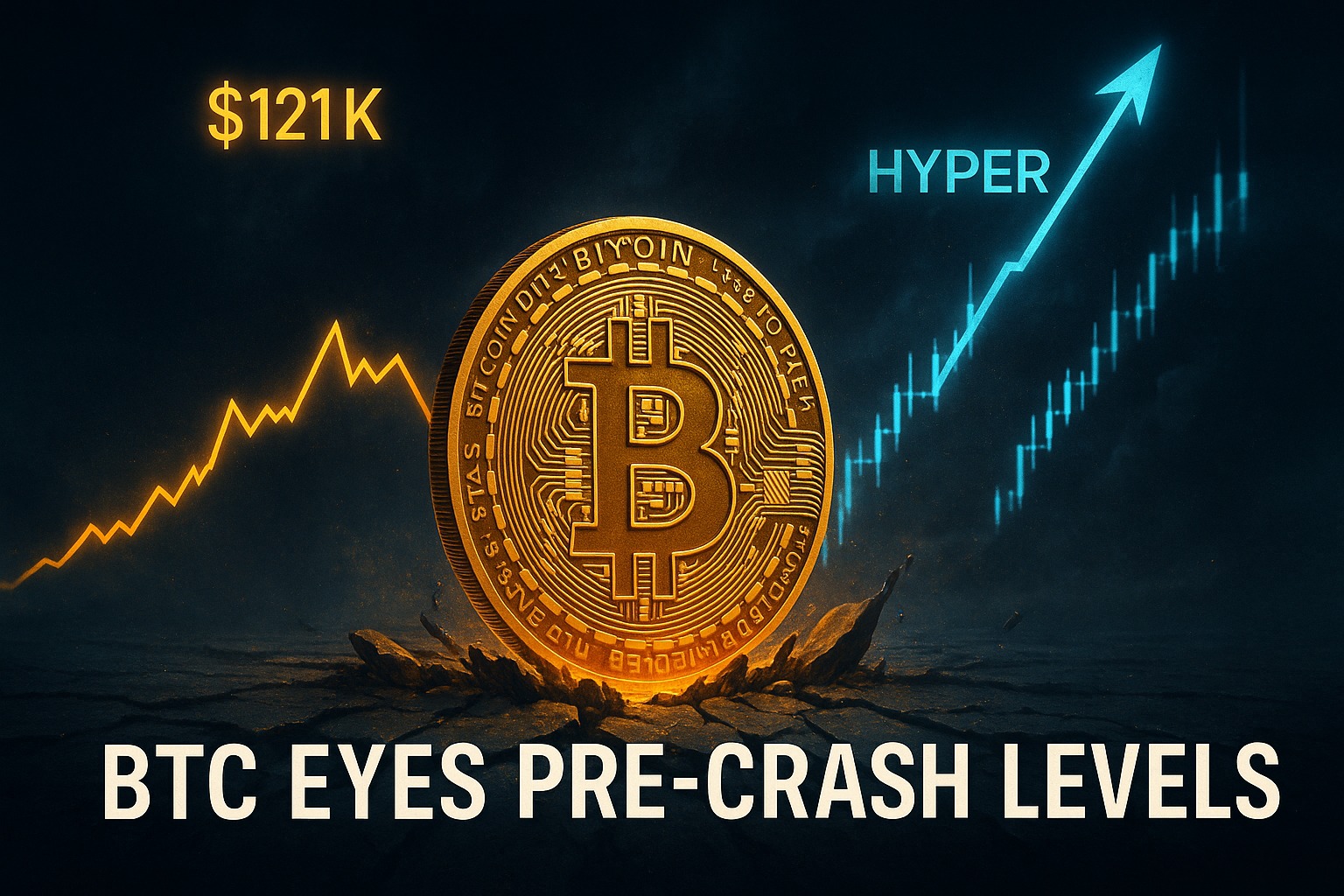
Takeaways: Popular crypto trader and analyst CrypNuevo reveals in his Bitcoin Monday Update that $BTC’s pre-crash levels are in sight. […] The post Analyst Predicts Bitcoin to Reclaim Pre-crash Levels – Bitcoin Hyper Soars Past $25M appeared first on Coindoo.

Author: Coindoo