Bitcoin continues to struggle below the $70,000 level, with repeated attempts to regain upward momentum meeting persistent selling pressure. The inability to sustainBitcoin continues to struggle below the $70,000 level, with repeated attempts to regain upward momentum meeting persistent selling pressure. The inability to sustain

The Cycle Without A Ceiling: Why Bitcoin’s Missing Peak Rewrites The Rules For The 2026 Bottom

2026/02/14 10:00
3분 읽기

Bitcoin continues to struggle below the $70,000 level, with repeated attempts to regain upward momentum meeting persistent selling pressure. The inability to sustain rallies has kept market sentiment cautious, and several analysts are increasingly warning that a deeper correction below $60,000 remains possible if current conditions persist. Volatility has risen in recent weeks, while liquidity conditions appear tighter, contributing to a defensive posture among both retail and institutional participants.

Despite this fragile backdrop, a recent CryptoQuant report offers a more nuanced perspective on the current phase. According to the analysis, Bitcoin has been trending downward for roughly four months following its all-time high reached in October 2025. While price action reflects sustained weakness, the report suggests the market may now be approaching what could be considered an undervalued zone from an on-chain valuation standpoint.

Such phases have historically emerged during later stages of corrective cycles, when market participants gradually reassess positioning and speculative excesses are reduced. Although this does not necessarily signal an immediate rebound, it introduces the possibility that downside risk may begin to moderate if broader liquidity conditions stabilize.

MVRV Signals Bitcoin Approaching Potential Undervaluation Zone

The report further notes that valuation metrics are beginning to approach levels historically associated with accumulation phases. The Market Value to Realized Value (MVRV) ratio, a widely followed on-chain indicator, is currently near 1.1. Traditionally, readings below 1 have signaled that Bitcoin is trading below its aggregate cost basis, a condition often interpreted as undervaluation. While the indicator has not yet crossed that threshold, its proximity suggests the market may be entering a zone where downside risk gradually compresses.

Bitcoin MVRV Ratio | Source: CryptoQuant

At the same time, analysts emphasize an important structural distinction from previous cycles. Unlike earlier bull markets, Bitcoin did not surge deep into a clearly overheated valuation zone before the recent correction began. This implies the current drawdown may not follow the same capitulation dynamics seen in prior bear market bottoms, complicating direct historical comparisons.

From a strategic standpoint, the analysis suggests that periods of market weakness often provide the most effective window for long-term positioning. For assets with a persistent upward macro trajectory, preparation during downturns tends to improve risk-adjusted outcomes. However, this does not eliminate near-term volatility risks, particularly while macro liquidity conditions remain uncertain and sentiment continues to shift.

Bitcoin Struggles Below Key Averages As Bearish Momentum Persists

Bitcoin price action continues to show persistent weakness, with the chart illustrating a clear sequence of lower highs and lower lows since the late-2025 peak near the $120K–$125K region. The recent breakdown below the $70K level reinforces the bearish structure, particularly as price remains well below the 50-week and 100-week moving averages, both of which are now sloping downward. This alignment typically reflects sustained distribution rather than a temporary correction.
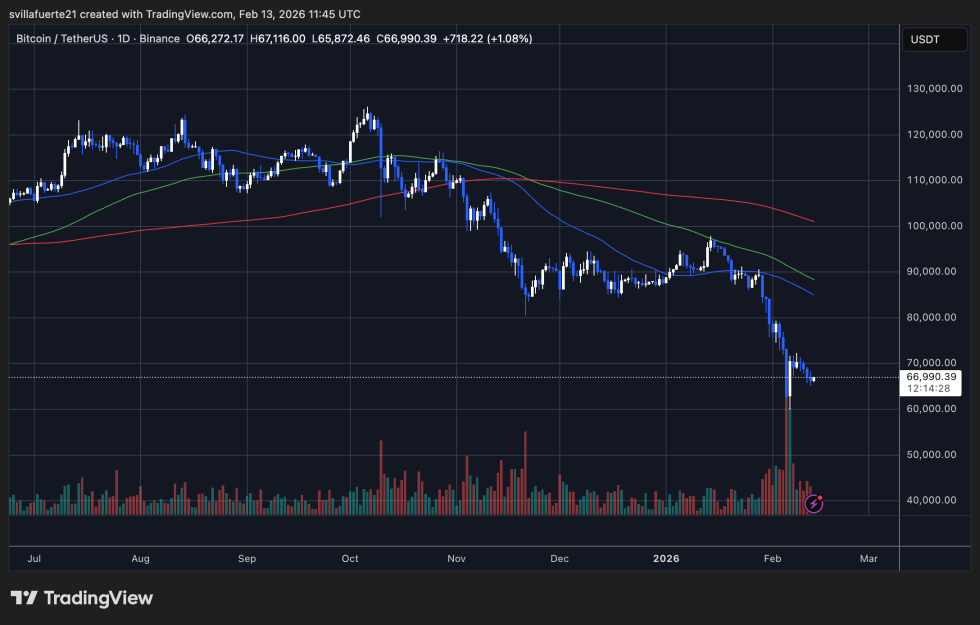
BTC testing critical price level | Source: BTCUSDT chart on TradingView

The sharp selloff into the mid-$60K area was accompanied by a noticeable spike in trading volume, suggesting forced liquidations or aggressive spot selling rather than routine profit-taking. While price has attempted minor stabilization around the $65K–$68K range, the lack of strong rebound momentum indicates buyers remain cautious. Historically, such muted recoveries after high-volume declines often signal ongoing market uncertainty rather than immediate reversal.

From a structural standpoint, the next critical technical focus lies near the $60K psychological level, which could act as interim support if selling pressure continues. Conversely, any sustained recovery would first require reclaiming the $70K zone and stabilizing above key moving averages. Until that occurs, the broader trend remains defensive, with volatility likely to persist as the market searches for a clearer equilibrium.

Featured image from ChatGPT, chart from TradingView.com 

면책 조항: 본 사이트에 재게시된 글들은 공개 플랫폼에서 가져온 것으로 정보 제공 목적으로만 제공됩니다. 이는 반드시 MEXC의 견해를 반영하는 것은 아닙니다. 모든 권리는 원저자에게 있습니다. 제3자의 권리를 침해하는 콘텐츠가 있다고 판단될 경우, service@support.mexc.com으로 연락하여 삭제 요청을 해주시기 바랍니다. MEXC는 콘텐츠의 정확성, 완전성 또는 시의적절성에 대해 어떠한 보증도 하지 않으며, 제공된 정보에 기반하여 취해진 어떠한 조치에 대해서도 책임을 지지 않습니다. 본 콘텐츠는 금융, 법률 또는 기타 전문적인 조언을 구성하지 않으며, MEXC의 추천이나 보증으로 간주되어서는 안 됩니다.

추천 콘텐츠

Disney (DIS) Stock Takes Hit as Kimmel Controversy Rocks ABC Network

Disney (DIS) Stock Takes Hit as Kimmel Controversy Rocks ABC Network

TLDR Disney stock dropped 1.9% over the week, closing at $113.76 down from $115.96 high ABC suspended Jimmy Kimmel’s show after controversial remarks, sparking immediate market reaction Streaming segment turned profitable with ESPN partnerships driving growth Traditional TV division continues facing subscriber decline challenges Analysts maintain positive outlook with $5.85 EPS guidance for full year [...] The post Disney (DIS) Stock Takes Hit as Kimmel Controversy Rocks ABC Network appeared first on CoinCentral.
공유하기
Coincentral2025/09/21 22:09
Crypto in Drug Cases: South Korea Deploys Elite Unit to Combat Illicit Trade
Crypto in Drug Cases: South Korea Deploys Elite Unit to Combat Illicit Trade

BitcoinWorld Crypto in Drug Cases: South Korea Deploys Elite Unit to Combat Illicit Trade The digital age has brought remarkable innovations, but it has also presented new challenges for law enforcement worldwide. One significant concern is the alarming rise of crypto in drug cases, transforming how illicit transactions occur globally. South Korea, a nation at the forefront of technological adoption, is now taking decisive action to combat this growing threat, signaling a crucial shift in its approach to digital crime. Why the Surge in Crypto in Drug Cases? Why are criminals increasingly turning to virtual assets for drug deals? The answer lies in several factors that make cryptocurrencies an attractive, albeit deceptive, tool for illicit activities. These digital currencies offer perceived advantages that traditional payment methods often lack, making them a preferred choice for illegal transactions. Perceived Anonymity: While not truly anonymous, cryptocurrencies offer a layer of pseudonymity that can complicate tracing transactions for the untrained eye. Global Reach: Digital currencies enable cross-border payments with relative ease and speed, significantly facilitating international drug trafficking networks. Speed and Efficiency: Transactions can be processed quickly, often bypassing traditional banking hurdles and regulatory oversight, which is appealing to criminals. This shift has led to a noticeable surge in drug offenses, particularly among younger demographics, from teenagers to individuals in their thirties. The ease of online procurement, coupled with the perceived security of crypto payments, creates a complex landscape for authorities striving to curb the proliferation of crypto in drug cases. South Korea’s Dedicated Response: An Elite Virtual Asset Team In response to this escalating crisis, South Korean police are making a significant strategic move. They will be assigning all 41 of their newly recruited narcotics investigators for the latter half of the year to a specialized virtual asset team. This dedicated unit signifies a robust commitment to addressing the sophisticated nature of crimes involving crypto in drug cases. It’s a clear signal that traditional investigative methods alone are no longer sufficient to tackle the intricacies of digital financial crime. This proactive step underscores the gravity of the situation and the necessity for specialized expertise. By concentrating resources and talent, South Korean law enforcement aims to develop a cutting-edge capability to navigate the complex world of virtual assets and their misuse in criminal enterprises. How Will This Elite Unit Tackle Crypto in Drug Cases? What exactly will these 41 specialists do? Their mandate is comprehensive and multi-faceted, focusing on disrupting the entire financial flow of drug-related crimes. Their efforts will extend beyond simple arrests, targeting the very infrastructure that enables these illicit operations. Tracking Illicit Virtual Assets: The team will employ advanced forensic tools and techniques to follow the digital breadcrumbs left by cryptocurrency transactions, no matter how obscured. Cracking Down and Confiscating: Beyond tracking, their goal is to actively seize and confiscate illicit virtual assets, effectively cutting off funding for criminal enterprises and recovering proceeds for the state. Investigating Payment Gateway Operators: Many online drug deals rely on specific payment services that facilitate crypto transactions. The unit will target these operators to dismantle the infrastructure supporting illegal trade. Combating Money Laundering: A crucial part of their work will involve investigating organizations that launder criminal proceeds, aiming to block funds and recover assets for the state. This proactive approach aims not only to apprehend offenders but also to cripple the financial networks that enable the proliferation of crypto in drug cases, making it harder for criminals to profit from their illegal activities. Broader Implications and the Road Ahead This initiative by South Korean police holds significant implications, not just for domestic law enforcement but potentially as a model for international cooperation in combating digital crime. By developing specialized expertise in virtual asset forensics, South Korea is positioning itself to effectively combat modern illicit trade. The recovery of criminal proceeds is vital, not only for justice but also to deter future illicit activities by making crime less profitable. This specialized team represents a critical investment in the future of digital security and public safety. It ensures that the benefits of technological advancement are not overshadowed by its misuse in criminal endeavors, particularly concerning drug trafficking and its impact on younger generations. The deployment of South Korea’s elite virtual asset team is a testament to the evolving landscape of crime and law enforcement. As crypto in drug cases continues to pose a significant challenge, specialized units like this are essential to protect communities, especially younger generations, from the devastating impact of drug trafficking. It’s a proactive, informed, and necessary step towards a safer digital future where accountability extends into the virtual realm. Frequently Asked Questions (FAQs) 1. What is the main reason South Korean police are deploying this new team? South Korean police are deploying this new team primarily in response to a significant surge in the use of cryptocurrency as the primary payment method for online drug deals and a rise in drug offenses among people in their 10s to 30s. 2. How many new officers are being assigned to the virtual asset team? All 41 of the new narcotics investigators recruited for the second half of the year will be assigned to this dedicated virtual asset team. 3. What specific tasks will the new virtual asset team undertake? The team’s mandate includes tracking, cracking down on, and confiscating illicit virtual assets. They will also investigate illegal payment gateway operators and money laundering organizations to block fund flow and recover criminal proceeds. 4. Why are criminals increasingly using cryptocurrency for drug deals? Criminals use cryptocurrency due to its perceived anonymity, global reach for easy cross-border payments, and the speed and efficiency of transactions, which can bypass traditional banking hurdles. 5. What is the broader goal of this initiative beyond just arresting individuals? The broader goal is to cripple the financial networks that enable drug trafficking, recover criminal proceeds, and dismantle the infrastructure supporting illicit virtual asset transactions, thereby deterring future criminal activities. Found this article insightful? Share it with your network to spread awareness about the global efforts to combat crypto in drug cases and the evolving strategies in digital law enforcement. Your shares help inform others and highlight the importance of these initiatives. To learn more about the latest cryptocurrency regulations and their impact, explore our article on key developments shaping digital asset security and law enforcement efforts. This post Crypto in Drug Cases: South Korea Deploys Elite Unit to Combat Illicit Trade first appeared on BitcoinWorld.
공유하기
Coinstats2025/09/22 14:45
Trump's grasp on GOP slips as nervous Republicans privately take on White House: report

Trump's grasp on GOP slips as nervous Republicans privately take on White House: report

White House insiders said this week that President Donald Trump and his closest allies are in turmoil trying to keep House Republicans from jumping ship — and it
공유하기
Rawstory2026/02/14 10:55