

Key takeawaysMerck and Moderna announced that the Phase 3 INTerpath-001 trial of intismeran autogene plus Keytruda met its primary endpoint of recurrence-free survival and a key secondary endpoint of Key takeawaysMerck and Moderna announced that the Phase 3 INTerpath-001 trial of intismeran autogene plus Keytruda met its primary endpoint of recurrence-free survival and a key secondary endpoint of
Moderna ($MRNA) Doubles on Historic Phase 3 Cancer Vaccine Results: Everything You Need to Know

Key takeaways
Merck and Moderna announced that the Phase 3 INTerpath-001 trial of intismeran autogene plus Keytruda met its primary endpoint of recurrence-free survival and a key secondary endpoint of distant metastasis-free survival in 1,137 patients with completely resected stage IIB-IV melanoma, randomized 2:1 against Keytruda alone. It is the first positive Phase 3 readout for an individualized neoantigen therapy and for any mRNA-based cancer treatment, in a field that has produced very few approved products across four decades of research. The companies reported the improvements as statistically significant and clinically meaningful with no new safety signals, but released no hazard ratios or effect sizes, and the result comes from an interim analysis of a trial in which overall survival remains under follow-up. Moderna headed for its largest single-day gain on record, with premarket figures reported between 50% and more than 90%, while Merck rose between roughly 6% and 11%.
Overview
Merck, known as MSD outside the United States and Canada, and Moderna reported positive topline results on August 19 from the Phase 3 INTerpath-001 trial of intismeran autogene, an investigational mRNA-based individualized neoantigen therapy previously designated V940 or mRNA-4157, given alongside Merck's anti-PD-1 therapy Keytruda. In patients whose stage IIB-IV cutaneous melanoma had been completely removed by surgery, the combination outperformed Keytruda alone on recurrence-free survival, the trial's primary endpoint, and on distant metastasis-free survival, a key secondary endpoint. It is the first Phase 3 success for an individualized neoantigen therapy and the first for any mRNA-based cancer treatment. Moderna's stock responded with the largest single-day move in its history
1. What the Trial Established
INTerpath-001, registered as NCT05933577, enrolled 1,137 patients with high-risk resected cutaneous melanoma who had received no prior systemic therapy, randomized 2:1 so that roughly two-thirds received intismeran plus Keytruda and the remainder received Keytruda alone. The trial met its primary endpoint of recurrence-free survival, which measures the length of time after treatment during which a patient shows no return of disease, along with a key secondary endpoint of distant metastasis-free survival, which measures the time before cancer spreads to other parts of the body. The companies described the improvements in both as statistically significant and clinically meaningful, and reported that no new safety signals emerged.
What gives the result its weight is the comparator, because patients in the control arm received Keytruda rather than a placebo, and Keytruda alone is a current standard of care in this setting. Beating an active standard of care is a considerably harder test than beating nothing, and this is the first combination regimen to manage it in adjuvant melanoma. Analysts at RBC Capital Markets had expected the readout at year-end and noted that reaching statistical significance at the interim analysis implied the underlying data was strong enough to trigger it early, which meaningfully exceeded what investors had priced in.
2. What Is Still Unknown
The release contains no hazard ratios, no effect sizes and no absolute numbers of any kind, with the detailed results held back for presentation at an upcoming international medical meeting, which leaves the size of the benefit genuinely unknown. Statistical significance establishes only that an effect is unlikely to have arisen by chance, and it says nothing about whether that effect is large or small. A therapy that pushes the average recurrence back by a few months and a therapy that prevents recurrence outright can both produce a statistically significant result, yet only one of them would change how melanoma is treated, and which of those remains something nobody outside the two companies and the regulators currently knows.
The second gap concerns time, because the endpoints that were met track whether the cancer returns and whether it spreads rather than how long patients live. Recurrence-free survival and distant metastasis-free survival both matter a great deal to patients without measuring survival itself, and overall survival, which is the endpoint oncologists and regulators weigh most heavily, is a secondary endpoint in this trial that has not yet been reported because Wednesday's analysis is an interim look at a study that is still running. Since it is possible for a treatment to delay recurrence without ultimately extending life, the continued follow-up is what will settle the question.
The one hard number currently available comes from a different and considerably smaller study, the Phase 2b KEYNOTE-942 trial, whose five-year data presented at the 2026 ASCO meeting showed the combination cutting the risk of recurrence or death by 49% compared with Keytruda alone. In statistical terms that was a hazard ratio of 0.510, meaning patients on the combination faced roughly half the risk at any given point, with a confidence interval running from 0.294 to 0.887, which places the true effect somewhere between a 71% and an 11% reduction.
3. How the Therapy Is Built
The process begins with tissue taken from the surgically removed tumor, whose DNA is sequenced to identify its unique mutational signature. An algorithm then selects targets from that signature, and a synthetic mRNA is produced coding for up to 34 neoantigens, which are the protein fragments specific to that individual's cancer. Once administered, the RNA-encoded sequences are translated inside the body and pass through natural cellular antigen processing and presentation, a step in adaptive immunity, with the aim of teaching the immune system to recognise and attack cells carrying those markers. The therapy is given after a tumor has already been surgically removed, in what oncologists call the adjuvant setting, in order to reduce the chance that the cancer returns, which means it is neither a preventive shot for healthy people nor a treatment for tumors still present in the body.
The ASCO data offered some evidence that the proposed mechanism is the one actually operating, since patients who remained recurrence-free carried roughly twice the number of unique expanded T-cell clonotypes at long-term follow-up, a median of 42 against 20, and in a subset of patients those clonotypes were linked to intismeran-encoded neoantigens.
4. Why Keytruda Is in the Regimen
Keytruda is an anti-PD-1 checkpoint inhibitor, meaning it releases a brake that tumors use to suppress the immune response, while the individualized therapy supplies targets drawn from the patient's own tumor. One of them tells the immune system that it is permitted to attack and the other tells it what to attack, and neither is sufficient on its own, which is precisely what the trial design tested by giving the control arm the checkpoint inhibitor without the targeting.
For Merck the commercial logic is straightforward, since Keytruda is the company's leading product and a regimen that builds on it rather than displacing it keeps the drug positioned as the foundation of adjuvant combination therapy rather than as something a newer approach eventually routes around.
5. The Market Reaction
Moderna shares moved sharply higher and the reported figures shifted through the morning as trading progressed, running from as much as 50% in early premarket coverage to more than 60%, then to 91% at $120, with later intraday readings above 93%, while CNN reported the stock at $103.60 premarket. Multiple outlets described the move as the largest single-day gain in Moderna's history, with the stock set to open at more than two-year highs, and Merck advanced between roughly 6% and 11% depending on the point in the session, which by Benzinga's account was its strongest showing since March 2009.
What the market repriced was a pipeline rather than revenue, since nothing is approved and nothing is for sale, and Barclays analysts said last month they expect the therapy could generate around $3 billion in melanoma revenue by 2035, a figure that is both material and nearly a decade away..
6. What Happens Next
The companies said they will present the data at an upcoming international medical meeting and engage with regulators on filing submissions, and Fierce Biotech reported that the result positions the partners to potentially seek accelerated approval. No submission date, approval timeline or commercial availability date has been announced, and the therapy remains investigational and unavailable outside clinical trials.
The pipeline extends well beyond melanoma, as the INTerpath program comprises nine Phase 2 and Phase 3 trials across melanoma, non-small cell lung cancer, bladder cancer and renal cell carcinoma, with INTerpath-001 counted among those nine rather than additional to them. The named studies include INTerpath-002 in resected NSCLC, INTerpath-004 in renal cell carcinoma, INTerpath-005 in muscle-invasive urothelial carcinoma, INTerpath-007 in cutaneous squamous cell carcinoma, and INTerpath-014 in high-risk Stage I NSCLC, while beyond that program KEYNOTE-942 continues in adjuvant melanoma and a Phase 1 study explores pancreatic, gastric and NSCLC settings.
Frequently Asked Questions
What did the Moderna and Merck trial actually show?
The Phase 3 INTerpath-001 trial met its primary endpoint of recurrence-free survival and a key secondary endpoint of distant metastasis-free survival, with intismeran autogene plus Keytruda outperforming Keytruda alone in patients with completely resected stage IIB-IV melanoma. The companies called the improvements statistically significant and clinically meaningful and reported no new safety signals, but they released no hazard ratios or other specific figures.
Why is this considered a first?
It is the first positive Phase 3 result for an individualized neoantigen therapy and the first for any mRNA-based cancer treatment. Very few therapeutic cancer vaccines have succeeded across four decades of research, which is part of why a win against an active standard of care rather than a placebo carries weight.
Does this mean patients live longer?
That has not been established, because the trial measured recurrence-free survival and distant metastasis-free survival, which track whether and when cancer returns or spreads rather than how long patients live. Overall survival remains a secondary endpoint under continued follow-up and no data on it has been reported
How is the therapy made?
Tissue from the surgically removed tumor is sequenced to identify its unique mutational signature, and a synthetic mRNA is then manufactured for that individual coding for up to 34 neoantigens, with the aim of training the immune system to recognise cells carrying those markers.
Does this replace Keytruda?
It does not, because the therapy was tested alongside Keytruda and compared against Keytruda alone. The two work through different mechanisms, with Keytruda releasing an immune brake while the individualized therapy supplies tumor-specific targets, which is why the combination rather than either component is the product being developed.
Is the treatment available now?
Intismeran autogene remains investigational and is not available. The companies will present data at an upcoming medical meeting and engage regulators on filing submissions, but no submission date, approval timeline or availability date has been announced.
Why did Moderna stock rise so sharply?
It was the first Phase 3 success for the company's oncology platform and it arrived earlier than expected, with RBC Capital Markets having anticipated a year-end readout. Reported premarket gains ran from 50% to more than 90%, making it the largest single-day move in Moderna's history, and the repricing reflects the probability the market now assigns to the platform rather than any near-term revenue, since nothing is approved or on sale.
Disclaimer: This article is for informational purposes only and does not constitute financial, investment, or medical advice. Equities are volatile and you may lose capital. Conduct your own research before making any decision.
市場機遇
4實時價格 (4)
--
----
USD
4 (4) 實時價格圖表
本頁面分享的文章均源自公開平台,僅供參考。該內容不代表 MEXC 的立場或觀點。所有版權歸 Emmanuel Olamiye 所有。如果您認為任何內容侵犯了第三方的權益,請聯絡 service@support.mexc.com 以便及時刪除。 MEXC 不保證任何內容的準確性、完整性或及時性,且不對基於所提供信息而採取的任何行動負責。本內容不構成財務、法律或其他專業建議,亦不應被解釋為 MEXC 的推薦或認可。如需專家見解和深入分析,請造訪 MEXC 學院。
學習更多 4 知識
查看更多
MEXC Global Card vs MEXC Card(APAC)vs MEXC Ether.Fi Card:哪張加密貨幣 Visa 卡最適合您?
自 2026 年 8 月 31 日起,MEXC 的卡片陣容已從兩張擴增為三張 Visa 卡:兩張由 MEXC 自行發行,另一張則是透過 ether.fi 發行的聯名卡。 MEXC Global Card 與 MEXC Card(APAC)屬於託管型卡片,直接動用您存放在 MEXC 的 USDT;MEXC × ether.fi 信用卡則是非託管卡片,讓您在資產仍然屬於自己的情況下進行消費。 兩張 M
2026/09/01

穩定幣 vs 代幣化存款:哪一種可能驅動支付的未來?
兩種版本的貨幣正在競爭上鏈。 其中一種來自幣種。 另一種則來自銀行。 USDT 和 USDC 等穩定幣已經證明,以美元計價的價值可以透過區塊鏈網路全天 24 小時在全球流轉。 銀行正在開發另一種模式:代幣化存款。 銀行不是創建一個由儲備資產支撐的獨立數位代幣,而是在可程式化基礎設施上呈現既有的存款餘額。 國際清算銀行如今在這場辯論中表明了明確立場。 在 8 月 28 日的傑克遜霍爾經濟研討會上,B
2026/09/01

俄羅斯最大銀行俄羅斯聯邦儲蓄銀行:首年交易規模達 $46 十億
俄羅斯新的受監管幣種話題正開始成形,而其最重要的參與者之一可能是一家傳統銀行。 俄羅斯最大放貸機構 Sberbank 預計,在新框架實施的第一年,受監管的俄羅斯交易所上的加密貨幣交易額將達到最高 4 兆盧布,或約 $46.43 十億。 到 2029 年,根據俄羅斯國家新聞機構 TASS 對俄羅斯聯邦儲蓄銀行副董事長 Anatoly Popov 的採訪,該數字可能達到約 7.5 兆盧布,或 $87.
2026/09/01
4 最新動態
查看更多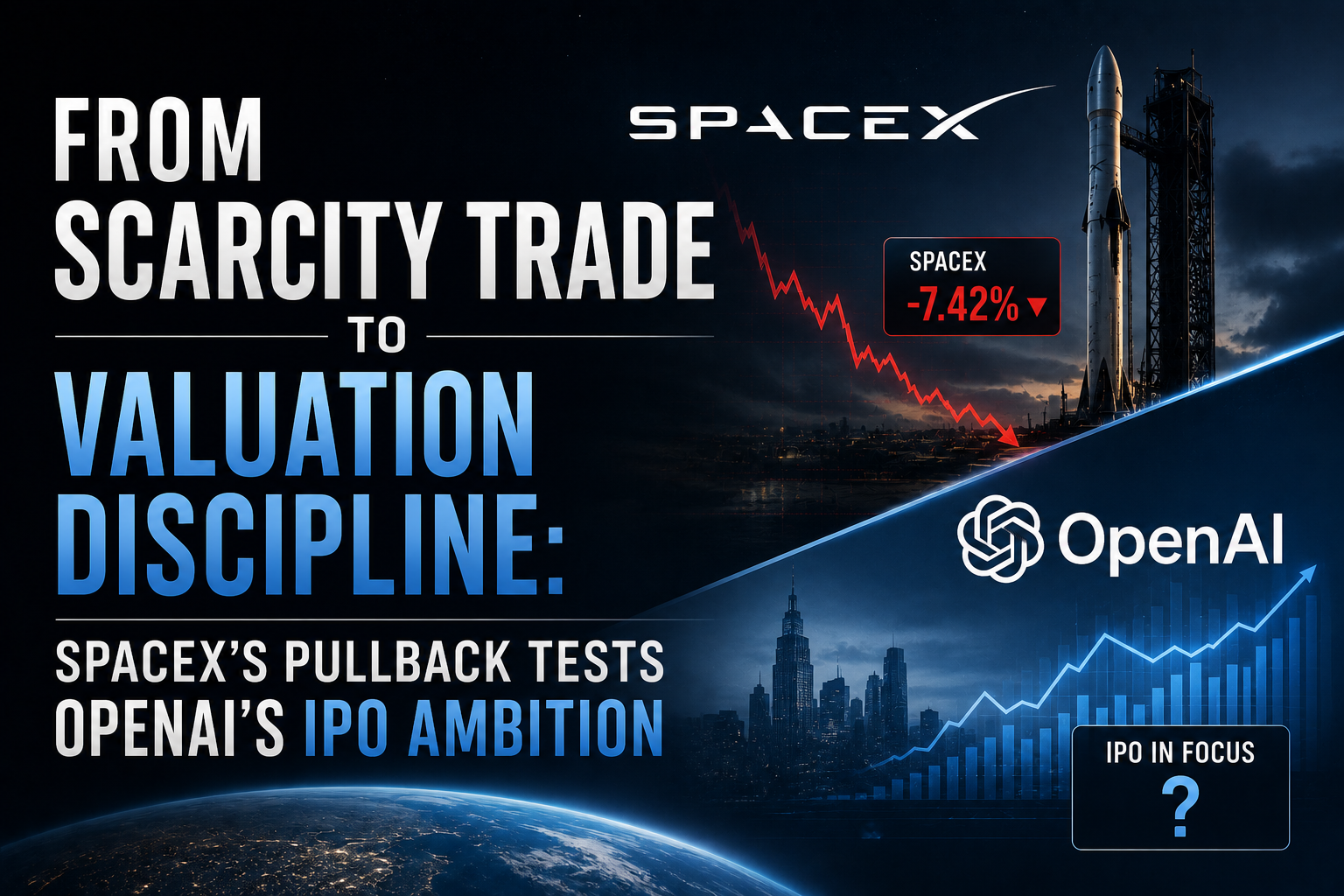
從稀缺交易到估值紀律:SpaceX的回調考驗OpenAI的IPO野心
據報導,OpenAI 傾向將其 IPO 推遲至 2027 年,但更強烈的市場訊號來自 SpaceX。SpaceX 於 6 月 22 日收盤下跌了 16.4%,收於 154.60 美元,較盤中高點 225.64 美元降低了 31.5%,但仍較其 135 美元的 IPO 價格高出 14.5%。這一走勢使 SpaceX 從一個由稀缺性驅動的 IPO 成功案例,轉變為 AI 相關超大型上市週期中首個重大公開市場壓力測試。
OpenAI 的問題不在於需求,而在於估值。路透社引用《紐約時報》的報導指出,OpenAI 正考慮等待至 2027 年,以維持高達 1 兆美元的估值目標,而顧問將此選擇定調為:要麼等待達到該估值,要麼以較低目標提前上市。
預測市場已開始反映這種謹慎態度。Polymarket 的 OpenAI IPO 市場近期顯示,OpenAI 在 2026 年 12 月 31 日前完成 IPO 的機率約為四分之一,這表明交易者不再將近期上市視為明確的基本情境。對於加密貨幣交易者而言,這使得 AI 上市前的曝險從單向的稀缺性交易,轉變為與公開市場基準掛鉤的估值紀律交易。
2026/06/29

Coldcard Mk3 警告隨 $38M Bitcoin 掃蕩而來,但原因仍未確認
比特幣硬體錢包製造商 Coinkite 已警告用戶,Coldcard 裝置存在種子生成問題,影響範圍涵蓋所有 4.0.1 及更高版本的 Mk3 韌體。此警告是在安全研究人員調查一宗涉及 594.48 BTC(價值約 3,800 萬美元)的協調性盜取事件時出現的。然而,目前尚無公開的技術證據證實 Coldcard 的問題導致了這些轉帳。
2026/07/31

Mastercard 完成對 BVNK 的收購,金額高達 18 億美元——穩定幣進入全球支付核心
Mastercard 於三月宣布該交易後,已於 2026 年 8 月 3 日(UTC +8)完成對穩定幣基礎設施供應商 BVNK 的收購。
2026/08/04


熱門
目前熱門備受市場關注的加密貨幣
加密貨幣價格
按交易量計算交易量最大的加密貨幣