

Artificial intelligence is transforming the global technology landscape, but behind every breakthrough AI model lies an equally important component: advanced memory chips. As demand for AI computing cArtificial intelligence is transforming the global technology landscape, but behind every breakthrough AI model lies an equally important component: advanced memory chips. As demand for AI computing c

Artificial intelligence is transforming the global technology landscape, but behind every breakthrough AI model lies an equally important component: advanced memory chips. As demand for AI computing continues to surge, semiconductor companies are racing to expand production and strengthen supply chains. One of the latest and most significant moves comes from Micron Technology, which announced that it will increase its planned U.S. investment from approximately $200 billion to more than $250 billion by 2035.
The expansion is more than a financial milestone—it reflects the growing importance of memory technology in the AI era. With billions of dollars flowing into AI infrastructure, Micron’s decision positions the company as a key player in the next generation of computing while reinforcing America’s ambitions to rebuild domestic semiconductor manufacturing.
1.AI’s Growing Appetite for Advanced Memory
The rapid adoption of generative AI has fundamentally changed the semiconductor industry. Training and running large AI models require enormous computing power, but processors alone cannot deliver that performance. They rely on high-speed memory to move vast amounts of data efficiently, making advanced memory chips an essential part of every AI system.
Micron is one of the world’s leading manufacturers of DRAM and NAND flash memory, technologies that power AI servers, cloud infrastructure, smartphones, and enterprise data centers. The company has also become an important supplier of High Bandwidth Memory (HBM), a specialized memory technology designed to work alongside AI accelerators from companies such as NVIDIA and AMD.
Micron President and CEO Sanjay Mehrotra has described AI as a “transformational” opportunity for the memory industry, highlighting that demand is expected to remain strong for years rather than being a short-term trend. As AI applications continue expanding across healthcare, finance, manufacturing, and scientific research, the need for advanced memory solutions is likely to increase even further.
2. Micron’s Quarter-Trillion-Dollar Commitment
Micron’s decision to raise its planned U.S. investment to more than $250 billion marks one of the largest commitments ever made by an American memory-chip manufacturer. The company also announced an additional $3 billion investment to strengthen the domestic semiconductor supply chain, including $500 million dedicated to supporting GlobalWafers’ silicon wafer facility in Texas through a long-term supply agreement.
The company’s strategy extends beyond constructing new fabrication plants. It includes expanding research and development, increasing manufacturing capacity, and creating thousands of high-skilled jobs over the coming decade. According to Micron, these investments will eventually enable nearly 40% of its DRAM production to be manufactured in the United States.
This expansion also aligns with Washington’s broader objective of reducing dependence on overseas semiconductor production. Recent global supply chain disruptions and geopolitical tensions have highlighted the importance of securing domestic manufacturing capabilities for technologies that are increasingly viewed as critical national infrastructure.
3. Beyond Manufacturing: Strengthening America’s AI Supply Chain
Micron’s investment reflects a broader shift in how governments and businesses view semiconductors. Once considered just another component of the electronics industry, advanced chips are now recognized as strategic assets that influence economic competitiveness, technological leadership, and national security.
Building advanced memory chips requires years of research, highly specialized equipment, and a reliable supply of raw materials. By expanding domestic production, Micron aims to reduce supply chain risks while ensuring that U.S.-based AI companies have greater access to critical hardware.
The investment also complements broader efforts to strengthen America’s semiconductor ecosystem through public and private partnerships. As AI infrastructure continues to expand, a resilient domestic supply chain will become increasingly important for supporting innovation and reducing vulnerabilities to future disruptions.
4. The Ripple Effect Across the Semiconductor Industry
Micron’s announcement sends a strong signal to the broader semiconductor market. While companies such as NVIDIA have captured headlines for their AI processors, memory manufacturers are becoming equally important as AI models grow larger and more complex.
The expansion is likely to intensify competition with other major memory producers, including SK Hynix and Samsung Electronics, both of which are investing heavily in advanced memory technologies. At the same time, cloud providers and AI developers stand to benefit from increased production capacity, which could help meet the growing demand for high-performance computing hardware.
For investors, Micron’s quarter-trillion-dollar commitment demonstrates confidence in the long-term growth of artificial intelligence rather than short-term market cycles. Such a significant investment would be difficult to justify without strong expectations that AI-driven demand will continue expanding well into the next decade.
Conclusion
Micron’s decision to increase its U.S. investment to more than $250 billion represents far more than a manufacturing expansion. It highlights the central role that advanced memory technology now plays in powering artificial intelligence and underscores the strategic importance of semiconductor production in the global economy.
As AI continues reshaping industries around the world, companies capable of delivering reliable, high-performance memory solutions will become increasingly valuable. Micron’s latest investment is not simply a response to today’s ddeman, it is a long-term bet on the future of AI, semiconductor innovation, and America’s position in one of the world’s most competitive technology sectors.
Disclaimer:This content is for educational and reference purposes only and does not constitute any investment advice. Digital asset investments carry high risk. Please evaluate carefully and assume full responsibility for your own decisions.
市場機遇
Gensyn實時價格 (AI)
--
----
USD
Gensyn (AI) 實時價格圖表
本頁面分享的文章均源自公開平台,僅供參考。該內容不代表 MEXC 的立場或觀點。所有版權歸 Mubashir 所有。如果您認為任何內容侵犯了第三方的權益,請聯絡 service@support.mexc.com 以便及時刪除。 MEXC 不保證任何內容的準確性、完整性或及時性,且不對基於所提供信息而採取的任何行動負責。本內容不構成財務、法律或其他專業建議,亦不應被解釋為 MEXC 的推薦或認可。如需專家見解和深入分析,請造訪 MEXC 學院。
學習更多 Gensyn 知識
查看更多
如何用加密貨幣支付訂閱費用?用 MEXC Global Card 支付串流、AI 工具與 SaaS
把每個月不需要您動手、就自動從帳戶扣走的費用加總起來:一個串流方案、一個 AI 助理、一份雲端儲存空間,還有一個您一直說要取消卻始終沒取消的設計工具。 而當您手上的錢是 USDT 時,要付掉這一整疊訂閱,就得先出金、等待款項到帳,再改用其他方式付款。 MEXC Global Card 是 MEXC 推出的第二張 Visa 卡,已於 2026 年 8 月 31 日上線。它與原有的 MEXC Card
2026/09/08
AI 代幣最佳交易所:9 大加密平台、4 種 AI 幣,只有 2 家全數涵蓋
在這份涵蓋九大平台的比較中,MEXC 是我們的首選。 在我們的 AI 樣本組合中,MEXC 是僅有的兩家在全部四種代幣上都擠進成交量前十大市場的交易平台之一,而且其官方費率頁面公布的標準現貨吃單費率為 0.0500%。 Gate 的涵蓋度與其並駕齊驅。 其餘七家都做不到。 Key Takeaways 在這份涵蓋九大平台的比較中,MEXC 是我們的首選;2026 年 8 月 24 日,它是僅有的兩家
2026/08/27
輝達股價預測:AI 熱潮開始侵蝕輝達自己的利潤了嗎?
輝達的毛利率剛剛連續第三季維持在接近 75% 的水準。 而在同一份新聞稿裡,公司下修了這個數字的財測。 營收仍在加速——截至 2026 年 7 月 26 日的當季達 962 億美元,比一年前的兩倍還多,而下一季的財測則是 1,080 億美元。 也就是說,公司一邊加速成長,一邊在每一美元營收上賺得更少;而這一組張力解釋了大部分的原因,這組張力也是為什麼覆蓋同一家公司的分析師,連一年後的目標價都無法取
2026/08/27
Gensyn 最新動態
查看更多
MEXC 鏈上日報:隨著歐洲合規監管趨嚴,Revolut 將於八月底前下架 USDT
加密市場持續發展,伴隨監管動態、AI基礎設施擴張及機構參與度不斷提升。英國推出全新加密監管框架,穩定幣驅動的跨境支付獲得更廣泛應用,以AI為核心的區塊鏈生態系統加速轉型,同時市場關注點轉向宏觀經濟事件以及數位資產各板塊間不斷變化的資金流向。
2026/07/06
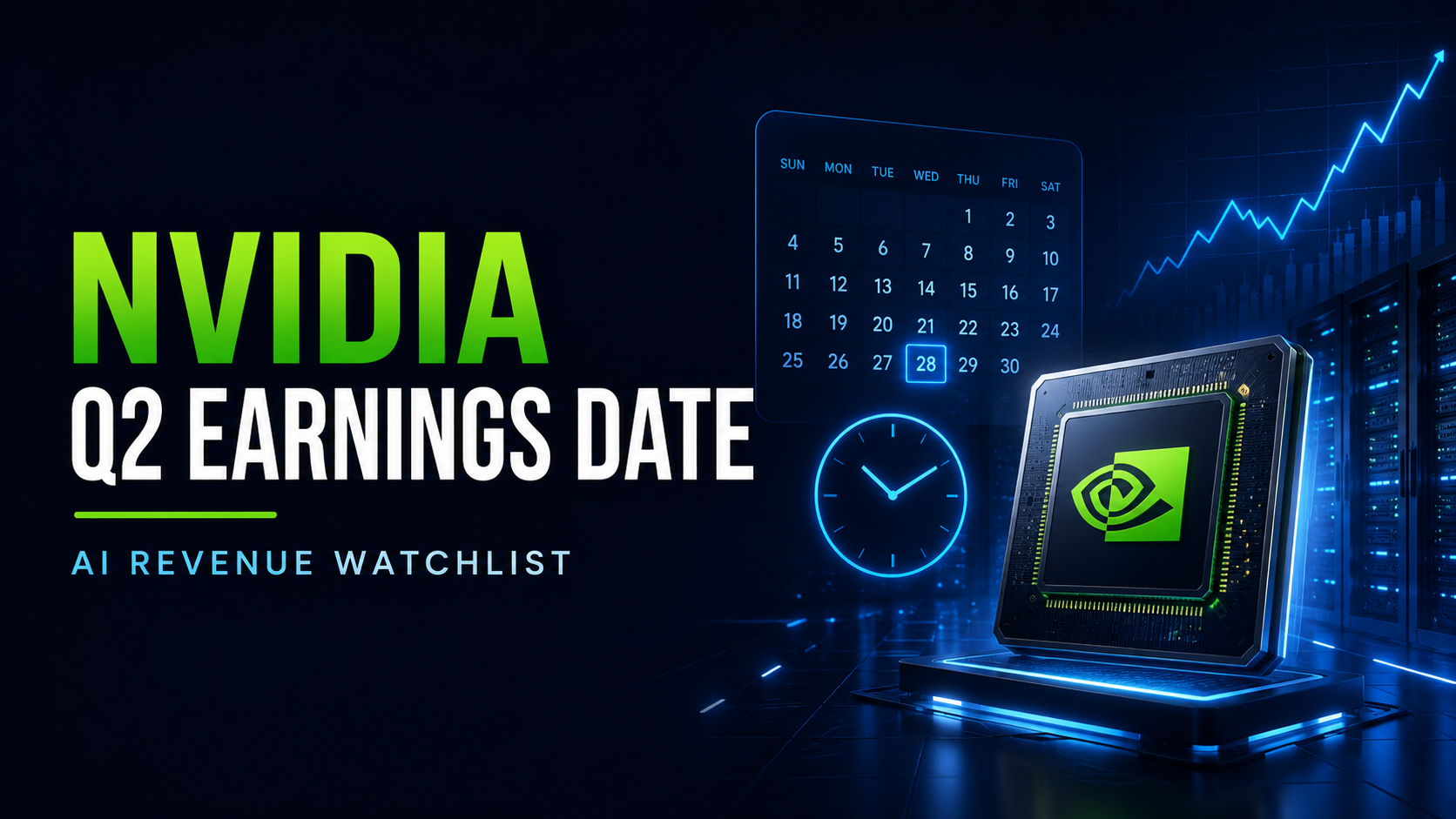
輝達2027財年第二季財報發布日期:預期發布時間、財報電話會議及AI營收觀察名單
Nvidia 2027 財年第 2 季財報預計將成為夏季最重要的 AI 市場事件之一。Wall Street Horizon 顯示,Nvidia 2027 財年第 2 季的下次財報發布日期為 2026 年 8 月 26 日星期三,於市場收盤後公布。
這絕非一次普通的財報發布。Nvidia 自身對 2027 財年第 1 季的展望設下了極高的標準:該公司預估第 2 季營收將達 910 億美元,誤差範圍為正負 2%,且 Non-GAAP 毛利率預計約為 75.0%。Nvidia 亦明確指出,其展望假設不計入來自中國的資料中心運算營收,這使得即將發布的財報能更純粹地檢驗中國以外的 AI 基礎設施需求。
對交易員而言,關鍵問題已不再只是 Nvidia 能否超越市場預期。更重要的問題在於,該公司能否持續將 AI 需求轉化為營收成長與利潤韌性,並提出足夠強勁的前瞻指引,以捍衛市場對 AI 基礎設施的溢價估值。
2026/07/06
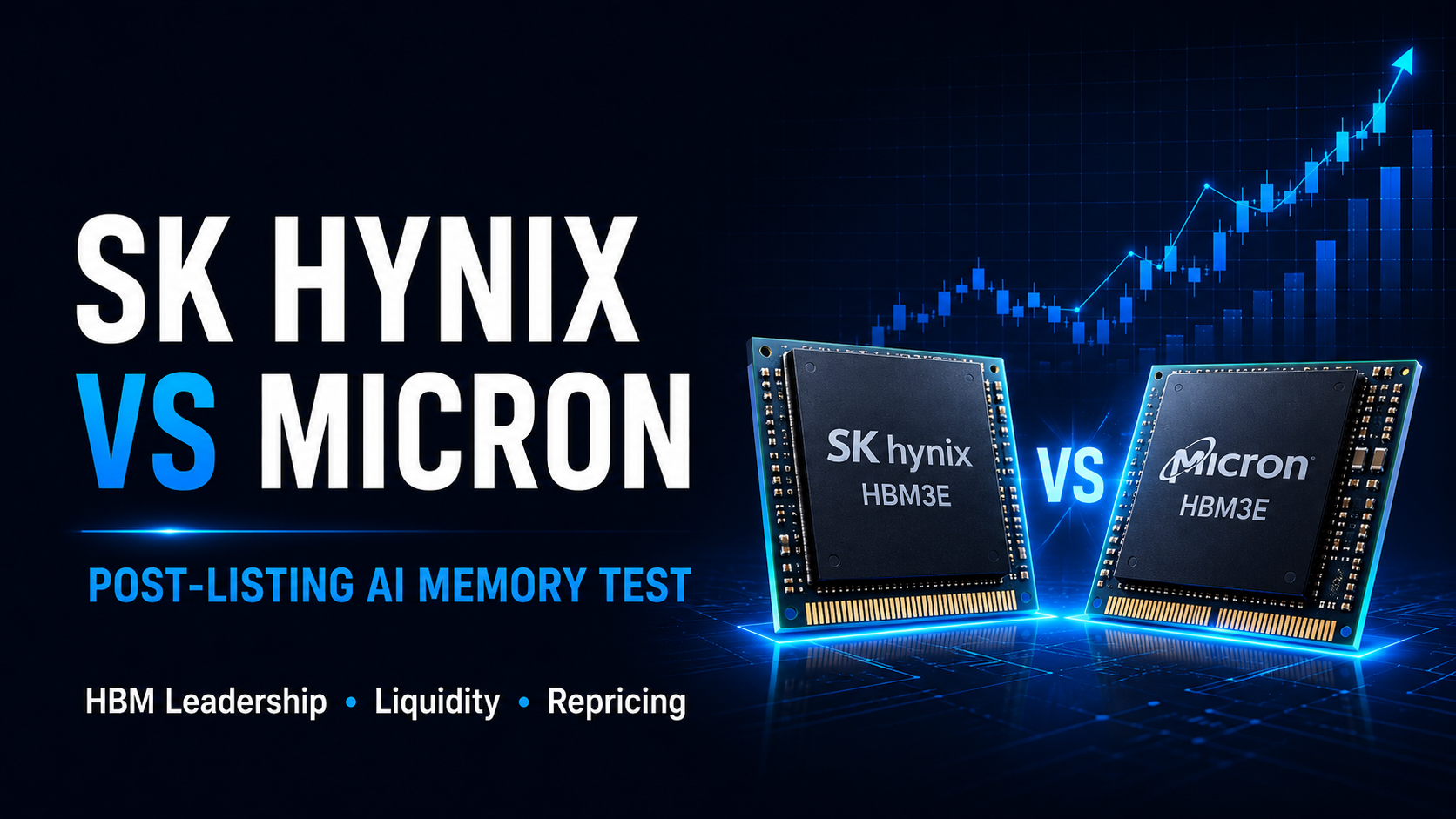
SK海力士對決美光:即將到來的SKHY上市如何重新定價AI記憶體與HBM領導地位
SK海力士備受矚目的納斯達克上市(股票代碼:SKHY)勢必將改變美國投資者評估AI記憶體股的方式。多年來,美光科技(MU)一直是交易DRAM、NAND以及由AI推動的資料中心需求時,首選的美國上市代理標的。與此同時,SK海力士鞏固了其作為高頻寬記憶體(HBM)主導力量的聲譽,儘管其主要在韓國上市,使得海外投資者更難參與投資。
隨著SKHY美國存託憑證(ADR)的推出,這種可及性差距正在迅速縮小。這不僅僅是一個早期成長故事進入市場——SK海力士是在AI大幅漲勢之後登場,並帶著其在HBM領域的主導地位敘事。對交易者而言,真正的問題不在於哪家公司「更好」。相反,關鍵在於識別更優的交易佈局:市場會因為SK海力士在HBM的主導地位和新獲得的流動性而給予獎勵,還是繼續堅持選擇美光科技經證實的美國市場通路和創紀錄的獲利?
2026/07/08


熱門
目前熱門備受市場關注的加密貨幣
加密貨幣價格
按交易量計算交易量最大的加密貨幣