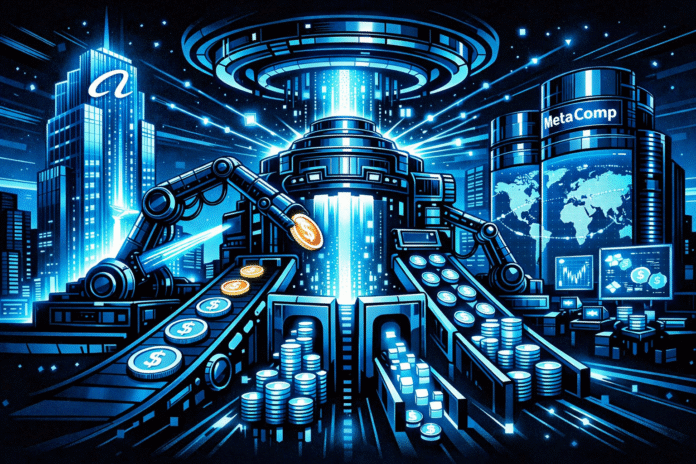
By 2026, the use of Artificial Intelligence in Business has evolved from “Generative” (writing text) to “Agentic” (performing work). We have entered the era of “By 2026, the use of Artificial Intelligence in Business has evolved from “Generative” (writing text) to “Agentic” (performing work). We have entered the era of “

The Agentic Workforce: Scaling Operations with Multi-Agent Orchestration

2026/02/23 04:43
Okuma süresi: 3 dk
Bu içerikle ilgili geri bildirim veya endişeleriniz için lütfen crypto.news@mexc.com üzerinden bizimle iletişime geçin.

By 2026, the use of Artificial Intelligence in Business has evolved from “Generative” (writing text) to “Agentic” (performing work). We have entered the era of “Multi-Agent Orchestration” (MAO). Instead of a human employee using one AI tool, a modern organization utilizes “Swarms” of specialized AI agents that collaborate to manage end-to-end processes. This article examines how the 2026 professional landscape is being reshaped by these “Digital Coworkers” and the new management frameworks required to lead them.

What is Multi-Agent Orchestration?

An “AI Agent” differs from a standard AI because it has “Agency”—the ability to plan, use tools, and correct its own mistakes. In 2026, a “Multi-Agent” system involves different agents with distinct roles:
The Agentic Workforce: Scaling Operations with Multi-Agent Orchestration
  1. The Planner Agent: Breaks down a high-level goal (e.g., “Launch our product in the Japanese market”) into sub-tasks.

  2. The Researcher Agent: Scours international databases, legal codes, and social sentiment to gather data.

  3. The Creative Agent: Drafts localized marketing materials and product descriptions.

  4. The Auditor Agent: Checks all outputs for cultural accuracy, legal compliance, and brand consistency.

The human role has transitioned to the “Orchestrator,” who reviews the “Final Proposal” and provides the strategic “Go/No-Go” decision.

Impact on Organizational Efficiency

The implementation of MAO is delivering unprecedented gains in 2026:

  • 24/7 Operational Velocity: Agent swarms do not sleep. A Business can now initiate a complex procurement cycle at 5:00 PM and have a fully negotiated, compliant contract ready by 9:00 AM the next day.An “AI Agent” differs from a standard AI because it has “Agency”—the ability to plan, use tools, and correct its own mistakes. In 2026, a “Multi-Agent” system involves different agents with distinct roles:


  • Elimination of “Process Friction”: Routine tasks like invoice reconciliation, employee onboarding, and customer ticket routing are now 100% automated, allowing human talent to focus on “High-Value Innovation.”

  • Cost Elasticity: Companies can “Scale Up” their agent workforce during peak seasons (like Black Friday) and “Scale Down” instantly, avoiding the fixed costs of traditional temporary staffing.

The “Governance” Imperative

With agents making decisions, “Governance” is the most critical professional function of 2026. Companies are adopting “Agentic Guardrails”:

  • Smart Contract Spending Limits: Agents are restricted to specific budget “Buckets” through blockchain-based smart contracts.

  • Explainability Logs: Every action taken by an agent must be “Logged” in a human-readable format, ensuring that the company can audit “Why” a specific decision was made.

  • Human-in-the-Loop (HITL) Triggers: Any decision that exceeds a certain “Risk Profile” (e.g., a contract over $50,000) automatically triggers a mandatory human review.

Conclusion: The Orchestration Advantage

In 2026, the most successful businesses are no longer defined by their “Headcount,” but by their “Orchestration Capacity.” The ability to manage a hybrid workforce of humans and agents is the definitive leadership skill of the decade.

  • 24/7 Operational Velocity: Agent swarms do not sleep. A Business can now initiate a complex procurement cycle at 5:00 PM and have a fully negotiated, compliant contract ready by 9:00 AM the next day.An “AI Agent” differs from a standard AI because it has “Agency”—the ability to plan, use tools, and correct its own mistakes. In 2026, a “Multi-Agent” system involves different agents with distinct roles:
Comments
Piyasa Fırsatı
swarms Logosu
swarms Fiyatı(SWARMS)
$0.00859
$0.00859$0.00859
-8.66%
USD
swarms (SWARMS) Canlı Fiyat Grafiği
Sorumluluk Reddi: Bu sitede yeniden yayınlanan makaleler, halka açık platformlardan alınmıştır ve yalnızca bilgilendirme amaçlıdır. MEXC'nin görüşlerini yansıtmayabilir. Tüm hakları telif sahiplerine aittir. Herhangi bir içeriğin üçüncü taraf haklarını ihlal ettiğini düşünüyorsanız, kaldırılması için lütfen crypto.news@mexc.com ile iletişime geçin. MEXC, içeriğin doğruluğu, eksiksizliği veya güncelliği konusunda hiçbir garanti vermez ve sağlanan bilgilere dayalı olarak alınan herhangi bir eylemden sorumlu değildir. İçerik, finansal, yasal veya diğer profesyonel tavsiye niteliğinde değildir ve MEXC tarafından bir tavsiye veya onay olarak değerlendirilmemelidir.

Ayrıca Şunları da Beğenebilirsiniz

Today’s Biggest Crypto Movers: Dogecoin Leads the Pack

Today’s Biggest Crypto Movers: Dogecoin Leads the Pack

Today's Biggest Crypto Movers: Dogecoin Leads the Pack 🚀 Crypto Markets Heat Up Today Major cryptocurrencies are showing strong gains. Let's dive into today's top
Paylaş
Blockchainmagazine2026/04/03 13:00
RWA Boom Accelerates As Tokenized Assets Hit New Highs In Early 2026

RWA Boom Accelerates As Tokenized Assets Hit New Highs In Early 2026

RWA distributed value rose from about $21B to $27.5B in Q1 2026, a gain of roughly 30%. Tokenized US Treasuries reached about $10B, creating an on-chain yield base
Paylaş
LiveBitcoinNews2026/04/03 13:00
Cryptos Signal Divergence Ahead of Fed Rate Decision

Cryptos Signal Divergence Ahead of Fed Rate Decision

The post Cryptos Signal Divergence Ahead of Fed Rate Decision appeared on BitcoinEthereumNews.com. Crypto assets send conflicting signals ahead of the Federal Reserve’s September rate decision. On-chain data reveals a clear decrease in Bitcoin and Ethereum flowing into centralized exchanges, but a sharp increase in altcoin inflows. The findings come from a Tuesday report by CryptoQuant, an on-chain data platform. The firm’s data shows a stark divergence in coin volume, which has been observed in movements onto centralized exchanges over the past few weeks. Bitcoin and Ethereum Inflows Drop to Multi-Month Lows Sponsored Sponsored Bitcoin has seen a dramatic drop in exchange inflows, with the 7-day moving average plummeting to 25,000 BTC, its lowest level in over a year. The average deposit per transaction has fallen to 0.57 BTC as of September. This suggests that smaller retail investors, rather than large-scale whales, are responsible for the recent cash-outs. Ethereum is showing a similar trend, with its daily exchange inflows decreasing to a two-month low. CryptoQuant reported that the 7-day moving average for ETH deposits on exchanges is around 783,000 ETH, the lowest in two months. Other Altcoins See Renewed Selling Pressure In contrast, other altcoin deposit activity on exchanges has surged. The number of altcoin deposit transactions on centralized exchanges was quite steady in May and June of this year, maintaining a 7-day moving average of about 20,000 to 30,000. Recently, however, that figure has jumped to 55,000 transactions. Altcoins: Exchange Inflow Transaction Count. Source: CryptoQuant CryptoQuant projects that altcoins, given their increased inflow activity, could face relatively higher selling pressure compared to BTC and ETH. Meanwhile, the balance of stablecoins on exchanges—a key indicator of potential buying pressure—has increased significantly. The report notes that the exchange USDT balance, around $273 million in April, grew to $379 million by August 31, marking a new yearly high. CryptoQuant interprets this surge as a reflection of…
Paylaş
BitcoinEthereumNews2025/09/18 01:01

Trade GOLD, Share 1,000,000 USDT

Trade GOLD, Share 1,000,000 USDTTrade GOLD, Share 1,000,000 USDT

0 fees, up to 1,000x leverage, deep liquidity