The Coming Return Of Commodity-Backed Money
The Coming Return Of Commodity-Backed Money

Authored by Chris MacIntosh via InternationalMan.com,
This piece is as much a mental exploration as a fact-gathering exercise.
Let’s begin with the problem. Bank failures come together with economic failures.
So trusting banks is a problem, but furthermore, trusting fiat currency is also a problem. This is on top of the issue that moving capital from one bank to another is increasingly fraught with headaches. AML and KYC have become weaponised, and the global surveillance system is tightening its grip. So movement of capital, treasury, and of course what to own in your treasury are all problems as I see it.
How to solve for all?
The Inversion
Most investors think in fiat terms — what’s the IRR in dollars, what’s the EBITDA multiple. That’s measuring real assets with a rubber ruler.
The better question is: What is this stake worth in hard asset terms, and what hard asset exposure does it give me per unit of fiat deployed?
Fiat currency is a liability of a central bank. It has no intrinsic floor. Now consider a warehouse receipt for oh say 500 tonnes of copper. That is the asset. There’s no counterparty sitting behind it who can dilute it, default on it, or sanction it into worthlessness.
The Real Monetary History
The current system is historically aberrant. Pre-1971, every dollar was a claim on gold. What Nixon did at Camp David wasn’t just a policy change — it was the largest unilateral default in history, redenominating global savings from hard asset claims into sovereign promises.
Since then, global M2 has expanded roughly 50x. Gold has gone from $35 to $4,000+. Real wages in the developed world have largely flatlined. Asset prices have inflated dramatically… but measured in gold, most assets are flat to down.
The money supply expansion didn’t create wealth. It merely redistributed it from savers and wage earners toward asset holders… and those closest to the money creation spigot.
What Warehouse Receipts Actually Represent
Imagine owning a warehouse receipt just like in the good old days when gold was held with a goldsmith and you received a receipt of ownership. But one can expand this beyond gold into most any commodity. This then isn’t just “a useful treasury instrument.” Rather, it’s a pre-fiat-style monetary instrument.
Medieval banking was largely built on exactly this. A Florentine merchant deposited grain or wool, got a receipt, and that receipt circulated as money because it was a claim on something real. Through this lens, the Medici didn’t invent credit — they institutionalised the monetisation of physical inventory.
What if one could enjoy a partial return to that model: hold receipts for oil, copper, wheat, cocoa. Those receipts are denominated in the asset itself, not in a currency. The currency price of those assets will fluctuate, but the asset quantity doesn’t. When the next monetary reset comes — and the direction of travel is clear — you hold the denominator, not the numerator.
The Hierarchy of Real Assets
Not all hard assets are equal in this context.
Gold and silver (the monetary metals). No industrial consumption risk on gold; pure monetary store. Silver has a dual role: monetary and industrial (solar, electronics). Both have 5,000-year track records as money. Central banks are net buyers of gold at record pace right now. They know what’s coming. Since you’re here… you do too.
Oil and energy (the master resource). Everything in industrial civilisation is downstream of energy. A barrel of oil contains the energy equivalent of roughly 4.5 years of human manual labour. It can’t be printed. It is under attack now globally and being fought over.
Agricultural commodities — arguably the most underappreciated. Food is the original hard asset. You can live without gold but not without calories. Soft commodities (cocoa, coffee, sugar) and hard agricultural commodities (wheat, corn, soy) sit at the base of social stability. History is littered with governments that fell not from military defeat but from grain price spikes.
Industrial metals, especially copper. The copper price is essentially a real-time vote on global industrial activity. Also increasingly a monetary metal proxy given its role in electrification, regardless of which energy path dominates.
So the question I asked myself is this: where in the world does something exist that has all or some of these commodities in physical form? And how to move them and turn them liquid?
The Trading House as Hard Asset Node
The answer appears to be trading houses.
A commodity trading house at its core is a node in the physical asset network. It handles the logistics, financing, and title transfer of real goods. The warehouse receipts it holds at any given moment are snapshots of real-world production: tonnes of metal, barrels of oil, bushels of grain.
It makes sense to own a stake in that node. It provides continuous exposure to the physical flow of real assets without having to warehouse them yourself; receipt access as treasury — you’re not holding a gold ETF (someone else’s promise), you’re holding a title document to a specific physical lot; and participation in the spread between jurisdictions — the firm makes money on the arbitrage between where goods are produced and where they’re consumed. That spread is denominated in real goods, not financial engineering.
What’s the alternative? Compare this to holding cash in a bank. The bank holds your deposit as a liability on its balance sheet and lends it out 10:1. You have an unsecured claim on an institution that is itself leveraged against a system that can be inflated, bailed-in, or sanctioned. The warehouse receipt has none of those layers.
The Monetary Reset Angle
The direction of travel globally is already toward commodity-backed settlement.
The BRICS payment system discussions keep circling back to commodity baskets. Saudi Arabia is actively diversifying away from dollar settlement. Russia’s war chest rebuild post-sanctions was done largely through commodity export surpluses held outside Western systems. China has been accumulating gold at the sovereign level while simultaneously building out commodity infrastructure across Africa, South America, and Central Asia.
When — not if — the next monetary architecture emerges, it will be anchored to something real. The countries and entities that hold the physical nodes of that system will be on the right side of the reset.
A trading house stake, held correctly, is a small position in that inevitable infrastructure.
Practical Implication for the Deal
Price the stake in hard asset terms. What quantum of warehouse receipt access does this buy you? Expressed not in dollars but in tonnes of copper equivalent, barrels of oil equivalent, or ounces of gold equivalent.
If a firm has, say, $15 million of inventory at any given time and you own a 20% non-operating stake with receipt participation rights, you have a claim on $3 million of physical commodity inventory. At current gold prices, that’s roughly 1,000 oz gold equivalent.
That’s your real floor. Not the EBITDA multiple.
* * *
The shift Chris describes is already underway. The old financial system is being strained by debt, inflation, political pressure, and a growing loss of trust in fiat money. That does not mean you need to predict every detail of what comes next. But it does mean you should understand the forces now reshaping the world—and what they could mean for your wealth, freedom, and future. We’ve prepared a free special report that explains the major economic, political, and cultural trends unfolding right now, the risks they create, and how a contrarian investor can think about staying one step ahead. Click here to get it now now.
Ayrıca Şunları da Beğenebilirsiniz

UK crypto holders brace for FCA’s expanded regulatory reach
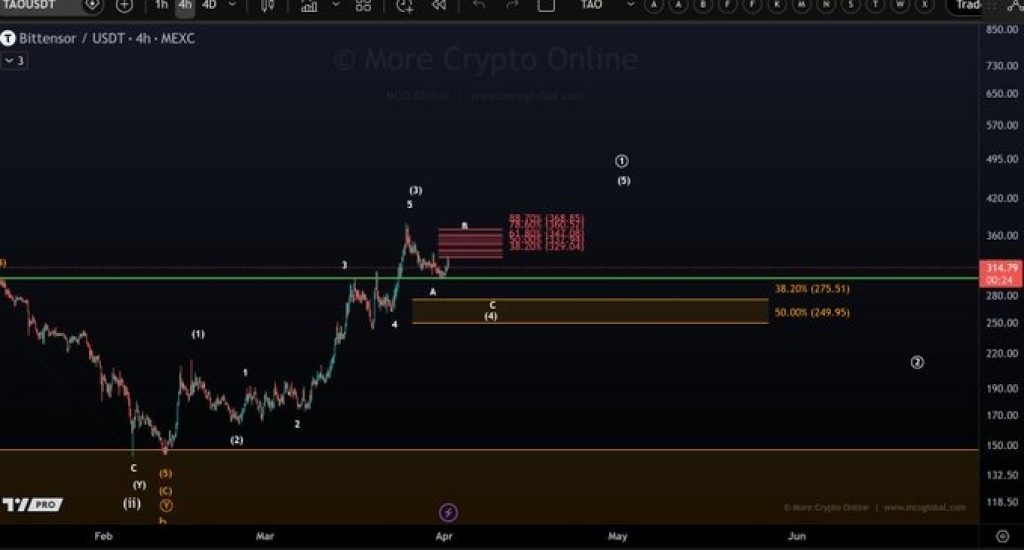
Thinking of Buying Bittensor? Watch These TAO Price Correction Levels First

China Nabs Another Huione Group Core Member in Cambodia Extradition
Popüler Haberler
Daha fazla