

Trump Iran Success: President Announces Breakthrough in Diplomatic Talks
BitcoinWorld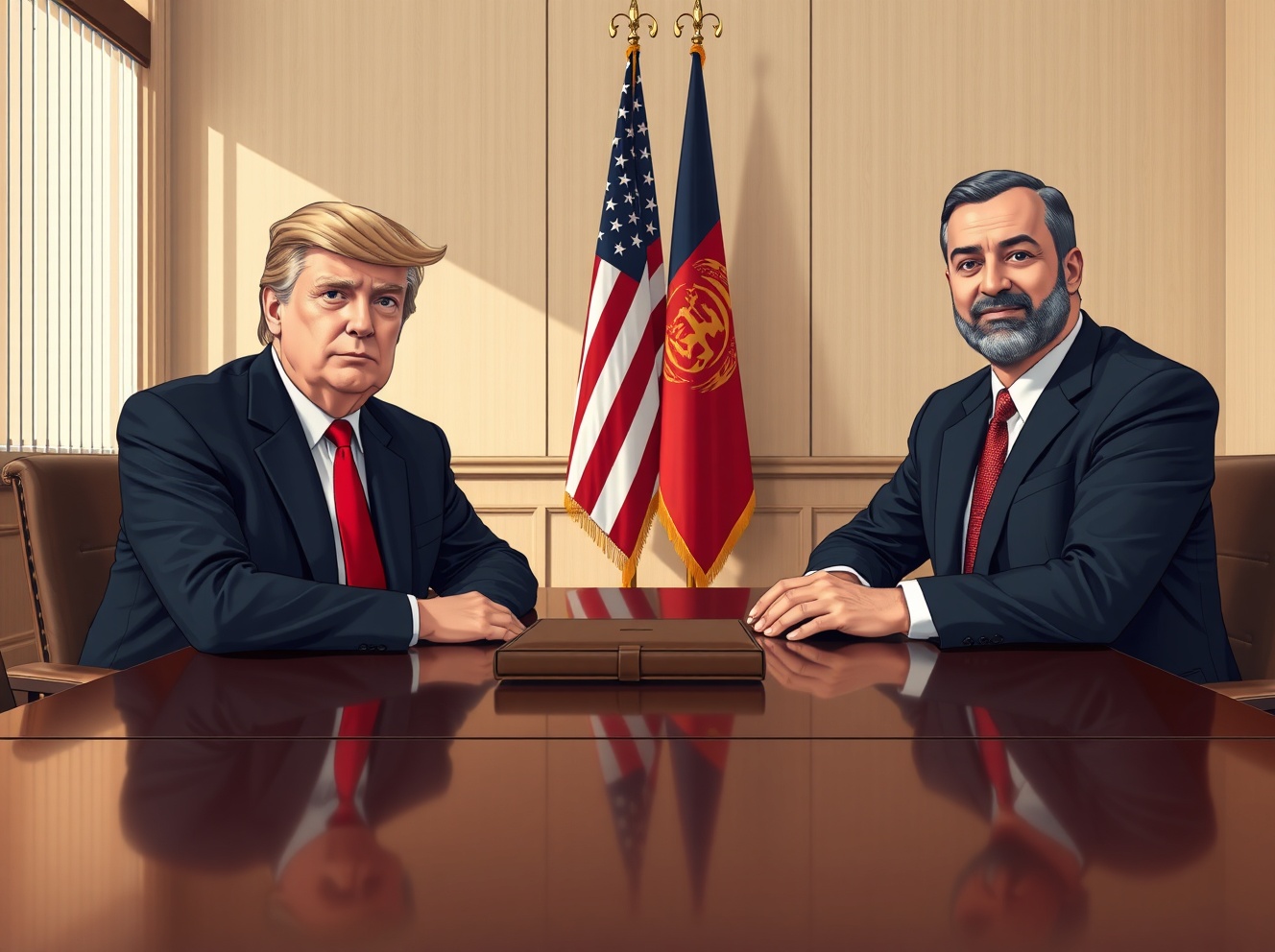
Trump Iran Success: President Announces Breakthrough in Diplomatic Talks
WASHINGTON, D.C. – President Donald Trump declared on Tuesday that the United States is achieving significant progress in its dealings with Iran, marking a potential shift in one of the world’s most complex diplomatic relationships. The announcement follows months of escalating tensions and comes as the administration engages in what it describes as productive talks with key Iranian officials.
Trump Iran Success Announcement Details
President Trump made his remarks during a White House briefing with reporters. He specifically stated that his administration is “achieving great success” in its approach to Iran. Furthermore, he revealed that U.S. officials are currently engaged in discussions with what he termed “the right people” to reach a formal agreement. This statement represents a notable development in U.S.-Iran relations, which have been characterized by hostility since the 1979 Iranian Revolution.
The Trump administration has maintained a policy of “maximum pressure” on Iran since withdrawing from the Joint Comprehensive Plan of Action (JCPOA) in 2018. This policy has involved stringent economic sanctions targeting Iran’s oil exports, banking sector, and key individuals. Consequently, Iran’s economy has faced significant challenges, with inflation soaring and currency values plummeting.
Historical Context of US-Iran Relations
Understanding the current diplomatic landscape requires examining the turbulent history between the two nations. Relations deteriorated sharply after the 1979 Islamic Revolution, when Iranian students seized the U.S. Embassy in Tehran and held 52 Americans hostage for 444 days. This event led to a complete diplomatic rupture that has persisted for decades, with brief periods of engagement.
Key historical milestones include:
- 1979: Iranian Revolution and hostage crisis
- 1980: U.S. imposes comprehensive sanctions
- 2015: JCPOA nuclear agreement signed
- 2018: U.S. withdraws from JCPOA
- 2020: Tensions peak after U.S. drone strike kills General Qasem Soleimani
The 2015 nuclear deal, negotiated by the Obama administration, temporarily eased tensions by limiting Iran’s nuclear program in exchange for sanctions relief. However, President Trump criticized the agreement as “the worst deal ever” and reinstated sanctions, creating the current diplomatic impasse.
Current Diplomatic Landscape Analysis
The administration’s recent statements suggest a potential opening for renewed negotiations. Several factors may be contributing to this development. First, both nations face domestic pressures that could make diplomacy more appealing. Second, regional dynamics in the Middle East continue to evolve, with shifting alliances and security concerns. Third, economic realities on both sides create incentives for dialogue.
Regional experts note that several channels for communication have remained open despite public hostility. These include:
- Swiss embassy intermediaries in Tehran
- Backchannel discussions through third countries
- International organizations serving as neutral platforms
- Military-to-military communication lines
Additionally, recent months have seen indirect talks in Vienna regarding a potential return to the nuclear agreement. European mediators have worked to bridge gaps between the positions of Washington and Tehran.
Expert Perspectives on Negotiation Prospects
Foreign policy analysts offer varied interpretations of President Trump’s announcement. Some experts view the statement as a genuine reflection of behind-the-scenes progress. They point to recent diplomatic movements and changing rhetoric from both capitals as evidence of shifting positions. Other analysts remain more skeptical, noting that similar optimistic statements have preceded continued stalemates in the past.
Dr. Sarah Johnson, a Middle East specialist at Georgetown University, explains: “Diplomatic breakthroughs with Iran typically require careful, multi-layered negotiations. The administration’s reference to talking with ‘the right people’ suggests they may be engaging with figures who have actual decision-making authority rather than just ceremonial officials.”
Meanwhile, regional security considerations continue to influence the diplomatic calculus. Iran’s activities in Syria, Yemen, and Lebanon remain concerns for U.S. allies. Similarly, Iran views U.S. military presence in the Persian Gulf as a direct threat to its security.
Economic and Sanctions Considerations
The U.S. maximum pressure campaign has significantly impacted Iran’s economy. According to International Monetary Fund data, Iran’s GDP contracted by approximately 6% in 2019, though it has shown modest recovery since. Oil exports, once exceeding 2.5 million barrels per day, have fallen to an estimated 400,000 barrels daily due to sanctions.
However, the sanctions have also affected global oil markets and created challenges for U.S. allies dependent on Middle Eastern stability. Some European countries have attempted to establish alternative payment mechanisms to continue limited trade with Iran, though with limited success.
The economic pressure creates potential leverage for negotiations but also risks hardening Iranian positions if perceived as coercive rather than persuasive. Successful diplomacy often requires balancing pressure with incentives, a challenge that has complicated previous negotiation attempts.
Regional Implications and Responses
Neighboring countries are closely monitoring developments between Washington and Tehran. Israel and Saudi Arabia, traditional U.S. allies, have expressed concerns about any agreement that might strengthen Iran’s regional influence. Conversely, Qatar and Oman have generally supported diplomatic engagement as a path to regional stability.
The table below summarizes key regional perspectives:
| Country | Position on US-Iran Talks | Primary Concerns |
|---|---|---|
| Israel | Cautious opposition | Iranian nuclear capabilities, regional proxies |
| Saudi Arabia | Guarded skepticism | Iranian influence in Yemen, Iraq |
| United Arab Emirates | Pragmatic engagement | Economic stability, maritime security |
| Qatar | Supportive | Regional dialogue, conflict reduction |
These divergent positions illustrate the complex regional landscape that any U.S.-Iran agreement must navigate. A successful diplomatic outcome would likely require addressing not only bilateral concerns but also regional security architecture.
Potential Pathways Forward
Several possible scenarios could emerge from the current diplomatic opening. First, the parties might negotiate a limited agreement addressing immediate concerns while leaving more complex issues for later discussion. Second, they could attempt a comprehensive settlement covering nuclear, regional, and economic issues simultaneously. Third, the current momentum might dissipate if either side perceives insufficient concessions from the other.
Historical precedent suggests that incremental confidence-building measures often precede major breakthroughs in contentious relationships. Small agreements on humanitarian issues, prisoner exchanges, or regional de-escalation could create positive momentum for more substantial negotiations.
The coming weeks will likely reveal whether President Trump’s announcement reflects genuine diplomatic progress or represents diplomatic positioning. Key indicators to watch include:
- Official meetings between U.S. and Iranian officials
- Changes in sanctions enforcement or designations
- Public statements from Iranian leadership
- Movement in Vienna nuclear talks
- Regional security developments
Conclusion
President Trump’s announcement of Trump Iran success represents a potentially significant development in one of the world’s most challenging diplomatic relationships. While details remain limited, the statement suggests the administration believes progress is being made through discussions with appropriate Iranian counterparts. The path forward remains uncertain, given the deep historical mistrust and complex regional dynamics involved. However, even tentative diplomatic engagement between Washington and Tehran could have important implications for Middle Eastern stability, global energy markets, and nonproliferation efforts. Observers will continue monitoring for concrete developments that might substantiate the administration’s optimistic assessment.
FAQs
Q1: What exactly did President Trump say about Iran?
President Trump stated that the United States is “achieving great success” in Iran and that his administration is talking with “the right people” to reach an agreement.
Q2: How have US-Iran relations been historically?
Relations have been hostile since the 1979 Iranian Revolution and hostage crisis. There was brief engagement during the 2015 nuclear deal negotiations, but tensions resumed after the U.S. withdrew from that agreement in 2018.
Q3: What is the current status of the Iran nuclear deal?
The Joint Comprehensive Plan of Action (JCPOA) remains technically in effect between Iran and other signatories, but the U.S. withdrawal and reimposition of sanctions have significantly undermined the agreement. Indirect talks continue in Vienna about a potential U.S. return to the deal.
Q4: What are the main obstacles to a US-Iran agreement?
Key obstacles include Iran’s nuclear program, its regional activities through proxy groups, U.S. sanctions, historical mistrust, and differing views on what constitutes compliance with previous agreements.
Q5: How have other countries reacted to potential US-Iran talks?
Reactions vary regionally. U.S. allies like Israel and Saudi Arabia express caution, while other Middle Eastern nations like Qatar and Oman generally support diplomatic engagement as a path to stability.
This post Trump Iran Success: President Announces Breakthrough in Diplomatic Talks first appeared on BitcoinWorld.
You May Also Like

American Bitcoin’s $5B Nasdaq Debut Puts Trump-Backed Miner in Crypto Spotlight

Tether Engages Big Four for First Full Audit – Crypto News Bitcoin News

