

HIRECT: Advanced Copper Conductors Are Shaping Infrastructure CX

Precision Manufacturing Meets CX: How Advanced Conductors Are Shaping Infrastructure Experience
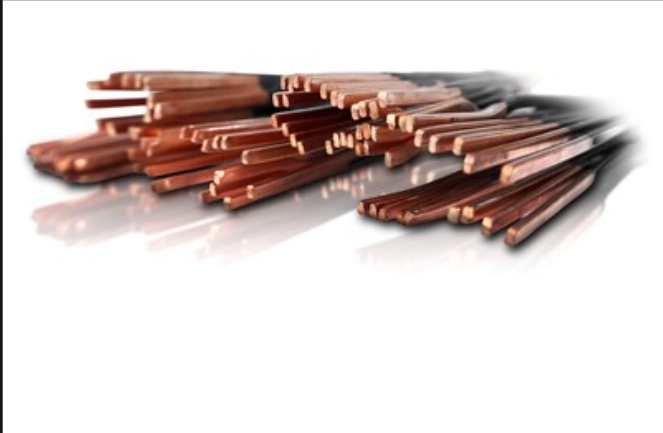
Hind Rectifiers Limited (HIRECT) has expanded its manufacturing capabilities with the introduction of advanced copper conductors—Continuously Transposed Conductors (CTC), Paper Insulated Copper Conductors (PICC), and Enameled Paper Insulated Copper Conductors (EPICC)—from its Sinnar facility in Nashik. The development aims at supporting high-power transformers and related applications across energy, transportation, and industrial infrastructure.
While the announcement roots in manufacturing innovation, its implications extend into customer experience, particularly in sectors where reliability and performance are critical.
Redefining Infrastructure CX
Customer experience in infrastructure and industrial ecosystems has undergone a significant shift. Unlike consumer-facing industries, where experience is often defined by engagement and service design, B2B infrastructure CX is increasingly measured by uptime, efficiency, and predictability.
Utilities, rail operators, and industrial players now expect suppliers to deliver not just components but assurance—assurance of performance, compliance, and lifecycle reliability.
This shift accelerates by digital transformation. Smart manufacturing, real-time monitoring, and advanced quality control are enabling companies to embed consistency into their production processes. As a result, CX leaders in these sectors are focusing more on operational excellence as a core experience driver.
Strategic Expansion into High-Value Manufacturing
HIRECT move into advanced conductor manufacturing reflects a strategic effort to strengthen its position within the transformer and power equipment ecosystem. By producing high-specification components, the company is positioning itself closer to the core of infrastructure value creation.
The expansion also aligns with global demand trends. As countries invest in grid modernization, renewable energy integration, and electrification of transport systems, the need for efficient and reliable transformer components is increasing.
The company’s focus on export markets further underscores its intent to compete on a global stage. By adhering to international quality and compliance standards, it is positioning itself as a viable partner for OEMs and infrastructure developers worldwide.
From a CX perspective, this shift signals a move toward embedding experience into the product itself, rather than treating it as an external layer.
Technology as an Enabler of Experience
At the core of this development is a set of manufacturing capabilities designed to deliver precision and consistency.
The production lines for CTC allow for flexible configurations, accommodating varying strand counts and dimensions. This flexibility is critical in meeting diverse transformer design requirements.
For PICC and EPICC products, advanced insulation techniques enable precise control over thickness and layering. This ensures that conductors can withstand high thermal and electrical stresses, a key requirement in high-power applications.
Equally important is the integration of in-line optical testing systems. These systems detect defects such as pinholes and inconsistencies in real time, enabling immediate corrective action.
As noted by Shailesh Jadav, Vice President of Operations at HIRECT:
“To guarantee insulation integrity and dimensional precision, we have implemented 100% in-line optical testing, supported by precision measurement systems capable of maintaining tolerances within ±5 microns.”
This level of precision reflects a broader industry trend toward zero-defect manufacturing, where quality assurance embe within the production process rather than applied post-production.
CX Impact: Reliability as Experience
The implications for customer experience are significant.
Firstly, improved product reliability translates directly into reduced downtime for end users. In sectors such as power distribution and rail transport, even minor disruptions can have cascading effects. Moreover, igh-quality conductors help mitigate these risks.
Secondly, consistency in manufacturing reduces variability, which in turn simplifies procurement and deployment processes. Customers can rely on predictable performance, reducing the need for extensive testing and validation on their end.
Third, the company’s adherence to responsible sourcing standards addresses a growing expectation among global buyers. Compliance with frameworks such as the EU Conflict Minerals Regulation enhances transparency and reduces reputational risk.
Jadav also highlighted this aspect, noting that the company’s supply chain aligns with global responsible sourcing initiatives, enabling customers to deploy products with confidence across international markets.
Finally, customization capabilities allow customers to specify conductor dimensions and insulation characteristics tailored to their applications—an increasingly important requirement in complex infrastructure environments.
Broader Industry Implications
The development signals several broader trends in the industry.
One is the increasing importance of advanced materials and precision engineering in enabling next-generation infrastructure. As systems become more complex, the tolerance for variability decreases.
Another is the role of digital technologies in manufacturing at HIRECT. In-line testing, controlled environments, and data-driven processes are becoming standard practices for ensuring quality at scale.
There is also a growing emphasis on globalization. Manufacturers are no longer competing solely on cost but on their ability to meet diverse regulatory and performance requirements across markets.
This shift is redefining competitive dynamics, placing greater emphasis on operational excellence as a driver of customer experience.
Looking Ahead: CX Beyond Interfaces
For CX leaders, the key takeaway is that experience no longer confine to customer-facing interactions. It embeds in products, processes, and supply chains.
As HIRECT infrastructure systems evolve, the definition of customer experience will continue to expand. Reliability, transparency, and customization will become as important as responsiveness and service quality.
In this context, investments in advanced manufacturing capabilities are not just operational decisions—they are strategic CX initiatives. Companies that can deliver consistent, high-quality outcomes will have a better position to build trust and long-term relationships with their customers.
HIRECT’s expansion into advanced copper conductors illustrates this shift, highlighting how engineering innovation can serve as a foundation for improved customer experience in industrial ecosystems.
KEY TAKEAWAYS
- Reliability is the new CX benchmark in infrastructure
Customer experience is increasingly defined by uptime, consistency, and performance predictability rather than service interactions. - Manufacturing precision directly impacts CX outcomes
Advanced production techniques and in-line testing reduce variability, enabling more consistent and dependable customer experiences. - Transparency and compliance build global trust
Alignment with international standards and responsible sourcing frameworks enhances credibility and simplifies cross-border engagement. - Customization is becoming essential in B2B CX
Flexible manufacturing capabilities allow suppliers to meet diverse customer requirements, improving relevance and satisfaction. - CX is shifting deeper into the value chain
Experience design is no longer limited to interfaces—it is embedded across engineering, production, and supply chain operations.
The post HIRECT: Advanced Copper Conductors Are Shaping Infrastructure CX appeared first on CX Quest.


You May Also Like

ApeMars Price Prediction: Will APRZ Get a CEX Listing Soon

Infamous MEV Bot JaredFromSubway Drained For $7.5 Million

Exclusive: Index Ventures, Union Square Ventures back trading app Fomo at $550 million valuation


Trending News
More24/7 Live News
MoreQuick Reads
More
