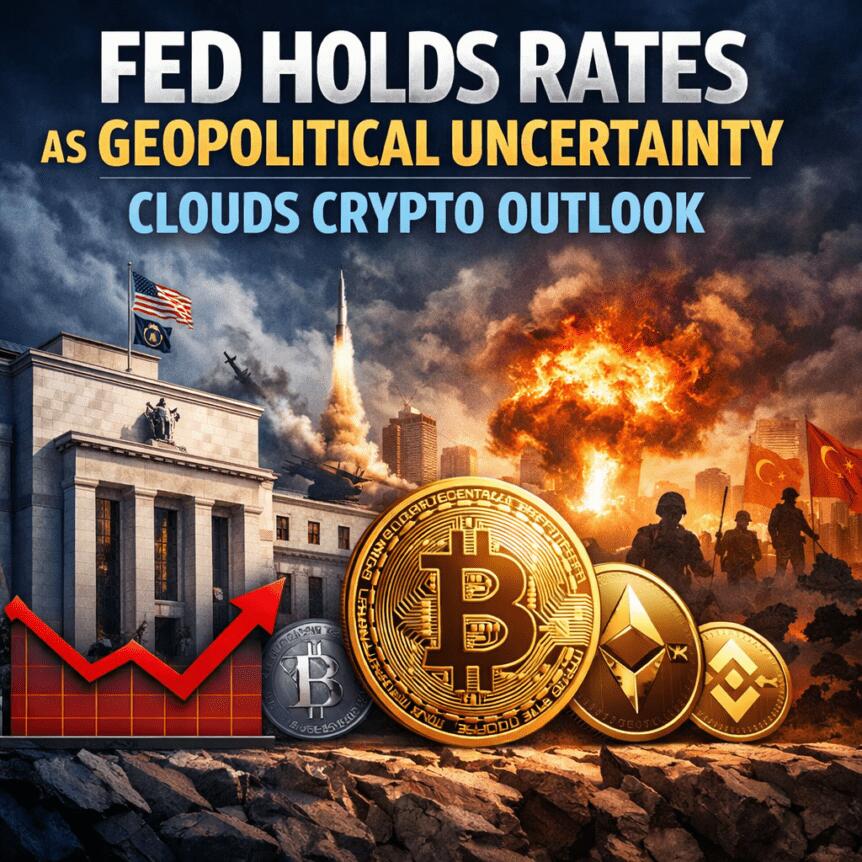
Fed Holds Rates as Geopolitical Uncertainty Clouds Crypto Outlook
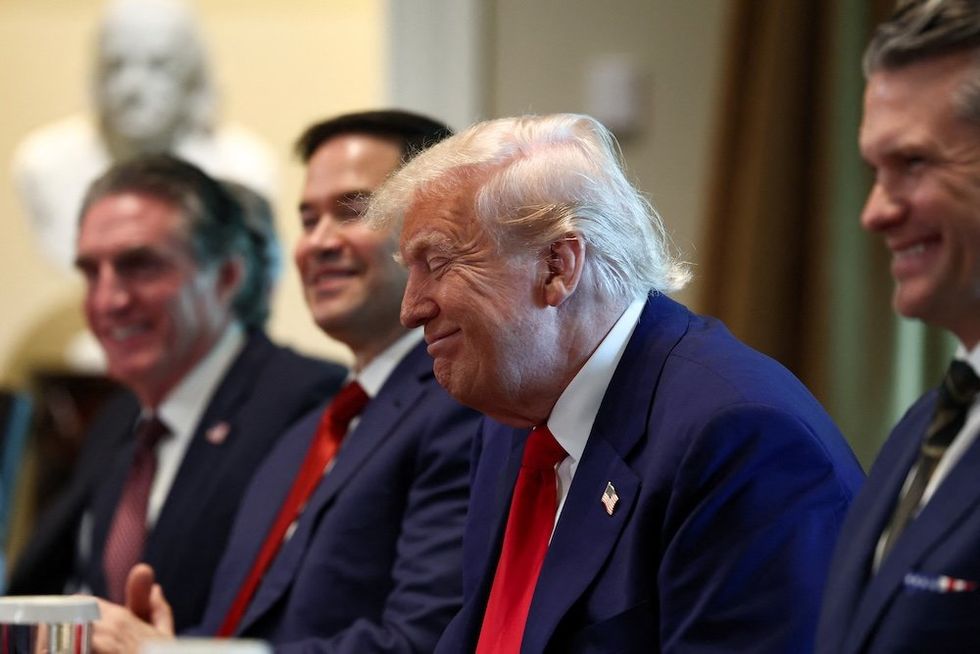
The Federal Reserve’s Open Market Committee kept the federal funds target range unchanged at 3.5% to 3.75, signaling a wait-and-see stance as policymakers weigh the evolving macro backdrop and the geopolitical shock stemming from the Middle East. The decision preserves a restrictive stance while the central bank monitors inflation pressures and the economy’s ability to weather external shocks.
Fed Chair Jerome Powell framed the economy as performing well in broad terms — consumer spending staying resilient and business investment continuing to expand — but he warned that weaknesses linger in the housing market and the labor market shows signs of softening. Inflation, meanwhile, remains “somewhat elevated” relative to the 2% target, complicating the Fed’s path back to price stability.
The posture underscores a difficult balancing act: the Fed must pursue maximum employment while keeping inflation anchored, all in a context where the war’s economic spillovers could push energy costs higher and alter demand dynamics. Powell’s remarks suggest policymakers view the near-term outlook as uncertain, with energy price trajectories among the wild cards that will shape policy in the months ahead.
Key takeaways
- Policy remains unchanged at 3.5% to 3.75%, with inflation lingering above the 2% goal and housing weakness alongside signs of labor-market cooling.
- Geopolitical tensions add energy-price risk, injecting additional uncertainty into the inflation path and the policy outlook.
- Markets broadly price in little near-term relief from rate cuts; CME data shows a 97% probability of no change at the next year-ahead horizon, with a small 3% chance of a 25-basis-point hike by April 2026 that would lift the range to 3.75%–4.00%.
- Industry commentary frames the gap between policy and liquidity flows: some observers expect potential easing if geopolitical strains intensify, while others see a gradual expansion of money supply lifting asset prices over time.
Policy stance amid a cloud of uncertainty
With inflation still stubbornly above target and a housing sector that has not fully recovered, the Fed’s decision to hold rates steady reinforces a cautious, data-driven posture. Powell emphasized that the economy’s breadth — including resilient consumer demand and ongoing investment — supports a patient approach to policy normalization. Yet he also acknowledged that the energy-price channel could complicate the inflation outlook if tensions in the Middle East persist or escalate.
The central bank’s balance between supporting employment and curbing inflation remains the defining tension of the moment. The war adds a layer of risk that policy makers must weigh against the need to avoid overtightening in an environment where consumer confidence and business sentiment can swing with energy headlines. In this context, the Fed’s forward guidance will be scrutinized for any signal about the pace and sequencing of future policy moves as new data arrive.
Market path and crypto implications
Traders have largely priced in a stationary policy path in the near term, with a long horizon view depending on how inflation evolves and how geopolitical risks unfold. Data from the Chicago Mercantile Exchange’s FedWatch tool indicated a dominant expectation for no near-term changes, reinforcing a narrative of policy steadiness in the face of uncertainty. The odds of a rate hike at the next specified horizon sit at a slim margin, while the probability of any cuts remains uncertain for the medium term.
Analysts have offered a spectrum of views on how policy could adapt if geopolitical tensions permanently alter the risk landscape. Some market observers, including Arthur Hayes, co-founder of BitMEX, have signaled a preference for lower rates before resuming bullish bets on bitcoin and other crypto assets. He has argued that a rate cut could bolster risk-taking and liquidity, potentially supporting crypto markets as capital seeks higher-yield opportunities.
On the other side of the debate, macro strategist Lyn Alden has described a scenario in which the Fed’s policy stance represents a gradual, ongoing expansion of monetary liquidity. In such a regime, asset prices, including digital assets, could receive support over time even without aggressive rate cuts, provided inflation remains contained and financial conditions remain accommodative enough to sustain broad-based investment activity.
For crypto investors and builders, the Fed’s decision underscores how sensitive risk assets remain to the direction of liquidity and the macro narrative around inflation and growth. A steady policy stance can reduce the impulsive volatility that often accompanies surprise shifts in rate expectations, but the ultimate crypto implication will hinge on how long inflation stays above target, how the labor market evolves, and how energy-price dynamics respond to geopolitical developments.
Beyond the immediate policy path, the relationship between Fed signals and risk assets suggests traders will monitor several ping points: incoming inflation prints, employment data, housing metrics, and evolving energy prices tied to Middle East developments. The crypto market’s sensitivity to liquidity conditions means any durable shift in the rate outlook could quickly reweight risk appetite across tokens, with capital potentially rotating between traditional risk assets and digital instruments tied to alternative financial rails.
As the central bank maintains a calibrated stance, investors should watch how policymakers view the trajectory of inflation in the wake of heightened geopolitical risk. A credible path back toward the 2% target—if energy-price pressures subside or are absorbed without a prolonged disruption—could reopen room for rate normalization. Conversely, persistent or rising inflation would keep policy more restrictive, with potential knock-on effects for both equities and crypto markets.
Looking ahead, the next round of economic data and any fresh guidance from policymakers will be pivotal. If energy prices stabilize and inflation moves closer to target, markets could begin pricing in a more confident glide path, potentially supporting broader risk-taking, including crypto ecosystems that rely on liquidity and favorable financing conditions.
In the meantime, traders and builders in the crypto space should remain attentive to shifts in liquidity and macro narrative. While the Fed’s decision to hold rates steadies some near-term risk, the ongoing Middle East situation remains a critical wildcard that could redefine the pace of policy normalization and, by extension, the appetite for risk across asset classes.
What comes next will hinge on incoming data, the resilience of consumer demand, and how energy markets absorb geopolitical developments. As investors recalibrate, the crypto sector will likely respond to evolving liquidity conditions and the broader assessment of risk appetite in a world where policy and geopolitics remain tightly interwoven.
This article was originally published as Fed Holds Rates as Geopolitical Uncertainty Clouds Crypto Outlook on Crypto Breaking News – your trusted source for crypto news, Bitcoin news, and blockchain updates.
You May Also Like

SEC Backs Nasdaq, CBOE, NYSE Push to Simplify Crypto ETF Rules

Visa Crypto Labs Launches Command-Line Tool for Secure AI Payments