The post Solana ETFs Advance With Updated Staking And Custody Plans appeared on BitcoinEthereumNews.com. Major investment firms revised their proposals for Solana-based exchange-traded funds (ETF) in the United States. Canary Capital, Franklin Templeton, and VanEck submitted amended S-1 filings to the Securities and Exchange Commission in 2025. The filings showed continued talks with regulators and detailed new structures for staking, custody, and taxation. What do these changes reveal about the development of regulated Solana products? Solana ETF Included Staking Through Marinade Finance The updated documents introduced staking features for the funds. Marinade Finance was selected as the only staking provider. Each trust planned to allocate most of its holdings to Marinade for at least two years. Staking meant that tokens were locked to help secure the network in return for rewards. These rewards were set to be reinvested after deducting fees. By doing so, the fund’s net asset value would increase over time. The filings also highlighted Marinade’s instant unbonding tool. This feature allowed immediate liquidity for redemptions. Without it, investors would have needed to wait for Solana’s cycle to release staked tokens. The design gave the funds more flexibility to handle inflows and withdrawals. Solana Filings Expand Custody and Risk Disclosures Custody arrangements were also revised. Solana holdings would be split between hot and cold wallets. The custodian kept full control of private keys. Investors would not hold tokens directly. The filings admitted that risks remained despite these safeguards. Daily disclosure was another change. Each ETF’s website would publish its net asset value, total holdings, and data on whether shares traded at a premium or discount. The new drafts expanded sections on risk. They listed penalties from validator slashing, possible network outages, and potential validator failures. The possibility of forks or airdrops not being supported by the trust was also included. The filings added tax language for the first time. Sponsors said they… The post Solana ETFs Advance With Updated Staking And Custody Plans appeared on BitcoinEthereumNews.com. Major investment firms revised their proposals for Solana-based exchange-traded funds (ETF) in the United States. Canary Capital, Franklin Templeton, and VanEck submitted amended S-1 filings to the Securities and Exchange Commission in 2025. The filings showed continued talks with regulators and detailed new structures for staking, custody, and taxation. What do these changes reveal about the development of regulated Solana products? Solana ETF Included Staking Through Marinade Finance The updated documents introduced staking features for the funds. Marinade Finance was selected as the only staking provider. Each trust planned to allocate most of its holdings to Marinade for at least two years. Staking meant that tokens were locked to help secure the network in return for rewards. These rewards were set to be reinvested after deducting fees. By doing so, the fund’s net asset value would increase over time. The filings also highlighted Marinade’s instant unbonding tool. This feature allowed immediate liquidity for redemptions. Without it, investors would have needed to wait for Solana’s cycle to release staked tokens. The design gave the funds more flexibility to handle inflows and withdrawals. Solana Filings Expand Custody and Risk Disclosures Custody arrangements were also revised. Solana holdings would be split between hot and cold wallets. The custodian kept full control of private keys. Investors would not hold tokens directly. The filings admitted that risks remained despite these safeguards. Daily disclosure was another change. Each ETF’s website would publish its net asset value, total holdings, and data on whether shares traded at a premium or discount. The new drafts expanded sections on risk. They listed penalties from validator slashing, possible network outages, and potential validator failures. The possibility of forks or airdrops not being supported by the trust was also included. The filings added tax language for the first time. Sponsors said they…

Solana ETFs Advance With Updated Staking And Custody Plans

3 min read

Major investment firms revised their proposals for Solana-based exchange-traded funds (ETF) in the United States.

Canary Capital, Franklin Templeton, and VanEck submitted amended S-1 filings to the Securities and Exchange Commission in 2025.

The filings showed continued talks with regulators and detailed new structures for staking, custody, and taxation.

What do these changes reveal about the development of regulated Solana products?

Solana ETF Included Staking Through Marinade Finance

The updated documents introduced staking features for the funds. Marinade Finance was selected as the only staking provider.

Each trust planned to allocate most of its holdings to Marinade for at least two years. Staking meant that tokens were locked to help secure the network in return for rewards.

These rewards were set to be reinvested after deducting fees. By doing so, the fund’s net asset value would increase over time.

The filings also highlighted Marinade’s instant unbonding tool. This feature allowed immediate liquidity for redemptions.

Without it, investors would have needed to wait for Solana’s cycle to release staked tokens. The design gave the funds more flexibility to handle inflows and withdrawals.

Solana Filings Expand Custody and Risk Disclosures

Custody arrangements were also revised. Solana holdings would be split between hot and cold wallets.

The custodian kept full control of private keys. Investors would not hold tokens directly. The filings admitted that risks remained despite these safeguards.

Daily disclosure was another change. Each ETF’s website would publish its net asset value, total holdings, and data on whether shares traded at a premium or discount.

The new drafts expanded sections on risk. They listed penalties from validator slashing, possible network outages, and potential validator failures.

The possibility of forks or airdrops not being supported by the trust was also included. The filings added tax language for the first time.

Sponsors said they aimed for grantor trust treatment under US law. They also admitted that taxation of staking rewards remained uncertain.

That ambiguity could influence how investor returns were treated.

Source: X

Outlook for Solana ETF and Regulatory Process

Bloomberg analyst James Seyffart said the coordinated filings showed active dialogue between issuers and the SEC.

He noted that Franklin Templeton, VanEck, and Canary Capital were not alone. Other firms were expected to file updated documents soon.

Source: X

Seyffart added that the process had not slowed. The timing suggested regulators and issuers were working step by step through revisions.

He pointed to Solana’s growing role as an institutional product. The filings came as the US government published certain GDP data on the Solana blockchain.

This highlighted adoption beyond financial products and gave more context for institutional interest. If approved, the funds would allow investors to gain exposure to Solana in a regulated format.

They would work in the same way that Bitcoin and Ethereum ETFs already did in the US. Such access could increase the role of Solana in portfolios managed by large financial institutions.

At press time, the Solana price was trading around $130. The relative strength index, or RSI, was near 65 at the time of writing.

RSI measured momentum and suggested whether an asset was overbought or oversold. The filings showed that sponsors were willing to adjust their plans to meet regulatory expectations.

Investors would now watch how the SEC reviewed the updated documents. The outcome would determine whether Solana ETFs joined Bitcoin and Ethereum as regulated products available to US markets.

Source: https://www.thecoinrepublic.com/2025/08/30/solana-etfs-advanced-with-updated-staking-and-custody-plans/


Market Opportunity
ChangeX Logo
ChangeX Price(CHANGE)
$0.00030888
$0.00030888$0.00030888
-0.24%
USD
ChangeX (CHANGE) Live Price Chart
Disclaimer: The articles reposted on this site are sourced from public platforms and are provided for informational purposes only. They do not necessarily reflect the views of MEXC. All rights remain with the original authors. If you believe any content infringes on third-party rights, please contact service@support.mexc.com for removal. MEXC makes no guarantees regarding the accuracy, completeness, or timeliness of the content and is not responsible for any actions taken based on the information provided. The content does not constitute financial, legal, or other professional advice, nor should it be considered a recommendation or endorsement by MEXC.

You May Also Like

Once Upon a Farm Announces Pricing of Initial Public Offering

Once Upon a Farm Announces Pricing of Initial Public Offering

BERKELEY, Calif.–(BUSINESS WIRE)–Once Upon a Farm today announced the pricing of its initial public offering of 10,997,209 shares of its common stock, 7,631,537
Share
AI Journal2026/02/06 08:15
Forward Industries Bets Big on Solana With $4B Capital Plan

Forward Industries Bets Big on Solana With $4B Capital Plan

The firm has filed with the U.S. Securities and Exchange Commission to launch a $4 billion at-the-market (ATM) equity program, […] The post Forward Industries Bets Big on Solana With $4B Capital Plan appeared first on Coindoo.
Share
Coindoo2025/09/18 04:15
332M accounts and $28B TVL,

332M accounts and $28B TVL,

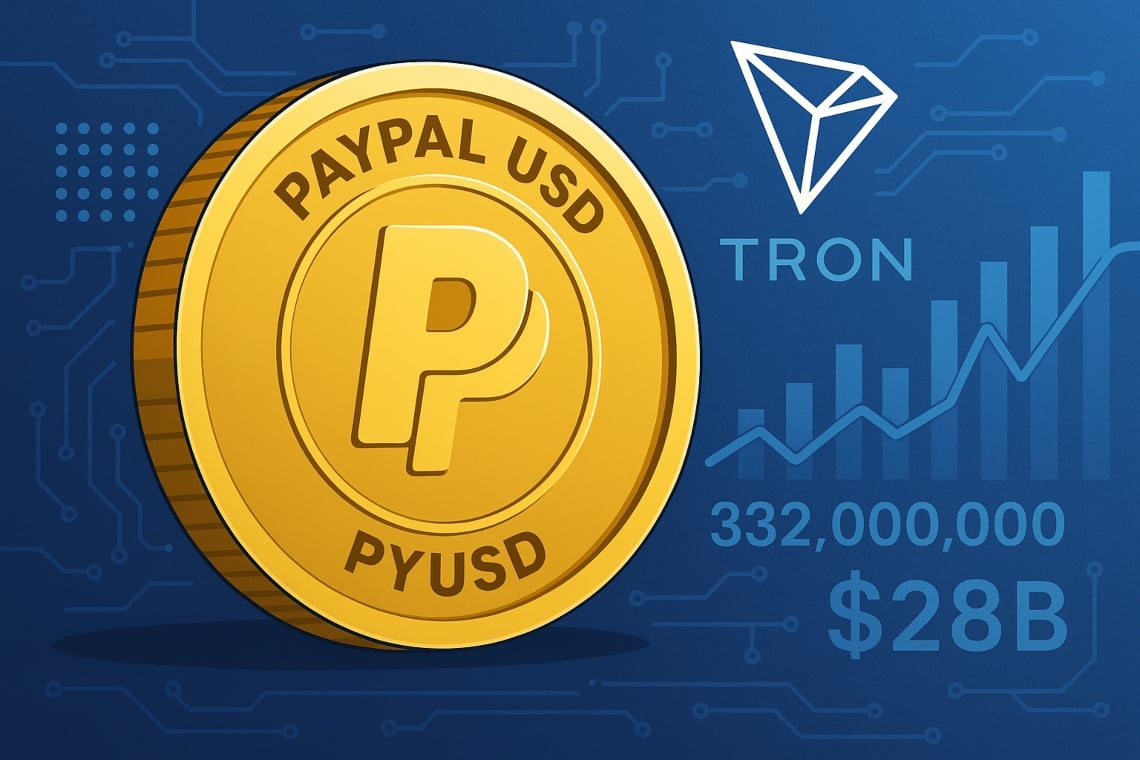
The post 332M accounts and $28B TVL, appeared on BitcoinEthereumNews.com. PayPal USD debuts on TRON as a permissionless token PYUSD0, enabled by LayerZero’s OFT standard and the Stargate Hydra extension. The announcement on September 18, 2025 (Geneva) introduces native interoperability between chains and transfers without manual steps for users; the news echoes elements already communicated by PayPal at the launch of PYUSD PayPal Newsroom. The move concerns an ecosystem that includes 332 million accounts and over $28 billion in TVL. In this context, the fungibility of a stablecoin regulated across multiple networks and the use of TRON as a settlement layer for payments and remittances is at stake. According to the data collected by TRONSCAN updated as of September 18, 2025, the network metrics confirm the cited volumes and highlighted traffic patterns. Our editorial team has verified the transaction logs and monitored the public chain metrics to corroborate the reported figures; the observations on daily flows and TVL are consistent with the network dashboards. Industry analysts observe that the entry of a regulated issuer like PayPal tends to increase institutional interest, provided there is transparency on reserves and compliance checks. What is PYUSD0 on TRON and why is it relevant PYUSD0 is the representation of PayPal USD on TRON. It is pegged one-to-one to PYUSD through the OFT standard: the two tokens remain a single stablecoin, fungible and reconciled across chains. The integration is made possible by Stargate Hydra, now operational through LayerZero. According to the founder of TRON, Justin Sun, the extension on TRON expands access and trust for users and institutions. For Bryan Pellegrino (CEO of LayerZero Labs), stablecoins represent a pillar of global payments and remittances, as the native compatibility between chains enables their operational scalability. It must be said that the alignment between issuer, cross-chain infrastructure, and settlement network is a key element. Key Numbers: TRON…
Share
BitcoinEthereumNews2025/09/19 08:18