The post EUR/JPY rises above 182.50 despite BoJ rate hike bets appeared on BitcoinEthereumNews.com. EUR/JPY extends its gains for the second successive session,The post EUR/JPY rises above 182.50 despite BoJ rate hike bets appeared on BitcoinEthereumNews.com. EUR/JPY extends its gains for the second successive session,

EUR/JPY rises above 182.50 despite BoJ rate hike bets

EUR/JPY extends its gains for the second successive session, trading around 182.80 during the Asian hours on Thursday. The upside of the currency cross could be restrained as the Japanese Yen (JPY) may find support from expectations that the Bank of Japan (BoJ) will continue tightening policy. According to Reuters, markets are pricing in nearly an 80% chance of a BoJ rate hike in April 2026. Still, policymakers are likely to assess upcoming data before deciding on further tightening.

Japan’s Core Machinery Orders jumped 19.1% month-over-month (MoM) to ¥1,052.5 billion in December 2025, rebounding from an 11% decline in November and far exceeding expectations of a 4.5% rise. The surge, the strongest in over a decade, was driven by large, one-off orders from refineries and nuclear fuel producers. On annual basis, private-sector orders rose 16.8% in December, reversing November’s 6.4% contraction and beating forecasts for a 3.9% increase.

The Financial Times reported that European Central Bank (ECB) President Christine Lagarde may step down before her scheduled retirement in October 2027. The report said Lagarde aims to give French President Emmanuel Macron and German Chancellor Friedrich Merz time to agree on her successor, though no timeline was specified.

Looking ahead, traders will focus on Japan’s National Consumer Price Index (CPI) data due Friday. Focus will shift toward preliminary Purchasing Managers’ Index (PMI) readings from Germany and the Eurozone.

Bank of Japan FAQs

The Bank of Japan (BoJ) is the Japanese central bank, which sets monetary policy in the country. Its mandate is to issue banknotes and carry out currency and monetary control to ensure price stability, which means an inflation target of around 2%.

The Bank of Japan embarked in an ultra-loose monetary policy in 2013 in order to stimulate the economy and fuel inflation amid a low-inflationary environment. The bank’s policy is based on Quantitative and Qualitative Easing (QQE), or printing notes to buy assets such as government or corporate bonds to provide liquidity. In 2016, the bank doubled down on its strategy and further loosened policy by first introducing negative interest rates and then directly controlling the yield of its 10-year government bonds. In March 2024, the BoJ lifted interest rates, effectively retreating from the ultra-loose monetary policy stance.

The Bank’s massive stimulus caused the Yen to depreciate against its main currency peers. This process exacerbated in 2022 and 2023 due to an increasing policy divergence between the Bank of Japan and other main central banks, which opted to increase interest rates sharply to fight decades-high levels of inflation. The BoJ’s policy led to a widening differential with other currencies, dragging down the value of the Yen. This trend partly reversed in 2024, when the BoJ decided to abandon its ultra-loose policy stance.

A weaker Yen and the spike in global energy prices led to an increase in Japanese inflation, which exceeded the BoJ’s 2% target. The prospect of rising salaries in the country – a key element fuelling inflation – also contributed to the move.

Source: https://www.fxstreet.com/news/eur-jpy-rises-above-18250-despite-boj-rate-hike-bets-202602190249

Market Opportunity
Lorenzo Protocol Logo
Lorenzo Protocol Price(BANK)
$0,04028
$0,04028$0,04028
+1,53%
USD
Lorenzo Protocol (BANK) Live Price Chart
Disclaimer: The articles reposted on this site are sourced from public platforms and are provided for informational purposes only. They do not necessarily reflect the views of MEXC. All rights remain with the original authors. If you believe any content infringes on third-party rights, please contact service@support.mexc.com for removal. MEXC makes no guarantees regarding the accuracy, completeness, or timeliness of the content and is not responsible for any actions taken based on the information provided. The content does not constitute financial, legal, or other professional advice, nor should it be considered a recommendation or endorsement by MEXC.

You May Also Like

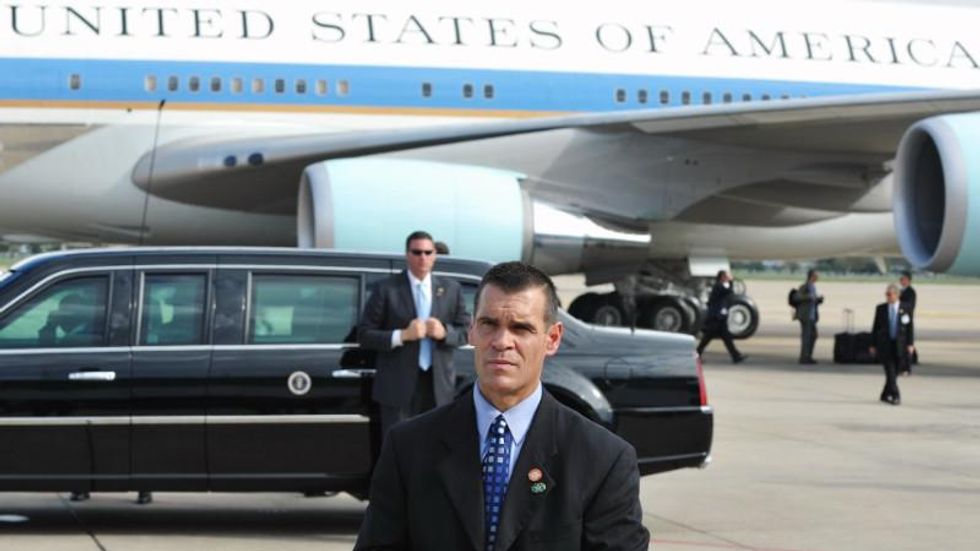
Secret Service’s ‘odd’ new suit policy raises eyebrows

Secret Service’s ‘odd’ new suit policy raises eyebrows

New Secret Service agents assigned to protective details are set to receive a taxpayer-funded wardrobe upgrade, according to a new CNN exclusive report.The Secret
Share
Rawstory2026/02/21 08:04
The Shift to Fractional Leadership: Agility in the 2026 Executive Suite

The Shift to Fractional Leadership: Agility in the 2026 Executive Suite

The traditional model of a permanent, full-time executive suite is undergoing a radical transformation. As we move through 2026, the concept of “Fractional Leadership
Share
Techbullion2026/02/21 08:20
OFAC Designates Two Iranian Finance Facilitators For Crypto Shadow Banking

OFAC Designates Two Iranian Finance Facilitators For Crypto Shadow Banking

The Department of the Treasury’s Office of Foreign Assets Control (OFAC) sanctioned two Iranian financial facilitators for coordinating over $100 million worth of cryptocurrency in oil sales for the Iranian government, a September 16 press release shows. OFAC Sanctions Iranian Nationals According to the Tuesday press release, Iranian nationals Alireza Derakhshan and Arash Estaki Alivand “used a network of front companies in multiple foreign jurisdictions” to transfer the digital assets. OFAC alleges that Alivand and Derakhshan’s transfers also involved the sale of Iranian oil that benefited Iran’s Islamic Revolutionary Guard Corps-Qods Force (IRGC-QF) and the Ministry of Defense and Armed Forces Logistics (MODAFL). IRGC-QF and MODAFL then used the proceeds to support regional proxy terrorist organizations and strengthen their advanced weapons systems, including ballistic missiles. U.S. officials say the move targets shadow banking in the region, where illicit financial actors use overseas money laundering and digital assets to evade sanctions. “Iranian entities rely on shadow banking networks to evade sanctions and move millions through the international financial system,” said Under Secretary of the Treasury for Terrorism and Financial Intelligence John K. Hurley. “Under President Trump’s leadership, we will continue to disrupt these key financial streams that fund Iran’s weapons programs and malign activities in the Middle East and beyond,” he continued. Dozens Designated In Shadow Banking Scandal Both Alivand and Derakhshan have been designated “for having materially assisted, sponsored, or provided financial, material, or technological support for, or goods or services to or in support of the IRGC-QF.” In addition to Alivand and Derakhshan, OFAC has sanctioned more than a dozen Hong Kong and United Arab Emirates-based entities and individuals tied to the network. According to the press release, the sanctioned entities may face civil or criminal penalties imposed as a result
Share
CryptoNews2025/09/18 11:18