In December 2025, the Dubai Financial Services Authority (DFSA) shared its updated Crypto token regulatory framework, allowing DFSA-regulated entities to chooseIn December 2025, the Dubai Financial Services Authority (DFSA) shared its updated Crypto token regulatory framework, allowing DFSA-regulated entities to choose

DFSA shifts token responsibility to firms under the updated crypto framework

2026/02/14 02:13
4 min read

In December 2025, the Dubai Financial Services Authority (DFSA) shared its updated Crypto token regulatory framework, allowing DFSA-regulated entities to choose which crypto tokens to work with, eliminating the need for DFSA approval. The update was supposed to come into effect in January 2026.

This is why today, the DFSA has published a Frequently Asked Questions (FAQs) document to support firms in understanding and implementing its updated Crypto Token regulatory framework. The FAQs are intended to provide practical clarification on the application of the DFSA Rulebook to financial services and activities involving Crypto Tokens in or from the Dubai International Financial Centre (DIFC).

According to DFSA, the updated framework strengthens its approach to crypto regulation as it offers greater regulatory clarity for firms, while reinforcing market integrity and investor protection.

Updated framework will grow crypto asset volumes in the financial freezone

On January 12th, 2026, in an interview with Bloomberg, Elisabeth Wallace, Associate Director of Policy & Legal at the Dubai Financial Services Authority, had noted that the decision to give onus to DFIC firms as opposed to regulators was based on three things: alignment to international standards, alignment to international regulatory standards, and, most importantly in response to market feedback.

Wallace noted that while crypto asset volumes in DIFC have not been large, she believes that after this update, these volumes will grow, and “We will see more in 2026 in response to our framework.”

The updated framework shows maturity and brings a competitive advantage

Kokila Alagh, Founder of KARM Legal Consultants, gave her legal perspective to Cryptopolitan, noting that the previously recognized framework had an important role in the early stages of DIFC’s crypto token framework because it had provided firms with regulatory certainty in a high-risk, fast-evolving market. She believes that the shift away from a regulator-led list reflects “maturity of the ecosystem” and “aligns DFSA with regulator peers.”

She asserts that giving DIFC firms responsibility for choosing the crypto assets signals that DIFC is offering more flexibility in structuring their crypto token activities within a well-defined compliance framework.

As for the firms, Alagh states, “Firms now assume primary responsibility for assessing token suitability, which increases accountability and compliance expectations. This requires firms to implement a robust internal framework in relation to, among others, documentation, ongoing monitoring, reporting, transparency, and disclosure obligations, making a sound compliance culture essential to managing compliance and regulatory risks.”

From the perspective of firms interested in setting up in DIFC, Andrew Forson, President of DeFi Technologies, told Cryptopolitan that “ a list of recognized crypto tokens was not really a relevant factor in determining which tokens to work with. The token landscape moves so quickly that, as an asset manager, the most relevant factor tends to be market interest and market demand.”

He believes that removing the list is recognition by Dubai’s crypto regulations that this industry is technology- and demand-driven above all else. He stated, “This is the appropriate approach because it is individual firms who have the closest view of what tokens are worth, how their underlying projects impact their business model, and therefore the associated risk. Attempting to regulate tokens as eligible centrally may, in many instances, kill the competitive advantage a firm has.”

The DFSA FAQ is built on feedback from 600 participants

The latest FAQs are a result of market engagement and a recent DFSA webinar that brought together more than 600 participants from across the financial services and digital assets ecosystem.

One of the most important information is that the FAQ states that crypto token covers tokens that are used as a medium of exchange for payment or investment purposes, and not NFTs, utility tokens, or investment tokens such as security tokens and stablecoins. Stablecoins can only be used to make payments by an asset manager.

The FAQ document notes that a licensed DFSA firm providing financial services can offer products with exposure to a crypto token if it follows the crypto token regime and complies with relevant requirements, such as suitability assessments under GEN Rule 3A.2.1.

A Crypto Token may be assessed as suitable based on several criteria, such as its characteristics, including its purpose, governance arrangements, and founders.

Secondly is the regulatory status of the Crypto Token in other jurisdictions, including whether it has been assessed or approved for use by a financial services regulator, as well as the size, liquidity, and trading history of the market for the Crypto Token globally and finally the technology used in connection with the Crypto Token; and whether the use of the Crypto Token could prevent the person from complying with legislation administered by the DFSA.

Earn 8% CASHBACK in USDC when you pay with COCA. Order your FREE card.

Market Opportunity
Effect AI Logo
Effect AI Price(EFFECT)
$0,003897
$0,003897$0,003897
+0,02%
USD
Effect AI (EFFECT) Live Price Chart
Disclaimer: The articles reposted on this site are sourced from public platforms and are provided for informational purposes only. They do not necessarily reflect the views of MEXC. All rights remain with the original authors. If you believe any content infringes on third-party rights, please contact service@support.mexc.com for removal. MEXC makes no guarantees regarding the accuracy, completeness, or timeliness of the content and is not responsible for any actions taken based on the information provided. The content does not constitute financial, legal, or other professional advice, nor should it be considered a recommendation or endorsement by MEXC.

You May Also Like

Gold Hits $3,700 as Sprott’s Wong Says Dollar’s Store-of-Value Crown May Slip
Gold Hits $3,700 as Sprott’s Wong Says Dollar’s Store-of-Value Crown May Slip

The post Gold Hits $3,700 as Sprott’s Wong Says Dollar’s Store-of-Value Crown May Slip appeared on BitcoinEthereumNews.com. Gold is strutting its way into record territory, smashing through $3,700 an ounce Wednesday morning, as Sprott Asset Management strategist Paul Wong says the yellow metal may finally snatch the dollar’s most coveted role: store of value. Wong Warns: Fiscal Dominance Puts U.S. Dollar on Notice, Gold on Top Gold prices eased slightly to $3,678.9 […] Source: https://news.bitcoin.com/gold-hits-3700-as-sprotts-wong-says-dollars-store-of-value-crown-may-slip/
Share
BitcoinEthereumNews2025/09/18 00:33
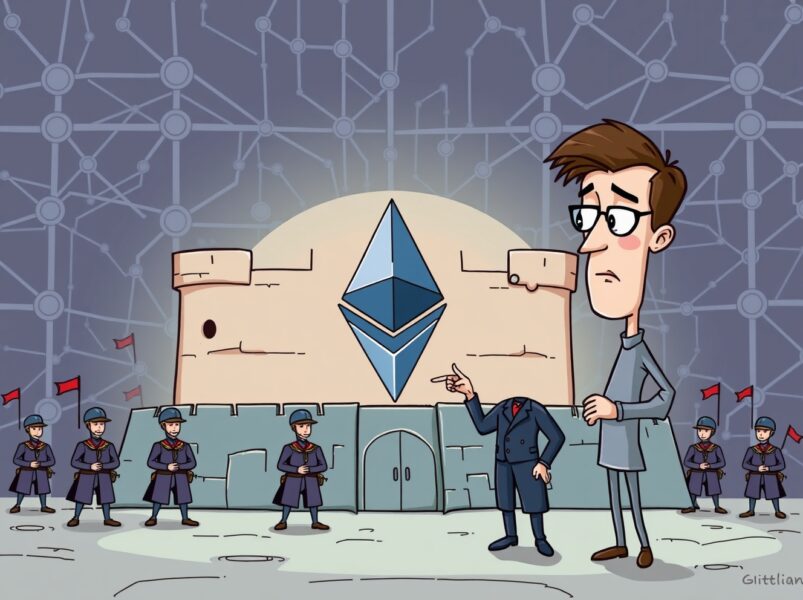
Crucial ETH Unstaking Period: Vitalik Buterin’s Unwavering Defense for Network Security

Crucial ETH Unstaking Period: Vitalik Buterin’s Unwavering Defense for Network Security

BitcoinWorld Crucial ETH Unstaking Period: Vitalik Buterin’s Unwavering Defense for Network Security Ever wondered why withdrawing your staked Ethereum (ETH) isn’t an instant process? It’s a question that often sparks debate within the crypto community. Ethereum founder Vitalik Buterin recently stepped forward to defend the network’s approximately 45-day ETH unstaking period, asserting its crucial role in safeguarding the network’s integrity. This lengthy waiting time, while sometimes seen as an inconvenience, is a deliberate design choice with profound implications for security. Why is the ETH Unstaking Period a Vital Security Measure? Vitalik Buterin’s defense comes amidst comparisons to other networks, like Solana, which boast significantly shorter unstaking times. He drew a compelling parallel to military operations, explaining that an army cannot function effectively if its soldiers can simply abandon their posts at a moment’s notice. Similarly, a blockchain network requires a stable and committed validator set to maintain its security. The current ETH unstaking period isn’t merely an arbitrary delay. It acts as a critical buffer, providing the network with sufficient time to detect and respond to potential malicious activities. If validators could instantly exit, it would open doors for sophisticated attacks, jeopardizing the entire system. Currently, Ethereum boasts over one million active validators, collectively staking approximately 35.6 million ETH, representing about 30% of the total supply. This massive commitment underpins the network’s robust security model, and the unstaking period helps preserve this stability. Network Security: Ethereum’s Paramount Concern A shorter ETH unstaking period might seem appealing for liquidity, but it introduces significant risks. Imagine a scenario where a large number of validators, potentially colluding, could quickly withdraw their stake after committing a malicious act. Without a substantial delay, the network would have limited time to penalize them or mitigate the damage. This “exit queue” mechanism is designed to prevent sudden validator exodus, which could lead to: Reduced decentralization: A rapid drop in active validators could concentrate power among fewer participants. Increased vulnerability to attacks: A smaller, less stable validator set is easier to compromise. Network instability: Frequent and unpredictable changes in validator numbers can lead to performance issues and consensus failures. Therefore, the extended period is not a bug; it’s a feature. It’s a calculated trade-off between immediate liquidity for stakers and the foundational security of the entire Ethereum ecosystem. Ethereum vs. Solana: Different Approaches to Unstaking When discussing the ETH unstaking period, many point to networks like Solana, which offers a much quicker two-day unstaking process. While this might seem like an advantage for stakers seeking rapid access to their funds, it reflects fundamental differences in network architecture and security philosophies. Solana’s design prioritizes speed and immediate liquidity, often relying on different consensus mechanisms and validator economics to manage security risks. Ethereum, on the other hand, with its proof-of-stake evolution from proof-of-work, has adopted a more cautious approach to ensure its transition and long-term stability are uncompromised. Each network makes design choices based on its unique goals and threat models. Ethereum’s substantial value and its role as a foundational layer for countless dApps necessitate an extremely robust security posture, making the current unstaking duration a deliberate and necessary component. What Does the ETH Unstaking Period Mean for Stakers? For individuals and institutions staking ETH, understanding the ETH unstaking period is crucial for managing expectations and investment strategies. It means that while staking offers attractive rewards, it also comes with a commitment to the network’s long-term health. Here are key considerations for stakers: Liquidity Planning: Stakers should view their staked ETH as a longer-term commitment, not immediately liquid capital. Risk Management: The delay inherently reduces the ability to react quickly to market volatility with staked assets. Network Contribution: By participating, stakers contribute directly to the security and decentralization of Ethereum, reinforcing its value proposition. While the current waiting period may not be “optimal” in every sense, as Buterin acknowledged, simply shortening it without addressing the underlying security implications would be a dangerous gamble for the network’s reliability. In conclusion, Vitalik Buterin’s defense of the lengthy ETH unstaking period underscores a fundamental principle: network security cannot be compromised for the sake of convenience. It is a vital mechanism that protects Ethereum’s integrity, ensuring its stability and trustworthiness as a leading blockchain platform. This deliberate design choice, while requiring patience from stakers, ultimately fortifies the entire ecosystem against potential threats, paving the way for a more secure and reliable decentralized future. Frequently Asked Questions (FAQs) Q1: What is the main reason for Ethereum’s long unstaking period? A1: The primary reason is network security. A lengthy ETH unstaking period prevents malicious actors from quickly withdrawing their stake after an attack, giving the network time to detect and penalize them, thus maintaining stability and integrity. Q2: How long is the current ETH unstaking period? A2: The current ETH unstaking period is approximately 45 days. This duration can fluctuate based on network conditions and the number of validators in the exit queue. Q3: How does Ethereum’s unstaking period compare to other blockchains? A3: Ethereum’s unstaking period is notably longer than some other networks, such as Solana, which has a two-day period. This difference reflects varying network architectures and security priorities. Q4: Does the unstaking period affect ETH stakers? A4: Yes, it means stakers need to plan their liquidity carefully, as their staked ETH is not immediately accessible. It encourages a longer-term commitment to the network, aligning staker interests with Ethereum’s stability. Q5: Could the ETH unstaking period be shortened in the future? A5: While Vitalik Buterin acknowledged the current period might not be “optimal,” any significant shortening would likely require extensive research and network upgrades to ensure security isn’t compromised. For now, the focus remains on maintaining robust network defenses. Found this article insightful? Share it with your friends and fellow crypto enthusiasts on social media to spread awareness about the critical role of the ETH unstaking period in Ethereum’s security! To learn more about the latest Ethereum trends, explore our article on key developments shaping Ethereum’s institutional adoption. This post Crucial ETH Unstaking Period: Vitalik Buterin’s Unwavering Defense for Network Security first appeared on BitcoinWorld.
Share
Coinstats2025/09/18 15:30
ChatGPT Predicts Bitcoin’s Next Move – Here’s Why $HYPER Could Be the Biggest Winner

ChatGPT Predicts Bitcoin’s Next Move – Here’s Why $HYPER Could Be the Biggest Winner

The post ChatGPT Predicts Bitcoin’s Next Move – Here’s Why $HYPER Could Be the Biggest Winner appeared on BitcoinEthereumNews.com. That’s because historically, September has been Bitcoin’s worst-performing month, with an average return of -4.44% over the last 15 years. So, with a positive September, Bitcoin is showing early signs of an explosive Q4. Speaking of Q4, Bitcoin has delivered an average return of nearly 80% in this quarter over the last 15 years of recorded data. This time around, the return percentage could be even greater, thanks to strong fundamental tailwinds such as pro-crypto policy shifts from the Trump administration, multiple expected Federal Reserve rate cuts before year-end, and crypto’s growing adoption and awareness among everyday users. To arrive at an objective Bitcoin price prediction, we turned to ChatGPT. Thanks to its access to real-time crypto-related data – from social media chatter and company updates to on-chain metrics and policy announcements – ChatGPT has its finger on the pulse of the market. Unlike human analysts, it can detach from emotions and biases, which is important because, let’s face it, most people online want crypto to skyrocket, creating an unavoidable bias. By using ChatGPT, we can cut through that noise and rely on objective analysis. So read on to find out what ChatGPT predicts for Bitcoin’s future – and how you can ride digital gold’s bullishness by buying Bitcoin Hyper ($HYPER), a new BTC-themed altcoin currently in presale and poised for potential gains of up to 9,100% in the coming years. Bitcoin Setting Up for New Highs The first thing ChatGPT noted on Bitcoin’s chart was how neatly its weekly price action has been setting up for an upward move. Sure, Bitcoin fell for three straight weeks in August, but ChatGPT was quick to analyze that this was, in all likelihood, a healthy price correction as it pulled the token toward the important 0.5-0.618 Fibonacci zone, which is considered the…
Share
BitcoinEthereumNews2025/09/30 16:19