BitcoinWorld Trump Fed Governor: Shocking Ultimatum to Lisa Cook Amid Allegations The political landscape is buzzing with a startling announcement: former U.S. President Donald Trump has issued a direct ultimatum to Federal Reserve (Fed) Governor Lisa Cook. According to a report by Walter Bloomberg on X, Trump stated he would fire Cook if she does not resign. This bold declaration puts the spotlight squarely on the role of the Trump Fed Governor and the delicate balance of power between political leadership and independent economic institutions. Trump Fed Governor Cook: The Unprecedented Ultimatum This isn’t just another political soundbite; it’s a significant development that could have far-reaching implications. Donald Trump’s threat to dismiss Lisa Cook stems from his administration’s decision to refer mortgage-fraud allegations against her to the Justice Department for review. Such a direct challenge to a sitting Federal Reserve official is rare and immediately raises questions about the Fed’s independence. Here’s what we know: The Threat: Trump explicitly stated he would fire Governor Cook if she does not step down. The Context: This follows allegations of mortgage-fraud, which have been passed to the Justice Department. The Official: Lisa Cook is a Federal Reserve Governor, a crucial role in shaping the nation’s monetary policy. The implications of a President directly threatening a Trump Fed Governor are profound, stirring debates about the separation of powers and the sanctity of economic policy-making. Unpacking the Mortgage-Fraud Allegations: What Are They? The core of this controversy lies in the mortgage-fraud allegations. While specific details remain under wraps as the Justice Department reviews the case, these accusations are serious. Any claims of financial misconduct against a high-ranking official like a Federal Reserve Governor warrant thorough investigation. However, the timing and public nature of Trump’s threat add another layer of complexity. It is important to remember that allegations are not convictions. The Justice Department’s review will determine the veracity and extent of these claims. Meanwhile, the public discourse inevitably shifts to whether these allegations are being used as a political tool to exert pressure on the Federal Reserve. What Could This Mean for the Federal Reserve’s Independence? The Federal Reserve operates with a degree of independence from political influence, a design intended to allow it to make monetary policy decisions based on economic data rather than short-term political cycles. This independence is a cornerstone of economic stability, both domestically and globally. Therefore, a presidential threat to a Trump Fed Governor, regardless of the underlying allegations, strikes at the heart of this principle. Potential impacts include: Market Uncertainty: Investors and markets often react negatively to perceived political interference in central bank operations. Policy Shifts: If a Governor is forced out, it could lead to changes in the Fed’s composition and potentially its policy stance. Erosion of Trust: Public trust in the Fed’s ability to act impartially could be damaged. The situation highlights the constant tension between political aims and the need for an apolitical central bank, especially when a figure like a Trump Fed Governor is at the center of such a storm. Navigating Political Tensions in Economic Policy This episode serves as a powerful reminder of how deeply intertwined politics and economics can become. The Federal Reserve’s mandate includes maintaining price stability and maximum employment, crucial functions that affect every American. When a President, past or present, publicly challenges a Fed official, it sends ripples throughout the financial system and political discourse. Moving forward, observers will be closely watching: The outcome of the Justice Department’s review into the allegations. Lisa Cook’s response to the ultimatum. The broader reaction from other Fed officials and political figures. The future of the Trump Fed Governor situation could set an important precedent for the relationship between the executive branch and the nation’s central bank. The ultimatum issued by Donald Trump to Federal Reserve Governor Lisa Cook is a significant event, blending serious allegations with high-stakes political maneuvering. It underscores the fragility of institutional independence and the potential for political pressure to influence critical economic bodies. As the Justice Department reviews the mortgage-fraud allegations, the financial world and political observers will be watching closely to see how this unprecedented situation unfolds and what it means for the future of the Federal Reserve’s autonomy. Frequently Asked Questions (FAQs) What is the role of a Federal Reserve Governor? A Federal Reserve Governor is a member of the Board of Governors of the Federal Reserve System, responsible for setting monetary policy, overseeing the banking system, and ensuring the stability of the U.S. financial system. Why did Donald Trump threaten to fire Fed Governor Lisa Cook? Trump’s threat follows his administration’s referral of mortgage-fraud allegations against Lisa Cook to the Justice Department for review. He stated he would fire her if she does not resign. How does this situation impact the Federal Reserve’s independence? Such a direct threat from a former President to a sitting Fed official raises concerns about political interference in the central bank’s operations, potentially undermining its independence and creating market uncertainty. Are the mortgage-fraud allegations against Lisa Cook proven? No, the allegations have been referred to the Justice Department for review. They are currently unproven claims and are subject to investigation. What could be the long-term consequences of this ‘Trump Fed Governor’ controversy? The controversy could set a precedent for future interactions between the executive branch and the Federal Reserve, potentially influencing public trust, market stability, and the perceived autonomy of the central bank. If you found this analysis insightful, please share it with your network! Stay informed on critical developments shaping the intersection of politics and finance by sharing this article on social media. To learn more about the latest explore our article on key developments shaping the financial markets and institutional policy changes. This post Trump Fed Governor: Shocking Ultimatum to Lisa Cook Amid Allegations first appeared on BitcoinWorld and is written by Editorial TeamBitcoinWorld Trump Fed Governor: Shocking Ultimatum to Lisa Cook Amid Allegations The political landscape is buzzing with a startling announcement: former U.S. President Donald Trump has issued a direct ultimatum to Federal Reserve (Fed) Governor Lisa Cook. According to a report by Walter Bloomberg on X, Trump stated he would fire Cook if she does not resign. This bold declaration puts the spotlight squarely on the role of the Trump Fed Governor and the delicate balance of power between political leadership and independent economic institutions. Trump Fed Governor Cook: The Unprecedented Ultimatum This isn’t just another political soundbite; it’s a significant development that could have far-reaching implications. Donald Trump’s threat to dismiss Lisa Cook stems from his administration’s decision to refer mortgage-fraud allegations against her to the Justice Department for review. Such a direct challenge to a sitting Federal Reserve official is rare and immediately raises questions about the Fed’s independence. Here’s what we know: The Threat: Trump explicitly stated he would fire Governor Cook if she does not step down. The Context: This follows allegations of mortgage-fraud, which have been passed to the Justice Department. The Official: Lisa Cook is a Federal Reserve Governor, a crucial role in shaping the nation’s monetary policy. The implications of a President directly threatening a Trump Fed Governor are profound, stirring debates about the separation of powers and the sanctity of economic policy-making. Unpacking the Mortgage-Fraud Allegations: What Are They? The core of this controversy lies in the mortgage-fraud allegations. While specific details remain under wraps as the Justice Department reviews the case, these accusations are serious. Any claims of financial misconduct against a high-ranking official like a Federal Reserve Governor warrant thorough investigation. However, the timing and public nature of Trump’s threat add another layer of complexity. It is important to remember that allegations are not convictions. The Justice Department’s review will determine the veracity and extent of these claims. Meanwhile, the public discourse inevitably shifts to whether these allegations are being used as a political tool to exert pressure on the Federal Reserve. What Could This Mean for the Federal Reserve’s Independence? The Federal Reserve operates with a degree of independence from political influence, a design intended to allow it to make monetary policy decisions based on economic data rather than short-term political cycles. This independence is a cornerstone of economic stability, both domestically and globally. Therefore, a presidential threat to a Trump Fed Governor, regardless of the underlying allegations, strikes at the heart of this principle. Potential impacts include: Market Uncertainty: Investors and markets often react negatively to perceived political interference in central bank operations. Policy Shifts: If a Governor is forced out, it could lead to changes in the Fed’s composition and potentially its policy stance. Erosion of Trust: Public trust in the Fed’s ability to act impartially could be damaged. The situation highlights the constant tension between political aims and the need for an apolitical central bank, especially when a figure like a Trump Fed Governor is at the center of such a storm. Navigating Political Tensions in Economic Policy This episode serves as a powerful reminder of how deeply intertwined politics and economics can become. The Federal Reserve’s mandate includes maintaining price stability and maximum employment, crucial functions that affect every American. When a President, past or present, publicly challenges a Fed official, it sends ripples throughout the financial system and political discourse. Moving forward, observers will be closely watching: The outcome of the Justice Department’s review into the allegations. Lisa Cook’s response to the ultimatum. The broader reaction from other Fed officials and political figures. The future of the Trump Fed Governor situation could set an important precedent for the relationship between the executive branch and the nation’s central bank. The ultimatum issued by Donald Trump to Federal Reserve Governor Lisa Cook is a significant event, blending serious allegations with high-stakes political maneuvering. It underscores the fragility of institutional independence and the potential for political pressure to influence critical economic bodies. As the Justice Department reviews the mortgage-fraud allegations, the financial world and political observers will be watching closely to see how this unprecedented situation unfolds and what it means for the future of the Federal Reserve’s autonomy. Frequently Asked Questions (FAQs) What is the role of a Federal Reserve Governor? A Federal Reserve Governor is a member of the Board of Governors of the Federal Reserve System, responsible for setting monetary policy, overseeing the banking system, and ensuring the stability of the U.S. financial system. Why did Donald Trump threaten to fire Fed Governor Lisa Cook? Trump’s threat follows his administration’s referral of mortgage-fraud allegations against Lisa Cook to the Justice Department for review. He stated he would fire her if she does not resign. How does this situation impact the Federal Reserve’s independence? Such a direct threat from a former President to a sitting Fed official raises concerns about political interference in the central bank’s operations, potentially undermining its independence and creating market uncertainty. Are the mortgage-fraud allegations against Lisa Cook proven? No, the allegations have been referred to the Justice Department for review. They are currently unproven claims and are subject to investigation. What could be the long-term consequences of this ‘Trump Fed Governor’ controversy? The controversy could set a precedent for future interactions between the executive branch and the Federal Reserve, potentially influencing public trust, market stability, and the perceived autonomy of the central bank. If you found this analysis insightful, please share it with your network! Stay informed on critical developments shaping the intersection of politics and finance by sharing this article on social media. To learn more about the latest explore our article on key developments shaping the financial markets and institutional policy changes. This post Trump Fed Governor: Shocking Ultimatum to Lisa Cook Amid Allegations first appeared on BitcoinWorld and is written by Editorial Team

Trump Fed Governor: Shocking Ultimatum to Lisa Cook Amid Allegations

5 min read

BitcoinWorld

Trump Fed Governor: Shocking Ultimatum to Lisa Cook Amid Allegations

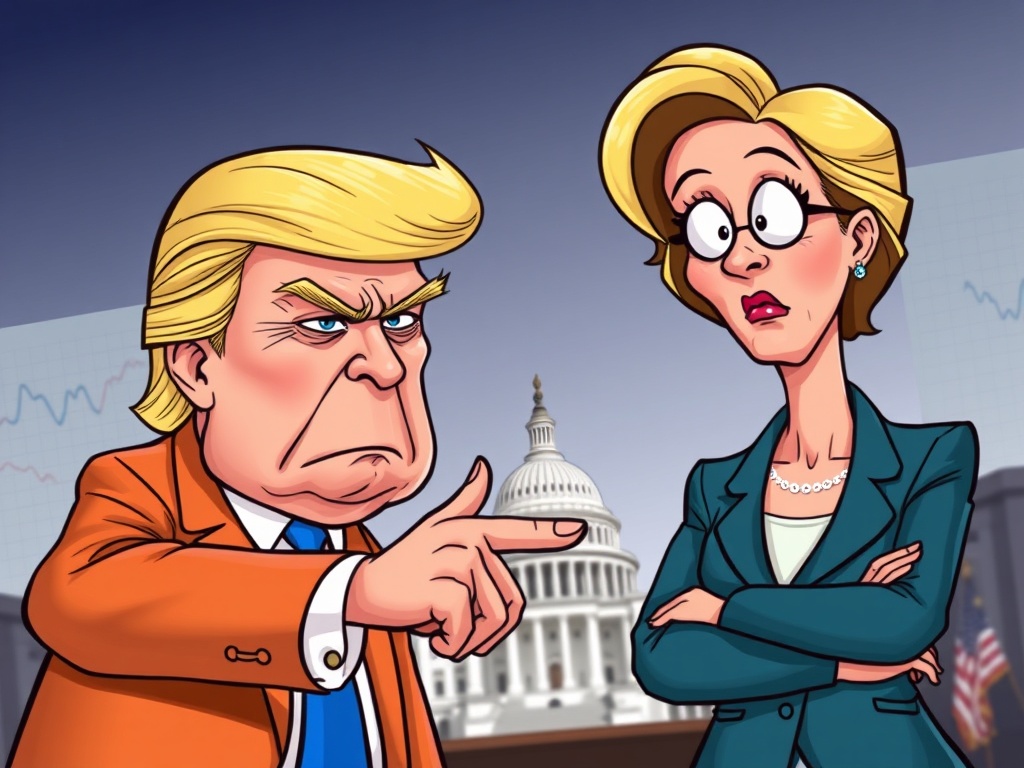
The political landscape is buzzing with a startling announcement: former U.S. President Donald Trump has issued a direct ultimatum to Federal Reserve (Fed) Governor Lisa Cook. According to a report by Walter Bloomberg on X, Trump stated he would fire Cook if she does not resign. This bold declaration puts the spotlight squarely on the role of the Trump Fed Governor and the delicate balance of power between political leadership and independent economic institutions.

Trump Fed Governor Cook: The Unprecedented Ultimatum

This isn’t just another political soundbite; it’s a significant development that could have far-reaching implications. Donald Trump’s threat to dismiss Lisa Cook stems from his administration’s decision to refer mortgage-fraud allegations against her to the Justice Department for review. Such a direct challenge to a sitting Federal Reserve official is rare and immediately raises questions about the Fed’s independence.

Here’s what we know:

  • The Threat: Trump explicitly stated he would fire Governor Cook if she does not step down.
  • The Context: This follows allegations of mortgage-fraud, which have been passed to the Justice Department.
  • The Official: Lisa Cook is a Federal Reserve Governor, a crucial role in shaping the nation’s monetary policy.

The implications of a President directly threatening a Trump Fed Governor are profound, stirring debates about the separation of powers and the sanctity of economic policy-making.

Unpacking the Mortgage-Fraud Allegations: What Are They?

The core of this controversy lies in the mortgage-fraud allegations. While specific details remain under wraps as the Justice Department reviews the case, these accusations are serious. Any claims of financial misconduct against a high-ranking official like a Federal Reserve Governor warrant thorough investigation. However, the timing and public nature of Trump’s threat add another layer of complexity.

It is important to remember that allegations are not convictions. The Justice Department’s review will determine the veracity and extent of these claims. Meanwhile, the public discourse inevitably shifts to whether these allegations are being used as a political tool to exert pressure on the Federal Reserve.

What Could This Mean for the Federal Reserve’s Independence?

The Federal Reserve operates with a degree of independence from political influence, a design intended to allow it to make monetary policy decisions based on economic data rather than short-term political cycles. This independence is a cornerstone of economic stability, both domestically and globally. Therefore, a presidential threat to a Trump Fed Governor, regardless of the underlying allegations, strikes at the heart of this principle.

Potential impacts include:

  • Market Uncertainty: Investors and markets often react negatively to perceived political interference in central bank operations.
  • Policy Shifts: If a Governor is forced out, it could lead to changes in the Fed’s composition and potentially its policy stance.
  • Erosion of Trust: Public trust in the Fed’s ability to act impartially could be damaged.

The situation highlights the constant tension between political aims and the need for an apolitical central bank, especially when a figure like a Trump Fed Governor is at the center of such a storm.

This episode serves as a powerful reminder of how deeply intertwined politics and economics can become. The Federal Reserve’s mandate includes maintaining price stability and maximum employment, crucial functions that affect every American. When a President, past or present, publicly challenges a Fed official, it sends ripples throughout the financial system and political discourse.

Moving forward, observers will be closely watching:

  • The outcome of the Justice Department’s review into the allegations.
  • Lisa Cook’s response to the ultimatum.
  • The broader reaction from other Fed officials and political figures.

The future of the Trump Fed Governor situation could set an important precedent for the relationship between the executive branch and the nation’s central bank.

The ultimatum issued by Donald Trump to Federal Reserve Governor Lisa Cook is a significant event, blending serious allegations with high-stakes political maneuvering. It underscores the fragility of institutional independence and the potential for political pressure to influence critical economic bodies. As the Justice Department reviews the mortgage-fraud allegations, the financial world and political observers will be watching closely to see how this unprecedented situation unfolds and what it means for the future of the Federal Reserve’s autonomy.

Frequently Asked Questions (FAQs)

What is the role of a Federal Reserve Governor?

A Federal Reserve Governor is a member of the Board of Governors of the Federal Reserve System, responsible for setting monetary policy, overseeing the banking system, and ensuring the stability of the U.S. financial system.

Why did Donald Trump threaten to fire Fed Governor Lisa Cook?

Trump’s threat follows his administration’s referral of mortgage-fraud allegations against Lisa Cook to the Justice Department for review. He stated he would fire her if she does not resign.

How does this situation impact the Federal Reserve’s independence?

Such a direct threat from a former President to a sitting Fed official raises concerns about political interference in the central bank’s operations, potentially undermining its independence and creating market uncertainty.

Are the mortgage-fraud allegations against Lisa Cook proven?

No, the allegations have been referred to the Justice Department for review. They are currently unproven claims and are subject to investigation.

What could be the long-term consequences of this ‘Trump Fed Governor’ controversy?

The controversy could set a precedent for future interactions between the executive branch and the Federal Reserve, potentially influencing public trust, market stability, and the perceived autonomy of the central bank.

If you found this analysis insightful, please share it with your network! Stay informed on critical developments shaping the intersection of politics and finance by sharing this article on social media.

To learn more about the latest explore our article on key developments shaping the financial markets and institutional policy changes.

This post Trump Fed Governor: Shocking Ultimatum to Lisa Cook Amid Allegations first appeared on BitcoinWorld and is written by Editorial Team

Market Opportunity
Threshold Logo
Threshold Price(T)
$0.007779
$0.007779$0.007779
+0.90%
USD
Threshold (T) Live Price Chart
Disclaimer: The articles reposted on this site are sourced from public platforms and are provided for informational purposes only. They do not necessarily reflect the views of MEXC. All rights remain with the original authors. If you believe any content infringes on third-party rights, please contact service@support.mexc.com for removal. MEXC makes no guarantees regarding the accuracy, completeness, or timeliness of the content and is not responsible for any actions taken based on the information provided. The content does not constitute financial, legal, or other professional advice, nor should it be considered a recommendation or endorsement by MEXC.

You May Also Like

Unlocking Massive Value: Curve Finance Revenue Sharing Proposal for CRV Holders

Unlocking Massive Value: Curve Finance Revenue Sharing Proposal for CRV Holders

BitcoinWorld Unlocking Massive Value: Curve Finance Revenue Sharing Proposal for CRV Holders The dynamic world of decentralized finance (DeFi) is constantly evolving, bringing forth new opportunities and innovations. A significant development is currently unfolding at Curve Finance, a leading decentralized exchange (DEX). Its founder, Michael Egorov, has put forth an exciting proposal designed to offer a more direct path for token holders to earn revenue. This initiative, centered around a new Curve Finance revenue sharing model, aims to bolster the value for those actively participating in the protocol’s governance. What is the “Yield Basis” Proposal and How Does it Work? At the core of this forward-thinking initiative is a new protocol dubbed Yield Basis. Michael Egorov introduced this concept on the CurveDAO governance forum, outlining a mechanism to distribute sustainable profits directly to CRV holders. Specifically, it targets those who stake their CRV tokens to gain veCRV, which are essential for governance participation within the Curve ecosystem. Let’s break down the initial steps of this innovative proposal: crvUSD Issuance: Before the Yield Basis protocol goes live, $60 million in crvUSD will be issued. Strategic Fund Allocation: The funds generated from the sale of these crvUSD tokens will be strategically deployed into three distinct Bitcoin-based liquidity pools: WBTC, cbBTC, and tBTC. Pool Capping: To ensure balanced risk and diversified exposure, each of these pools will be capped at $10 million. This carefully designed structure aims to establish a robust and consistent income stream, forming the bedrock of a sustainable Curve Finance revenue sharing mechanism. Why is This Curve Finance Revenue Sharing Significant for CRV Holders? This proposal marks a pivotal moment for CRV holders, particularly those dedicated to the long-term health and governance of Curve Finance. Historically, generating revenue for token holders in the DeFi space can often be complex. The Yield Basis proposal simplifies this by offering a more direct and transparent pathway to earnings. By staking CRV for veCRV, holders are not merely engaging in governance; they are now directly positioned to benefit from the protocol’s overall success. The significance of this development is multifaceted: Direct Profit Distribution: veCRV holders are set to receive a substantial share of the profits generated by the Yield Basis protocol. Incentivized Governance: This direct financial incentive encourages more users to stake their CRV, which in turn strengthens the protocol’s decentralized governance structure. Enhanced Value Proposition: The promise of sustainable revenue sharing could significantly boost the inherent value of holding and staking CRV tokens. Ultimately, this move underscores Curve Finance’s dedication to rewarding its committed community and ensuring the long-term vitality of its ecosystem through effective Curve Finance revenue sharing. Understanding the Mechanics: Profit Distribution and Ecosystem Support The distribution model for Yield Basis has been thoughtfully crafted to strike a balance between rewarding veCRV holders and supporting the wider Curve ecosystem. Under the terms of the proposal, a substantial portion of the value generated by Yield Basis will flow back to those who contribute to the protocol’s governance. Returns for veCRV Holders: A significant share, specifically between 35% and 65% of the value generated by Yield Basis, will be distributed to veCRV holders. This flexible range allows for dynamic adjustments based on market conditions and the protocol’s performance. Ecosystem Reserve: Crucially, 25% of the Yield Basis tokens will be reserved exclusively for the Curve ecosystem. This allocation can be utilized for various strategic purposes, such as funding ongoing development, issuing grants, or further incentivizing liquidity providers. This ensures the continuous growth and innovation of the platform. The proposal is currently undergoing a democratic vote on the CurveDAO governance forum, giving the community a direct voice in shaping the future of Curve Finance revenue sharing. The voting period is scheduled to conclude on September 24th. What’s Next for Curve Finance and CRV Holders? The proposed Yield Basis protocol represents a pioneering approach to sustainable revenue generation and community incentivization within the DeFi landscape. If approved by the community, this Curve Finance revenue sharing model has the potential to establish a new benchmark for how decentralized exchanges reward their most dedicated participants. It aims to foster a more robust and engaged community by directly linking governance participation with tangible financial benefits. This strategic move by Michael Egorov and the Curve Finance team highlights a strong commitment to innovation and strengthening the decentralized nature of the protocol. For CRV holders, a thorough understanding of this proposal is crucial for making informed decisions regarding their staking strategies and overall engagement with one of DeFi’s foundational platforms. FAQs about Curve Finance Revenue Sharing Q1: What is the main goal of the Yield Basis proposal? A1: The primary goal is to establish a more direct and sustainable way for CRV token holders who stake their tokens (receiving veCRV) to earn revenue from the Curve Finance protocol. Q2: How will funds be generated for the Yield Basis protocol? A2: Initially, $60 million in crvUSD will be issued and sold. The funds from this sale will then be allocated to three Bitcoin-based pools (WBTC, cbBTC, and tBTC), with each pool capped at $10 million, to generate profits. Q3: Who benefits from the Yield Basis revenue sharing? A3: The proposal states that between 35% and 65% of the value generated by Yield Basis will be returned to veCRV holders, who are CRV stakers participating in governance. Q4: What is the purpose of the 25% reserve for the Curve ecosystem? A4: This 25% reserve of Yield Basis tokens is intended to support the broader Curve ecosystem, potentially funding development, grants, or other initiatives that contribute to the platform’s growth and sustainability. Q5: When is the vote on the Yield Basis proposal? A5: A vote on the proposal is currently underway on the CurveDAO governance forum and is scheduled to run until September 24th. If you found this article insightful and valuable, please consider sharing it with your friends, colleagues, and followers on social media! Your support helps us continue to deliver important DeFi insights and analysis to a wider audience. To learn more about the latest DeFi market trends, explore our article on key developments shaping decentralized finance institutional adoption. This post Unlocking Massive Value: Curve Finance Revenue Sharing Proposal for CRV Holders first appeared on BitcoinWorld.
Share
Coinstats2025/09/18 00:35
Best Crypto To Buy Now: Pepeto vs BlockDAG, Layer Brett, Remittix, Little Pepe, Compared

Best Crypto To Buy Now: Pepeto vs BlockDAG, Layer Brett, Remittix, Little Pepe, Compared

Today we compare Pepeto (PEPETO), BlockDAG, Layer Brett, Remittix, Little Pepe (and how they stack up today) by the main […] The post Best Crypto To Buy Now: Pepeto vs BlockDAG, Layer Brett, Remittix, Little Pepe, Compared appeared first on Coindoo.
Share
Coindoo2025/09/18 02:39
Solana Price Plummets: SOL Crashes Below $90 in Stunning Market Reversal

Solana Price Plummets: SOL Crashes Below $90 in Stunning Market Reversal

BitcoinWorld Solana Price Plummets: SOL Crashes Below $90 in Stunning Market Reversal In a dramatic shift for one of cryptocurrency’s leading networks, Solana (
Share
bitcoinworld2026/02/05 06:45