South Korea is preparing to introduce a regulatory framework for stablecoins in a few months. In particular, the Financial Services Commission (FSC) is expected to submit the bill to the National Assembly in October. Stablecoin Framework Designed to Reduce Dollar Dependence According to lawmaker Park Min-kyu, the FSC briefed him on the policy direction and […] The post South Korea Moves Ahead With Stablecoin Regulation Bill appeared first on Live Bitcoin News.South Korea is preparing to introduce a regulatory framework for stablecoins in a few months. In particular, the Financial Services Commission (FSC) is expected to submit the bill to the National Assembly in October. Stablecoin Framework Designed to Reduce Dollar Dependence According to lawmaker Park Min-kyu, the FSC briefed him on the policy direction and […] The post South Korea Moves Ahead With Stablecoin Regulation Bill appeared first on Live Bitcoin News.

South Korea Moves Ahead With Stablecoin Regulation Bill

3 min read

South Korea is preparing to introduce a regulatory framework for stablecoins in a few months. In particular, the Financial Services Commission (FSC) is expected to submit the bill to the National Assembly in October.

Stablecoin Framework Designed to Reduce Dollar Dependence

According to lawmaker Park Min-kyu, the FSC briefed him on the policy direction and confirmed the timeline. The framework is part of the second phase of South Korea’s Virtual Asset User Protection Act, and is similar to the US’ recently passed GENIUS Act.

The upcoming bill will define rules for stablecoin issuance, collateral management and internal control systems, and regulators are aiming to give the market clear guidance while ensuring consumers are protected.

The push for stablecoin rules comes as South Korea seeks to reduce its reliance on dollar-pegged tokens. 

As of writing, the stablecoin market is dominated by USD-backed assets like Tether’s USDT and Circle’s USDC. Data from RWA.xyz even shows that dollar-based stablecoins account for as much as 99.8 per cent of the $266.7 billion market.
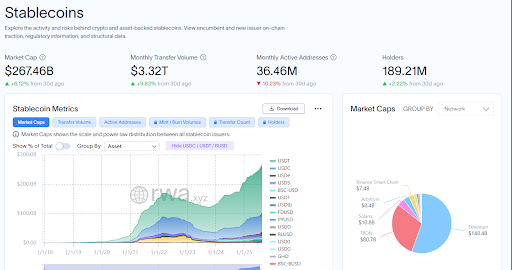
Source: Rwa.xyz 

South Korea’s government sees this as a risk to its monetary sovereignty. 

Several bills have already been submitted to mitigate this, including the Digital Asset Basic Act, the Act on the Issuance and Circulation of Value-Stable Digital Assets and the Act on Payment Innovation Using Value-Pegged Digital Assets. 

The upcoming FSC proposal will bring these efforts together under a unified framework.

South Korea Banks and Tech Firms Support Stablecoin Plans

The country’s largest banks and other institutions are already preparing for the shakeup.

Banks like KB Kookmin, Woori, Shinhan, and Hana have all expressed interest in providing services around stablecoins. These banks are also considering a meeting with Circle’s President, Heath Tarbert, to look into collaborating on stablecoin technology.

South Korea is not alone in pursuing local stablecoins. Its neighbour, Japan, is also close to launching its first yen-backed stablecoin, with fintech firm JPYC expecting approval soon. 

These moves show that Asian countries are making active efforts to strengthen their domestic currencies.

Stablecoin regulation is also gaining speed in other parts of the world. The United States recently introduced the Genius Act, which was signed by President Donald Trump. 

In essence, South Korea’s upcoming bill is likely an attempt to keep up with international developments like these, on its terms.

Concerns From the Central Bank

While the government and private sector are moving forward, the Bank of Korea has raised alarms.

For example, Governor Lee Chang-yong has argued that only licensed banks should issue won-pegged stablecoins. He warned that allowing multiple issuers could undermine the country’s ability to manage foreign currencies.

This move shows the need for balance as far as regulators are concerned. Stablecoins offer a great deal of potential for innovation when it comes to payments and finance. However, they can also be risky if they are not controlled properly.

The upcoming bill is expected to address these issues by setting strict requirements for issuers.


The post South Korea Moves Ahead With Stablecoin Regulation Bill appeared first on Live Bitcoin News.

Market Opportunity
Minswap Logo
Minswap Price(MIN)
$0.00643
$0.00643$0.00643
-0.31%
USD
Minswap (MIN) Live Price Chart
Disclaimer: The articles reposted on this site are sourced from public platforms and are provided for informational purposes only. They do not necessarily reflect the views of MEXC. All rights remain with the original authors. If you believe any content infringes on third-party rights, please contact service@support.mexc.com for removal. MEXC makes no guarantees regarding the accuracy, completeness, or timeliness of the content and is not responsible for any actions taken based on the information provided. The content does not constitute financial, legal, or other professional advice, nor should it be considered a recommendation or endorsement by MEXC.

You May Also Like

UBS CEO Targets Direct Crypto Access With “Fast Follower” Tokenization Strategy

UBS CEO Targets Direct Crypto Access With “Fast Follower” Tokenization Strategy

The tension in UBS’s latest strategy update is not between profit and innovation, but between speed and control. On February 4, 2026, as the bank reported a record
Share
Ethnews2026/02/05 04:56
When Will Altcoin Season Start? FED Rate Cut Fuels Bitcoin, but Ethereum Still Lagging

When Will Altcoin Season Start? FED Rate Cut Fuels Bitcoin, but Ethereum Still Lagging

The post When Will Altcoin Season Start? FED Rate Cut Fuels Bitcoin, but Ethereum Still Lagging appeared first on Coinpedia Fintech News The crypto market edged higher today after the U.S. Federal Reserve announced a 25 basis point rate cut, fueling optimism across risk assets. Bitcoin price today is trading around $117,000, while Ethereum holds steady near $4,600. The broader crypto market cap rose modestly, with major altcoins mixed but stable. Analysts note the short-term tone is …
Share
CoinPedia2025/09/18 14:59
Cryptos Signal Divergence Ahead of Fed Rate Decision

Cryptos Signal Divergence Ahead of Fed Rate Decision

The post Cryptos Signal Divergence Ahead of Fed Rate Decision appeared on BitcoinEthereumNews.com. Crypto assets send conflicting signals ahead of the Federal Reserve’s September rate decision. On-chain data reveals a clear decrease in Bitcoin and Ethereum flowing into centralized exchanges, but a sharp increase in altcoin inflows. The findings come from a Tuesday report by CryptoQuant, an on-chain data platform. The firm’s data shows a stark divergence in coin volume, which has been observed in movements onto centralized exchanges over the past few weeks. Bitcoin and Ethereum Inflows Drop to Multi-Month Lows Sponsored Sponsored Bitcoin has seen a dramatic drop in exchange inflows, with the 7-day moving average plummeting to 25,000 BTC, its lowest level in over a year. The average deposit per transaction has fallen to 0.57 BTC as of September. This suggests that smaller retail investors, rather than large-scale whales, are responsible for the recent cash-outs. Ethereum is showing a similar trend, with its daily exchange inflows decreasing to a two-month low. CryptoQuant reported that the 7-day moving average for ETH deposits on exchanges is around 783,000 ETH, the lowest in two months. Other Altcoins See Renewed Selling Pressure In contrast, other altcoin deposit activity on exchanges has surged. The number of altcoin deposit transactions on centralized exchanges was quite steady in May and June of this year, maintaining a 7-day moving average of about 20,000 to 30,000. Recently, however, that figure has jumped to 55,000 transactions. Altcoins: Exchange Inflow Transaction Count. Source: CryptoQuant CryptoQuant projects that altcoins, given their increased inflow activity, could face relatively higher selling pressure compared to BTC and ETH. Meanwhile, the balance of stablecoins on exchanges—a key indicator of potential buying pressure—has increased significantly. The report notes that the exchange USDT balance, around $273 million in April, grew to $379 million by August 31, marking a new yearly high. CryptoQuant interprets this surge as a reflection of…
Share
BitcoinEthereumNews2025/09/18 01:01