XRP Price: Three Factors That Could Trigger a Rebound from Current Levels
TLDR
- XRP price trades near $1.55-$1.60, a level not seen in nearly two years, after falling from its July 2025 peak of $3.66.
- The token broke out from a consolidation range in November 2024, surging from $0.50 to $2.00 before reaching $3.66 in July 2025.
- XRP spot ETF assets total $1.19 billion, with inflow patterns potentially signaling support for a near-term price rebound.
- Ripple Labs received full Electronic Money Institution approval from Luxembourg’s CSSF on February 2, 2026, expanding its EU operations.
- White House meetings between crypto and banking representatives revealed ongoing challenges to stablecoin yield legislation and the Market Structure Bill.
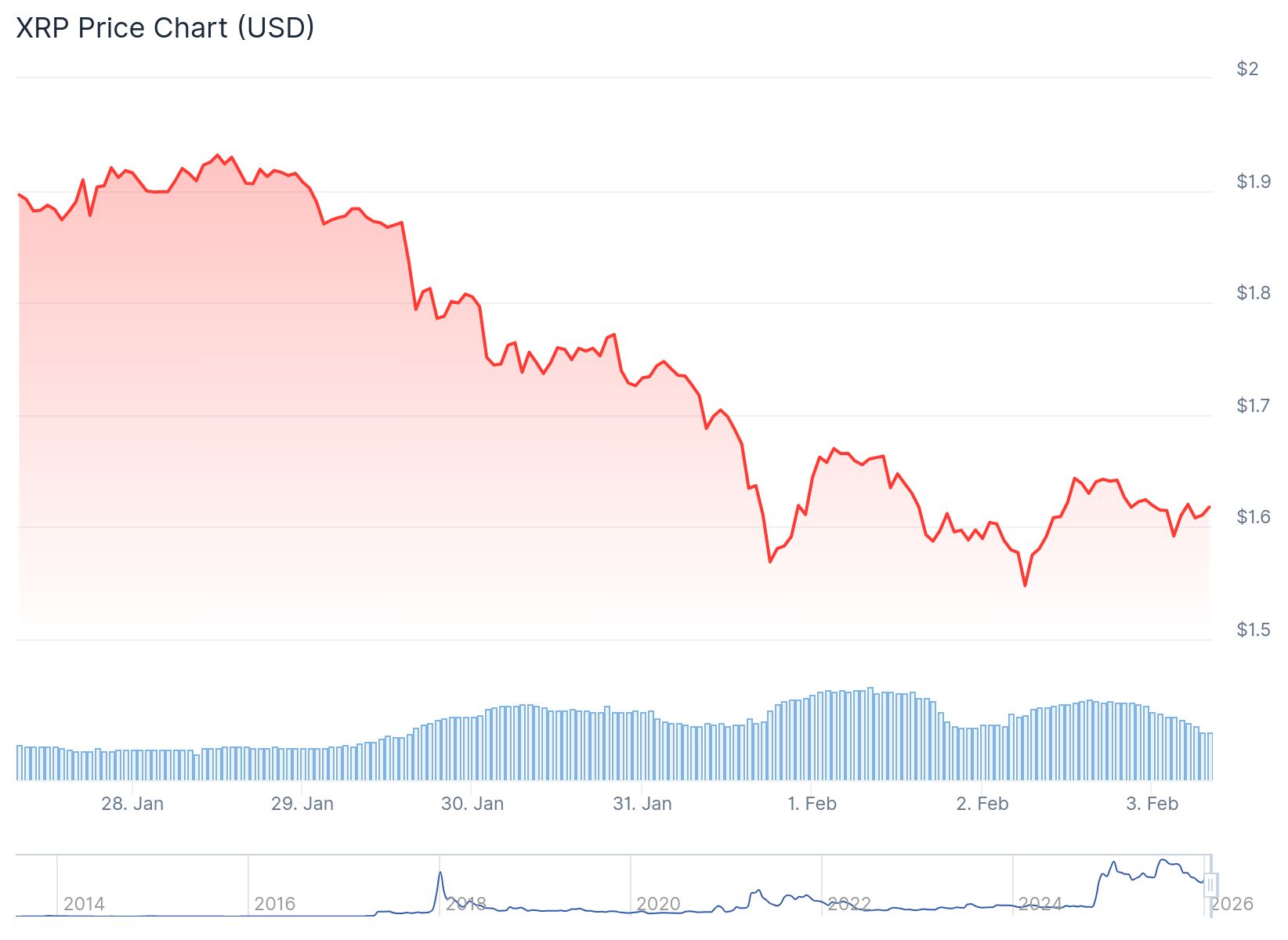
XRP price dropped to levels last seen in early 2024, putting the cryptocurrency at a critical technical juncture. The token currently trades between $1.55 and $1.60 after declining from its July 2025 peak of $3.66.
 XRP Price
The current price level marks a return to the breakout zone from November 2024. For most of 2023 and early 2024, XRP traded in a tight range between $0.45 and $0.70. In November 2024, the token broke above this range, climbing from around $0.50 to $2.00 within weeks.
Between December 2024 and March 2025, XRP consolidated between $2.00 and $3.20. The token then pushed higher, reaching $3.66 in July 2025. However, multiple attempts to hold above $3.50 failed, and selling pressure increased through the second half of 2025.
The current price zone sits near the midpoint of the November 2024 breakout move. This area previously acted as resistance before becoming support. A break below current levels would expose the $1.30 to $1.35 range, with psychological support near $1.00 to $1.10 below that.
ETF Activity Shows Mixed Signals
Total net assets across XRP spot ETFs stand near $1.19 billion. Daily flows have turned uneven, with some days showing moderate inflows that suggest cautious market participation.
Previous periods of high ETF inflows coincided with XRP price consolidation or rallies. If daily inflows increase, it could help absorb selling pressure at current levels. ETF flows represent institutional buying activity separate from retail trading.
Ripple Secures European Regulatory Approval
On February 2, 2026, Ripple Labs confirmed it received full approval for an Electronic Money Institution license from Luxembourg’s financial regulator, the CSSF. This followed preliminary approval and completion of all required conditions.
The license allows Ripple to operate across the European Union under a unified framework. It builds on recent approval from the United Kingdom’s Financial Conduct Authority, where Ripple secured both an EMI license and cryptoasset registration.
Ripple now holds more than 75 regulatory licenses worldwide. This places it among the most regulated firms in the digital asset sector.
White House meetings on February 2 between banking and crypto representatives highlighted ongoing challenges to crypto legislation. Discussions focused on stablecoin yield rules. A statement from banking trade groups emphasized the need to protect the financial system and local lending.
Crypto representatives wanted to discuss specific solutions on yield. Bank trade representatives avoided details and did not discuss discrete solutions. The different approaches suggest negotiations may face obstacles.
The US Senate Banking Committee postponed a markup vote on its draft text for the Market Structure Bill. Coinbase withdrew support, stating the draft text eliminated rewards on stablecoins.
XRP snapped a five-day losing streak on February 2 after strong US ISM Manufacturing Index data showed the sector returning to expansion. The token gained 1.90% that day, closing at $1.6192.
Technical analysis shows XRP trading below its 50-day and 200-day moving averages. Support levels to watch include $1.50 and $1.00. Resistance levels include $1.75, $2.00, and $2.50.
The post XRP Price: Three Factors That Could Trigger a Rebound from Current Levels appeared first on CoinCentral.
You May Also Like

Cashing In On University Patents Means Giving Up On Our Innovation Future

Trump foe devises plan to starve him of what he 'craves' most