The post Trump-Backed USD1 Stablecoin Explodes to $5B in Less Than a Year appeared first on Coinpedia Fintech News The Trump-linked USD1 stablecoin has surged pastThe post Trump-Backed USD1 Stablecoin Explodes to $5B in Less Than a Year appeared first on Coinpedia Fintech News The Trump-linked USD1 stablecoin has surged past

Trump-Backed USD1 Stablecoin Explodes to $5B in Less Than a Year
4 min read
USD1 Stablecoin

The post Trump-Backed USD1 Stablecoin Explodes to $5B in Less Than a Year appeared first on Coinpedia Fintech News

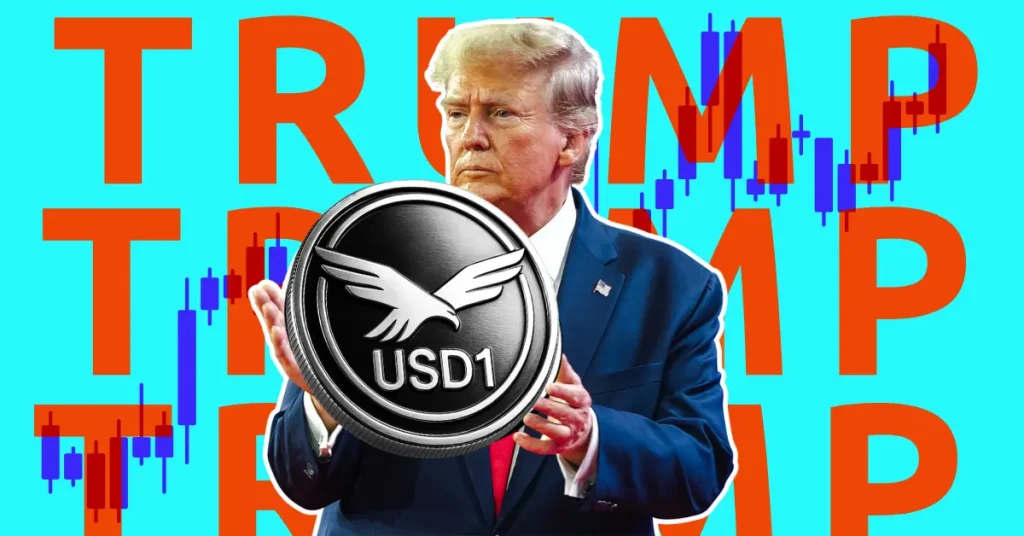
The Trump-linked USD1 stablecoin has surged past a $5 billion market capitalization, quickly cementing its place as the fifth-largest stablecoin globally. In doing so, USD1 has overtaken PayPal’s PYUSD and climbed into the top 25 cryptocurrencies by overall market value, according to CoinMarketCap data. The rapid rise has caught the market’s attention, especially given that the stablecoin has achieved this scale in less than a year.

Donald Trump Jr., co-founder of World Liberty Financial, highlighted the milestone on X, pointing to growing institutional interest and accelerating adoption. The pace of growth has positioned USD1 as one of the fastest-scaling stablecoins the market has seen so far.

Growth Fueled by New Products and Treasury Moves

Behind USD1’s momentum is an aggressive expansion strategy by World Liberty Financial. Earlier this year, the firm unveiled “World Liberty Markets,” a new platform that allows users to borrow digital assets using USD1 as collateral. The platform also supports major stablecoins like USDT and USDC, along with tokenized Bitcoin, broadening its appeal to both retail and institutional users.

At the same time, World Liberty has moved to strengthen USD1’s supply through governance. A recent community vote approved using part of the project’s treasury to expand stablecoin issuance, helping meet growing demand. The firm has also signaled plans to launch real-world asset products backed by USD1, further embedding the stablecoin into on-chain financial infrastructure.

Banking Ambitions Spark Regulatory Debate

USD1’s rapid rise comes alongside a controversial push into traditional finance. Earlier this month, WLTC Holdings LLC, an affiliate of World Liberty Financial, applied with the Office of the Comptroller of the Currency (OCC) to establish a national trust bank focused on stablecoin issuance.

  • Also Read :
  •   Why Are Bitcoin, XRP, and Ethereum Prices Falling Today?
  •   ,

The move immediately drew political scrutiny. Senator Elizabeth Warren urged the OCC to halt its review, citing concerns over the project’s ties to former President Donald Trump. The OCC responded by stating that World Liberty’s application would be evaluated under the same standards as any other filing.

World Liberty co-founder Zach Witkoff has defended the application, arguing that a national trust bank would build on USD1’s rapid growth and provide a stronger regulatory foundation for future expansion.

Security Concerns Add Another Layer

Warren has also raised alarms about USD1’s connection to PancakeSwap, a decentralized exchange where the stablecoin is actively traded. She previously warned the Treasury Department that the platform has been linked to illicit fund flows, questioning whether the partnership could pose national security risks.

World Liberty maintains that its operations remain compliant and that USD1’s growth reflects legitimate market demand rather than political backing.

As USD1 continues its climb, it now sits at the center of both market excitement and regulatory debate. Its rise highlights how quickly politically linked crypto projects can scale, but also how fast they can attract scrutiny as they push deeper into the financial system.

Never Miss a Beat in the Crypto World!

Stay ahead with breaking news, expert analysis, and real-time updates on the latest trends in Bitcoin, altcoins, DeFi, NFTs, and more.

bell icon Subscribe to News

FAQs

How did USD1 grow so fast compared to other stablecoins?

Its growth was driven by new lending products, treasury-backed issuance expansion, and early institutional interest boosting liquidity.

What regulatory concerns surround USD1 right now?

Lawmakers have questioned its banking ambitions and DeFi exposure, though regulators say it’s being reviewed like any other applicant.

Does USD1 pose risks to users or the crypto market?

Like all stablecoins, risks include regulation and platform exposure, but USD1 claims compliance and demand-driven growth so far.

Disclaimer: The articles reposted on this site are sourced from public platforms and are provided for informational purposes only. They do not necessarily reflect the views of MEXC. All rights remain with the original authors. If you believe any content infringes on third-party rights, please contact service@support.mexc.com for removal. MEXC makes no guarantees regarding the accuracy, completeness, or timeliness of the content and is not responsible for any actions taken based on the information provided. The content does not constitute financial, legal, or other professional advice, nor should it be considered a recommendation or endorsement by MEXC.

You May Also Like

Recovery extends to $88.20, momentum improves

Recovery extends to $88.20, momentum improves

The post Recovery extends to $88.20, momentum improves appeared on BitcoinEthereumNews.com. Silver price extended its recovery for the second straight day, up by
Share
BitcoinEthereumNews2026/02/05 07:34
Fed Decides On Interest Rates Today—Here’s What To Watch For

Fed Decides On Interest Rates Today—Here’s What To Watch For

The post Fed Decides On Interest Rates Today—Here’s What To Watch For appeared on BitcoinEthereumNews.com. Topline The Federal Reserve on Wednesday will conclude a two-day policymaking meeting and release a decision on whether to lower interest rates—following months of pressure and criticism from President Donald Trump—and potentially signal whether additional cuts are on the way. President Donald Trump has urged the central bank to “CUT INTEREST RATES, NOW, AND BIGGER” than they might plan to. Getty Images Key Facts The central bank is poised to cut interest rates by at least a quarter-point, down from the 4.25% to 4.5% range where they have been held since December to between 4% and 4.25%, as Wall Street has placed 100% odds of a rate cut, according to CME’s FedWatch, with higher odds (94%) on a quarter-point cut than a half-point (6%) reduction. Fed governors Christopher Waller and Michelle Bowman, both Trump appointees, voted in July for a quarter-point reduction to rates, and they may dissent again in favor of a large cut alongside Stephen Miran, Trump’s Council of Economic Advisers’ chair, who was sworn in at the meeting’s start on Tuesday. It’s unclear whether other policymakers, including Kansas City Fed President Jeffrey Schmid and St. Louis Fed President Alberto Musalem, will favor larger cuts or opt for no reduction. Fed Chair Jerome Powell said in his Jackson Hole, Wyoming, address last month the central bank would likely consider a looser monetary policy, noting the “shifting balance of risks” on the U.S. economy “may warrant adjusting our policy stance.” David Mericle, an economist for Goldman Sachs, wrote in a note the “key question” for the Fed’s meeting is whether policymakers signal “this is likely the first in a series of consecutive cuts” as the central bank is anticipated to “acknowledge the softening in the labor market,” though they may not “nod to an October cut.” Mericle said he…
Share
BitcoinEthereumNews2025/09/18 00:23
Wormhole launches reserve tying protocol revenue to token

Wormhole launches reserve tying protocol revenue to token

The post Wormhole launches reserve tying protocol revenue to token appeared on BitcoinEthereumNews.com. Wormhole is changing how its W token works by creating a new reserve designed to hold value for the long term. Announced on Wednesday, the Wormhole Reserve will collect onchain and offchain revenues and other value generated across the protocol and its applications (including Portal) and accumulate them into W, locking the tokens within the reserve. The reserve is part of a broader update called W 2.0. Other changes include a 4% targeted base yield for tokenholders who stake and take part in governance. While staking rewards will vary, Wormhole said active users of ecosystem apps can earn boosted yields through features like Portal Earn. The team stressed that no new tokens are being minted; rewards come from existing supply and protocol revenues, keeping the cap fixed at 10 billion. Wormhole is also overhauling its token release schedule. Instead of releasing large amounts of W at once under the old “cliff” model, the network will shift to steady, bi-weekly unlocks starting October 3, 2025. The aim is to avoid sharp periods of selling pressure and create a more predictable environment for investors. Lockups for some groups, including validators and investors, will extend an additional six months, until October 2028. Core contributor tokens remain under longer contractual time locks. Wormhole launched in 2020 as a cross-chain bridge and now connects more than 40 blockchains. The W token powers governance and staking, with a capped supply of 10 billion. By redirecting fees and revenues into the new reserve, Wormhole is betting that its token can maintain value as demand for moving assets and data between chains grows. This is a developing story. This article was generated with the assistance of AI and reviewed by editor Jeffrey Albus before publication. Get the news in your inbox. Explore Blockworks newsletters: Source: https://blockworks.co/news/wormhole-launches-reserve
Share
BitcoinEthereumNews2025/09/18 01:55