7 AM: The kettle goes on.  7:15 AM: The window is left ajar, letting in the crisp morning breeze. 7:30 AM: The favorite recliner chair is arranged neatly on a sunlit7 AM: The kettle goes on.  7:15 AM: The window is left ajar, letting in the crisp morning breeze. 7:30 AM: The favorite recliner chair is arranged neatly on a sunlit

How Predictable Care Routines Help Seniors Feel More Confident at Home

6 min read
News Brief
A kettle whistling at 7 AM, a window nudged open fifteen minutes later, and a beloved chair angled toward morning sunlight by 7:30—these seemingly unremarkable rituals actually form the backbone of daily life for older adults. Studies indicate that 84% of seniors prefer aging in place, and I believe these steady care patterns significantly boost their confidence and sense of autonomy. Our brains naturally gravitate toward familiar sequences, and this tendency intensifies with age; recognizing predictable routines eases cognitive load and fosters emotional security at home. Once the mind internalizes a routine, it transitions from active decision-making to simple recognition, allowing seniors to anticipate what comes next rather than constantly questioning it—a shift that cultivates genuine control and self-assurance. Recent findings reveal that 75% of adults over 50 would embrace smart home monitoring for independent living, yet 60% view current aging care systems as merely fair or poor, underscoring the need for supportive, stable environments. Moreover, predictability alleviates anxiety and decision fatigue; highly anxious individuals tend to perceive situations as unpredictable and explore excessive options after setbacks, while calmer people favor familiar paths. For seniors, decision fatigue stems less from sheer choice volume than from uncertainty, so consistent routines streamline options, stabilize expectations, and free up energy for meaningful activities. True independence in later years isn't about handling everything solo—it's about continuity. Familiar daily rhythms enable seniors to remain active participants in their own lives, engaging with their surroundings on their own terms. A 2024 survey found that 75% of adults aged 50-plus wish to stay in their current homes, and 73% hope to remain within their communities, highlighting the profound psychological link between stable routines and autonomy. These patterns uphold personal agency, preserve dignity, reinforce identity through lifelong habits, and support meaningful choices within a framework of gentle assistance. Additionally, steady routines nurture a deep bond between seniors and their homes, fostering belonging that encourages social connection and reduces loneliness. Modern care models now prioritize how seniors actually experience independence, making aging in place increasingly common—and giving caregivers confidence that seniors will flourish at their own comfortable, predictable rhythm.

7 AM: The kettle goes on. 

7:15 AM: The window is left ajar, letting in the crisp morning breeze.

How Predictable Care Routines Help Seniors Feel More Confident at Home

7:30 AM: The favorite recliner chair is arranged neatly on a sunlit spot of the porch for a relaxing cup of tea. 

Did this sound a bit mundane? Well, such little, predictable moments may look ordinary, but to older adults, they act as a firm foundation. Regardless of the reason, a majority of seniors want to age in place (their home). A study found that 84% considered aging in place a priority. 

To feel more confident and independent, it’s important for seniors to have predictable care routines. This article will share exactly how in detail. 

The Psychology of Routine in Everyday Senior Care

Routines serve a powerful psychological role as the human brain is designed to rely on patterns. Though true of any age, the brain’s reliance on routine gets more pronounced during one’s senior years.

This makes sense since familiar sequences reduce the mental strain involved in getting through the day. Seniors can feel safe and emotionally steady within their own environment. 

A brain accustomed to routine moves from active problem-solving to recognition mode. In other words, it no longer needs to keep asking, “What happens next?” In contrast, seniors can anticipate the flow of their day. 

It is this anticipation only that creates a sense of control, one that is associated with confidence. The good news is that routines can remain predictable without becoming inflexible. As TruCare Home Care shares, the level of care depends on individual requirements and personalized care plans. 

Speaking from a psychological standpoint, routines support older adults in the following ways: 

  • Reducing cognitive load, as fewer daily decisions compete for mental energy 
  • Regulating emotional responses, since predictability lowers stress and uncertainty 
  • Strengthening memory through repetition, as tasks begin to feel familiar 
  • Building a trustworthy framework for daily life, which reduces vigilance and anxiety 

In a 2025 EY Global Consumer Health Study, 75% of adults aged 50 and older said they would use ‘smart home monitoring’ to support independent living at home. 60% rated the current aging care system as fair or poor, highlighting the desire to age in place. This also showcases the importance of supportive, predictable settings. 

In applied care environments, these principles are often reflected in structured daily schedules. For instance, TruCare Agency emphasizes caregiver continuity and proper timing to help seniors remain oriented. Rigidity is not the goal here. It’s a dependable routine that adapts to changing needs without robbing seniors of their sense of familiarity. 

How Predictability Reduces Anxiety and Decision Fatigue 

Anxiety and uncertainty are deeply intertwined with how the brain evaluates choices. Recent research shows that people with higher anxiety perceive situations as more volatile. They also tend to explore more options after negative outcomes. On the other hand, less anxious individuals stick with familiar choices. 

We see here that uncertainty affects decision patterns and mental effort. As for seniors, decision fatigue may arise not only from the number of choices they face, but also from the unpredictability of those choices. The mental load required to continually assess what comes next increases stress and the likelihood of anxiety. 

With predictable routines, caregivers and seniors do not have to worry themselves over mental fatigue. The routine itself will support emotional and mental ease in the following ways:

  • Choices become streamlined as all activities occur in a familiar order. This allows the brain to expend less energy choosing between options. 
  • Expectations are stabilized as there is no stress of anticipation involved. 
  • Since repetition points towards safety, the senior doesn’t feel the need to constantly assess their environment. 
  • With fewer decisions to process, seniors enjoy more energy for meaningful engagement. 

Now, such a psychological relief is in no way trivial. As mentioned previously, consistent routines allow the brain to shift from active decision-making to pattern recognition. The latter requires far less energy or emotional bandwidth. No wonder seniors begin to feel less overwhelmed and more comfortable with transitions. 

Familiar Daily Patterns and the Feeling of Independence 

Independence in later life is often misunderstood as the ability to manage everything alone. For many seniors, independence is more about continuity than self-sufficiency. Familiar daily routines allow them to stay actively engaged in their own lives. They can remain rooted in schedules they already understand and trust. 

As the day flows, seniors can know exactly what transitions to expect instead of being overwhelmed by them. This restores a sense of agency by allowing them to also interact with their environment as per their preferences. We see a pattern of supported autonomy here, one that allows independence to thrive within a predictable boundary. 

As per a 2024 survey, 75% of adults aged 50 and older want to remain in their current homes as they age. 73% hope to stay in their communities, emphasizing the deep psychological connection between stable daily life and a sense of independence. To expound, familiar daily patterns contribute to independence in the following ways:

  • They help maintain personal agency, since seniors can participate in planning their day. 
  • They preserve dignity, as predictable patterns reduce the need for constant reminders. 
  • They also maintain identity, since daily routines are often a reflection of personal preferences and lifelong habits. 
  • They encourage meaningful choices, even within the structure of supportive autonomy. 

An added benefit is how such steady patterns cultivate a meaningful connection between seniors and their homes. A living space with a recurring pace feels personal, thereby offering a sense of belonging that encourages social mingling. 

Older adults get to make each day count, focusing on their relationships, hobbies, and self-expression. This is especially crucial in light of the risks of ‘gray loneliness.’ 

Even with what we just discussed, a distinct shift in senior care is evident. It’s about designing confidence rather than assuming it. Care models today are based on a deep understanding of how seniors experience independence. 

This is precisely why aging in place is no longer rare but commonplace. Caregivers need not worry about doing more; instead, they can rest in knowing that seniors can and will thrive at their own (predictable) pace. 

Comments
Disclaimer: The articles reposted on this site are sourced from public platforms and are provided for informational purposes only. They do not necessarily reflect the views of MEXC. All rights remain with the original authors. If you believe any content infringes on third-party rights, please contact service@support.mexc.com for removal. MEXC makes no guarantees regarding the accuracy, completeness, or timeliness of the content and is not responsible for any actions taken based on the information provided. The content does not constitute financial, legal, or other professional advice, nor should it be considered a recommendation or endorsement by MEXC.

You May Also Like

Three dormant wallets, suspected to belong to the same entity, purchased 5,970 ETH eight hours ago.

Three dormant wallets, suspected to belong to the same entity, purchased 5,970 ETH eight hours ago.

PANews reported on February 4 that, according to Lookonchain monitoring, three wallets that had been dormant for four years (likely controlled by the same entity
Share
PANews2026/02/04 11:36
BlackRock Increases U.S. Stock Exposure Amid AI Surge

BlackRock Increases U.S. Stock Exposure Amid AI Surge

The post BlackRock Increases U.S. Stock Exposure Amid AI Surge appeared on BitcoinEthereumNews.com. Key Points: BlackRock significantly increased U.S. stock exposure. AI sector driven gains boost S&P 500 to historic highs. Shift may set a precedent for other major asset managers. BlackRock, the largest asset manager, significantly increased U.S. stock and AI sector exposure, adjusting its $185 billion investment portfolios, according to a recent investment outlook report.. This strategic shift signals strong confidence in U.S. market growth, driven by AI and anticipated Federal Reserve moves, influencing significant fund flows into BlackRock’s ETFs. The reallocation increases U.S. stocks by 2% while reducing holdings in international developed markets. BlackRock’s move reflects confidence in the U.S. stock market’s trajectory, driven by robust earnings and the anticipation of Federal Reserve rate cuts. As a result, billions of dollars have flowed into BlackRock’s ETFs following the portfolio adjustment. “Our increased allocation to U.S. stocks, particularly in the AI sector, is a testament to our confidence in the growth potential of these technologies.” — Larry Fink, CEO, BlackRock The financial markets have responded favorably to this adjustment. The S&P 500 Index recently reached a historic high this year, supported by AI-driven investment enthusiasm. BlackRock’s decision aligns with widespread market speculation on the Federal Reserve’s next moves, further amplifying investor interest and confidence. AI Surge Propels S&P 500 to Historic Highs At no other time in history has the S&P 500 seen such dramatic gains driven by a single sector as the recent surge spurred by AI investments in 2023. Experts suggest that the strategic increase in U.S. stock exposure by BlackRock may set a precedent for other major asset managers. Historically, shifts of this magnitude have influenced broader market behaviors as others follow suit. Market analysts point to the favorable economic environment and technological advancements that are propelling the AI sector’s momentum. The continued growth of AI technologies is…
Share
BitcoinEthereumNews2025/09/18 02:49
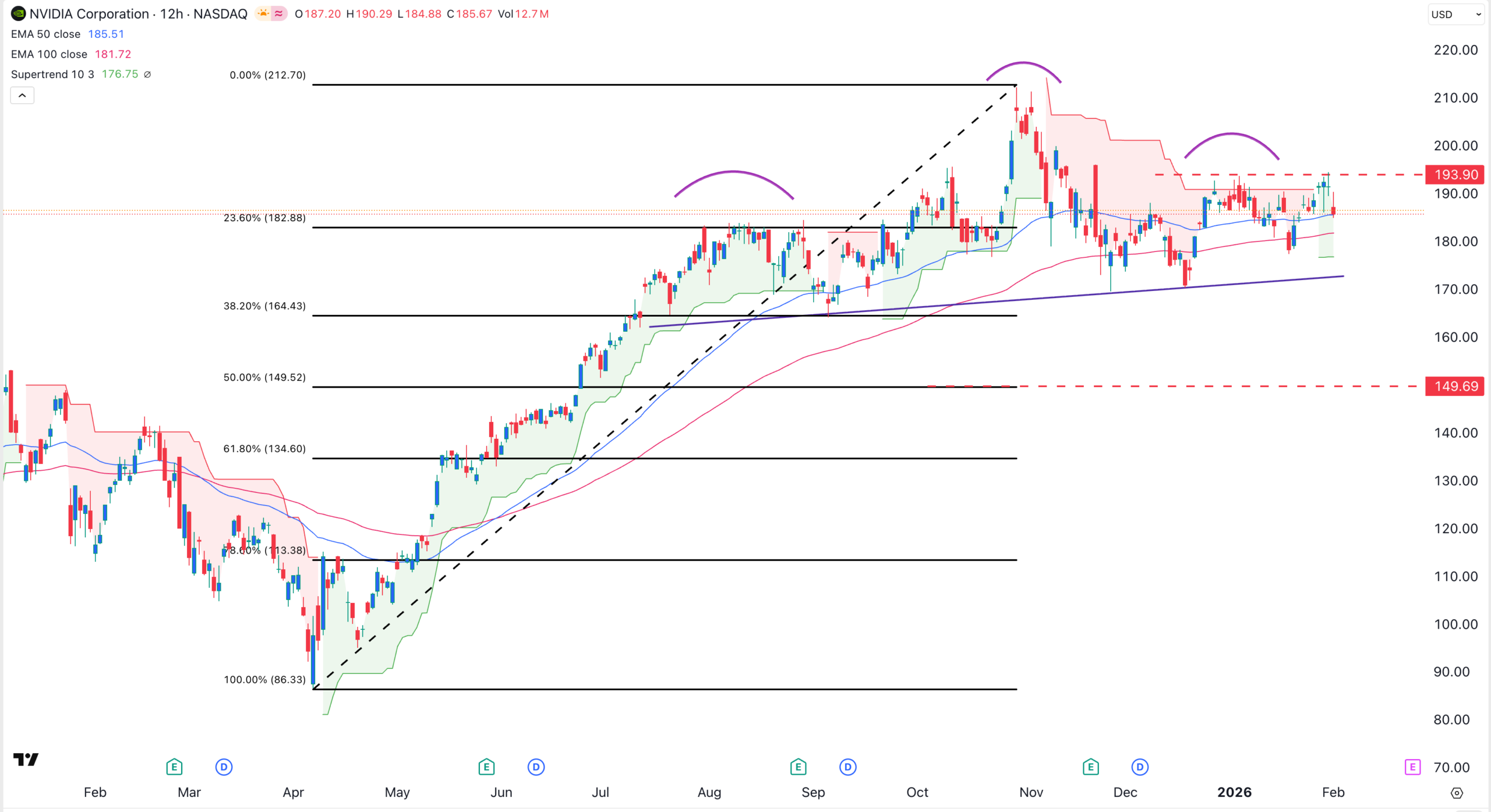
NVIDIA Stock Price Analysis as OpenAI Issues Concerns About its Chips

NVIDIA Stock Price Analysis as OpenAI Issues Concerns About its Chips

Key Insights NVIDIA stock started the week in the red. It crashed by over 2%. Meanwhile, the S&P 500, Dow Jones, and Nasdaq 100 moved close to their all-time highs
Share
Themarketperiodical2026/02/04 11:27