Table of contents Samsung Galaxy S25 Ultra Samsung Galaxy S25 Plus Samsung Galaxy S25 Samsung Galaxy S25 Edge Samsung Galaxy S25 FE (Fan Edition) Samsung GalaxyTable of contents Samsung Galaxy S25 Ultra Samsung Galaxy S25 Plus Samsung Galaxy S25 Samsung Galaxy S25 Edge Samsung Galaxy S25 FE (Fan Edition) Samsung Galaxy

Samsung Galaxy Phones to buy in 2026: A complete guide

8 min read

Table of contents

Samsung Galaxy S25 Ultra

Samsung Galaxy S25 Plus

Samsung Galaxy S25

Samsung Galaxy S25 Edge

Samsung Galaxy S25 FE (Fan Edition)

Samsung Galaxy Z Fold 7

Samsung Galaxy Z Flip 7

Samsung Galaxy A56 5G

Samsung Galaxy A36 5G

Samsung Galaxy smartphones are among the most popular devices in the world, but choosing the right model in 2026 is no longer straightforward. The lineup is crowded, the names are similar, and nearly every phone promises flagship-level performance.

To cut through the noise, we looked beyond marketing claims to answer a simpler question: which Samsung Galaxy phones actually make sense for everyday use in 2026?

Our review focused on hardware longevity, on-device AI performance, and how each design fits into daily life. The models in this guide are the ones that truly stand out. Each offers a minimum of seven years of software support and runs on advanced 3-nanometer or 4-nanometer chips, delivering better speed, efficiency, and long-term value.

Samsung Galaxy phones to buy right now

Samsung’s 2026 lineup includes slab-style flagships and foldable models built to solve real user needs. Each phone is designed for a specific purpose, from creative work to a clean, modern design for daily use.

1. Samsung Galaxy S25 Ultra
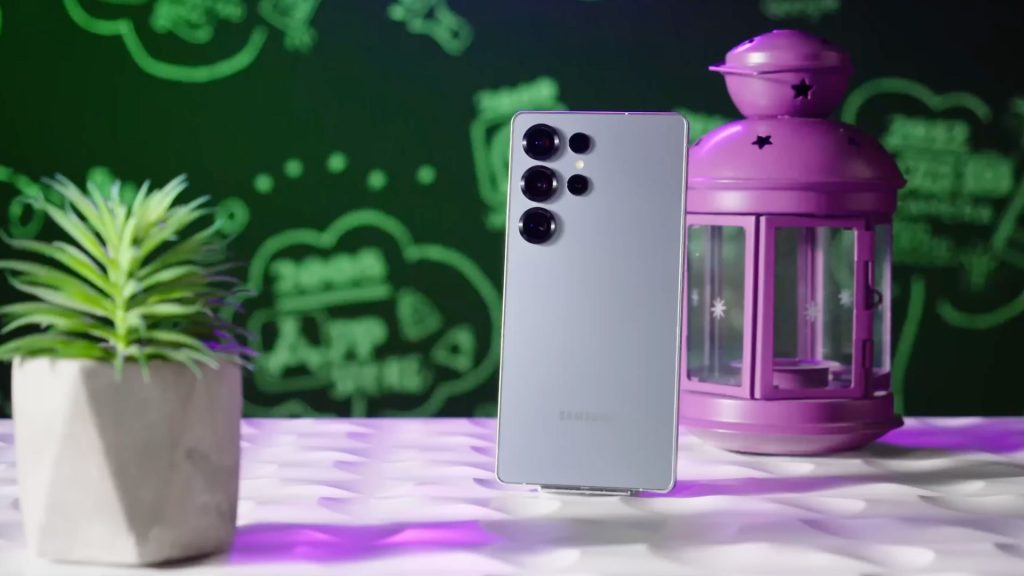
Samsung Galaxy S25 Ultra

Image source: GSMArena Official on YouTube

The Samsung Galaxy S25 Ultra is the top choice if you need power, advanced cameras, and digital note-taking. It uses a titanium frame for better strength and lighter weight than aluminium, with rounded corners that make it more comfortable to hold for long periods.

It runs on the Qualcomm Snapdragon 8 Elite for Galaxy, a custom chip that powers Galaxy AI features like Now Brief and True AI Companion.

The phone has a 6.9-inch Dynamic LTPO AMOLED 2X display protected by Gorilla Glass Armour. It reduces reflections and reaches a peak brightness of 2,600 nits. It is the only slab-style phone in this lineup with a built-in S Pen. Some reports confirm that Bluetooth remote features were removed from the stylus to create space for better internal cooling.

The camera system includes a 200-megapixel main camera and a 50-megapixel ultrawide sensor. This gives the ProVisual Engine more data for AI-based photo processing.

In Nigeria, prices are higher due to logistics and currency hedging. Retailers like Pointek sell the 1TB model at above normal exchange-based pricing. You still benefit from UWB (Ultra-Wideband) for accurate tracking and 45W fast charging, which helps reduce your downtime.

2. Samsung Galaxy S25 Plus
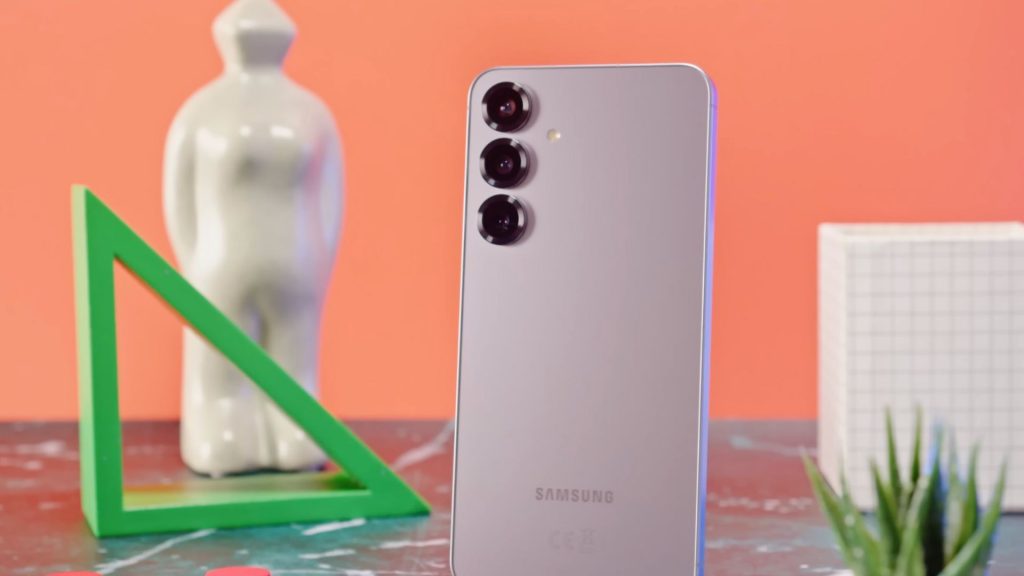
Samsung Galaxy S25 Plus

Image source: GSMArena Official on YouTube

The Galaxy S25 Plus is built for you if you want a big screen and long battery life without the size or weight of the Ultra. It is popular among people who watch a lot of videos, thanks to the 6.7-inch QHD+ display with ProScaler, which improves resolution and colour in real time.

It uses an aluminium frame and weighs 190 grams. Also runs on the same Snapdragon 8 Elite chip, so your gaming, multitasking, and One UI 7 performance stay fast and smooth.

The 4,900 mAh battery is known for strong screen-on time because it powers a smaller display than the Ultra while keeping the same 45W charging speed.

This phone sits between the base S25 and the Ultra in size and price. It has a 509 ppi pixel density, which is higher than the Ultra’s 501 ppi, resulting in sharper images on a 6.7-inch screen.

3. Samsung Galaxy S25
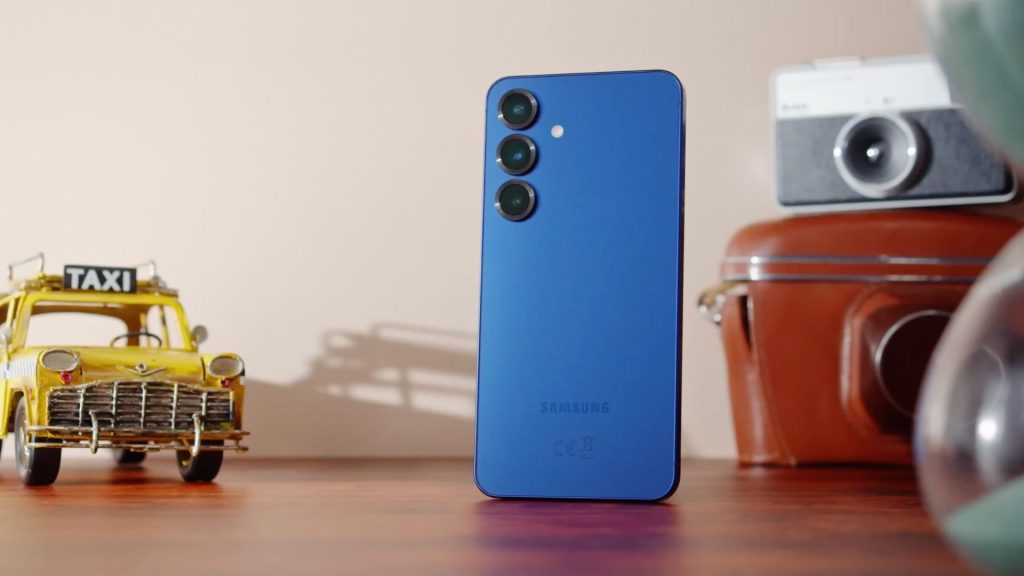
Samsung Galaxy S25

Image source: GSMArena Official on YouTube

The Samsung Galaxy S25 is built for you if you want a small flagship phone without losing power. It has a 6.2-inch display and uses the same Snapdragon 8 Elite for Galaxy chip as the larger models. This means you still get 12GB RAM and Galaxy AI features like Circle to Search and Now Bar.

It weighs just 162 grams. The smaller body limits the battery to 4,000 mAh and wired charging to 25W. Thanks to the 3nm processor, it can still last a full day with normal use.

The S25 is often compared to the iPhone 17 in the compact flagship category. Samsung includes 12GB RAM to keep on-device AI performance ahead of competitors.

4. Samsung Galaxy S25 Edge
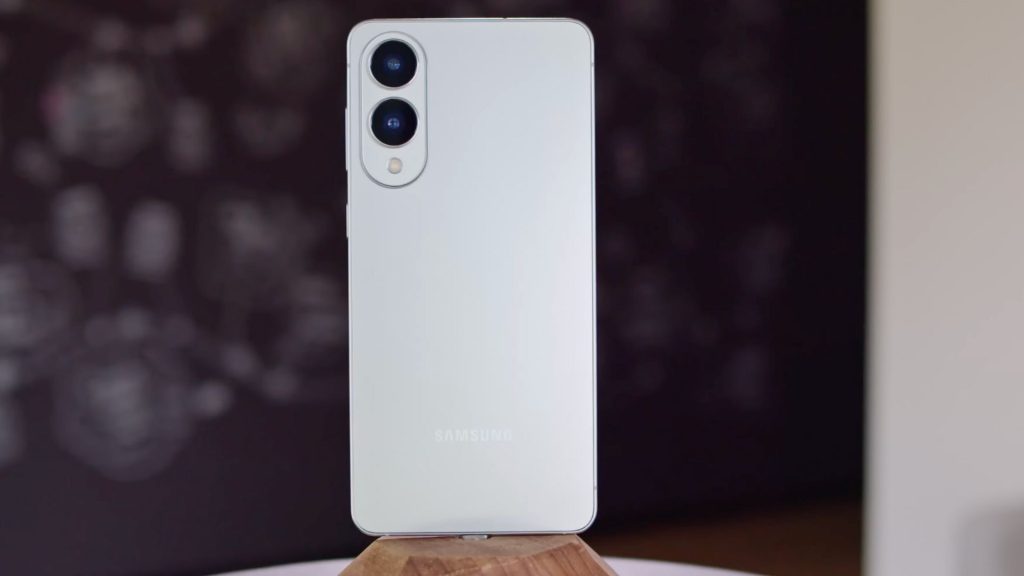
Samsung Galaxy S25 Edge

Image source: GSMArena Official on YouTube

The Galaxy S25 Edge is built for you if you care most about a slim, premium look. It is 5.8mm thick, which makes it about 30% thinner than the S25 Ultra. It uses a titanium frame and Gorilla Glass Ceramic 2 to stay durable.

To reach this thin design, Samsung made hardware trade-offs. The phone has no telephoto lens and depends on its 200-megapixel main camera for digital zoom. The battery is limited to 3,900 mAh, which is smaller than the base S25’s, and charging is capped at 25W to control heat.

The S25 Edge is priced between the Plus and Ultra models. Its value is mainly in its design, and many experts say the S25 Plus offers more everyday use for $100 less.

5. Samsung Galaxy S25 FE (Fan Edition)
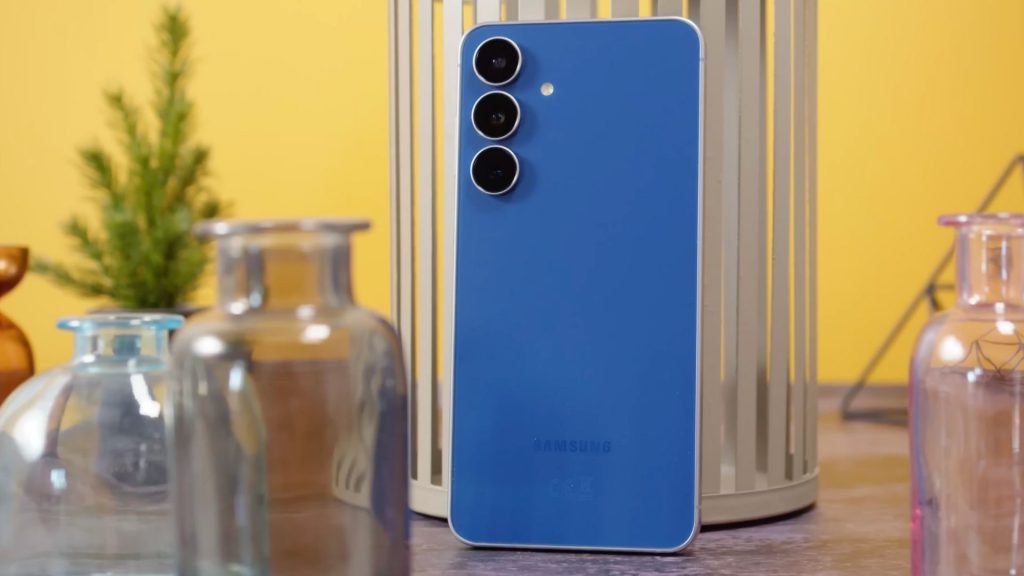
Samsung Galaxy S25 FE (Fan Edition)

Image source: GSMArena Official on YouTube

The Galaxy S25 FE is made for you if you want flagship features at a lower price. It launched in late 2025 and uses the Samsung Exynos 2400 chip in most regions. Aimed at younger users and students who want Galaxy AI without paying for premium models.

It has a 6.7-inch AMOLED display, a 4,900 mAh battery, and 45W fast charging. The main camera is a 50-megapixel model and works with the ProVisual Engine to keep portraits and low-light photos competitive.

Samsung guarantees seven years of OS and security updates, which makes this a strong long-term choice compared to many mid-range Android phones.

6. Samsung Galaxy Z Fold 7

The Galaxy Z Fold 7 is built for you if you want a phone that works like a tablet for serious productivity. It is 4.2mm thick when unfolded and 8.9mm when folded. This makes it the most portable large foldable in Western markets.

To achieve this thin body, Samsung removed internal support for the S Pen. It makes up for this by adding a 200-megapixel main camera, matching the S25 Ultra for the first time. The phone also has an IP48 rating for dust and water protection.

The high price reflects its focus on power users who value the 8-inch work screen and accept the limits of foldable displays.

7. Samsung Galaxy Z Flip 7

The Galaxy Z Flip 7 is made for you if you want a small phone that still feels premium. It has a 4.1-inch edge-to-edge external FlexWindow with a 120Hz refresh rate, so you can check messages and use basic apps without opening the phone.

It runs on the Samsung Exynos 2500 chip, built to handle the heat limits of a flip phone. The camera is a 50-megapixel, and the battery is 4,300 mAh, the largest ever in the Flip series, giving you full-day use for the first time.

The Z Flip 7 is the most affordable way to enter the foldable category, with pricing close to regular slab phones and full Galaxy AI support.

8. Samsung Galaxy A56 5G
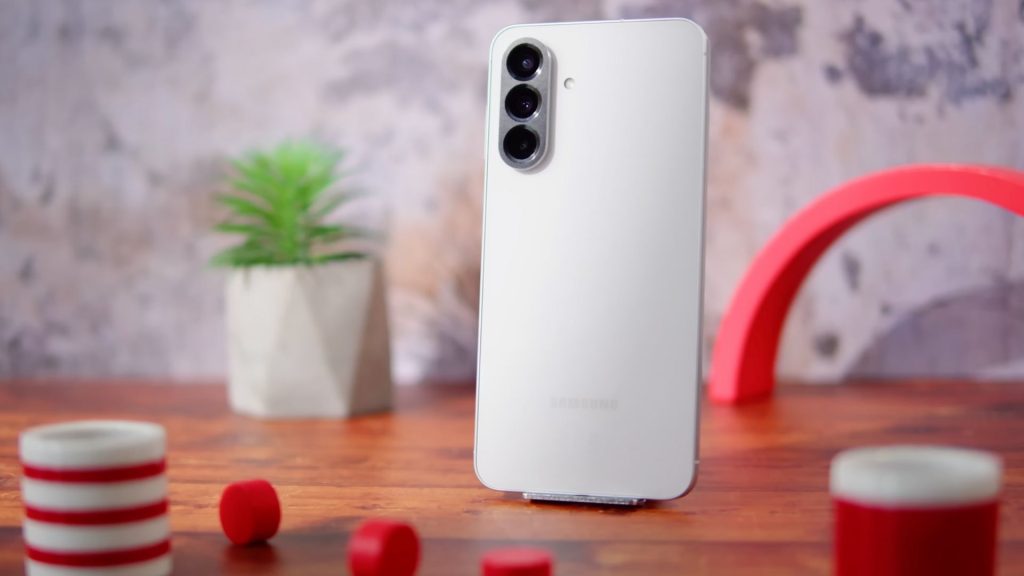
 Samsung Galaxy A56 5G

Image source: GSMArena Official on YouTube

The Galaxy A56 5G is built for you if you want strong performance at a lower price. It runs on the Exynos 1580 chip with 4nm performance and includes seven years of OS and security updates.

It has a 6.7-inch AMOLED display with a 120Hz refresh rate, a 5,000 mAh battery, and 45W fast charging, the same charging speed as the S25 Ultra.

The body is mostly plastic, but it still looks premium with colours like Light Blue and Graphite. You get about 80% of the flagship experience at less than half the cost, making it a strong choice if you do not need advanced AI features or titanium materials.

9. Samsung Galaxy A36 5G

The Galaxy A36 5G is made for you if you want an affordable phone that still feels complete. It runs on the Snapdragon 6 Gen 3 chip and supports full 5G for smooth daily use.

It has a 6.7-inch AMOLED display, a 5,000 mAh battery, and 45W fast charging, so you do not lose the basics even at a lower price.

This phone is a strong choice if you want a big screen and 5G on a tight budget, while still getting charging speeds that beat many phones that cost twice as much.

Final thoughts

The 2026 Samsung Galaxy lineup is built around clear use cases. The S25 series focuses on power and long-term value, with the S25 Ultra for productivity and the S25 Edge for ultra-slim design. The A56 and A36 bring 45W charging and a seven-year software support window to more people, raising the standard for mid-range phones.

Samsung’s foldables are now ready for daily use. The Z Fold 7 and Z Flip 7 offer stronger builds and thinner designs, and the global launch of the Z TriFold shows Samsung is still pushing new form factors.

The shift to 2nm processors in the S26 series, planned for late February 2026, is expected to improve heat control and performance.

Disclaimer: The articles reposted on this site are sourced from public platforms and are provided for informational purposes only. They do not necessarily reflect the views of MEXC. All rights remain with the original authors. If you believe any content infringes on third-party rights, please contact service@support.mexc.com for removal. MEXC makes no guarantees regarding the accuracy, completeness, or timeliness of the content and is not responsible for any actions taken based on the information provided. The content does not constitute financial, legal, or other professional advice, nor should it be considered a recommendation or endorsement by MEXC.
Tags:

You May Also Like

Unlocking Massive Value: Curve Finance Revenue Sharing Proposal for CRV Holders

Unlocking Massive Value: Curve Finance Revenue Sharing Proposal for CRV Holders

BitcoinWorld Unlocking Massive Value: Curve Finance Revenue Sharing Proposal for CRV Holders The dynamic world of decentralized finance (DeFi) is constantly evolving, bringing forth new opportunities and innovations. A significant development is currently unfolding at Curve Finance, a leading decentralized exchange (DEX). Its founder, Michael Egorov, has put forth an exciting proposal designed to offer a more direct path for token holders to earn revenue. This initiative, centered around a new Curve Finance revenue sharing model, aims to bolster the value for those actively participating in the protocol’s governance. What is the “Yield Basis” Proposal and How Does it Work? At the core of this forward-thinking initiative is a new protocol dubbed Yield Basis. Michael Egorov introduced this concept on the CurveDAO governance forum, outlining a mechanism to distribute sustainable profits directly to CRV holders. Specifically, it targets those who stake their CRV tokens to gain veCRV, which are essential for governance participation within the Curve ecosystem. Let’s break down the initial steps of this innovative proposal: crvUSD Issuance: Before the Yield Basis protocol goes live, $60 million in crvUSD will be issued. Strategic Fund Allocation: The funds generated from the sale of these crvUSD tokens will be strategically deployed into three distinct Bitcoin-based liquidity pools: WBTC, cbBTC, and tBTC. Pool Capping: To ensure balanced risk and diversified exposure, each of these pools will be capped at $10 million. This carefully designed structure aims to establish a robust and consistent income stream, forming the bedrock of a sustainable Curve Finance revenue sharing mechanism. Why is This Curve Finance Revenue Sharing Significant for CRV Holders? This proposal marks a pivotal moment for CRV holders, particularly those dedicated to the long-term health and governance of Curve Finance. Historically, generating revenue for token holders in the DeFi space can often be complex. The Yield Basis proposal simplifies this by offering a more direct and transparent pathway to earnings. By staking CRV for veCRV, holders are not merely engaging in governance; they are now directly positioned to benefit from the protocol’s overall success. The significance of this development is multifaceted: Direct Profit Distribution: veCRV holders are set to receive a substantial share of the profits generated by the Yield Basis protocol. Incentivized Governance: This direct financial incentive encourages more users to stake their CRV, which in turn strengthens the protocol’s decentralized governance structure. Enhanced Value Proposition: The promise of sustainable revenue sharing could significantly boost the inherent value of holding and staking CRV tokens. Ultimately, this move underscores Curve Finance’s dedication to rewarding its committed community and ensuring the long-term vitality of its ecosystem through effective Curve Finance revenue sharing. Understanding the Mechanics: Profit Distribution and Ecosystem Support The distribution model for Yield Basis has been thoughtfully crafted to strike a balance between rewarding veCRV holders and supporting the wider Curve ecosystem. Under the terms of the proposal, a substantial portion of the value generated by Yield Basis will flow back to those who contribute to the protocol’s governance. Returns for veCRV Holders: A significant share, specifically between 35% and 65% of the value generated by Yield Basis, will be distributed to veCRV holders. This flexible range allows for dynamic adjustments based on market conditions and the protocol’s performance. Ecosystem Reserve: Crucially, 25% of the Yield Basis tokens will be reserved exclusively for the Curve ecosystem. This allocation can be utilized for various strategic purposes, such as funding ongoing development, issuing grants, or further incentivizing liquidity providers. This ensures the continuous growth and innovation of the platform. The proposal is currently undergoing a democratic vote on the CurveDAO governance forum, giving the community a direct voice in shaping the future of Curve Finance revenue sharing. The voting period is scheduled to conclude on September 24th. What’s Next for Curve Finance and CRV Holders? The proposed Yield Basis protocol represents a pioneering approach to sustainable revenue generation and community incentivization within the DeFi landscape. If approved by the community, this Curve Finance revenue sharing model has the potential to establish a new benchmark for how decentralized exchanges reward their most dedicated participants. It aims to foster a more robust and engaged community by directly linking governance participation with tangible financial benefits. This strategic move by Michael Egorov and the Curve Finance team highlights a strong commitment to innovation and strengthening the decentralized nature of the protocol. For CRV holders, a thorough understanding of this proposal is crucial for making informed decisions regarding their staking strategies and overall engagement with one of DeFi’s foundational platforms. FAQs about Curve Finance Revenue Sharing Q1: What is the main goal of the Yield Basis proposal? A1: The primary goal is to establish a more direct and sustainable way for CRV token holders who stake their tokens (receiving veCRV) to earn revenue from the Curve Finance protocol. Q2: How will funds be generated for the Yield Basis protocol? A2: Initially, $60 million in crvUSD will be issued and sold. The funds from this sale will then be allocated to three Bitcoin-based pools (WBTC, cbBTC, and tBTC), with each pool capped at $10 million, to generate profits. Q3: Who benefits from the Yield Basis revenue sharing? A3: The proposal states that between 35% and 65% of the value generated by Yield Basis will be returned to veCRV holders, who are CRV stakers participating in governance. Q4: What is the purpose of the 25% reserve for the Curve ecosystem? A4: This 25% reserve of Yield Basis tokens is intended to support the broader Curve ecosystem, potentially funding development, grants, or other initiatives that contribute to the platform’s growth and sustainability. Q5: When is the vote on the Yield Basis proposal? A5: A vote on the proposal is currently underway on the CurveDAO governance forum and is scheduled to run until September 24th. If you found this article insightful and valuable, please consider sharing it with your friends, colleagues, and followers on social media! Your support helps us continue to deliver important DeFi insights and analysis to a wider audience. To learn more about the latest DeFi market trends, explore our article on key developments shaping decentralized finance institutional adoption. This post Unlocking Massive Value: Curve Finance Revenue Sharing Proposal for CRV Holders first appeared on BitcoinWorld.
Share
Coinstats2025/09/18 00:35
Best Crypto To Buy Now: Pepeto vs BlockDAG, Layer Brett, Remittix, Little Pepe, Compared

Best Crypto To Buy Now: Pepeto vs BlockDAG, Layer Brett, Remittix, Little Pepe, Compared

Today we compare Pepeto (PEPETO), BlockDAG, Layer Brett, Remittix, Little Pepe (and how they stack up today) by the main […] The post Best Crypto To Buy Now: Pepeto vs BlockDAG, Layer Brett, Remittix, Little Pepe, Compared appeared first on Coindoo.
Share
Coindoo2025/09/18 02:39
Solana Price Plummets: SOL Crashes Below $90 in Stunning Market Reversal

Solana Price Plummets: SOL Crashes Below $90 in Stunning Market Reversal

BitcoinWorld Solana Price Plummets: SOL Crashes Below $90 in Stunning Market Reversal In a dramatic shift for one of cryptocurrency’s leading networks, Solana (
Share
bitcoinworld2026/02/05 06:45