

US Stocks Close Lower: A Stark Reality Check for Investors as Major Indices Plunge

BitcoinWorld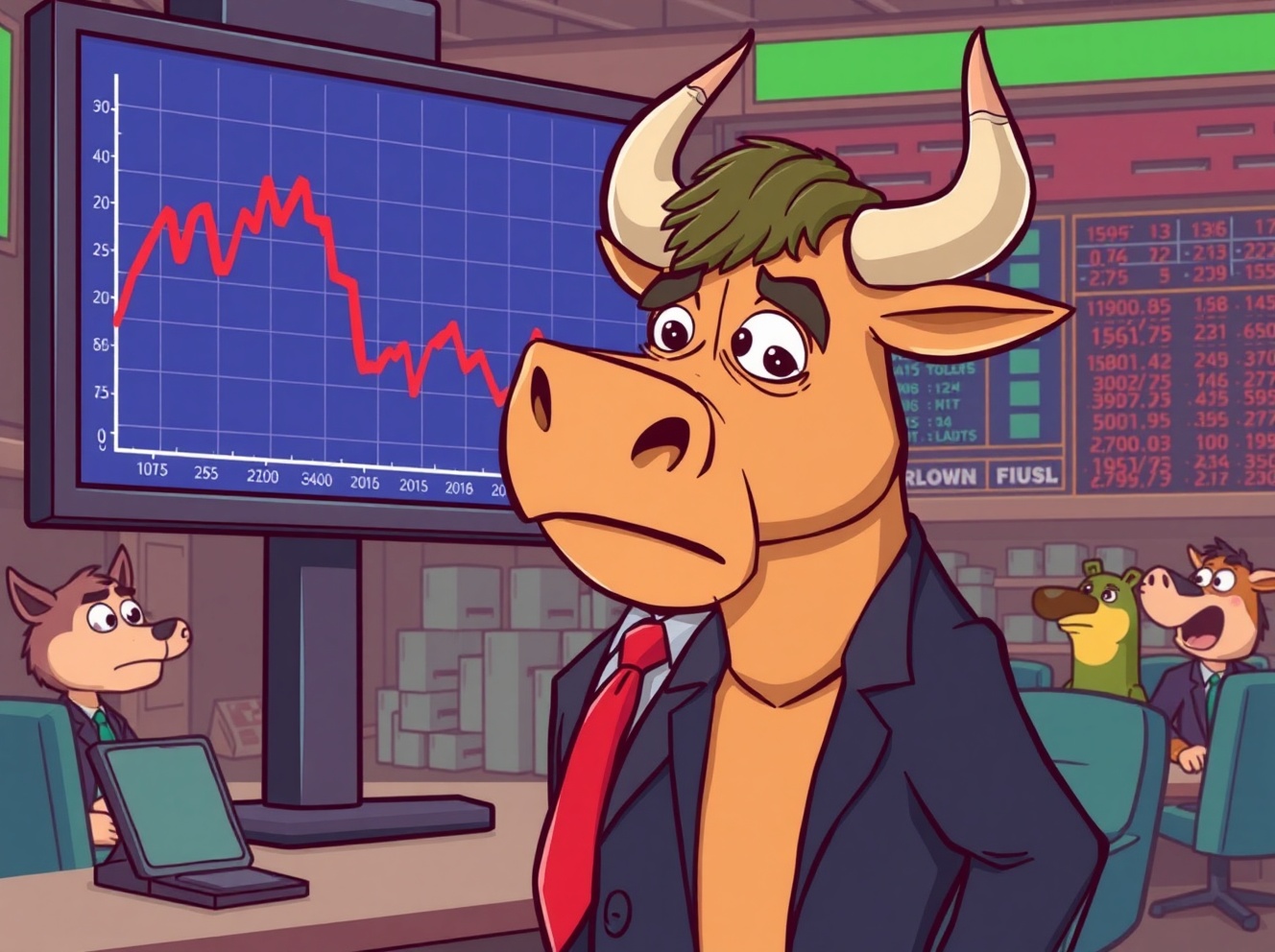
US Stocks Close Lower: A Stark Reality Check for Investors as Major Indices Plunge
NEW YORK, NY – In a stark reversal for Wall Street, US stocks closed lower on Tuesday, delivering a significant reality check to investors as all three major benchmarks erased recent gains with substantial single-day declines. The S&P 500, Nasdaq Composite, and Dow Jones Industrial Average each fell by more than 1.5%, marking one of the most pronounced synchronized downturns of the quarter and prompting immediate analysis of underlying economic pressures.
US Stocks Close Lower: Breaking Down the Numbers
The trading session concluded with clear losses across the board. Specifically, the S&P 500 index dropped by 2.06%, a move that erased its progress from the preceding week. Meanwhile, the technology-heavy Nasdaq Composite fell even more sharply, declining by 2.39%. Furthermore, the blue-chip Dow Jones Industrial Average retreated by 1.76%. These figures represent a broad-based sell-off rather than an isolated sector event. Consequently, market participants swiftly shifted their focus to the catalysts behind the sudden weakness.
| Index | Percentage Change | Point Change (Approx.) |
|---|---|---|
| S&P 500 | -2.06% | -105 pts |
| Nasdaq Composite | -2.39% | -370 pts |
| Dow Jones Industrial Average | -1.76% | -680 pts |
Contextualizing the Market Downturn
This decline did not occur within a vacuum. Instead, it unfolded against a complex macroeconomic backdrop. Primarily, investors grappled with freshly released economic data that suggested persistent inflationary pressures. Additionally, remarks from Federal Reserve officials reinforced a cautious monetary policy stance. The market’s negative reaction, therefore, reflects a recalibration of expectations around interest rates and economic growth. Historically, similar multi-index drops have often preceded periods of heightened volatility.
Expert Analysis on Contributing Factors
Financial analysts point to a confluence of immediate triggers. First, stronger-than-expected producer price index data renewed concerns about sticky inflation. Second, rising Treasury yields placed downward pressure on equity valuations, particularly for growth stocks. Third, geopolitical tensions contributed to a risk-off sentiment among institutional investors. Market strategists often reference the “wealth effect” and consumer confidence, which can be dampened by sustained stock market weakness, potentially impacting broader economic activity.
Sector Performance and Market Breadth
The sell-off displayed notable breadth, affecting nearly all eleven primary S&P 500 sectors. However, the decline was not uniform. Technology and consumer discretionary shares, which had led the market higher earlier in the year, faced the steepest losses. Conversely, more defensive sectors like utilities and consumer staples demonstrated relative resilience, though they still finished in negative territory. This rotation often signals a shift in investor sentiment from growth-seeking to capital preservation.
- Technology: Led the decline, sensitive to interest rate expectations.
- Consumer Discretionary: Fell sharply on growth concerns.
- Financials: Declined alongside broader market fears.
- Defensive Sectors (Utilities/Staples): Outperformed but still closed lower.
Historical Comparisons and Volatility Metrics
To provide perspective, a single-day drop exceeding 2% for the S&P 500 remains a significant event, though not unprecedented. For instance, similar movements occurred during the regional banking concerns of the previous year. The CBOE Volatility Index (VIX), often called the “fear gauge,” spiked considerably during Tuesday’s session. This spike indicated a sharp rise in expected near-term volatility as traders priced in greater uncertainty. Market historians note that sustained high volatility often clusters, suggesting careful monitoring of subsequent sessions is warranted.
The Role of Institutional and Retail Flows
Data from major financial platforms indicated elevated selling volume, particularly in exchange-traded funds (ETFs), which suggests institutional rebalancing played a key role. Meanwhile, retail investor activity showed a mixed pattern, with some engaging in bargain hunting while others reduced exposure. The interplay between these investor classes can amplify or cushion market moves. Analysis of options market activity also revealed a surge in protective put buying, a clear sign of hedging against further downside.
Global Market Reactions and Interconnectedness
The weakness on Wall Street reverberated through global financial markets overnight. Major European and Asian indices opened lower in their subsequent trading sessions, reflecting the interconnected nature of modern finance. Currency markets also reacted, with the US dollar strengthening as a traditional safe-haven asset. This global correlation underscores how US market sentiment often sets the tone worldwide, influencing capital flows and investment decisions from Tokyo to Frankfurt.
Conclusion
The session where US stocks closed lower serves as a potent reminder of the market’s inherent volatility and its sensitivity to macroeconomic data. The pronounced declines in the S&P 500, Nasdaq, and Dow Jones highlight ongoing investor anxieties about inflation and monetary policy. While a single day does not define a trend, it necessitates a thorough examination of risk exposure and portfolio strategy. Moving forward, market participants will scrutinize upcoming economic releases and corporate earnings for signals about the durability of this pullback or the potential for a swift recovery.
FAQs
Q1: Why did US stocks close lower on Tuesday?
The primary drivers were stronger-than-expected inflation data, which raised concerns about prolonged high interest rates from the Federal Reserve, and a subsequent rise in Treasury yields that pressured equity valuations.
Q2: Which index fell the most?
The Nasdaq Composite fell the most in percentage terms, dropping 2.39%, as technology and growth stocks are particularly sensitive to changes in interest rate expectations.
Q3: Is a single-day drop of over 2% unusual for the S&P 500?
While notable and significant, it is not extremely rare. Such moves reflect moments of market repricing and have occurred several times in recent years during periods of economic or geopolitical uncertainty.
Q4: What does this mean for the average investor?
It underscores the importance of diversification and a long-term perspective. Short-term volatility is a normal part of investing, and knee-jerk reactions to single-day moves are generally discouraged by financial advisors.
Q5: How did other asset classes react?
Typically, during such equity sell-offs, investors flock to perceived safe havens. This led to a rise in US Treasury prices (lower yields initially, though they later rose), a stronger US dollar, and pressure on commodities like oil.
This post US Stocks Close Lower: A Stark Reality Check for Investors as Major Indices Plunge first appeared on BitcoinWorld.
You May Also Like

Tom Lee’s BitMine Hits 7-Month Stock Low as Ethereum Paper Losses Reach $8 Billion

MYX Finance price surges again as funding rate points to a crash
