IOTA’s Dominik Schiener said that 2025 was a year of crypto exhaustion driven by excess leverage. For 2026, they will work on making IOTA a digital public infrastructureIOTA’s Dominik Schiener said that 2025 was a year of crypto exhaustion driven by excess leverage. For 2026, they will work on making IOTA a digital public infrastructure

IOTA’s Dom Schiener Reviews 2025 Progress on Rebased, ADAPT and On-Chain Use Cases

  • IOTA’s Dominik Schiener said that 2025 was a year of crypto exhaustion driven by excess leverage.
  • For 2026, they will work on making IOTA a digital public infrastructure for global trade, linking its token directly to network security, transaction validation, and real economic value.

In his year-end address, IOTA co-founder Dominik Schiener spoke about the project’s strategy for the next year 2026. He said that the goal next year would be to focus on real-world adoption through some key initiatives like the Twim platform.

Schiener called 2025 one of the most challenging periods in crypto, comparing it with the 2018 bear market. He said the industry is experiencing “existential questioning” and fatigue after seeing speculative cycles, memecoins, and value extraction. According to Schiener, leverage-driven trading and short-term token launches eroded investors’ confidence.

Despite the negative sentiment, Schiener said that crypto adoption is making progress at the institutional level. He praised the surge in on-chain activity by large financial players and the increased use of stablecoins for cross-border payments. Furthermore, Schiener said that the tokenization efforts by traditional finance firms are signs of improving blockchain infrastructure.

IOTA’s Strategic Shift Away from Speculation

Schiener said that IOTA chose to avoid moving after speculative trends such as memecoins, NFTs, or short-lived DeFi incentives. Instead, the project has spent the past several years putting focus on real-world infrastructure and enterprise use cases.

A key milestone in 2025 was the launch of IOTA Rebased, which brought key changes to the network’s Layer 1. The upgrade introduced Move-based smart contracts, native staking, full decentralization along with a growing validator set. Schiener said these changes make IOTA production-ready for governments and institutions. Thus, it is capable of handling large-scale, real-world transaction volumes.

Schiener said IOTA has found clear product–market fit in trade and supply-chain digitization. This area represents nearly one-third of global economic activity. Through its Twin platform, IOTA is digitizing trade documents, tokenizing physical assets, enabling trade finance, and supporting stablecoin-based cross-border payments.

Twin is useful in live trade flows, such as shipments in Europe and pilot programs in Africa. Schiener spoke about key partnerships with TradeMark Africa, the Tony Blair Institute, and the World Economic Forum, calling them a strong real-world validation for the IOTA network.

A major development is IOTA’s collaboration with the African Continental Free Trade Area, where together they will work to digitize cross-border trade across the continent. In early 2026, Kenya will conduct cross border trade over the IOTA mainnet, and more countries in the African continent will follow.

Outlook for 2026: institutions and real yield

Looking ahead, Schiener said 2026 will be the year for institutional adoption, real business models, and token utility linked to economic activity. IOTA plans to use its token to secure the network, validating transactions. It will also participate in value creation from trade and tokenized assets.

As per Schiener, IOTA will work on platforms similar to decentralized finance (DeFi), to connect on-chain liquidity with institutional trade finance. He added that IOTA is entering 2026 with stronger fundamentals, live adoption, and a clear focus on becoming a digital public infrastructure for global trade.

]]>
Market Opportunity
MIOTAC Logo
MIOTAC Price(IOTA)
$0.06855
$0.06855$0.06855
-1.43%
USD
MIOTAC (IOTA) Live Price Chart
Disclaimer: The articles reposted on this site are sourced from public platforms and are provided for informational purposes only. They do not necessarily reflect the views of MEXC. All rights remain with the original authors. If you believe any content infringes on third-party rights, please contact service@support.mexc.com for removal. MEXC makes no guarantees regarding the accuracy, completeness, or timeliness of the content and is not responsible for any actions taken based on the information provided. The content does not constitute financial, legal, or other professional advice, nor should it be considered a recommendation or endorsement by MEXC.

You May Also Like

Ex-Alipay UK Chief Eva Zhang to Lead Blockscout Into AI-Driven Growth

Ex-Alipay UK Chief Eva Zhang to Lead Blockscout Into AI-Driven Growth

Blockscout, the leading open-source block explorer for EVM chains, has appointed Eva Zhang, former CEO of Alipay UK, as its new chief executive officer.
Share
Blockchainreporter2025/09/18 19:00
Gold price in Malaysia: Rates on February 16
Gold price in Malaysia: Rates on February 16

The post Gold price in Malaysia: Rates on February 16 appeared on BitcoinEthereumNews.com. Gold prices fell in Malaysia on Monday, according to data compiled by
Share
BitcoinEthereumNews2026/02/16 13:21
U.S. Treasury Seeks Public Input on Game-Changing Stablecoin Regulations

U.S. Treasury Seeks Public Input on Game-Changing Stablecoin Regulations

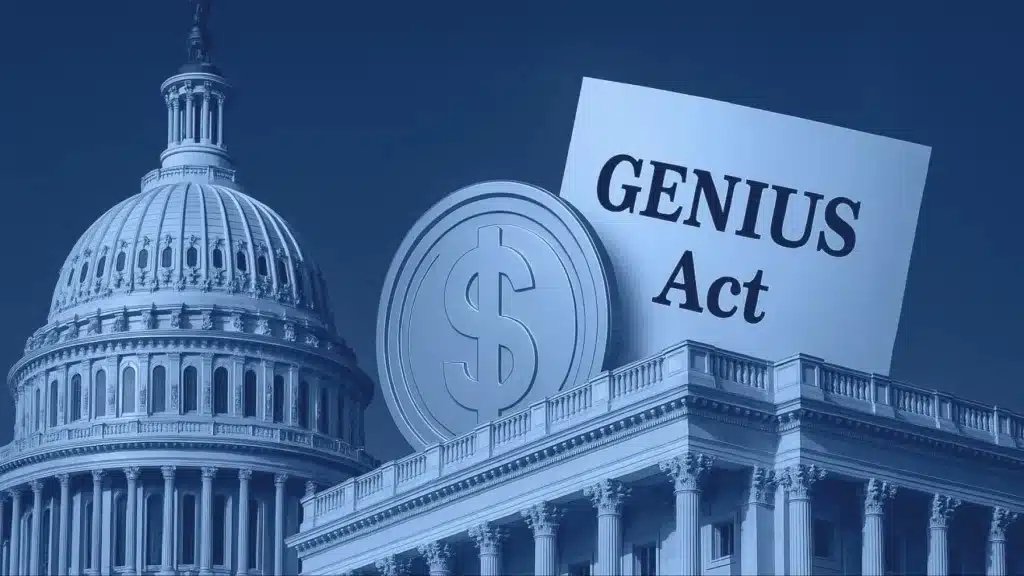
U.S. Treasury invites feedback on groundbreaking stablecoin regulations under GENIUS. Key questions around stablecoin tax treatment and foreign issuer rules. Treasury explores marketing restrictions, oversight balance, and AML enforcement options. The U.S. Treasury Department is now inviting public feedback on the implementation of the groundbreaking GENIUS Act, the first piece of crypto-specific legislation passed in the U.S. this summer. The new law is a milestone in terms of regulation of stablecoins, as the Treasury is aiming to balance the need to innovate and the aim of protecting consumers and monetary stability. According to Treasury officials, the GENIUS Act is designed to stimulate the growth of payment stablecoins while addressing potential risks related to illicit financial activities and maintaining overall economic stability. The department especially shows interest in the acquisition of data that could assist in refining the regulatory guidelines as it proceeds with the writing of its formal proposal. The commenting is active through the October 20 deadline, which gives both opponents and players in the industry time to express their views. One of the most pressing questions under consideration is how the IRS will handle the federal income tax treatment of stablecoins. The GENIUS Act does not directly cover this, and there is room to interpret and make decisions by regulation in the future. Also unclear is when and how foreign issuers can be allowed to offer stablecoins in the U.S., and it does not look like there is a timeline involved in making any changes. Also Read: Ripple Partners with DZ BANK to Launch Institutional Digital Asset Custody Solution Key Areas Under Scrutiny as Treasury Prepares Stablecoin Regulations Several key issues are currently up for discussion as part of the Treasury’s review of the GENIUS Act’s implementation. These include whether stablecoins should have certain marketing limitations, whether it should be at the state or federal level, and how the current anti-money laundering (AML) and sanctions policies will relate to digital assets. Moreover, the Treasury is analyzing how the current regulations, such as the Bank Secrecy Act (BSA), are capable of mitigating the risks of digital assets. This is after it was earlier sought to seek the views of people on the detection of illicit use in the digital asset markets. As the Treasury moves toward finalizing the regulations, it is clear that the department aims to craft a robust and flexible framework that can adapt to the evolving landscape of digital currencies. The outcome will have lasting implications for the future of stablecoin regulation in the U.S., shaping the path forward for both domestic and international players in the crypto space. Also Read: Shiba Inu Faces Major Selling Pressure as 157 Billion SHIB Floods Exchanges! The post U.S. Treasury Seeks Public Input on Game-Changing Stablecoin Regulations appeared first on 36Crypto.
Share
Coinstats2025/09/20 17:22