BitcoinWorld Prediction Market Power: Kalshi’s Stunning 40% Edge Over Wall Street on Inflation For decades, Wall Street giants have dominated economic forecastingBitcoinWorld Prediction Market Power: Kalshi’s Stunning 40% Edge Over Wall Street on Inflation For decades, Wall Street giants have dominated economic forecasting

Prediction Market Power: Kalshi’s Stunning 40% Edge Over Wall Street on Inflation

5 min read
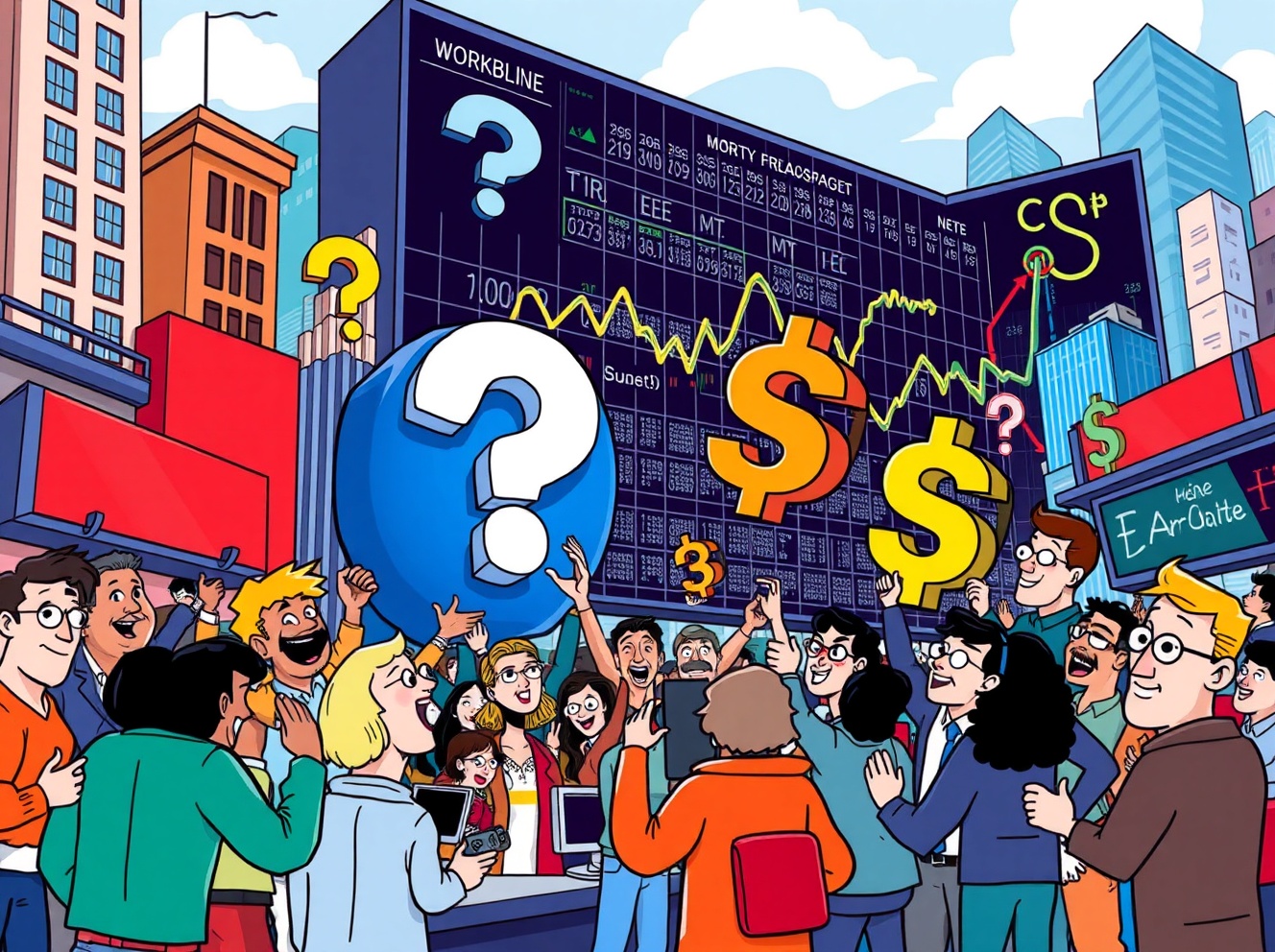
A vibrant cartoon prediction market scene showing crowd wisdom outperforming traditional finance on inflation forecasts.

BitcoinWorld

Prediction Market Power: Kalshi’s Stunning 40% Edge Over Wall Street on Inflation

For decades, Wall Street giants have dominated economic forecasting. Now, a bold challenger claims it can do better. Prediction market platform Kalshi states its users are significantly more accurate at forecasting inflation than traditional financial institutions. This revelation challenges the very foundation of how we predict economic trends.

What is a Prediction Market and How Does It Work?

A prediction market is a platform where people trade contracts based on the outcome of future events. Think of it like a stock market for predictions. Users buy ‘shares’ in a specific outcome, such as ‘Inflation will be above 3% next month.’ The trading price reflects the crowd’s collective probability estimate. Therefore, the wisdom of many can often surface insights missed by small teams of experts.

Kalshi’s Bold Claim: Outperforming Wall Street

According to a report by CoinDesk, Kalshi analyzed its data over a 25-month period. The company found its market’s average forecasting error was a staggering 40% lower than consensus forecasts from Wall Street. This isn’t a minor improvement; it’s a potential paradigm shift. If true, it suggests that aggregated, real-time sentiment from a diverse crowd can be more powerful than traditional analyst models.

Why might this happen? Consider these factors:

  • Speed: A prediction market updates instantly with new information, while institutional reports are often delayed.
  • Diversity: It pools knowledge from traders, economists, and everyday observers, not just a homogenous group of analysts.
  • Incentives: People risk real money on being correct, aligning their interests directly with accuracy.

Could This Change How We Forecast Economics?

The implications are profound. Central banks, policymakers, and investors rely heavily on inflation forecasts. A more accurate prediction market tool could lead to better monetary decisions and more stable markets. However, we must view this claim with a critical eye. The sample period of 25 months is relatively short, encompassing unique economic conditions like post-pandemic volatility.

Furthermore, prediction markets face their own challenges. They can be influenced by trading volume, liquidity, and speculative bubbles unrelated to fundamental analysis. Their strength lies in aggregating existing information, not necessarily in uncovering new data.

The Future of Financial Forecasting

This development doesn’t signal the end of Wall Street analysts. Instead, it points to a future of hybrid models. Imagine a world where traditional fundamental analysis is combined with real-time sentiment data from a global prediction market. This fusion could create the most robust forecasting tools we’ve ever seen.

The rise of platforms like Kalshi highlights a broader trend: the democratization of finance. Knowledge and insight are no longer confined to glass-walled skyscrapers. They are being harnessed from a connected, informed, and incentivized global crowd.

Conclusion: A New Contender Emerges

Kalshi’s claim is a powerful reminder that innovation often comes from the edges. While more data and longer timeframes are needed for full validation, the 40% accuracy edge is impossible to ignore. The prediction market model has demonstrated its potential to complement, and sometimes surpass, traditional forecasting. The competition for accuracy is heating up, and everyone, from traders to policymakers, should be paying attention.

Frequently Asked Questions (FAQs)

Q: What exactly is Kalshi?
A: Kalshi is a regulated exchange in the United States where users can trade event contracts based on economic, political, and other outcomes. It functions as a financial prediction market.

Q: How can a prediction market be more accurate than professional analysts?
A: It uses the ‘wisdom of the crowd’ principle. By aggregating thousands of independent opinions and bets, it can filter out individual biases and converge on a more probable outcome, often faster than traditional reports.

Q: Is my money at risk on a prediction market?
A: Yes. Trading on any prediction market involves financial risk. You can lose the money you use to purchase contracts if your prediction is wrong.

Q: What are the main limitations of prediction markets?
A: They require high liquidity (many traders) to be accurate. They can also be swayed by misinformation or manipulation in the short term and are best for forecasting known unknowns rather than completely unforeseen events.

Q: Are prediction markets legal?
A: It depends on the jurisdiction and how they are structured. Kalshi is regulated by the CFTC in the U.S. Other platforms may operate in legal gray areas or be restricted in certain countries.

Q: Can prediction markets forecast cryptocurrency prices?
A> While they often focus on event-based outcomes (e.g., ‘Will Bitcoin hit $X by date Y?’), they are not typically designed for continuous price prediction like a derivatives market. Their value is in capturing probability on specific binary questions.

Found this look at the future of forecasting fascinating? If you think the rise of the prediction market is a game-changer, share this article on social media to spark the conversation with your network!

To learn more about the latest trends in decentralized finance and market innovation, explore our article on key developments shaping the cryptocurrency landscape and its convergence with traditional finance.

This post Prediction Market Power: Kalshi’s Stunning 40% Edge Over Wall Street on Inflation first appeared on BitcoinWorld.

Market Opportunity
Power Protocol Logo
Power Protocol Price(POWER)
$0.19067
$0.19067$0.19067
-0.90%
USD
Power Protocol (POWER) Live Price Chart
Disclaimer: The articles reposted on this site are sourced from public platforms and are provided for informational purposes only. They do not necessarily reflect the views of MEXC. All rights remain with the original authors. If you believe any content infringes on third-party rights, please contact service@support.mexc.com for removal. MEXC makes no guarantees regarding the accuracy, completeness, or timeliness of the content and is not responsible for any actions taken based on the information provided. The content does not constitute financial, legal, or other professional advice, nor should it be considered a recommendation or endorsement by MEXC.

You May Also Like

VanEck Targets Stablecoins & Next-Gen ICOs

VanEck Targets Stablecoins & Next-Gen ICOs

The post VanEck Targets Stablecoins & Next-Gen ICOs appeared on BitcoinEthereumNews.com. Welcome to the US Crypto News Morning Briefing—your essential rundown of the most important developments in crypto for the day ahead. Grab a coffee because the firms shaping crypto’s future are not just building products, but also trying to reshape how capital flows. Crypto News of the Day: VanEck Maps Next Frontier of Crypto Venture Investing VanEck, a Wall Street player known for financial “firsts,” is pushing that legacy into Web3. The firsts include pioneering US gold funds and launching one of the earliest spot Bitcoin ETFs. Sponsored Sponsored “Financial instruments have always been a kind of tokenization. From seashells to traveler’s checks, from relational databases to today’s on-chain assets. You could even joke that VanEck’s first gold mutual funds were the original ‘tokenized gold,’” Juan C. Lopez, General Partner at VanEck Ventures, told BeInCrypto. That same instinct drives the firm’s venture bets. Lopez said VanEck goes beyond writing checks and brings the full weight of the firm. This extends from regulatory proximity to product experiments to founders building the next phase of crypto infrastructure. Asked about key investment priorities, Lopez highlighted stablecoins. “We care deeply about three questions: How do we accelerate stablecoin ubiquity? What will users want to do with them once highly distributed? And what net new assets can we construct now that we have sophisticated market infrastructure?” Lopez added. However, VanEck is not limiting itself to the hottest narrative, acknowledging that decentralized finance (DeFi) is having a renaissance. The VanEck executive also noted that success will depend on new approaches to identity and programmable compliance layered on public blockchains. Backing Legion With A New Model for ICOs Sponsored Sponsored That compliance-first angle explains VanEck Ventures’ recent co-lead of Legion’s $5 million seed round alongside Brevan Howard. Legion aims to reinvent token fundraising by making early-stage access…
Share
BitcoinEthereumNews2025/09/18 03:52
Whales Dump 200 Million XRP in Just 2 Weeks – Is XRP’s Price on the Verge of Collapse?

Whales Dump 200 Million XRP in Just 2 Weeks – Is XRP’s Price on the Verge of Collapse?

Whales offload 200 million XRP leaving market uncertainty behind. XRP faces potential collapse as whales drive major price shifts. Is XRP’s future in danger after massive sell-off by whales? XRP’s price has been under intense pressure recently as whales reportedly offloaded a staggering 200 million XRP over the past two weeks. This massive sell-off has raised alarms across the cryptocurrency community, as many wonder if the market is on the brink of collapse or just undergoing a temporary correction. According to crypto analyst Ali (@ali_charts), this surge in whale activity correlates directly with the price fluctuations seen in the past few weeks. XRP experienced a sharp spike in late July and early August, but the price quickly reversed as whales began to sell their holdings in large quantities. The increased volume during this period highlights the intensity of the sell-off, leaving many traders to question the future of XRP’s value. Whales have offloaded around 200 million $XRP in the last two weeks! pic.twitter.com/MiSQPpDwZM — Ali (@ali_charts) September 17, 2025 Also Read: Shiba Inu’s Price Is at a Tipping Point: Will It Break or Crash Soon? Can XRP Recover or Is a Bigger Decline Ahead? As the market absorbs the effects of the whale offload, technical indicators suggest that XRP may be facing a period of consolidation. The Relative Strength Index (RSI), currently sitting at 53.05, signals a neutral market stance, indicating that XRP could move in either direction. This leaves traders uncertain whether the XRP will break above its current resistance levels or continue to fall as more whales sell off their holdings. Source: Tradingview Additionally, the Bollinger Bands, suggest that XRP is nearing the upper limits of its range. This often points to a potential slowdown or pullback in price, further raising concerns about the future direction of the XRP. With the price currently around $3.02, many are questioning whether XRP can regain its footing or if it will continue to decline. The Aftermath of Whale Activity: Is XRP’s Future in Danger? Despite the large sell-off, XRP is not yet showing signs of total collapse. However, the market remains fragile, and the price is likely to remain volatile in the coming days. With whales continuing to influence price movements, many investors are watching closely to see if this trend will reverse or intensify. The coming weeks will be critical for determining whether XRP can stabilize or face further declines. The combination of whale offloading and technical indicators suggest that XRP’s price is at a crossroads. Traders and investors alike are waiting for clear signals to determine if the XRP will bounce back or continue its downward trajectory. Also Read: Metaplanet’s Bold Move: $15M U.S. Subsidiary to Supercharge Bitcoin Strategy The post Whales Dump 200 Million XRP in Just 2 Weeks – Is XRP’s Price on the Verge of Collapse? appeared first on 36Crypto.
Share
Coinstats2025/09/17 23:42
Foreigner’s Lou Gramm Revisits The Band’s Classic ‘4’ Album, Now Reissued

Foreigner’s Lou Gramm Revisits The Band’s Classic ‘4’ Album, Now Reissued

The post Foreigner’s Lou Gramm Revisits The Band’s Classic ‘4’ Album, Now Reissued appeared on BitcoinEthereumNews.com. American-based rock band Foreigner performs onstage at the Rosemont Horizon, Rosemont, Illinois, November 8, 1981. Pictured are, from left, Mick Jones, on guitar, and vocalist Lou Gramm. (Photo by Paul Natkin/Getty Images) Getty Images Singer Lou Gramm has a vivid memory of recording the ballad “Waiting for a Girl Like You” at New York City’s Electric Lady Studio for his band Foreigner more than 40 years ago. Gramm was adding his vocals for the track in the control room on the other side of the glass when he noticed a beautiful woman walking through the door. “She sits on the sofa in front of the board,” he says. “She looked at me while I was singing. And every now and then, she had a little smile on her face. I’m not sure what that was, but it was driving me crazy. “And at the end of the song, when I’m singing the ad-libs and stuff like that, she gets up,” he continues. “She gives me a little smile and walks out of the room. And when the song ended, I would look up every now and then to see where Mick [Jones] and Mutt [Lange] were, and they were pushing buttons and turning knobs. They were not aware that she was even in the room. So when the song ended, I said, ‘Guys, who was that woman who walked in? She was beautiful.’ And they looked at each other, and they went, ‘What are you talking about? We didn’t see anything.’ But you know what? I think they put her up to it. Doesn’t that sound more like them?” “Waiting for a Girl Like You” became a massive hit in 1981 for Foreigner off their album 4, which peaked at number one on the Billboard chart for 10 weeks and…
Share
BitcoinEthereumNews2025/09/18 01:26