The post Two Dormant Casascius Bitcoin Coins Activated After 13 Years, Potentially Unlocking $179 Million appeared on BitcoinEthereumNews.com. Two long-dormant Casascius coins, each loaded with 1,000 Bitcoin, were activated on Friday, unlocking over $179 million in value after more than 13 years of inactivity. Minted in 2011 and 2012 when Bitcoin traded at just $3.88 and $11.69, these physical collectibles represent massive potential returns for their owners. Casascius coins activation unlocks $179 million: Onchain data shows two 1,000 BTC physical coins from 2011 and 2012 moved to digital wallets. These rare collectibles, created by Mike Caldwell, feature tamper-resistant holograms hiding private keys for Bitcoin redemption. Historical value explosion: The 2011 coin’s return exceeds 2.3 million percent, based on current Bitcoin prices around $90,000, excluding minting costs. Discover how dormant Casascius coins activation reveals $179 million in Bitcoin value after 13 years. Explore the history and mechanics of these rare physical crypto collectibles today. What Are Casascius Coins? Casascius coins are physical representations of Bitcoin created as collectible metal pieces between 2011 and 2013 by Utah-based entrepreneur Mike Caldwell. These coins and bars embed paper with private keys under tamper-resistant holograms, allowing owners to redeem the stored Bitcoin value digitally. They symbolize early Bitcoin enthusiasm and have become highly valuable artifacts in the cryptocurrency space. Casascius coins ranged in denominations from 1 to 1,000 BTC, making them unique tangible assets in an otherwise digital ecosystem. Their rarity and historical significance drive collector interest, especially as Bitcoin’s price has surged dramatically since their inception. How Do Casascius Coins Work? Casascius coins function by storing actual Bitcoin value through a private key concealed beneath a holographic sticker. To access the funds, the owner peels back the hologram, reveals the key, and transfers the Bitcoin to a digital wallet. Once redeemed, the physical coin loses its monetary value but retains collectible appeal. Production was limited; records indicate only about 16 bars and… The post Two Dormant Casascius Bitcoin Coins Activated After 13 Years, Potentially Unlocking $179 Million appeared on BitcoinEthereumNews.com. Two long-dormant Casascius coins, each loaded with 1,000 Bitcoin, were activated on Friday, unlocking over $179 million in value after more than 13 years of inactivity. Minted in 2011 and 2012 when Bitcoin traded at just $3.88 and $11.69, these physical collectibles represent massive potential returns for their owners. Casascius coins activation unlocks $179 million: Onchain data shows two 1,000 BTC physical coins from 2011 and 2012 moved to digital wallets. These rare collectibles, created by Mike Caldwell, feature tamper-resistant holograms hiding private keys for Bitcoin redemption. Historical value explosion: The 2011 coin’s return exceeds 2.3 million percent, based on current Bitcoin prices around $90,000, excluding minting costs. Discover how dormant Casascius coins activation reveals $179 million in Bitcoin value after 13 years. Explore the history and mechanics of these rare physical crypto collectibles today. What Are Casascius Coins? Casascius coins are physical representations of Bitcoin created as collectible metal pieces between 2011 and 2013 by Utah-based entrepreneur Mike Caldwell. These coins and bars embed paper with private keys under tamper-resistant holograms, allowing owners to redeem the stored Bitcoin value digitally. They symbolize early Bitcoin enthusiasm and have become highly valuable artifacts in the cryptocurrency space. Casascius coins ranged in denominations from 1 to 1,000 BTC, making them unique tangible assets in an otherwise digital ecosystem. Their rarity and historical significance drive collector interest, especially as Bitcoin’s price has surged dramatically since their inception. How Do Casascius Coins Work? Casascius coins function by storing actual Bitcoin value through a private key concealed beneath a holographic sticker. To access the funds, the owner peels back the hologram, reveals the key, and transfers the Bitcoin to a digital wallet. Once redeemed, the physical coin loses its monetary value but retains collectible appeal. Production was limited; records indicate only about 16 bars and…

Two Dormant Casascius Bitcoin Coins Activated After 13 Years, Potentially Unlocking $179 Million

  • Casascius coins activation unlocks $179 million: Onchain data shows two 1,000 BTC physical coins from 2011 and 2012 moved to digital wallets.

  • These rare collectibles, created by Mike Caldwell, feature tamper-resistant holograms hiding private keys for Bitcoin redemption.

  • Historical value explosion: The 2011 coin’s return exceeds 2.3 million percent, based on current Bitcoin prices around $90,000, excluding minting costs.

Discover how dormant Casascius coins activation reveals $179 million in Bitcoin value after 13 years. Explore the history and mechanics of these rare physical crypto collectibles today.

What Are Casascius Coins?

Casascius coins are physical representations of Bitcoin created as collectible metal pieces between 2011 and 2013 by Utah-based entrepreneur Mike Caldwell. These coins and bars embed paper with private keys under tamper-resistant holograms, allowing owners to redeem the stored Bitcoin value digitally. They symbolize early Bitcoin enthusiasm and have become highly valuable artifacts in the cryptocurrency space.

Casascius coins ranged in denominations from 1 to 1,000 BTC, making them unique tangible assets in an otherwise digital ecosystem. Their rarity and historical significance drive collector interest, especially as Bitcoin’s price has surged dramatically since their inception.

How Do Casascius Coins Work?

Casascius coins function by storing actual Bitcoin value through a private key concealed beneath a holographic sticker. To access the funds, the owner peels back the hologram, reveals the key, and transfers the Bitcoin to a digital wallet. Once redeemed, the physical coin loses its monetary value but retains collectible appeal.

Production was limited; records indicate only about 16 bars and 6 coins in the 1,000 BTC denomination were ever minted. Caldwell halted operations in 2013 following a FinCEN letter raising concerns over unlicensed money transmission. This scarcity enhances their status among Bitcoin enthusiasts.

Onchain data from blockchain explorers confirms the recent activation of two such 1,000 BTC coins. One, minted in December 2011 when Bitcoin was valued at $3.88, and the other in October 2012 at $11.69, moved to active addresses on Friday. At current prices exceeding $90,000 per Bitcoin, this equates to over $179 million unlocked, per reports from onchain analysts.

Expert insights underscore the non-impact on market supply. In a 2024 interview with Cointelegraph, a Casascius coin owner known as “John Galt,” who redeemed a 100 BTC coin, explained his decision stemmed from security needs rather than selling. “Having 100 BTC is life-changing for anyone. But the thing is, I’ve had it for so long that this was more about staying safe than suddenly getting rich,” he stated. This suggests activations often prioritize accessibility over liquidation.


Source: Sani

Related: Bitcoin OG’s selling to ‘weak’ hands will deepen selloffs: Peter Schiff. While market watchers sometimes fear influxes from dormant wallets, historical patterns show redeemed Casascius coins rarely lead to immediate selloffs. Blockchain transparency allows real-time monitoring, reassuring investors that these events reflect maturation of early holdings rather than distress sales.

Frequently Asked Questions

What Happens When a Casascius Coin Is Activated?

Activating a Casascius coin involves peeling the hologram to access the private key and transferring the Bitcoin to a secure wallet. This process, as seen with the recent 1,000 BTC coins, unlocks the full value—over $179 million in this case—without affecting the coin’s physical collectible status. Owners typically do this for better security or accessibility, according to onchain records and expert accounts.

Are Casascius Coins Still Valuable After Redemption?

Once the private key is used, the Casascius coin no longer holds Bitcoin value, but it remains a prized collectible due to its historical significance. Redeemed examples from early Bitcoin eras fetch high prices at auctions, often valued for rarity rather than redeemable funds, making them enduring symbols in cryptocurrency history.

Key Takeaways

  • Rare Activation Event: Two 1,000 BTC Casascius coins from 2011 and 2012 were activated, unlocking $179 million after 13 years dormant.
  • Historical Returns: Minted at $3.88 and $11.69 per Bitcoin, these coins highlight the asset’s explosive growth, with potential returns over 2.3 million percent.
  • Collector Appeal: Even post-redemption, Casascius pieces retain value as artifacts; monitor onchain data for similar movements to gauge market sentiment.

Conclusion

The activation of these long-dormant Casascius coins underscores the enduring legacy of early Bitcoin innovations, blending physical collectibles with digital wealth. As onchain data reveals such events, it demonstrates the security and longevity of blockchain storage. Investors and collectors should stay informed on Casascius coins history to appreciate cryptocurrency’s evolution—consider securing your own assets today for similar peace of mind in the future.

Source: https://en.coinotag.com/two-dormant-casascius-bitcoin-coins-activated-after-13-years-potentially-unlocking-179-million

Market Opportunity
Belong Logo
Belong Price(LONG)
$0.002496
$0.002496$0.002496
-2.57%
USD
Belong (LONG) Live Price Chart
Disclaimer: The articles reposted on this site are sourced from public platforms and are provided for informational purposes only. They do not necessarily reflect the views of MEXC. All rights remain with the original authors. If you believe any content infringes on third-party rights, please contact service@support.mexc.com for removal. MEXC makes no guarantees regarding the accuracy, completeness, or timeliness of the content and is not responsible for any actions taken based on the information provided. The content does not constitute financial, legal, or other professional advice, nor should it be considered a recommendation or endorsement by MEXC.

You May Also Like

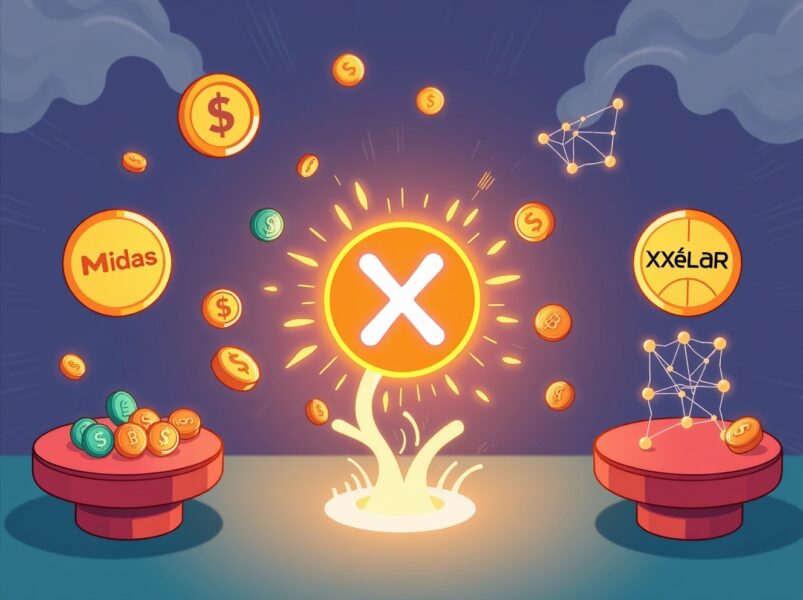
Revolutionary: Midas and Axelar Launch Tokenized XRP with 8% Target Yield

Revolutionary: Midas and Axelar Launch Tokenized XRP with 8% Target Yield

BitcoinWorld Revolutionary: Midas and Axelar Launch Tokenized XRP with 8% Target Yield The cryptocurrency world is constantly evolving, bringing exciting new opportunities for investors. A recent development has captured significant attention: the launch of tokenized XRP by Midas and Axelar. This innovative collaboration aims to transform how you interact with your XRP holdings, potentially offering an attractive yield. What is Tokenized XRP (mXRP) and Why Does it Matter? Imagine holding your favorite digital asset, XRP, but also having the ability to earn a passive income from it. That is precisely what Midas, an asset tokenization platform, has achieved by partnering with Axelar, a leading blockchain interoperability protocol. Together, they have introduced mXRP, a tokenized version of XRP that comes with a compelling target annual yield. This initiative is more than just another crypto product; it represents a significant step forward in making digital assets work harder for their holders. By tokenizing XRP, Midas is essentially creating a digital representation of the asset on a different blockchain, allowing it to participate in decentralized finance (DeFi) activities that were previously inaccessible to native XRP. The immediate appeal lies in the product’s base annual yield, which currently hovers around 8%. Midas and Axelar have publicly stated their commitment to maintaining this yield within a 6% to 8% range, providing a degree of stability and predictability often sought after in the volatile crypto market. This stable yield target is a crucial differentiator, aiming to attract both new and experienced crypto participants looking for reliable returns. How Does This Partnership Benefit XRP Holders? The collaboration between Midas and Axelar brings distinct advantages to the XRP community and the broader crypto ecosystem. Here’s a closer look at the key benefits: Enhanced Utility for XRP: Traditionally, XRP has been known for its speed and low transaction costs, primarily used for cross-border payments. With mXRP, the asset gains new utility within the DeFi space, expanding its potential applications beyond its native blockchain. Attractive Yield Opportunities: The 8% target yield on tokenized XRP is highly competitive, especially when compared to traditional savings accounts or even some other crypto staking options. This allows XRP holders to potentially grow their assets passively. Increased Accessibility: Axelar’s interoperability protocol ensures that mXRP can seamlessly move across various blockchain networks. This means greater flexibility and access to a wider range of DeFi protocols and applications for mXRP holders. Diversification of Investment Strategies: For investors looking to diversify their crypto portfolio, mXRP offers a unique blend of exposure to XRP’s value proposition combined with the income-generating potential of DeFi. Institutional Interest: The structured nature and targeted yield of products like mXRP could attract more institutional investors to the XRP ecosystem, further validating its market presence and utility. Moreover, the partnership leverages the strengths of both platforms. Midas excels in asset tokenization, providing the infrastructure to create and manage mXRP. Axelar, on the other hand, ensures secure and efficient cross-chain communication, making mXRP truly interoperable. This synergy is vital for the product’s success and broad adoption. Navigating the Future of Tokenized XRP: What Should Investors Consider? While the launch of tokenized XRP presents exciting prospects, it is important for investors to approach it with a clear understanding of the crypto landscape. The target yield, while appealing, is not guaranteed and can be subject to market conditions and the underlying mechanisms used to generate that yield. As with any crypto investment, understanding the technology, the partners involved, and the potential risks is paramount. Investors should research Midas and Axelar thoroughly, understanding their security practices, audit reports, and track records. Always remember that the crypto market can be volatile, and while attractive yields are offered, capital is always at risk. The emergence of mXRP underscores a broader trend in the digital asset space: the increasing sophistication of financial products built on blockchain technology. As more assets become tokenized and interoperability improves, we can expect to see even more innovative offerings that bridge traditional finance with the decentralized world. This evolution offers unprecedented opportunities for those willing to learn and adapt. Conclusion: A New Horizon for XRP and DeFi The collaboration between Midas and Axelar to launch tokenized XRP with an 8% target yield marks a significant milestone. It not only enhances the utility and earning potential for XRP holders but also demonstrates the power of blockchain interoperability and asset tokenization in creating new financial instruments. This development opens up a new horizon for investors seeking to integrate passive income strategies with their digital asset holdings, pushing the boundaries of what is possible in decentralized finance. Frequently Asked Questions (FAQs) Q1: What is mXRP? A1: mXRP is a tokenized XRP, a digital representation of XRP created by Midas in partnership with Axelar. It aims to offer holders a base annual yield, currently around 8%, by enabling XRP to participate in broader DeFi activities. Q2: How is the 8% target yield generated? A2: While the specific mechanisms are managed by Midas, such yields in DeFi typically come from activities like lending protocols, liquidity provision, or other yield-generating strategies. Midas and Axelar aim to maintain the base yield between 6% and 8%. Q3: Is mXRP the same as native XRP? A3: No, mXRP is a tokenized version of XRP, meaning it is a representation of XRP on a different blockchain, enabled by Midas and Axelar’s technology. Native XRP exists on the XRP Ledger. Q4: What role does Axelar play in this launch? A4: Axelar is a blockchain interoperability protocol. Its role is crucial in ensuring that mXRP can securely and seamlessly move and operate across various blockchain networks, enhancing its utility and accessibility within the DeFi ecosystem. Q5: What are the risks associated with investing in mXRP? A5: Like all cryptocurrency investments, mXRP carries risks including market volatility, smart contract risks, and potential fluctuations in the target yield. Investors should conduct their own research and understand these risks before investing. Share This Insight! Found this article on tokenized XRP insightful? Share it with your network and help others understand this exciting development in the crypto space! Your shares help us bring more valuable content to the community. To learn more about the latest crypto market trends, explore our article on key developments shaping the future of decentralized finance price action. This post Revolutionary: Midas and Axelar Launch Tokenized XRP with 8% Target Yield first appeared on BitcoinWorld.
Share
Coinstats2025/09/22 19:30
Wormhole’s W token enters ‘value accrual’ phase with strategic reserve

Wormhole’s W token enters ‘value accrual’ phase with strategic reserve

Wormhole has moved beyond its distribution phase, initiating a new strategy. By allocating on-chain and off-chain protocol revenue to a dedicated treasury, the cross-chain protocol is creating a direct link between its commercial success and the value of its native…
Share
Crypto.news2025/09/18 03:05
XRP Price Prediction February 2026: Senator Warren Warns Fed as Pepeto’s 100x Presale Steals the Spotlight From Ripple

XRP Price Prediction February 2026: Senator Warren Warns Fed as Pepeto’s 100x Presale Steals the Spotlight From Ripple

Senator Elizabeth Warren reportedly sent a letter to Fed Chair Jerome Powell and Treasury Secretary Scott Bessent demanding they not […] The post XRP Price Prediction
Share
Coindoo2026/02/22 05:55