Between Public Value and Product Sales
The Structural Identity Crisis of Germany’s Sparkassen in the Digital Age
Title graphic for the article “Between Public Value and Product Sales”: an analysis of the structural identity crisis of Germany’s Sparkassen in the digital age.Abstract
Germany’s Sparkassen have long been among the most significant public-sector financial institutions in Europe. Their societal mandate, wealth building, financial inclusion, and regional stability, is increasingly at odds with an operational reality shaped by regulatory pressure, digital overstretch, high cost structures, and growing competition from direct banks, fintechs, and BNPL providers. This article examines the erosion of the Sparkassen’s public-value mission, analyzes the structural causes behind this shift, and situates these developments within the broader global transformation of payments, retail banking, and financial resilience.
Introduction: A Historical Financial Institution in Transition
For more than two centuries, the Sparkassen have been a cornerstone of Europe’s financial and social architecture. Their emergence was rooted in a normative principle: financial services should not only enable individual liquidity but also strengthen societal stability. Encouraging savings, supporting wealth accumulation, sustaining regional economies, and preventing over-indebtedness were central pillars of their mandate.
Today, however, a widening gap has emerged between this historical identity and the lived reality of many institutions. Rising fees, declining service quality, increased standardization, and especially the growing emphasis on consumer lending and BNPL-like products reflect a strategic shift that is well documented in academic research and increasingly evident in the everyday experience of customers.
The Public-Value Mandate: Historical Foundations and Contemporary Expectations
The Sparkassen were founded in the 19th century as instruments of social participation. They were designed to provide broad access to safe deposits, promote wealth building, strengthen regional economic cycles, and ensure financial inclusion. This mandate remains enshrined in state legislation and forms the normative core of the Sparkassen organization.
Empirical studies , such as those by the Free University of Berlin, the ZEW Mannheim, and the University of Hohenheim , show that Sparkassen generated significant public value for decades. Yet this contribution is increasingly strained by structural and organizational developments. The institutional aspiration survives, but its practical realization is becoming more difficult.
Structural Challenges: Regulation, Costs, and Digitalization
Regulatory Pressure
Regulatory requirements for banks have expanded considerably in recent years. Analyses by PwC, the ZEW, and European supervisory authorities indicate that many Sparkassen now devote 70 to 85 percent of their personnel and financial resources to regulatory compliance. This burden absorbs not only capital but also shifts institutional logic: innovation, product development, and long-term strategic positioning recede behind compliance obligations.
While agile fintechs often transform regulatory frameworks into engines of innovation — building new products and digital services on top of them , the Sparkassen frequently struggle to make that leap. The result is an accumulating innovation deficit.
Cost Structures and the Branch Model
Another structural challenge lies in the historically grown cost base of the Sparkassen. Hundreds of branches, extensive staffing, and complex internal processes generate fixed costs that are increasingly incompatible with a digital banking economy. Branch closures, service reductions, and the discontinuation of cost-intensive offerings such as cash handling are direct consequences.
This creates a cultural fracture: an institution whose brand identity rests on proximity and personal contact is forced by structural constraints to reduce exactly these touchpoints. Aspirations and lived reality diverge.
The Digital Gap
While direct banks like ING or DKB benefit from scale and fintechs attract customers with radically simplified processes, the Sparkassen face a complex IT landscape, decentralized decision-making, and limited development capacity. Digital offerings often appear fragmented and quickly outdated. For younger customers who rely exclusively on digital channels, the Sparkassen increasingly lack relevance.
The Strategic Shift: From Wealth Building to Consumer Credit
The most striking transformation in recent years has been the Sparkassen’s growing emphasis on consumer lending. Personal loans, installment financing, and BNPL-style products are aggressively marketed , often to customer segments with low income or unstable financial circumstances. The outsourcing of operational credit processes to specialized service providers such as S-Kreditpartner GmbH reinforces this development, as these entities rely on sales-driven performance metrics.
This approach conflicts with the principles of the public-value mandate. Credit provision may solve short-term liquidity issues but contributes little to sustainable wealth building. The strategic pivot toward consumer finance thus creates a paradox: the very institutions founded to promote saving increasingly advertise its opposite.
The Customer Perspective: A Growing Sense of Estrangement
The identity crisis becomes visible in a wide range of customer experiences. High fees for low-income users, automated credit advertising, a lack of investment products for higher earners, restrictive cash policies, and diminishing service capacity lead to mounting frustration. Many customers feel misunderstood or undervalued.
Meanwhile, the Sparkassen face a strategic dilemma: they must remain profitable to meet regulatory and operational demands, yet they cannot abandon their societal mission. Currently, they occupy a precarious middle position — too regulated to innovate, too cost-intensive for digital excellence, too sales-driven for genuine public value, and too fragmented to scale effectively.
International Context: The Global Payments Challenge
While the Sparkassen wrestle with internal transformation, a new global payments ecosystem is emerging. Initiatives such as BIS Nexus, FedNow, and India’s UPI demonstrate how real-time payments, digital identities, tokenized assets, and programmable financial flows are redefining global standards. Cross-border interoperability and digital resilience are becoming strategic imperatives for national financial systems.
In this environment, the Sparkassen risk assuming the role of purely regional service providers with little participation in global innovation cycles. Over time, this could lead to a dangerous decoupling of local financial infrastructure from global financial transformation.
Conclusion: An Identity Crisis with Systemic Implications
The developments within the Sparkassen sector are not isolated service issues; they reflect a deep structural transformation. Public value, regulatory pressure, cost structures, digitalization, and product logic exist in a fragile tension that has not been resolved. Unless the Sparkassen reinterpret their historical mission with clarity and courage, they risk a gradual marginalization within a financial system that is becoming increasingly global, digital, and interoperable.
Given their unique institutional role in Europe, it would be unfortunate if their future were defined less by loss of relevance than by a failure to transform.
References
Krall, J.; Schrooten, M. (2020–2023). Der öffentliche Auftrag der Sparkassen. FU Berlin.
ZEW Mannheim (2022). Ertrags- und Regulierungsdruck im deutschen Bankensektor.
PwC (2023). Banking Transformation — Regulatorik, Kosten und Digitalisierung.
Deutscher Städtetag (2021). Sparkassen als kommunale Infrastruktur.
University of Hohenheim (2022). Financial Inclusion in Germany.
EBA (2020–2024). Risk and Compliance Reports.
Deutsche Bundesbank (2019–2023). Strukturanalysen der deutschen Kreditwirtschaft.
Between Public Value and Product Sales was originally published in Coinmonks on Medium, where people are continuing the conversation by highlighting and responding to this story.
You May Also Like
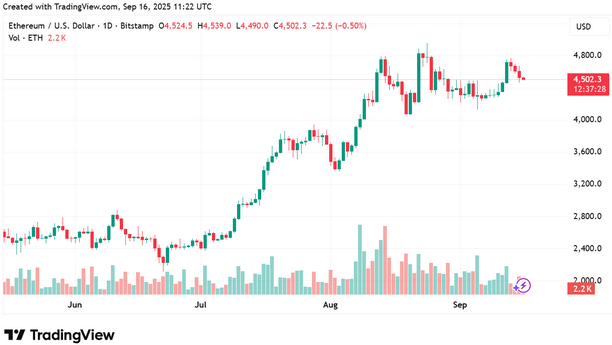
Ethereum Price Prediction: ETH Targets $10,000 In 2026 But Layer Brett Could Reach $1 From $0.0058

Whales Dump 200 Million XRP in Just 2 Weeks – Is XRP’s Price on the Verge of Collapse?