Recently, the Aptos community has been embroiled in a heated debate over a proposal to reduce staking returns, AIP-119. Supporters see it as a necessary measure to curb inflation and activate ecosystem liquidity, while opponents warn that it could weaken the decentralized foundation of the network and even trigger capital outflows.Recently, the Aptos community has been embroiled in a heated debate over a proposal to reduce staking returns, AIP-119. Supporters see it as a necessary measure to curb inflation and activate ecosystem liquidity, while opponents warn that it could weaken the decentralized foundation of the network and even trigger capital outflows.

Aptos inflation governance dilemma: AIP-119 proposal sparks controversy, ecological prosperity may be the solution

2025/04/27 13:04
8 min read

Author: Frank, PANews

Inflation governance has always been a core proposition of the public chain economic model and ecological development. Recently, the Aptos community has been caught in a heated debate over a proposal to reduce staking returns, AIP-119. Supporters see it as a necessary measure to curb inflation and activate ecological liquidity, while opponents warn that it may weaken the foundation of network decentralization and even cause capital outflows.

When the game between cost-cutting and open source collides with the redistribution of validator interests, the reform of Aptos not only concerns the future of the APT token economy, but also reflects the deep contradictions of PoS public chain governance. PANews analyzes the proposal disputes and compares the mainstream public chain models to explore how Aptos can find a way out between high inflation and low activity.

Inflation "surgery" triggers debate over whether it cures the disease or hurts the capital

AIP-119 was proposed by community member moonshiesty on the Aptos Foundation's GitHub on April 17, 2025. The specific proposal is to reduce the base staking reward rate of Aptos by 1% per month over the next three months, with the ultimate goal of reducing the annualized rate of return (APR) from about 7% (or 6.8%) at the time to 3.79%. From the content point of view, the proposal itself is not complicated. It just alleviates APT inflation by reducing staking rewards, which is beneficial to the long-term health of the ecosystem, but it will touch the core interests of large staking nodes that are accustomed to passive income, so it has caused a lot of debate in the community.

The mainstream support believes that in addition to being able to quickly reduce the inflation of APT, this proposal can also incentivize coin holders to transfer funds to other DeFi activities on the chain rather than relying solely on passive staking.

However, judging from the community’s discussions, the controversy surrounding this proposal is not limited to opposition from large holders. Many members have also raised concerns about the negative impact that this proposal may cause, from the perspective of small validators and the entire community.

There are opponents spending, and a significant reduction in staking rewards will have a greater impact on small validators. The profit margins of many validators are therefore compressed, and they may not be able to cover the cost of operating validators (about $30,000 per year), forcing them to exit the network. This indirectly weakens the decentralization of the Aptos network, and ultimately power and resources are concentrated and tilted towards large validators.

Eric Amnis, co-founder of Amnis Finance, made a specific calculation in the forum. Currently, the annual server cost of a validator holding 1 million APT is about $72,000 to $96,000 (but this figure is quite different from the $35,000 proposed by the proposer). However, if the rate of return is reduced to 3.9%, the final income may be only $13,000, so there will be a phenomenon of not making ends meet. Only when the holding amount reaches more than 10 million APT can it barely make a profit, which will directly eliminate small validators.
Aptos inflation governance dilemma: AIP-119 proposal sparks controversy, ecological prosperity may be the solution

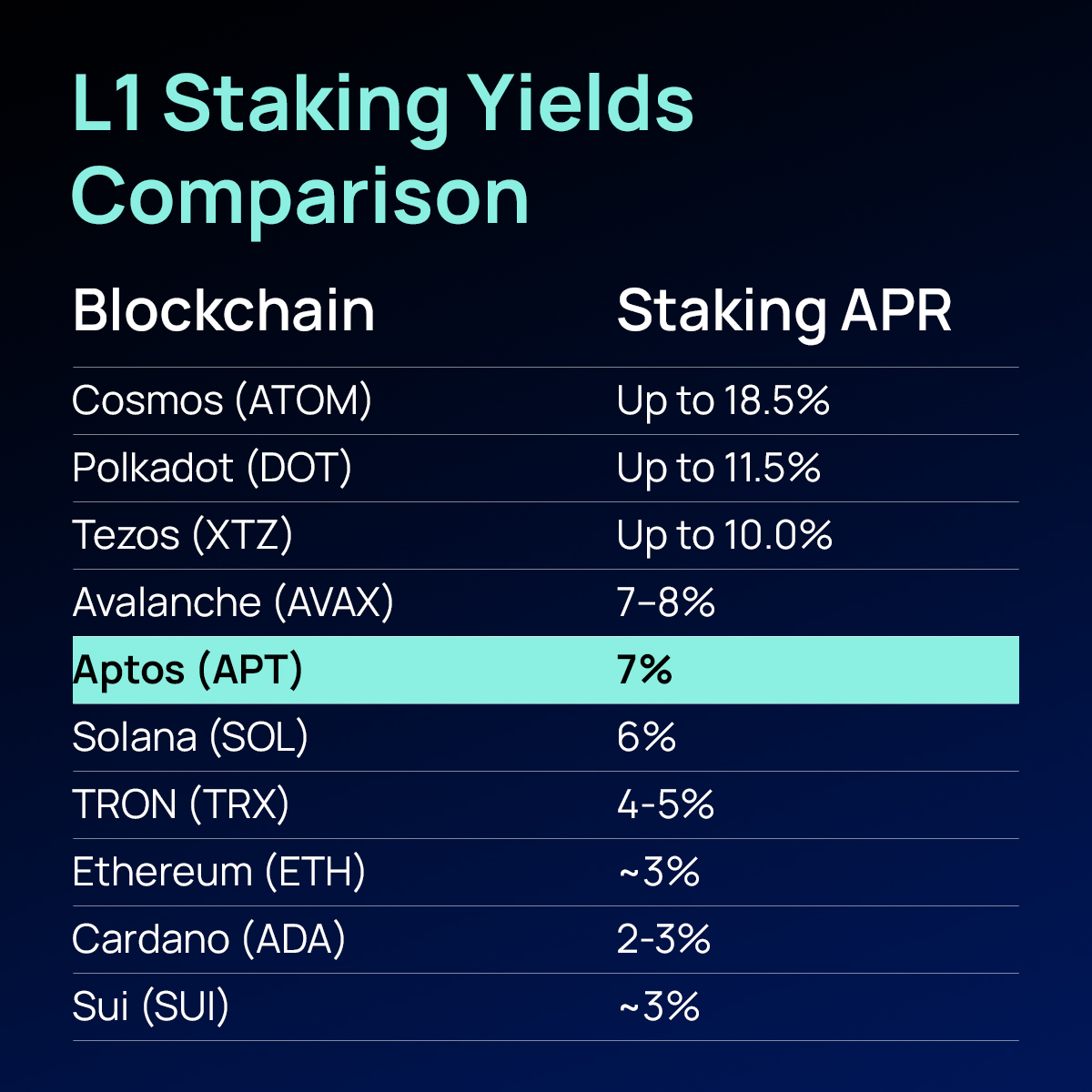
In addition, there are also comments that the reduced staking yield (3.79%) is uncompetitive compared to other chains that offer higher returns (such as Cosmos, about 15%), which may cause large investors and institutions seeking high returns to transfer funds to other networks, reduce Aptos' TVL and liquidity, and create a risk of capital outflow. In addition, a lower staking yield will also reduce the attractiveness of the AptosDeFi protocol to liquidity providers, affecting the growth of the protocol and user participation.

The universal problem of PoS governance: balancing rewards and inflation

In fact, this proposal is exactly the same as the SIMD-0228 proposal that was previously proposed on Solana and was ultimately rejected. Both attempts to curb network inflation by reducing the validator yield, which reflects the interest game problem in public chain governance. This governance problem is usually more prominent in the POS consensus mechanism.

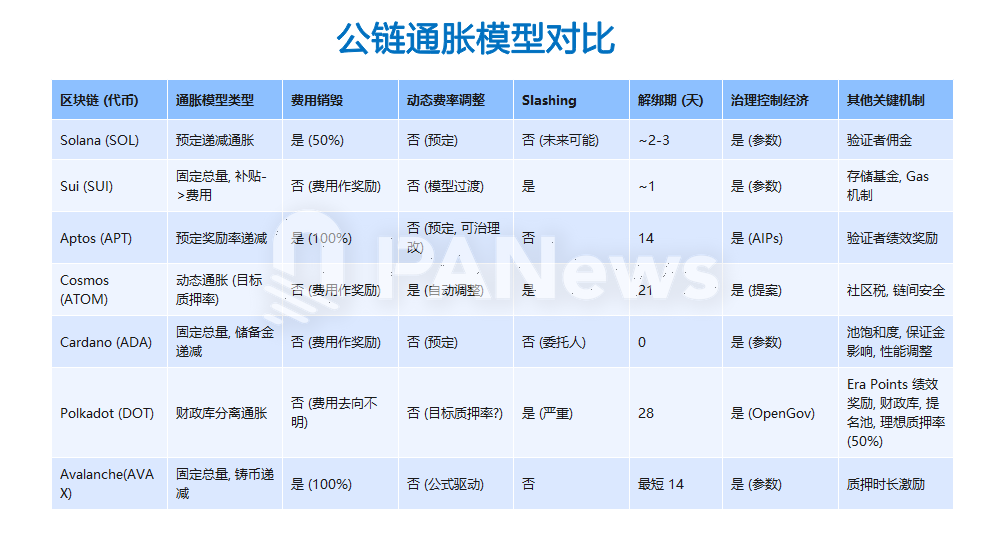
Therefore, the best way to determine whether the Aptos proposal is reasonable is to compare how several public chains with similar mechanisms balance this issue and what effects they produce.
Aptos inflation governance dilemma: AIP-119 proposal sparks controversy, ecological prosperity may be the solution

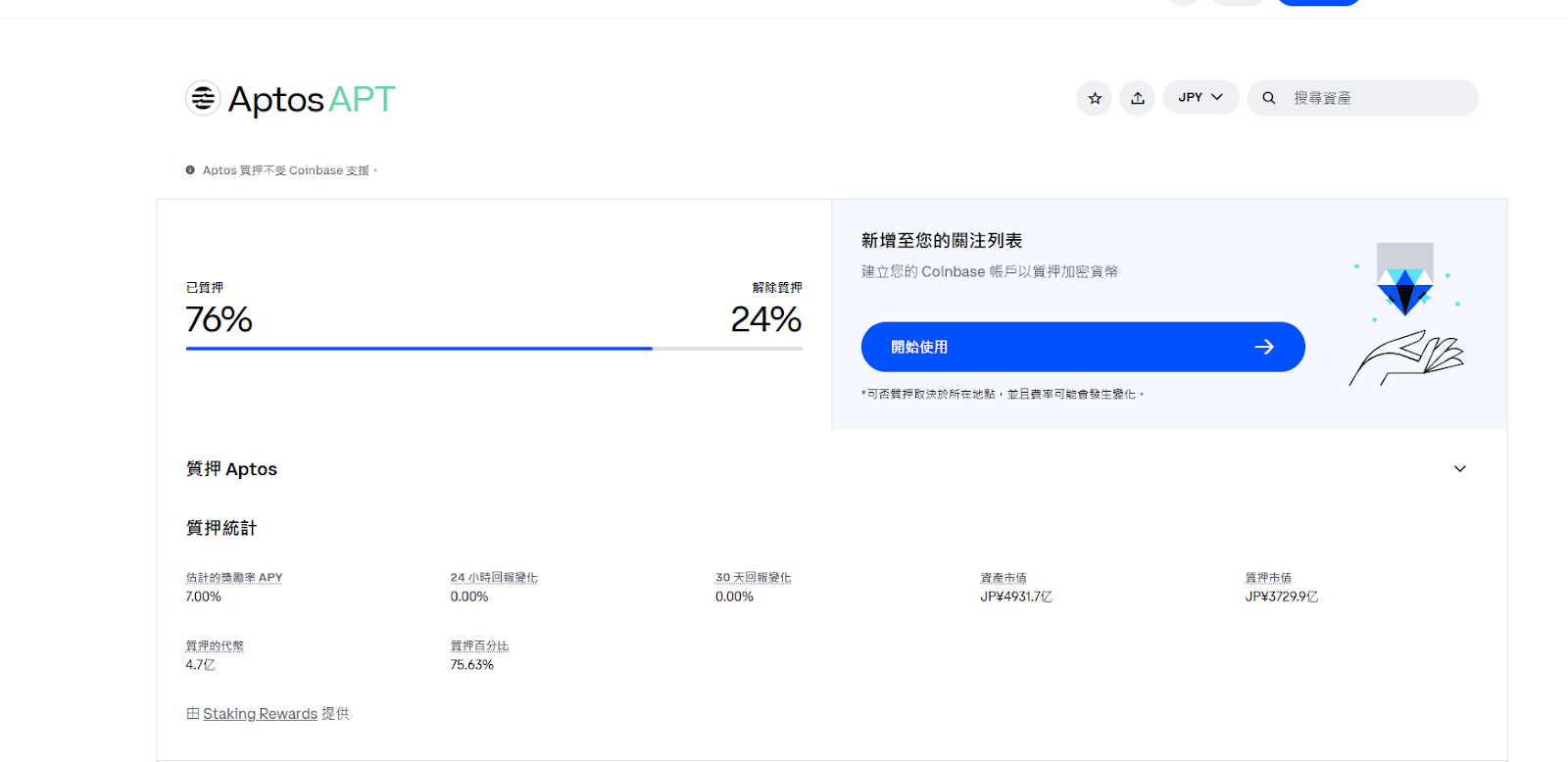
Currently, the token inflation model of Aptos is to increase by 7% every year. According to the AIP-30 proposal, the maximum reward rate is planned to decrease by 1.5% every year (relative to the previous year's value) until it reaches an annualized lower limit of 3.25% in more than 50 years. As of April, the pledge rate of APT reached 76%, maintaining a relatively high proportion among public chains. In terms of fee destruction, all transaction fees of Aptos will be destroyed at present, but since the on-chain fees of Aptos are only a few thousand dollars a day, this destruction is a drop in the bucket for resisting inflation.
Aptos inflation governance dilemma: AIP-119 proposal sparks controversy, ecological prosperity may be the solution

Judging from the trend of the token over the past year, Solana is a relatively successful public chain in the POS mechanism. Unlike Aptos' current fixed issuance ratio, Solana's inflation model is a year-on-year decreasing model, with an initial value of 8%, and then a decrease of 15% each year, currently about 4.58%. Therefore, this dynamic inflation model seems to be exactly the expected goal after the Aptos proposal reform. However, for Solana, this inflation is still considered too high by the community, so the 0228 proposal came into being. In terms of pledge ratio, Solana's current pledge ratio is about 65%, lower than Aptos' 76%.

In terms of fee destruction, 50% of Solana's transaction fees were previously destroyed, but after the 0096 proposal was passed, this 50% destruction was canceled and rewarded to validators, which also caused Solana's inflation to become more serious. However, due to the high activity of the Solana network, it does not seem to be affected too much by inflation.

In addition, Sui, another public chain of the MOVE system, is often compared with Aptos. In terms of staking yield, Sui's yield is relatively low, only between 2.3% and 2.5. And the SUI token has a hard cap of 10 billion SUI, which fundamentally controls the possibility of unlimited issuance. In terms of staking rate, SUI's staking rate is about 76.73%, which is close to APT. However, in terms of fee destruction, Sui network chooses to use it as a reward and does not have a destruction mechanism. Relatively speaking, Sui's hard cap model seems to have reduced a lot of inflation anxiety in the community, so its price performance is also relatively bright.

In addition, the staking income of Cosmos is relatively typical, up to 14.26%. From the perspective of the number of tokens in circulation, it also shows a continuous climbing effect. At present, the staking rate of Cosmos is about 59%, and this inflation will continue before it reaches 67%. However, although the staking income is high, the price trend of ATOM tokens has continued to fall. From a high of $44 to a low of $3.81, a drop of 91%.
Aptos inflation governance dilemma: AIP-119 proposal sparks controversy, ecological prosperity may be the solution

Aptos’s choice: save money or increase revenue?

In general, among the major POS public chains, no one can perfectly solve the balance between inflation rate and network participation. In the process of solving these games, on the one hand, it is necessary to control the inflation rate to maintain the healthy development of the token economic model, and on the other hand, it is necessary to attract validators to participate in network governance through relatively reasonable staking income. Ethereum has achieved deflation through POS transformation and basic fee destruction. But ETH does not seem to have ushered in a rise in token prices due to solving the inflation problem. On the contrary, Solana has recently passed the 0096 proposal to increase inflation, and the 0028 proposal to reduce deflation has been rejected by the community. But this does not seem to have much impact on Solana's token price. In the final analysis, it is because Solana's network activity has always ranked among the top public chains.

Solving inflation is like saving money, and improving network activity is like opening up new sources of income. For an active network, the balance between opening up new sources of income and saving money is naturally important, but for a network that is not very lively at the moment. How to improve activity is the real way to improve network tokens. Judging from the problems currently encountered by Aptos, Aptos' TVL is only 1.1 billion US dollars, ranking 11th among public chains. The overall data is not impressive, and the current number of validators in the entire network is 149, and the number of complete nodes is 495, which is not too high. Once many validators withdraw due to reduced yields, there is indeed the possibility of serious damage.

Therefore, for Aptos, while considering "throttling" through AIP-119, it may be more important to consider its potential impact on the validator ecosystem and network decentralization. Compared with radically cutting rewards, the more urgent choice at this stage may be how to "open source" - that is, to increase the activity of the network and attract more high-quality projects to settle in, so as to build a truly prosperous and sustainable ecosystem. This may be the key to supporting the long-term value of APT.

Disclaimer: The articles reposted on this site are sourced from public platforms and are provided for informational purposes only. They do not necessarily reflect the views of MEXC. All rights remain with the original authors. If you believe any content infringes on third-party rights, please contact service@support.mexc.com for removal. MEXC makes no guarantees regarding the accuracy, completeness, or timeliness of the content and is not responsible for any actions taken based on the information provided. The content does not constitute financial, legal, or other professional advice, nor should it be considered a recommendation or endorsement by MEXC.

You May Also Like

Is Doge Losing Steam As Traders Choose Pepeto For The Best Crypto Investment?

Is Doge Losing Steam As Traders Choose Pepeto For The Best Crypto Investment?

The post Is Doge Losing Steam As Traders Choose Pepeto For The Best Crypto Investment? appeared on BitcoinEthereumNews.com. Crypto News 17 September 2025 | 17:39 Is dogecoin really fading? As traders hunt the best crypto to buy now and weigh 2025 picks, Dogecoin (DOGE) still owns the meme coin spotlight, yet upside looks capped, today’s Dogecoin price prediction says as much. Attention is shifting to projects that blend culture with real on-chain tools. Buyers searching “best crypto to buy now” want shipped products, audits, and transparent tokenomics. That frames the true matchup: dogecoin vs. Pepeto. Enter Pepeto (PEPETO), an Ethereum-based memecoin with working rails: PepetoSwap, a zero-fee DEX, plus Pepeto Bridge for smooth cross-chain moves. By fusing story with tools people can use now, and speaking directly to crypto presale 2025 demand, Pepeto puts utility, clarity, and distribution in front. In a market where legacy meme coin leaders risk drifting on sentiment, Pepeto’s execution gives it a real seat in the “best crypto to buy now” debate. First, a quick look at why dogecoin may be losing altitude. Dogecoin Price Prediction: Is Doge Really Fading? Remember when dogecoin made crypto feel simple? In 2013, DOGE turned a meme into money and a loose forum into a movement. A decade on, the nonstop momentum has cooled; the backdrop is different, and the market is far more selective. With DOGE circling ~$0.268, the tape reads bearish-to-neutral for the next few weeks: hold the $0.26 shelf on daily closes and expect choppy range-trading toward $0.29–$0.30 where rallies keep stalling; lose $0.26 decisively and momentum often bleeds into $0.245 with risk of a deeper probe toward $0.22–$0.21; reclaim $0.30 on a clean daily close and the downside bias is likely neutralized, opening room for a squeeze into the low-$0.30s. Source: CoinMarketcap / TradingView Beyond the dogecoin price prediction, DOGE still centers on payments and lacks native smart contracts; ZK-proof verification is proposed,…
Share
BitcoinEthereumNews2025/09/18 00:14
Crucial Fed Rate Cut: October Probability Surges to 94%

Crucial Fed Rate Cut: October Probability Surges to 94%

BitcoinWorld Crucial Fed Rate Cut: October Probability Surges to 94% The financial world is buzzing with a significant development: the probability of a Fed rate cut in October has just seen a dramatic increase. This isn’t just a minor shift; it’s a monumental change that could ripple through global markets, including the dynamic cryptocurrency space. For anyone tracking economic indicators and their impact on investments, this update from the U.S. interest rate futures market is absolutely crucial. What Just Happened? Unpacking the FOMC Statement’s Impact Following the latest Federal Open Market Committee (FOMC) statement, market sentiment has decisively shifted. Before the announcement, the U.S. interest rate futures market had priced in a 71.6% chance of an October rate cut. However, after the statement, this figure surged to an astounding 94%. This jump indicates that traders and analysts are now overwhelmingly confident that the Federal Reserve will lower interest rates next month. Such a high probability suggests a strong consensus emerging from the Fed’s latest communications and economic outlook. A Fed rate cut typically means cheaper borrowing costs for businesses and consumers, which can stimulate economic activity. But what does this really signify for investors, especially those in the digital asset realm? Why is a Fed Rate Cut So Significant for Markets? When the Federal Reserve adjusts interest rates, it sends powerful signals across the entire financial ecosystem. A rate cut generally implies a more accommodative monetary policy, often enacted to boost economic growth or combat deflationary pressures. Impact on Traditional Markets: Stocks: Lower interest rates can make borrowing cheaper for companies, potentially boosting earnings and making stocks more attractive compared to bonds. Bonds: Existing bonds with higher yields might become more valuable, but new bonds will likely offer lower returns. Dollar Strength: A rate cut can weaken the U.S. dollar, making exports cheaper and potentially benefiting multinational corporations. Potential for Cryptocurrency Markets: The cryptocurrency market, while often seen as uncorrelated, can still react significantly to macro-economic shifts. A Fed rate cut could be interpreted as: Increased Risk Appetite: With traditional investments offering lower returns, investors might seek higher-yielding or more volatile assets like cryptocurrencies. Inflation Hedge Narrative: If rate cuts are perceived as a precursor to inflation, assets like Bitcoin, often dubbed “digital gold,” could gain traction as an inflation hedge. Liquidity Influx: A more accommodative monetary environment generally means more liquidity in the financial system, some of which could flow into digital assets. Looking Ahead: What Could This Mean for Your Portfolio? While the 94% probability for a Fed rate cut in October is compelling, it’s essential to consider the nuances. Market probabilities can shift, and the Fed’s ultimate decision will depend on incoming economic data. Actionable Insights: Stay Informed: Continue to monitor economic reports, inflation data, and future Fed statements. Diversify: A diversified portfolio can help mitigate risks associated with sudden market shifts. Assess Risk Tolerance: Understand how a potential rate cut might affect your specific investments and adjust your strategy accordingly. This increased likelihood of a Fed rate cut presents both opportunities and challenges. It underscores the interconnectedness of traditional finance and the emerging digital asset space. Investors should remain vigilant and prepared for potential volatility. The financial landscape is always evolving, and the significant surge in the probability of an October Fed rate cut is a clear signal of impending change. From stimulating economic growth to potentially fueling interest in digital assets, the implications are vast. Staying informed and strategically positioned will be key as we approach this crucial decision point. The market is now almost certain of a rate cut, and understanding its potential ripple effects is paramount for every investor. Frequently Asked Questions (FAQs) Q1: What is the Federal Open Market Committee (FOMC)? A1: The FOMC is the monetary policymaking body of the Federal Reserve System. It sets the federal funds rate, which influences other interest rates and economic conditions. Q2: How does a Fed rate cut impact the U.S. dollar? A2: A rate cut typically makes the U.S. dollar less attractive to foreign investors seeking higher returns, potentially leading to a weakening of the dollar against other currencies. Q3: Why might a Fed rate cut be good for cryptocurrency? A3: Lower interest rates can reduce the appeal of traditional investments, encouraging investors to seek higher returns in alternative assets like cryptocurrencies. It can also be seen as a sign of increased liquidity or potential inflation, benefiting assets like Bitcoin. Q4: Is a 94% probability a guarantee of a rate cut? A4: While a 94% probability is very high, it is not a guarantee. Market probabilities reflect current sentiment and data, but the Federal Reserve’s final decision will depend on all available economic information leading up to their meeting. Q5: What should investors do in response to this news? A5: Investors should stay informed about economic developments, review their portfolio diversification, and assess their risk tolerance. Consider how potential changes in interest rates might affect different asset classes and adjust strategies as needed. Did you find this analysis helpful? Share this article with your network to keep others informed about the potential impact of the upcoming Fed rate cut and its implications for the financial markets! To learn more about the latest crypto market trends, explore our article on key developments shaping Bitcoin price action. This post Crucial Fed Rate Cut: October Probability Surges to 94% first appeared on BitcoinWorld.
Share
Coinstats2025/09/18 02:25
MOEX to Launch $XRP Indices/Futures: $MAXI Adoption Grows

MOEX to Launch $XRP Indices/Futures: $MAXI Adoption Grows

The post MOEX to Launch $XRP Indices/Futures: $MAXI Adoption Grows appeared on BitcoinEthereumNews.com. MOEX to Launch $XRP Indices/Futures: $MAXI Adoption
Share
BitcoinEthereumNews2026/02/04 06:00