Ethereum developers are advancing a new zero-knowledge protocol that aims to bring stronger privacy to on-chain interactions, beginning with a cryptographically verified Secret Santa–style matching system.Though playful in theme, the work reflects a growing push within the Ethereum ecosystem to design practical privacy frameworks that can be deployed across a range of real-world applications.A push for private coordination in EthereumThe idea resurfaced recently after Solidity engineer Artem Chystiakov highlighted research he and collaborators first published earlier this year.Their proposal, known as the ZK Secret Santa (ZKSS) protocol, describes a method for matching participants on-chain without exposing who is assigned to whom.The challenge is heightened by Ethereum’s fully transparent state, lack of native randomness and the long-standing problem of Sybil resistance.To address these constraints, the ZKSS design leans heavily on zero-knowledge proofs, transaction relayers and cryptographic nullifiers.Together, these tools allow participants to prove their place in the game, contribute randomness and receive assignments without revealing the underlying identity linkages that would otherwise be visible on-chain.The use of a relayer is central to the privacy guarantee. During the matching phase, participants submit their randomness through the relayer, which broadcasts the transactions on their behalf.Because the relayer masks the origin of each submission, no observer can infer which address contributed which value.The protocol’s zero-knowledge proofs then verify that each randomness submission is valid, tied to a legitimate participant and not duplicated.Inside the three-step protocolThe ZKSS system unfolds in three coordinated steps.First, all participants are registered in a smart contract, which stores their addresses in a sparse Merkle tree.This setup needs to be done only once, allowing for repeated Secret Santa rounds without rebuilding the participant list.The registration tree later enables proof-based membership checks without exposing wallet relationships.The second stage, called signature commitment, requires each participant to commit to a deterministic ECDSA signature.This commitment prevents them from using signature variability to bypass anti-Sybil protections.Each signature hash is stored in a separate Merkle tree, with the contract verifying that the sender belongs to the initial participant set.After committing, players generate and publish a unique randomness value. They do this privately, but their proof shows that the randomness belongs to a legitimate participant and hasn’t been reused.Players are encouraged to use RSA public keys as their randomness so they can later receive encrypted delivery details from their assigned counterpart.The final step is the receiver disclosure phase. Here, each participant reveals themselves to the person who drew their randomness. They provide a proof showing they are not claiming their own slot and that their nullifier does not conflict with the randomness they selected.With this final verification step, the protocol completes the matching without leaking any sender-receiver mappings to the public chain.A framework with broader usesAlthough framed as a Secret Santa algorithm, the implications reach far beyond seasonal gift exchanges.Ethereum’s growing intersection with regulated finance, governance, and organisational coordination has amplified the need for permissionless privacy systems.The same framework can support anonymous voting in DAOs, whistleblower channels where members must prove eligibility without exposing identity, and private airdrops that avoid revealing recipient lists.Its structure, Merkle trees for membership checking, deterministic signatures for Sybil resistance, and zero-knowledge proofs for correctness, mirrors the backbone of many emerging privacy-first protocols.Developers expect continued refinement as the community tests the ZKSS design and explores interoperability with existing Ethereum tooling.The early research suggests that privacy-preserving, verifiable coordination can be achieved without trusted intermediaries, marking a notable step toward more confidential activity on public blockchains.The post Ethereum developers working on a ZK protocol for on-chain interactions privacy appeared first on InvezzEthereum developers are advancing a new zero-knowledge protocol that aims to bring stronger privacy to on-chain interactions, beginning with a cryptographically verified Secret Santa–style matching system.Though playful in theme, the work reflects a growing push within the Ethereum ecosystem to design practical privacy frameworks that can be deployed across a range of real-world applications.A push for private coordination in EthereumThe idea resurfaced recently after Solidity engineer Artem Chystiakov highlighted research he and collaborators first published earlier this year.Their proposal, known as the ZK Secret Santa (ZKSS) protocol, describes a method for matching participants on-chain without exposing who is assigned to whom.The challenge is heightened by Ethereum’s fully transparent state, lack of native randomness and the long-standing problem of Sybil resistance.To address these constraints, the ZKSS design leans heavily on zero-knowledge proofs, transaction relayers and cryptographic nullifiers.Together, these tools allow participants to prove their place in the game, contribute randomness and receive assignments without revealing the underlying identity linkages that would otherwise be visible on-chain.The use of a relayer is central to the privacy guarantee. During the matching phase, participants submit their randomness through the relayer, which broadcasts the transactions on their behalf.Because the relayer masks the origin of each submission, no observer can infer which address contributed which value.The protocol’s zero-knowledge proofs then verify that each randomness submission is valid, tied to a legitimate participant and not duplicated.Inside the three-step protocolThe ZKSS system unfolds in three coordinated steps.First, all participants are registered in a smart contract, which stores their addresses in a sparse Merkle tree.This setup needs to be done only once, allowing for repeated Secret Santa rounds without rebuilding the participant list.The registration tree later enables proof-based membership checks without exposing wallet relationships.The second stage, called signature commitment, requires each participant to commit to a deterministic ECDSA signature.This commitment prevents them from using signature variability to bypass anti-Sybil protections.Each signature hash is stored in a separate Merkle tree, with the contract verifying that the sender belongs to the initial participant set.After committing, players generate and publish a unique randomness value. They do this privately, but their proof shows that the randomness belongs to a legitimate participant and hasn’t been reused.Players are encouraged to use RSA public keys as their randomness so they can later receive encrypted delivery details from their assigned counterpart.The final step is the receiver disclosure phase. Here, each participant reveals themselves to the person who drew their randomness. They provide a proof showing they are not claiming their own slot and that their nullifier does not conflict with the randomness they selected.With this final verification step, the protocol completes the matching without leaking any sender-receiver mappings to the public chain.A framework with broader usesAlthough framed as a Secret Santa algorithm, the implications reach far beyond seasonal gift exchanges.Ethereum’s growing intersection with regulated finance, governance, and organisational coordination has amplified the need for permissionless privacy systems.The same framework can support anonymous voting in DAOs, whistleblower channels where members must prove eligibility without exposing identity, and private airdrops that avoid revealing recipient lists.Its structure, Merkle trees for membership checking, deterministic signatures for Sybil resistance, and zero-knowledge proofs for correctness, mirrors the backbone of many emerging privacy-first protocols.Developers expect continued refinement as the community tests the ZKSS design and explores interoperability with existing Ethereum tooling.The early research suggests that privacy-preserving, verifiable coordination can be achieved without trusted intermediaries, marking a notable step toward more confidential activity on public blockchains.The post Ethereum developers working on a ZK protocol for on-chain interactions privacy appeared first on Invezz

Ethereum developers working on a ZK protocol for on-chain interactions privacy

2025/12/02 17:46
4 min read

Ethereum developers are advancing a new zero-knowledge protocol that aims to bring stronger privacy to on-chain interactions, beginning with a cryptographically verified Secret Santa–style matching system.

Though playful in theme, the work reflects a growing push within the Ethereum ecosystem to design practical privacy frameworks that can be deployed across a range of real-world applications.

A push for private coordination in Ethereum

The idea resurfaced recently after Solidity engineer Artem Chystiakov highlighted research he and collaborators first published earlier this year.

Their proposal, known as the ZK Secret Santa (ZKSS) protocol, describes a method for matching participants on-chain without exposing who is assigned to whom.

The challenge is heightened by Ethereum’s fully transparent state, lack of native randomness and the long-standing problem of Sybil resistance.

To address these constraints, the ZKSS design leans heavily on zero-knowledge proofs, transaction relayers and cryptographic nullifiers.

Together, these tools allow participants to prove their place in the game, contribute randomness and receive assignments without revealing the underlying identity linkages that would otherwise be visible on-chain.

The use of a relayer is central to the privacy guarantee. During the matching phase, participants submit their randomness through the relayer, which broadcasts the transactions on their behalf.

Because the relayer masks the origin of each submission, no observer can infer which address contributed which value.

The protocol’s zero-knowledge proofs then verify that each randomness submission is valid, tied to a legitimate participant and not duplicated.

Inside the three-step protocol

The ZKSS system unfolds in three coordinated steps.

First, all participants are registered in a smart contract, which stores their addresses in a sparse Merkle tree.

This setup needs to be done only once, allowing for repeated Secret Santa rounds without rebuilding the participant list.

The registration tree later enables proof-based membership checks without exposing wallet relationships.

The second stage, called signature commitment, requires each participant to commit to a deterministic ECDSA signature.

This commitment prevents them from using signature variability to bypass anti-Sybil protections.

Each signature hash is stored in a separate Merkle tree, with the contract verifying that the sender belongs to the initial participant set.

After committing, players generate and publish a unique randomness value. They do this privately, but their proof shows that the randomness belongs to a legitimate participant and hasn’t been reused.

Players are encouraged to use RSA public keys as their randomness so they can later receive encrypted delivery details from their assigned counterpart.

The final step is the receiver disclosure phase. Here, each participant reveals themselves to the person who drew their randomness.

They provide a proof showing they are not claiming their own slot and that their nullifier does not conflict with the randomness they selected.

With this final verification step, the protocol completes the matching without leaking any sender-receiver mappings to the public chain.

A framework with broader uses

Although framed as a Secret Santa algorithm, the implications reach far beyond seasonal gift exchanges.

Ethereum’s growing intersection with regulated finance, governance, and organisational coordination has amplified the need for permissionless privacy systems.

The same framework can support anonymous voting in DAOs, whistleblower channels where members must prove eligibility without exposing identity, and private airdrops that avoid revealing recipient lists.

Its structure, Merkle trees for membership checking, deterministic signatures for Sybil resistance, and zero-knowledge proofs for correctness, mirrors the backbone of many emerging privacy-first protocols.

Developers expect continued refinement as the community tests the ZKSS design and explores interoperability with existing Ethereum tooling.

The early research suggests that privacy-preserving, verifiable coordination can be achieved without trusted intermediaries, marking a notable step toward more confidential activity on public blockchains.

The post Ethereum developers working on a ZK protocol for on-chain interactions privacy appeared first on Invezz

Market Opportunity
ZKsync Logo
ZKsync Price(ZK)
$0.02235
$0.02235$0.02235
+3.66%
USD
ZKsync (ZK) Live Price Chart
Disclaimer: The articles reposted on this site are sourced from public platforms and are provided for informational purposes only. They do not necessarily reflect the views of MEXC. All rights remain with the original authors. If you believe any content infringes on third-party rights, please contact service@support.mexc.com for removal. MEXC makes no guarantees regarding the accuracy, completeness, or timeliness of the content and is not responsible for any actions taken based on the information provided. The content does not constitute financial, legal, or other professional advice, nor should it be considered a recommendation or endorsement by MEXC.

You May Also Like

Satoshi-Era Mt. Gox’s 1,000 Bitcoin Wallet Suddenly Reactivated
Satoshi-Era Mt. Gox’s 1,000 Bitcoin Wallet Suddenly Reactivated

The post Satoshi-Era Mt. Gox’s 1,000 Bitcoin Wallet Suddenly Reactivated appeared on BitcoinEthereumNews.com. X account @SaniExp, which belongs to the founder of the Timechain Index explorer, has published data showing that a dormant BTC wallet was activated after hibernating for six years. However, it was set up 13 years ago, according to the tweet — the time when Satoshi Nakamoto’s shadow was still casting itself around, so to speak. The X post states that the tweet belongs to infamous early Bitcoin exchange Mt. Gox, which suffered from a major hack in the early 2010s, and last year it began paying out compensation to clients who lost their crypto in that hack. The deadline was eventually extended to October 2025. Mt. Gox’s wallet with 1,000 BTC reactivated The above-mentioned data source shared a screenshot from the Timechain Index explorer, showing multiple transactions marked as confirmed and moving a total of 1,000 Bitcoins. This amount of crypto is valued at $116,195,100 at the time of the initiated transaction. Last year, Mt. Gox began to move the remains of its gargantuan funds to pay out compensations to its creditors. Earlier this year, it also made several massive transactions to partner exchanges to distribute funds to Mt. Gox investors. All of the compensations were promised to be paid out by Oct. 31, 2025. The aforementioned transaction is likely preparation for another payout. The exchange was hacked for several years due to multiple unnoticed security breaches, and in 2014, when the site went offline, 744,408 Bitcoins were reported stolen. Source: https://u.today/satoshi-era-mtgoxs-1000-bitcoin-wallet-suddenly-reactivated
Share
BitcoinEthereumNews2025/09/18 10:18
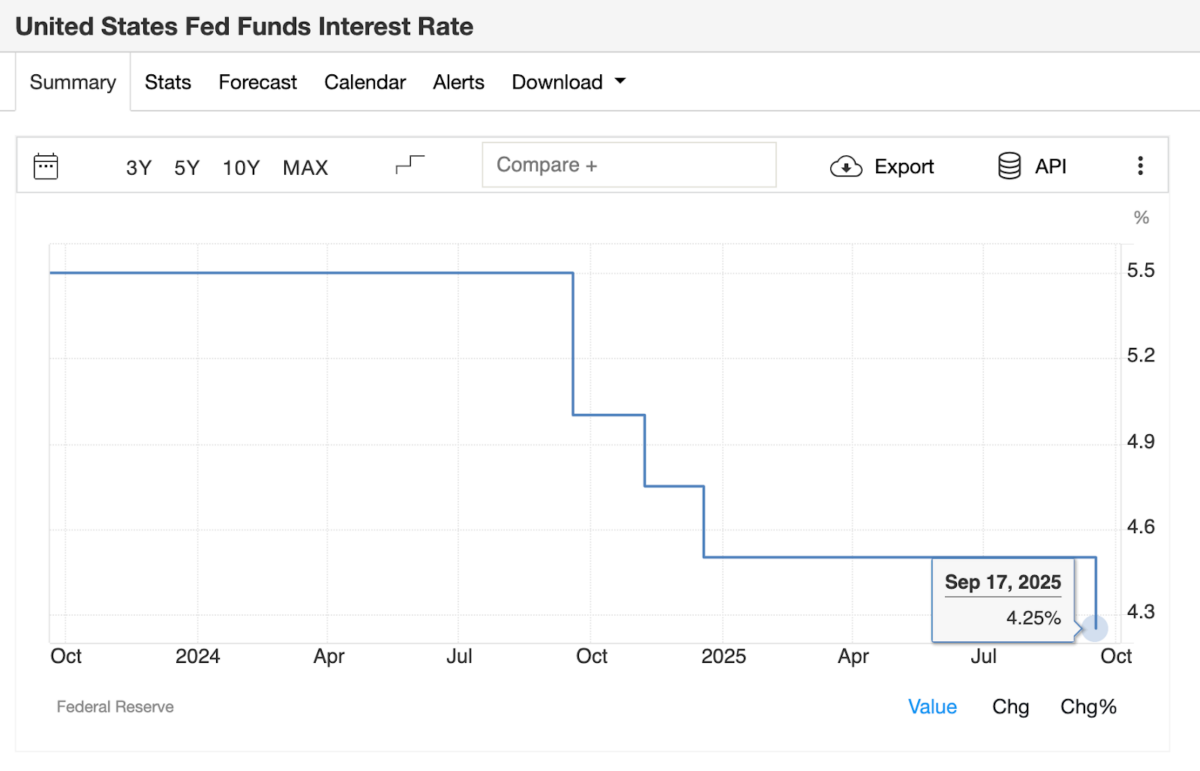
Bitcoin Holds $115K Support as Fed Cuts Rates by 25 Basis Points

Bitcoin Holds $115K Support as Fed Cuts Rates by 25 Basis Points

Bitcoin maintained support above $115,000 following the Federal Reserve's 25 basis point rate cut, which fell short of the widely anticipated 50bp reduction. The post Bitcoin Holds $115K Support as Fed Cuts Rates by 25 Basis Points appeared first on Coinspeaker.
Share
Coinspeaker2025/09/18 07:44
MoonBull, Brett, and Dogwifhat Compared

MoonBull, Brett, and Dogwifhat Compared

The post MoonBull, Brett, and Dogwifhat Compared appeared on BitcoinEthereumNews.com. Crypto News 18 September 2025 | 05:15 Explore MoonBull Whitelist, Brett token, and Dogwifhat price action. Learn why MoonBull’s best crypto whitelist is live now with big FOMO potential. Ever wondered why meme coins stir so much hype in the crypto jungle? Traders, students, and even seasoned blockchain builders keep chasing the next peanut pile of gains, hoping their bags turn into bull-sized fortunes overnight. In today’s scene, names like Brett and Dogwifhat grab the spotlight, while MoonBull lights up conversations with its whitelist buzz. Each of these projects carries its own flavor, yet the energy they generate reveals how meme culture keeps shaking financial markets. Brett became a crowd darling by spinning internet humor into tokenomics. Dogwifhat turned playful memes into market waves, pulling traders in with viral appeal. Both show how lighthearted memes can fuel serious capital flow. Yet the chatter doesn’t stop with them. MoonBull now appears, sparking urgency with its whitelist, creating noise louder than a hippo splash in shallow waters. MoonBull’s whitelist offering exclusive early perks, the crypto crowd feels the tug of FOMO stronger than ever. This first-come, first-served invite could be a rare second shot at a moonshot. MoonBull Whitelist is Live: Your Chance to Join the Best Crypto Whitelist MoonBull ($MOBU) has entered the arena not as just another meme coin but as a project built with the precision of Ethereum’s secure backbone. Designed for those chasing explosive upside, MoonBull stacks its chips on elite staking rewards and secret token drops. Its whitelist isn’t simply a sign-up form; it’s a ticket into Stage One of the presale, where entry comes at the lowest price possible and doors swing open to bonus allocations. Being whitelisted is like being a penguin in the front row of a bull stampede. Whitelist members aren’t just joining…
Share
BitcoinEthereumNews2025/09/18 10:17