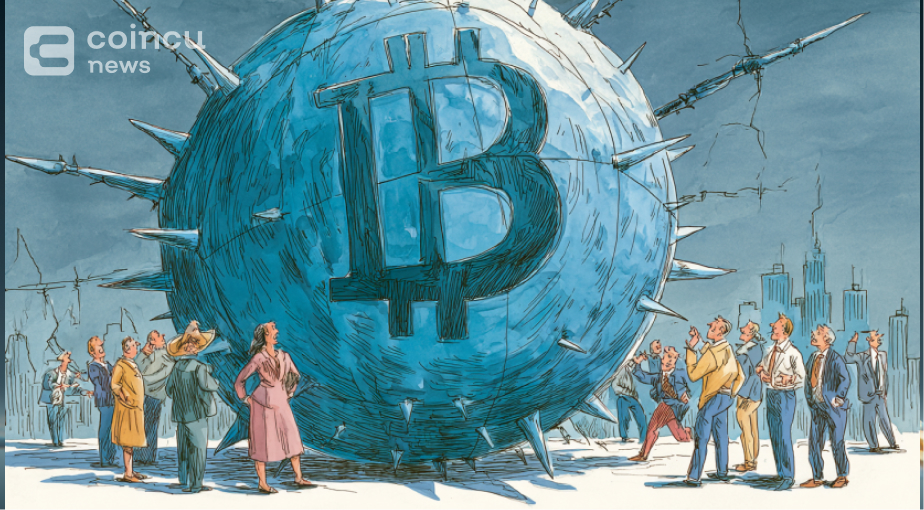
Bitcoin Price Prediction Looks Uncertain: Should You Shift to XRP Staking Platforms Like Tundra?
Bitcoin’s decline below the $90,000 mark has renewed concerns about whether the market is entering another extended downturn. The world’s largest cryptocurrency traded at $89,390 on Tuesday afternoon, marking its lowest level since April as sell pressure accelerated across major exchanges.
The latest drop follows a week of sharp losses. Bitcoin is down more than 15% over the past seven days and has fallen over 33% from its October all-time high. Analysts attribute the deeper slide to a combination of ETF outflows, whale-driven short positioning and thinning liquidity, all of which have transformed a routine correction into a more forceful drawdown. With traders unsure whether this marks the early stage of a more prolonged “crypto winter,” attention is shifting toward parts of the market offering more predictable returns.
Bitcoin’s Sharp Pullback Forces Analysts to Revisit Price Predictions
The magnitude of Bitcoin’s selling has surprised even long-term market observers. ETF flows, once a stabilizing force, have weakened in recent sessions, while large leveraged positions from derivatives desks added pressure as liquidations cascaded. The decline has left traders questioning whether the market is merely resetting or preparing for a multi-month consolidation.

Liquidity has thinned across major trading pairs, leaving intraday volatility elevated and amplifying the effects of even modest selling pressure. Analysts watching these developments argue that corrections of this scale often lead to rotations into ecosystem-specific opportunities, particularly those that provide a clearer path to yield. Channels tracking market behavior, including Crypto Legends, have noted that downturns frequently accelerate movement toward platforms offering consistent staking returns during periods of uncertainty.
Why Yield-Focused Investors Are Exploring XRPL Ecosystems Instead
When Bitcoin weakens, investors typically look for alternative strategies that can generate predictable returns without relying on price appreciation. Bitcoin has no native on-chain yield mechanism, requiring holders to use centralized lenders or derivative products if they want returns. As the current drawdown deepens, investors are revisiting ecosystems capable of distributing revenue-backed rewards.
XRP Tundra has emerged as a focal point in that conversation. The project aims to deliver the native DeFi layer that the XRP Ledger has lacked, anchored in a dual-token architecture built for both speed and governance. TUNDRA-S, deployed on Solana, powers high-throughput DeFi execution, while TUNDRA-X on the XRPL handles governance, reserves and future control of the upcoming GlacierChain L2. Cryo Vault staking and Frost Key NFTs create structured yield channels that align with how XRP holders already interact with the ecosystem.
The project’s bull-case thesis argues that if broader market conditions remain volatile, early-stage platforms offering revenue-backed yield may attract capital that is unwilling to sit idle during Bitcoin’s corrective phase. Tundra’s emphasis on audits, KYC, anti-dump liquidity mechanisms and fixed supply is designed for an environment where credibility becomes more important than speculative momentum.
Real Revenue vs. Zero Yield — The Fundamental Difference Between Bitcoin and Tundra
At the center of the comparison between Bitcoin and XRP Tundra is the source of returns. Bitcoin does not produce yield at the protocol level. Returns depend on custodial services, leverage or lending models that expose users to counterparty risk. This becomes more problematic during market downturns, when liquidity tightens and lenders reduce payouts.

XRP Tundra’s model is different. All staking yields come directly from real ecosystem revenue. Swaps, lending operations, derivatives activity and cross-chain bridge usage on TUNDRA-S generate fees that flow into the Cryo Vaults. Frost Key NFT mints add another stream of revenue, while the governance treasury directs a portion of income toward market-buying and permanently locking TUNDRA-X. No inflationary minting exists in either token, and APYs rise or adjust based on verifiable economic activity rather than issuance.
These design choices distinguish Tundra from previous “staking” schemes that targeted XRP holders with inflated returns and no underlying revenue. For investors asking “is XRP Tundra legit”, the project provides a transparent record that includes independent audits from Cyberscope, Solidproof and FreshCoins, along with full team verification from Vital Block.
Staking Tier Comparison Shows How Tundra Targets Different Yield Profiles
The appeal of Tundra grows when comparing its structured staking system to Bitcoin’s complete absence of native yield. Cryo Vaults provide tiered options designed for different risk levels:
| Staking Tier | APY Range | Commitment | Min Stake | Withdrawal | Risk Level |
| Liquid Staking | 4–6% | None | 100 TUNDRA-S | Instant | Low |
| Balanced Staking | 8–12% | 30 days | 500 TUNDRA-S | After lock-up | Medium |
| Premium Staking | 15–20% | 90 days | 1,000 TUNDRA-S | After lock-up | Med–High |
Bitcoin cannot match these structures because it has no yield mechanism at the protocol level. Ethereum offers staking, but returns depend on inflation and validator saturation rather than revenue. For users reconsidering strategy during Bitcoin’s drawdown, Tundra’s model provides multiple paths to predictable income without relying on market speculation.
Could Bitcoin’s Volatility Push Investors Toward Yield Platforms in 2025?
The question now is whether Bitcoin’s downturn is a temporary correction or the beginning of a longer period of consolidation. If volatility remains elevated, investors seeking stability may prioritize platforms with transparent, revenue-backed yield mechanisms. XRP Tundra’s presale remains in Phase 12, offering TUNDRA-S at $0.214 with an 8% bonus and free TUNDRA-X at a $0.107 reference value. Confirmed listing prices of $2.5 for TUNDRA-S and $1.25 for TUNDRA-X provide clear valuation reference points.
With more than $3.5 million raised so far, the project has gained traction among investors looking for yield opportunities during market uncertainty. Whether Bitcoin recovers or continues trending downward, yield-focused strategies are becoming increasingly important in portfolio decisions.

Secure your Phase 12 allocation while Bitcoin’s outlook remains uncertain.
Buy Tundra Now: official XRP Tundra website
How To Buy Tundra: step-by-step guide
Security and Trust: Solidproof audit
Join the Community: Telegram
You May Also Like

Here’s How Consumers May Benefit From Lower Interest Rates

Your 24/7 Market Watchdog: Sleep Soundly While Technology Tracks the Charts