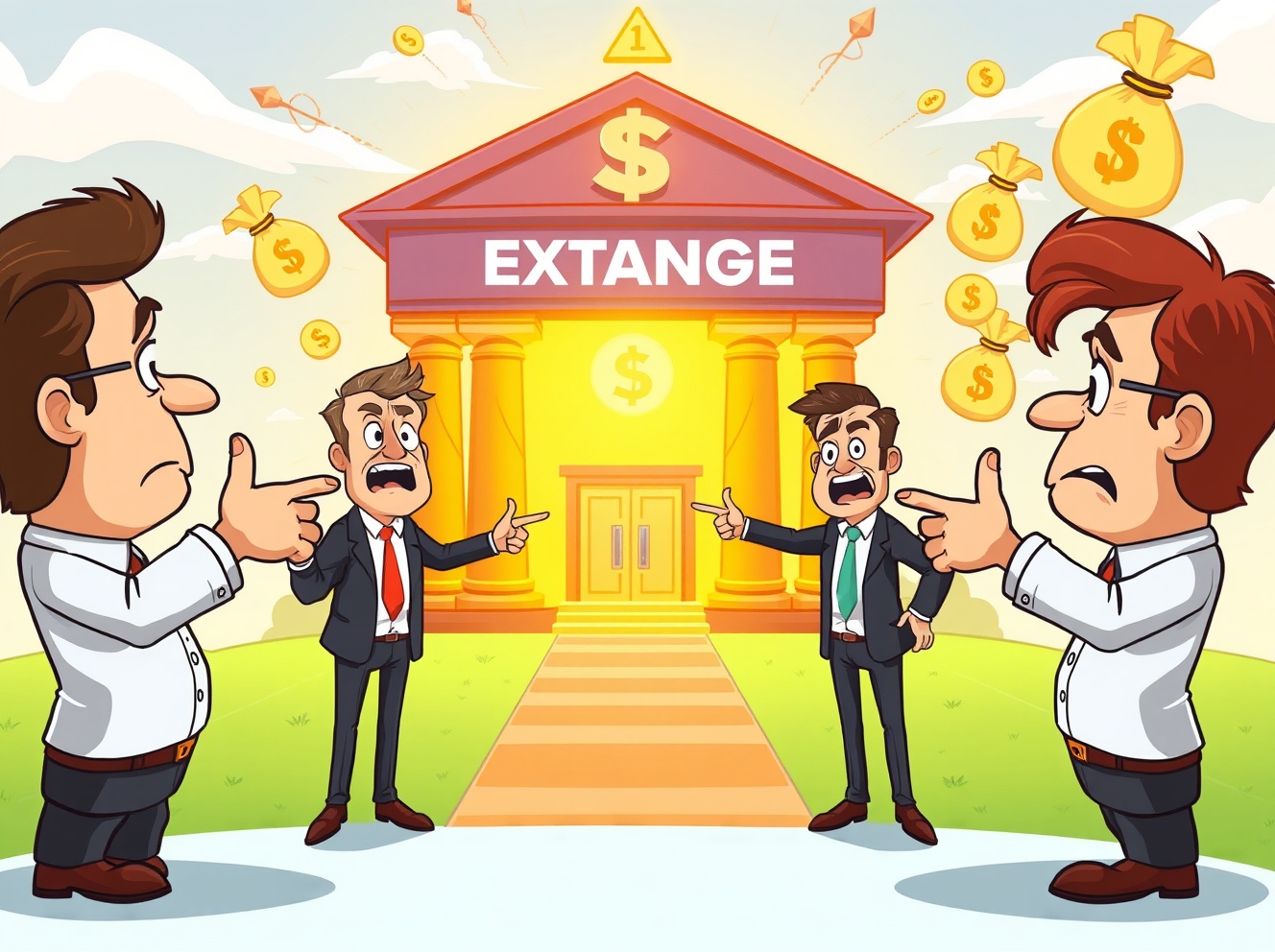
BitcoinWorld Shocking FTX Creditor Allegations Reveal Blocked Billion-Dollar Rescue Bids A stunning revelation from a former FTX creditor committee member has rocked the cryptocurrency world, alleging that potential billion-dollar rescue bids for the bankrupt exchange were deliberately blocked. These shocking claims suggest creditors may have lost out on massive recovery opportunities due to legal interference. What Did the FTX Creditor Actually Reveal? Arush, a former […] This post Shocking FTX Creditor Allegations Reveal Blocked Billion-Dollar Rescue Bids first appeared on BitcoinWorld.BitcoinWorld Shocking FTX Creditor Allegations Reveal Blocked Billion-Dollar Rescue Bids A stunning revelation from a former FTX creditor committee member has rocked the cryptocurrency world, alleging that potential billion-dollar rescue bids for the bankrupt exchange were deliberately blocked. These shocking claims suggest creditors may have lost out on massive recovery opportunities due to legal interference. What Did the FTX Creditor Actually Reveal? Arush, a former […] This post Shocking FTX Creditor Allegations Reveal Blocked Billion-Dollar Rescue Bids first appeared on BitcoinWorld.

Shocking FTX Creditor Allegations Reveal Blocked Billion-Dollar Rescue Bids
2025/11/19 20:10
4 min read
FTX creditor allegations about blocked rescue bids for the bankrupt exchange

BitcoinWorld

Shocking FTX Creditor Allegations Reveal Blocked Billion-Dollar Rescue Bids

A stunning revelation from a former FTX creditor committee member has rocked the cryptocurrency world, alleging that potential billion-dollar rescue bids for the bankrupt exchange were deliberately blocked. These shocking claims suggest creditors may have lost out on massive recovery opportunities due to legal interference.

What Did the FTX Creditor Actually Reveal?

Arush, a former member of the FTX Unsecured Creditors Committee, dropped a bombshell on social media platform X. He stated that three major companies actively sought to bid for FTX’s assets but faced obstruction from the exchange’s bankruptcy law firm. This FTX creditor’s testimony contradicts official narratives about the bankruptcy proceedings.

The alleged interested bidders included:

  • Bullish – a major cryptocurrency exchange
  • Figure – a blockchain lending platform
  • One unnamed centralized exchange

How Could This Have Changed Creditor Recovery?

The blocked bids weren’t just ordinary offers. According to the FTX creditor, these proposals involved equity structures that could have added tens of billions of dollars to creditor repayments. This represents far more value than simple cash settlements.

The consortium bid organized by the creditors committee envisioned an FTX 2.0 relaunch. This approach could have preserved enterprise value rather than liquidating assets piecemeal. Every FTX creditor potentially stood to benefit significantly from this alternative path.

Why Would Anyone Block Better Deals?

The former FTX creditor made serious allegations about motivations. He claimed the law firm obstructed these superior deals to force a liquidation process that would generate higher legal fees. This accusation strikes at the heart of bankruptcy ethics and creditor protection.

Moreover, the FTX creditor called recent statements from FTX’s lawyers – who claimed there were no interested buyers – a blatant lie. The sharing of this post by FTX founder Sam Bankman-Fried adds another layer of complexity to these already serious allegations.

What Does This Mean for Future Crypto Bankruptcies?

These revelations from a former FTX creditor could set important precedents for how cryptocurrency bankruptcies are handled. The case highlights the critical need for transparency in creditor committees and legal representation.

The situation raises crucial questions about:

  • Creditor committee oversight mechanisms
  • Legal fee structures in complex bankruptcies
  • Bid evaluation processes for distressed crypto assets
  • Protections for the average FTX creditor

What’s Next for the FTX Creditor Community?

The allegations from this courageous FTX creditor have ignited discussions about potential legal challenges to the current bankruptcy process. Creditors may explore options to investigate the blocked bids further and potentially recover lost value.

This situation serves as a stark reminder that in complex bankruptcies, the interests of legal professionals don’t always align with those of the people they’re supposed to serve – the creditors themselves.

Frequently Asked Questions

Who is the FTX creditor making these allegations?

The whistleblower is Arush, a former member of the FTX Unsecured Creditors Committee who had inside knowledge of the bankruptcy proceedings and potential acquisition offers.

Which companies were allegedly blocked from bidding?

According to the allegations, Bullish (crypto exchange), Figure (blockchain lending platform), and one unnamed centralized exchange were prevented from submitting formal bids.

How much value might creditors have lost?

The equity-based proposals could have added tens of billions of dollars to creditor recoveries compared to liquidation values, representing potentially massive losses for each FTX creditor.

Why would a law firm block better deals?

The allegation suggests the law firm preferred liquidation because it would generate higher legal fees through extended bankruptcy proceedings rather than a quick sale.

As of now, FTX’s bankruptcy lawyers maintain their position that there were no serious interested buyers, directly contradicting the FTX creditor’s allegations.

What can creditors do about this situation?

Creditors can potentially petition the bankruptcy court to investigate these allegations and consider challenging the legal team’s actions and fee structures.

Did this investigation into FTX creditor allegations surprise you? Share this explosive revelation with others in the crypto community who need to understand the importance of transparency in bankruptcy proceedings. Your shares help ensure these critical issues receive the attention they deserve.

To learn more about the latest cryptocurrency regulatory developments, explore our article on key developments shaping cryptocurrency regulatory frameworks and institutional adoption.

This post Shocking FTX Creditor Allegations Reveal Blocked Billion-Dollar Rescue Bids first appeared on BitcoinWorld.

Disclaimer: The articles reposted on this site are sourced from public platforms and are provided for informational purposes only. They do not necessarily reflect the views of MEXC. All rights remain with the original authors. If you believe any content infringes on third-party rights, please contact service@support.mexc.com for removal. MEXC makes no guarantees regarding the accuracy, completeness, or timeliness of the content and is not responsible for any actions taken based on the information provided. The content does not constitute financial, legal, or other professional advice, nor should it be considered a recommendation or endorsement by MEXC.

You May Also Like

Here’s How Consumers May Benefit From Lower Interest Rates

Here’s How Consumers May Benefit From Lower Interest Rates

The post Here’s How Consumers May Benefit From Lower Interest Rates appeared on BitcoinEthereumNews.com. Topline The Federal Reserve on Wednesday opted to ease interest rates for the first time in months, leading the way for potentially lower mortgage rates, bond yields and a likely boost to cryptocurrency over the coming weeks. Average long-term mortgage rates dropped to their lowest levels in months ahead of the central bank’s policy shift. Copyright{2018} The Associated Press. All rights reserved. Key Facts The central bank’s policymaking panel voted this week to lower interest rates, which have sat between 4.25% and 4.5% since December, to a new range of 4% and 4.25%. How Will Lower Interest Rates Impact Mortgage Rates? Mortgage rates tend to fall before and during a period of interest rate cuts: The average 30-year fixed-rate mortgage dropped to 6.35% from 6.5% last week, the lowest level since October 2024, mortgage buyer Freddie Mac reported. Borrowing costs on 15-year fixed-rate mortgages also dropped to 5.5% from 5.6% as they neared the year-ago rate of 5.27%. When the Federal Reserve lowered the funds rate to between 0% and 0.25% during the pandemic, 30-year mortgage rates hit record lows between 2.7% and 3% by the end of 2020, according to data published by Freddie Mac. Consumers who refinanced their mortgages in 2020 saved about $5.3 billion annually as rates dropped, according to the Consumer Financial Protection Bureau. Similarly, mortgage rates spiked around 7% as interest rates were hiked in 2022 and 2023, though mortgage rates appeared to react within weeks of the Fed opting to cut or raise rates. How Do Treasury Bonds Respond To Lower Interest Rates? Long-term Treasury yields are more directly influenced by interest rates, as lower rates tend to result in lower yields. When the Fed pushed rates to near zero during the pandemic, 10-year Treasury yields fell to an all-time low of 0.5%. As…
Share
BitcoinEthereumNews2025/09/18 05:59
Your 24/7 Market Watchdog: Sleep Soundly While Technology Tracks the Charts
Your 24/7 Market Watchdog: Sleep Soundly While Technology Tracks the Charts

Check out the new info box on coin chart pages! Now you can get a feel for the market in a single glance. Continue Reading:Your 24/7 Market Watchdog: Sleep Soundly
Share
Coinstats2026/02/18 04:27
BTC Leverage Builds Near $120K, Big Test Ahead

BTC Leverage Builds Near $120K, Big Test Ahead

The post BTC Leverage Builds Near $120K, Big Test Ahead appeared on BitcoinEthereumNews.com. Key Insights: Heavy leverage builds at $118K–$120K, turning the zone into Bitcoin’s next critical resistance test. Rejection from point of interest with delta divergences suggests cooling momentum after the recent FOMC-driven spike. Support levels at $114K–$115K may attract buyers if BTC fails to break above $120K. BTC Leverage Builds Near $120K, Big Test Ahead Bitcoin was trading around $117,099, with daily volume close to $59.1 billion. The price has seen a marginal 0.01% gain over the past 24 hours and a 2% rise in the past week. Data shared by Killa points to heavy leverage building between $118,000 and $120,000. Heatmap charts back this up, showing dense liquidity bands in that zone. Such clusters of orders often act as magnets for price action, as markets tend to move where liquidity is stacked. Price Action Around the POI Analysis from JoelXBT highlights how Bitcoin tapped into a key point of interest (POI) during the recent FOMC-driven spike. This move coincided with what was called the “zone of max delta pain”, a level where aggressive volume left imbalances in order flow. Source: JoelXBT /X Following the test of this area, BTC faced rejection and began to pull back. Delta indicators revealed extended divergences, with price rising while buyer strength weakened. That mismatch suggests demand failed to keep up with the pace of the rally, leaving room for short-term cooling. Resistance and Support Levels The $118K–$120K range now stands as a major resistance band. A clean move through $120K could force leveraged shorts to cover, potentially driving further upside. On the downside, smaller liquidity clusters are visible near $114K–$115K. If rejection holds at the top, these levels are likely to act as the first supports where buyers may attempt to step in. Market Outlook Bitcoin’s next decisive move will likely form around the…
Share
BitcoinEthereumNews2025/09/18 16:40