There’s a transformation happening in the world of finance and technology that, until now, has flown under most people’s radar. At the center of this revolution is the x402 protocol, a system that just processed over 10 million autonomous AI agent payments in a single month. The magnitude of this trend isn’t lost on anyone following Web3 or AI, but the numbers belied something far deeper: in just 30 days, $200 million in Ethereum was routed through Chainlink’s new Chainlink Runtime Environment (CRE), while giants like Mastercard and UBS began actively using the infrastructure for cross-border payments and settlements. The sheer volume of these AI-driven transactions signals a paradigm shift. Autonomous agents are now not just interacting, but settling debts, paying for services, and managing value at blazing speed. Unlike the hyped-up NFT crazes or meme token surges, this new payment economy is built on a solid, programmable foundation. Google, Coinbase, and Cloudflare are backing the rails, and the flywheel is only spinning faster. The raw growth of the x402 protocol — up thousands of percent in a matter of weeks — proves that real commerce is moving onchain, pushed, executed, and verified by digital agents without any need for human authorization or intervention. Behind the scenes, this isn’t just theory or a few developers experimenting with new tech. There are now 50,000 AI agents running on platforms like ElizaOS, each one capable of generating $15,000 per operational round, buying compute, storage, or even digital labor. These agents work in swarms, negotiating, transacting, and executing tasks, all while leveraging programmable money and smart contracts. The economic backbone is solidified by integrations with legacy institutions: Mastercard and UBS have both plugged into Chainlink’s CRE, giving them instant, compliant access to blockchain for global settlements, all managed from the software systems they already trust. This is the bridge that brings $867 trillion in institutional assets and the efficiencies of automation to a single programmable plane. As the ecosystem rockets forward, market signals suggest that the so-called “smart money” is already deep in the game, moving capital into foundational tokens and autonomous agent infrastructure more aggressively than they ever did with pure-play DeFi tokens. While media and venture capital are distracted by flashy AI personalities or speculative NFT projects, the real alpha sits quietly in the networks enabling machines to manage their own finances. The way value moves, the way transactions settle, and how global commerce is orchestrated is fundamentally changing, with agent payment infrastructure at the very core. In short, the infrastructure war isn’t about which human-facing app gets the most downloads, but which protocol becomes the backbone of the $30 trillion machine economy expected by 2030. This wave is about programmable, permissionless settlement — where algorithms, not people, are the primary economic drivers. If ever there was a tipping point for machine-to-machine commerce, this is it. The rails have been built. The machines are paying. The only question is who will realize the scale of the opportunity before the rest of the world catches up. Machines Are Now Paying Machines was originally published in Coinmonks on Medium, where people are continuing the conversation by highlighting and responding to this storyThere’s a transformation happening in the world of finance and technology that, until now, has flown under most people’s radar. At the center of this revolution is the x402 protocol, a system that just processed over 10 million autonomous AI agent payments in a single month. The magnitude of this trend isn’t lost on anyone following Web3 or AI, but the numbers belied something far deeper: in just 30 days, $200 million in Ethereum was routed through Chainlink’s new Chainlink Runtime Environment (CRE), while giants like Mastercard and UBS began actively using the infrastructure for cross-border payments and settlements. The sheer volume of these AI-driven transactions signals a paradigm shift. Autonomous agents are now not just interacting, but settling debts, paying for services, and managing value at blazing speed. Unlike the hyped-up NFT crazes or meme token surges, this new payment economy is built on a solid, programmable foundation. Google, Coinbase, and Cloudflare are backing the rails, and the flywheel is only spinning faster. The raw growth of the x402 protocol — up thousands of percent in a matter of weeks — proves that real commerce is moving onchain, pushed, executed, and verified by digital agents without any need for human authorization or intervention. Behind the scenes, this isn’t just theory or a few developers experimenting with new tech. There are now 50,000 AI agents running on platforms like ElizaOS, each one capable of generating $15,000 per operational round, buying compute, storage, or even digital labor. These agents work in swarms, negotiating, transacting, and executing tasks, all while leveraging programmable money and smart contracts. The economic backbone is solidified by integrations with legacy institutions: Mastercard and UBS have both plugged into Chainlink’s CRE, giving them instant, compliant access to blockchain for global settlements, all managed from the software systems they already trust. This is the bridge that brings $867 trillion in institutional assets and the efficiencies of automation to a single programmable plane. As the ecosystem rockets forward, market signals suggest that the so-called “smart money” is already deep in the game, moving capital into foundational tokens and autonomous agent infrastructure more aggressively than they ever did with pure-play DeFi tokens. While media and venture capital are distracted by flashy AI personalities or speculative NFT projects, the real alpha sits quietly in the networks enabling machines to manage their own finances. The way value moves, the way transactions settle, and how global commerce is orchestrated is fundamentally changing, with agent payment infrastructure at the very core. In short, the infrastructure war isn’t about which human-facing app gets the most downloads, but which protocol becomes the backbone of the $30 trillion machine economy expected by 2030. This wave is about programmable, permissionless settlement — where algorithms, not people, are the primary economic drivers. If ever there was a tipping point for machine-to-machine commerce, this is it. The rails have been built. The machines are paying. The only question is who will realize the scale of the opportunity before the rest of the world catches up. Machines Are Now Paying Machines was originally published in Coinmonks on Medium, where people are continuing the conversation by highlighting and responding to this story

Machines Are Now Paying Machines

2025/11/10 14:21
3 min read

There’s a transformation happening in the world of finance and technology that, until now, has flown under most people’s radar. At the center of this revolution is the x402 protocol, a system that just processed over 10 million autonomous AI agent payments in a single month. The magnitude of this trend isn’t lost on anyone following Web3 or AI, but the numbers belied something far deeper: in just 30 days, $200 million in Ethereum was routed through Chainlink’s new Chainlink Runtime Environment (CRE), while giants like Mastercard and UBS began actively using the infrastructure for cross-border payments and settlements.

The sheer volume of these AI-driven transactions signals a paradigm shift. Autonomous agents are now not just interacting, but settling debts, paying for services, and managing value at blazing speed. Unlike the hyped-up NFT crazes or meme token surges, this new payment economy is built on a solid, programmable foundation. Google, Coinbase, and Cloudflare are backing the rails, and the flywheel is only spinning faster. The raw growth of the x402 protocol — up thousands of percent in a matter of weeks — proves that real commerce is moving onchain, pushed, executed, and verified by digital agents without any need for human authorization or intervention.

Behind the scenes, this isn’t just theory or a few developers experimenting with new tech. There are now 50,000 AI agents running on platforms like ElizaOS, each one capable of generating $15,000 per operational round, buying compute, storage, or even digital labor. These agents work in swarms, negotiating, transacting, and executing tasks, all while leveraging programmable money and smart contracts. The economic backbone is solidified by integrations with legacy institutions: Mastercard and UBS have both plugged into Chainlink’s CRE, giving them instant, compliant access to blockchain for global settlements, all managed from the software systems they already trust. This is the bridge that brings $867 trillion in institutional assets and the efficiencies of automation to a single programmable plane.

As the ecosystem rockets forward, market signals suggest that the so-called “smart money” is already deep in the game, moving capital into foundational tokens and autonomous agent infrastructure more aggressively than they ever did with pure-play DeFi tokens. While media and venture capital are distracted by flashy AI personalities or speculative NFT projects, the real alpha sits quietly in the networks enabling machines to manage their own finances. The way value moves, the way transactions settle, and how global commerce is orchestrated is fundamentally changing, with agent payment infrastructure at the very core.

In short, the infrastructure war isn’t about which human-facing app gets the most downloads, but which protocol becomes the backbone of the $30 trillion machine economy expected by 2030. This wave is about programmable, permissionless settlement — where algorithms, not people, are the primary economic drivers. If ever there was a tipping point for machine-to-machine commerce, this is it. The rails have been built. The machines are paying. The only question is who will realize the scale of the opportunity before the rest of the world catches up.


Machines Are Now Paying Machines was originally published in Coinmonks on Medium, where people are continuing the conversation by highlighting and responding to this story.

Disclaimer: The articles reposted on this site are sourced from public platforms and are provided for informational purposes only. They do not necessarily reflect the views of MEXC. All rights remain with the original authors. If you believe any content infringes on third-party rights, please contact service@support.mexc.com for removal. MEXC makes no guarantees regarding the accuracy, completeness, or timeliness of the content and is not responsible for any actions taken based on the information provided. The content does not constitute financial, legal, or other professional advice, nor should it be considered a recommendation or endorsement by MEXC.

You May Also Like

Ethereum unveils roadmap focusing on scaling, interoperability, and security at Japan Dev Conference

Ethereum unveils roadmap focusing on scaling, interoperability, and security at Japan Dev Conference

The post Ethereum unveils roadmap focusing on scaling, interoperability, and security at Japan Dev Conference appeared on BitcoinEthereumNews.com. Key Takeaways Ethereum’s new roadmap was presented by Vitalik Buterin at the Japan Dev Conference. Short-term priorities include Layer 1 scaling and raising gas limits to enhance transaction throughput. Vitalik Buterin presented Ethereum’s development roadmap at the Japan Dev Conference today, outlining the blockchain platform’s priorities across multiple timeframes. The short-term goals focus on scaling solutions and increasing Layer 1 gas limits to improve transaction capacity. Mid-term objectives target enhanced cross-Layer 2 interoperability and faster network responsiveness to create a more seamless user experience across different scaling solutions. The long-term vision emphasizes building a secure, simple, quantum-resistant, and formally verified minimalist Ethereum network. This approach aims to future-proof the platform against emerging technological threats while maintaining its core functionality. The roadmap presentation comes as Ethereum continues to compete with other blockchain platforms for market share in the smart contract and decentralized application space. Source: https://cryptobriefing.com/ethereum-roadmap-scaling-interoperability-security-japan/
Share
BitcoinEthereumNews2025/09/18 00:25
Trump crypto company says ‘coordinated attack‘ on stablecoin failed
Trump crypto company says ‘coordinated attack‘ on stablecoin failed

The price of World Liberty Financial's token dipped about 7% early on Monday, later reported to be the result of a social media and short-seller attack.World Liberty
Share
Coinstats2026/02/24 01:56
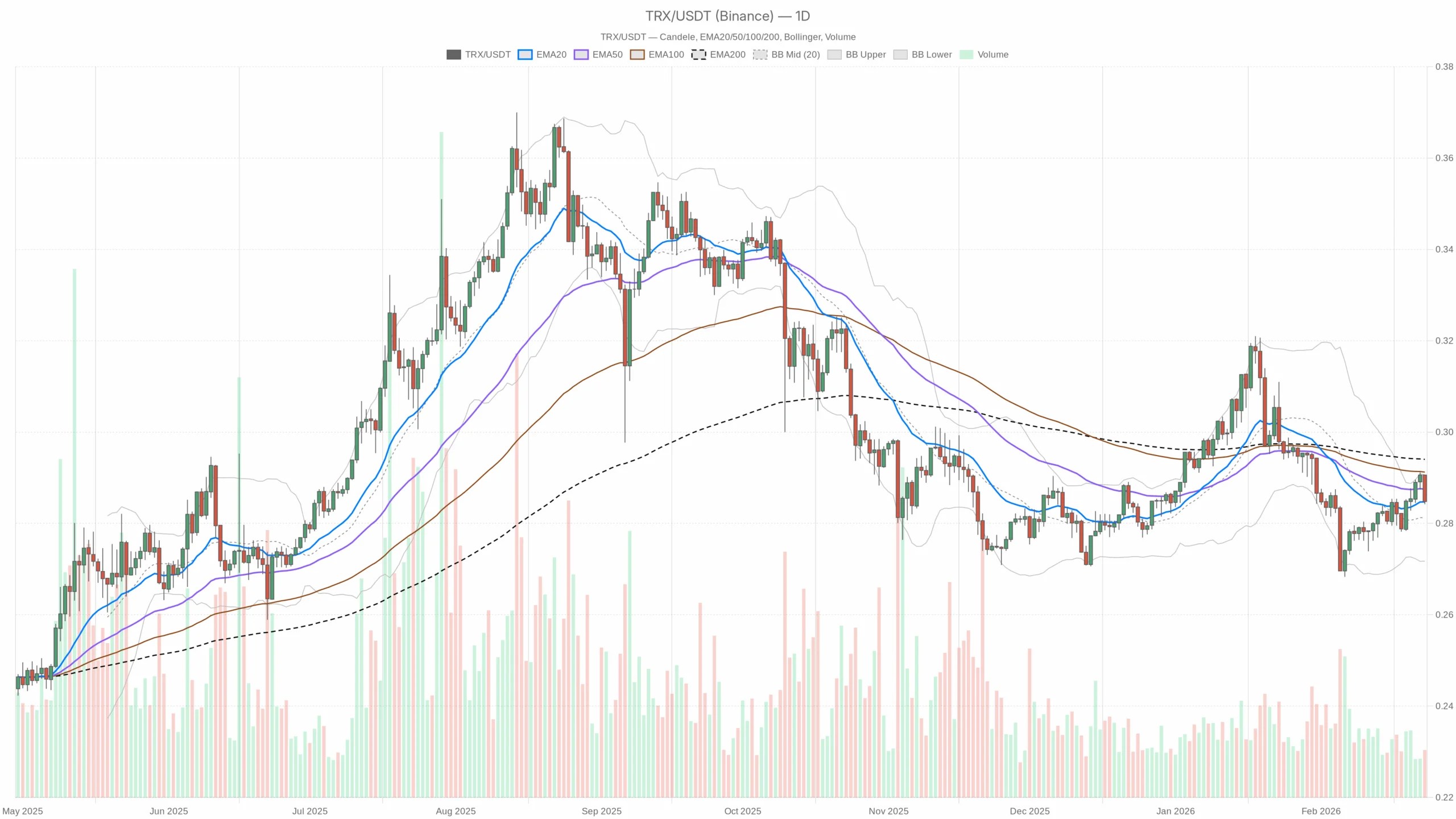
Tron crypto Analysis: 3 Scenarios for TRXUSDT

Tron crypto Analysis: 3 Scenarios for TRXUSDT

The post Tron crypto Analysis: 3 Scenarios for TRXUSDT appeared on BitcoinEthereumNews.com. While the broader crypto market leans risk‑off, Tron crypto (TRXUSDT
Share
BitcoinEthereumNews2026/02/24 02:33