Major crypto wallet maker Ledger has announced that its wallets are now ‘signers’, with the first of its kind, Ledger Nano Gen5, ready to ship. The company has highlighted a number of features meant to safeguard finances and digital identities, it said. First, the company has made some name changes to reflect the expanded concept. Previously called ‘hardware wallets’, its devices are now ‘Ledger signers’. The interface Ledger Live is now Ledger Wallet. Ledger signers will secure the interface, according to the announcement. “This update reflects their expanded role beyond securing financial transactions, including protecting digital identity in a world accelerated by AI,” the team says. The new Nano signer will usher in these changes. Ledger Nano Gen5 is ”the most powerful and playful Ledger Nano we’ve ever built,” they added. It will ”secure everything from assets to identity, smart contracts to tomorrow’s protocols.” Notably, the new device features NFC and Bluetooth for “on-the-go signing.” Its E Ink touchscreen enables Clear Signing, Transaction Check, and Ledger Security Key. “The Ledger Nano series is the most successful digital asset security device of all time, with millions sold and none ever hacked,” said Chairman and CEO Pascal Gauthier. “The all-new Ledger Nano is built for the challenges and opportunities of today, and ready for those coming in the future.” Ledger Nano is available to order, shipping immediately, for $179 (€179). You may also like: Ledger Launches Recovery Key, a Physical ‘Spare Key’ Major crypto wallet maker Ledger has released Ledger Recovery Key, a spare key for users to access digital assets. The company announced this product in late June 2025. It allows Ledger Flex and Ledger Stax users to create a spare key alongside the 24 words. According to the press release, Ledger Recovery Key is supposed to make accessing digital assets simple. The team claims it’s “as easy as tapping a card and entering a PIN.” The spare key connects directly to the wallet via NFC... DeFi Connection, Cash-To-Stablecoin, and Ledger Multisig At the same time, the Ledger Wallet app serves as a portfolio tracker and an “intuitive control center” for digital value. It provides services for buying, swapping, earning, and other actions. Per the announcement, the app’s Buy, Sell, Earn, and Swap features have been updated, providing heightened speed and reliability. Its new features include the ability to connect the Ledger signer directly to dapps. Moreover, it’s integrating Noah, aka ‘Cash-To-Stablecoin’. Users will be able to top up their wallet with USD or EUR without additional fees and instantly convert it to USDC. Chief Experience Officer Ian Rogers commented that “the combination of Ledger Wallet on your smartphone or computer and your Ledger signer makes it easy and safe to use the full range of services offered by decentralized finance.” Meanwhile, Ledger Signers will also “enable Proof of Authority beyond the individual.” It will expand into the institutional area, via Ledger’s platform for banks, custodians, governments, foundations, and crypto-native businesses. Expanding its Ledger Enterprise, the company unveiled the Ledger Multisig, aiming to turn “high-stakes operations into precise, verifiable decisions,” it said. “Every approval is Clear Signed on a Ledger device, so every action is seen, understood, and locked with cryptographic certainty.” The team designed Multisig for treasury management, smart contract governance, and multi-chain workflows. The Ledger Nano, Ledger Wallet, and Ledger Enterprise Multisig were tested by the Donjon, Ledger’s white hat hacker team. External security experts audited the products, the announcement says. Spare Key With Every Nano Ledger Recovery Key will be included in every Nano Gen5 box. In July this year, Ledger released its Ledger Recovery Key, a spare key for users to access digital assets. First announced in late June 2025, the product allows Ledger Flex and Ledger Stax users to create a spare key alongside the 24 words. The spare key connects directly to the wallet via NFC wireless channels. It’s kept on hardware and is protected by its own PIN code. Now, per the latest announcement, “NFC support further enables Ledger Security Key, allowing you to use FIDO2 Passkeys to protect your logins using your Ledger signer.” Meanwhile, Susan Kare, the artist and graphic designer behind the Apple Macintosh’s original iconography, has designed iconography for an exclusive series of Badges to personalize Ledger Nano. You may also like: Ledger Starts Shipping its New Ledger Stax Hardware Wallet After 18 Months French startup Ledger has finally begun shipping its latest Ledger Stax devices, nearly 18 months after their initial announcement. Collaborating with Tony Fadell, one of the key designers behind the iPod, Ledger has introduced an updated wallet featuring an E-Ink display, according to a report from TechCrunch. E-Ink technology, commonly used in e-book readers like the Amazon Kindle and Rakuten Kobo, provides a clear display in daylight while consuming minimal power. Following the... Competitor Reveals Trezor Safe 7 Just a couple of days prior to Ledger’s announcement, wallet maker Trezor presented its latest offering, Safe 7. The features focus on security, with the company claiming to be the first to include several key elements. These too are future- and protection-focused: while Ledger highlighted AI, Trezor noted quantum computers. These new features include TROPIC01, described as “the world’s first transparent and auditable secure element.” There’s also key isolation, Bluetooth communication secured via the novel Trezor Host Protocol (THP), as well as architecture that supports “quantum-secure updates.” Trezor Safe 7 costs $249 (€249) and is available in Charcoal Black and Bitcoin-only editions, with Obsidian Green coming soon. Cryptonews talked exclusively with Tomáš Sušánka, Chief Technology Officer at Trezor, on the day of the launch. Read the interview below. You may also like: Exclusive: Blockchains Are Not Ready for the Quantum Threat, But Trezor Is, Says CTO Cryptonews has talked with Tomáš Sušánka, Chief Technology Officer at Trezor, at the wallet maker’s Prague conference on 21 October, titled Trustless by Design. Sušánka has discussed the launch of the Trezor Safe 7, specifically the post-quantum security, and whether there is really a need for this feature (currently). He also answered our questions about utilizing Bluetooth, which is known to have security issues. Finally, the CTO noted the advantages of the latest introductions,... Major crypto wallet maker Ledger has announced that its wallets are now ‘signers’, with the first of its kind, Ledger Nano Gen5, ready to ship. The company has highlighted a number of features meant to safeguard finances and digital identities, it said. First, the company has made some name changes to reflect the expanded concept. Previously called ‘hardware wallets’, its devices are now ‘Ledger signers’. The interface Ledger Live is now Ledger Wallet. Ledger signers will secure the interface, according to the announcement. “This update reflects their expanded role beyond securing financial transactions, including protecting digital identity in a world accelerated by AI,” the team says. The new Nano signer will usher in these changes. Ledger Nano Gen5 is ”the most powerful and playful Ledger Nano we’ve ever built,” they added. It will ”secure everything from assets to identity, smart contracts to tomorrow’s protocols.” Notably, the new device features NFC and Bluetooth for “on-the-go signing.” Its E Ink touchscreen enables Clear Signing, Transaction Check, and Ledger Security Key. “The Ledger Nano series is the most successful digital asset security device of all time, with millions sold and none ever hacked,” said Chairman and CEO Pascal Gauthier. “The all-new Ledger Nano is built for the challenges and opportunities of today, and ready for those coming in the future.” Ledger Nano is available to order, shipping immediately, for $179 (€179). You may also like: Ledger Launches Recovery Key, a Physical ‘Spare Key’ Major crypto wallet maker Ledger has released Ledger Recovery Key, a spare key for users to access digital assets. The company announced this product in late June 2025. It allows Ledger Flex and Ledger Stax users to create a spare key alongside the 24 words. According to the press release, Ledger Recovery Key is supposed to make accessing digital assets simple. The team claims it’s “as easy as tapping a card and entering a PIN.” The spare key connects directly to the wallet via NFC... DeFi Connection, Cash-To-Stablecoin, and Ledger Multisig At the same time, the Ledger Wallet app serves as a portfolio tracker and an “intuitive control center” for digital value. It provides services for buying, swapping, earning, and other actions. Per the announcement, the app’s Buy, Sell, Earn, and Swap features have been updated, providing heightened speed and reliability. Its new features include the ability to connect the Ledger signer directly to dapps. Moreover, it’s integrating Noah, aka ‘Cash-To-Stablecoin’. Users will be able to top up their wallet with USD or EUR without additional fees and instantly convert it to USDC. Chief Experience Officer Ian Rogers commented that “the combination of Ledger Wallet on your smartphone or computer and your Ledger signer makes it easy and safe to use the full range of services offered by decentralized finance.” Meanwhile, Ledger Signers will also “enable Proof of Authority beyond the individual.” It will expand into the institutional area, via Ledger’s platform for banks, custodians, governments, foundations, and crypto-native businesses. Expanding its Ledger Enterprise, the company unveiled the Ledger Multisig, aiming to turn “high-stakes operations into precise, verifiable decisions,” it said. “Every approval is Clear Signed on a Ledger device, so every action is seen, understood, and locked with cryptographic certainty.” The team designed Multisig for treasury management, smart contract governance, and multi-chain workflows. The Ledger Nano, Ledger Wallet, and Ledger Enterprise Multisig were tested by the Donjon, Ledger’s white hat hacker team. External security experts audited the products, the announcement says. Spare Key With Every Nano Ledger Recovery Key will be included in every Nano Gen5 box. In July this year, Ledger released its Ledger Recovery Key, a spare key for users to access digital assets. First announced in late June 2025, the product allows Ledger Flex and Ledger Stax users to create a spare key alongside the 24 words. The spare key connects directly to the wallet via NFC wireless channels. It’s kept on hardware and is protected by its own PIN code. Now, per the latest announcement, “NFC support further enables Ledger Security Key, allowing you to use FIDO2 Passkeys to protect your logins using your Ledger signer.” Meanwhile, Susan Kare, the artist and graphic designer behind the Apple Macintosh’s original iconography, has designed iconography for an exclusive series of Badges to personalize Ledger Nano. You may also like: Ledger Starts Shipping its New Ledger Stax Hardware Wallet After 18 Months French startup Ledger has finally begun shipping its latest Ledger Stax devices, nearly 18 months after their initial announcement. Collaborating with Tony Fadell, one of the key designers behind the iPod, Ledger has introduced an updated wallet featuring an E-Ink display, according to a report from TechCrunch. E-Ink technology, commonly used in e-book readers like the Amazon Kindle and Rakuten Kobo, provides a clear display in daylight while consuming minimal power. Following the... Competitor Reveals Trezor Safe 7 Just a couple of days prior to Ledger’s announcement, wallet maker Trezor presented its latest offering, Safe 7. The features focus on security, with the company claiming to be the first to include several key elements. These too are future- and protection-focused: while Ledger highlighted AI, Trezor noted quantum computers. These new features include TROPIC01, described as “the world’s first transparent and auditable secure element.” There’s also key isolation, Bluetooth communication secured via the novel Trezor Host Protocol (THP), as well as architecture that supports “quantum-secure updates.” Trezor Safe 7 costs $249 (€249) and is available in Charcoal Black and Bitcoin-only editions, with Obsidian Green coming soon. Cryptonews talked exclusively with Tomáš Sušánka, Chief Technology Officer at Trezor, on the day of the launch. Read the interview below. You may also like: Exclusive: Blockchains Are Not Ready for the Quantum Threat, But Trezor Is, Says CTO Cryptonews has talked with Tomáš Sušánka, Chief Technology Officer at Trezor, at the wallet maker’s Prague conference on 21 October, titled Trustless by Design. Sušánka has discussed the launch of the Trezor Safe 7, specifically the post-quantum security, and whether there is really a need for this feature (currently). He also answered our questions about utilizing Bluetooth, which is known to have security issues. Finally, the CTO noted the advantages of the latest introductions,...

Ledger Unveils ‘Ledger Signers’ with New Nano Gen5, Announces Enterprise Multisig

6 min read

Major crypto wallet maker Ledger has announced that its wallets are now ‘signers’, with the first of its kind, Ledger Nano Gen5, ready to ship. The company has highlighted a number of features meant to safeguard finances and digital identities, it said.

First, the company has made some name changes to reflect the expanded concept. Previously called ‘hardware wallets’, its devices are now ‘Ledger signers’.

The interface Ledger Live is now Ledger Wallet. Ledger signers will secure the interface, according to the announcement.

“This update reflects their expanded role beyond securing financial transactions, including protecting digital identity in a world accelerated by AI,” the team says.

The new Nano signer will usher in these changes. Ledger Nano Gen5 is ”the most powerful and playful Ledger Nano we’ve ever built,” they added. It will ”secure everything from assets to identity, smart contracts to tomorrow’s protocols.”
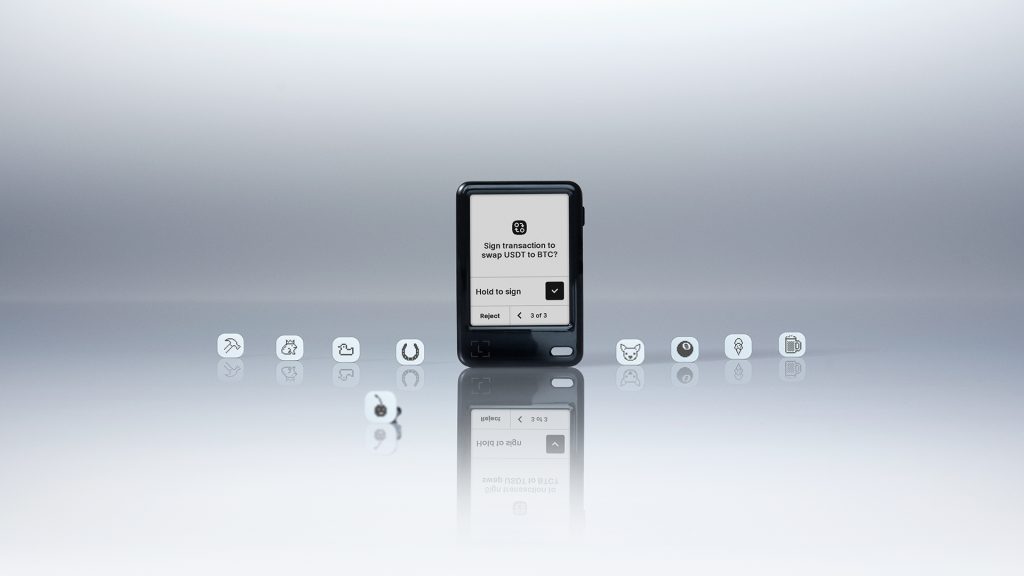
Notably, the new device features NFC and Bluetooth for “on-the-go signing.”

Its E Ink touchscreen enables Clear Signing, Transaction Check, and Ledger Security Key.

“The Ledger Nano series is the most successful digital asset security device of all time, with millions sold and none ever hacked,” said Chairman and CEO Pascal Gauthier. “The all-new Ledger Nano is built for the challenges and opportunities of today, and ready for those coming in the future.”

Ledger Nano is available to order, shipping immediately, for $179 (€179).

You may also like:
Ledger Launches Recovery Key, a Physical ‘Spare Key’
Major crypto wallet maker Ledger has released Ledger Recovery Key, a spare key for users to access digital assets. The company announced this product in late June 2025. It allows Ledger Flex and Ledger Stax users to create a spare key alongside the 24 words. According to the press release, Ledger Recovery Key is supposed to make accessing digital assets simple. The team claims it’s “as easy as tapping a card and entering a PIN.” The spare key connects directly to the wallet via NFC...

DeFi Connection, Cash-To-Stablecoin, and Ledger Multisig

At the same time, the Ledger Wallet app serves as a portfolio tracker and an “intuitive control center” for digital value. It provides services for buying, swapping, earning, and other actions.

Per the announcement, the app’s Buy, Sell, Earn, and Swap features have been updated, providing heightened speed and reliability.

Its new features include the ability to connect the Ledger signer directly to dapps.

Moreover, it’s integrating Noah, aka ‘Cash-To-Stablecoin’. Users will be able to top up their wallet with USD or EUR without additional fees and instantly convert it to USDC.

Chief Experience Officer Ian Rogers commented that “the combination of Ledger Wallet on your smartphone or computer and your Ledger signer makes it easy and safe to use the full range of services offered by decentralized finance.”

Meanwhile, Ledger Signers will also “enable Proof of Authority beyond the individual.” It will expand into the institutional area, via Ledger’s platform for banks, custodians, governments, foundations, and crypto-native businesses.

Expanding its Ledger Enterprise, the company unveiled the Ledger Multisig, aiming to turn “high-stakes operations into precise, verifiable decisions,” it said. “Every approval is Clear Signed on a Ledger device, so every action is seen, understood, and locked with cryptographic certainty.”

The team designed Multisig for treasury management, smart contract governance, and multi-chain workflows.

The Ledger Nano, Ledger Wallet, and Ledger Enterprise Multisig were tested by the Donjon, Ledger’s white hat hacker team. External security experts audited the products, the announcement says.

Spare Key With Every Nano

Ledger Recovery Key will be included in every Nano Gen5 box.

In July this year, Ledger released its Ledger Recovery Key, a spare key for users to access digital assets. First announced in late June 2025, the product allows Ledger Flex and Ledger Stax users to create a spare key alongside the 24 words.

The spare key connects directly to the wallet via NFC wireless channels. It’s kept on hardware and is protected by its own PIN code.

Now, per the latest announcement, “NFC support further enables Ledger Security Key, allowing you to use FIDO2 Passkeys to protect your logins using your Ledger signer.”

Meanwhile, Susan Kare, the artist and graphic designer behind the Apple Macintosh’s original iconography, has designed iconography for an exclusive series of Badges to personalize Ledger Nano.

You may also like:
Ledger Starts Shipping its New Ledger Stax Hardware Wallet After 18 Months
French startup Ledger has finally begun shipping its latest Ledger Stax devices, nearly 18 months after their initial announcement. Collaborating with Tony Fadell, one of the key designers behind the iPod, Ledger has introduced an updated wallet featuring an E-Ink display, according to a report from TechCrunch. E-Ink technology, commonly used in e-book readers like the Amazon Kindle and Rakuten Kobo, provides a clear display in daylight while consuming minimal power. Following the...

Competitor Reveals Trezor Safe 7

Just a couple of days prior to Ledger’s announcement, wallet maker Trezor presented its latest offering, Safe 7.

The features focus on security, with the company claiming to be the first to include several key elements. These too are future- and protection-focused: while Ledger highlighted AI, Trezor noted quantum computers.

These new features include TROPIC01, described as “the world’s first transparent and auditable secure element.” There’s also key isolation, Bluetooth communication secured via the novel Trezor Host Protocol (THP), as well as architecture that supports “quantum-secure updates.”

Trezor Safe 7 costs $249 (€249) and is available in Charcoal Black and Bitcoin-only editions, with Obsidian Green coming soon.

Cryptonews talked exclusively with Tomáš Sušánka, Chief Technology Officer at Trezor, on the day of the launch. Read the interview below.

You may also like:
Exclusive: Blockchains Are Not Ready for the Quantum Threat, But Trezor Is, Says CTO
Cryptonews has talked with Tomáš Sušánka, Chief Technology Officer at Trezor, at the wallet maker’s Prague conference on 21 October, titled Trustless by Design. Sušánka has discussed the launch of the Trezor Safe 7, specifically the post-quantum security, and whether there is really a need for this feature (currently). He also answered our questions about utilizing Bluetooth, which is known to have security issues. Finally, the CTO noted the advantages of the latest introductions,...
Disclaimer: The articles reposted on this site are sourced from public platforms and are provided for informational purposes only. They do not necessarily reflect the views of MEXC. All rights remain with the original authors. If you believe any content infringes on third-party rights, please contact service@support.mexc.com for removal. MEXC makes no guarantees regarding the accuracy, completeness, or timeliness of the content and is not responsible for any actions taken based on the information provided. The content does not constitute financial, legal, or other professional advice, nor should it be considered a recommendation or endorsement by MEXC.

You May Also Like

XRP Enters ‘Washout Zone,’ Then Targets $30, Crypto Analyst Says

XRP Enters ‘Washout Zone,’ Then Targets $30, Crypto Analyst Says

XRP has entered what Korean Certified Elliott Wave Analyst XForceGlobal (@XForceGlobal) calls a “washout” phase inside a broader Elliott Wave corrective structure
Share
NewsBTC2026/02/05 08:00
Republicans are 'very concerned about Texas' turning blue: GOP senator

Republicans are 'very concerned about Texas' turning blue: GOP senator

While Republicans in the U.S. House of Representatives have a razor-thin with just a four-seat advantage, their six-seat advantage in the U.S. Senate is seen as
Share
Alternet2026/02/05 08:38
Headwind Helps Best Wallet Token

Headwind Helps Best Wallet Token

The post Headwind Helps Best Wallet Token appeared on BitcoinEthereumNews.com. Google has announced the launch of a new open-source protocol called Agent Payments Protocol (AP2) in partnership with Coinbase, the Ethereum Foundation, and 60 other organizations. This allows AI agents to make payments on behalf of users using various methods such as real-time bank transfers, credit and debit cards, and, most importantly, stablecoins. Let’s explore in detail what this could mean for the broader cryptocurrency markets, and also highlight a presale crypto (Best Wallet Token) that could explode as a result of this development. Google’s Push for Stablecoins Agent Payments Protocol (AP2) uses digital contracts known as ‘Intent Mandates’ and ‘Verifiable Credentials’ to ensure that AI agents undertake only those payments authorized by the user. Mandates, by the way, are cryptographically signed, tamper-proof digital contracts that act as verifiable proof of a user’s instruction. For example, let’s say you instruct an AI agent to never spend more than $200 in a single transaction. This instruction is written into an Intent Mandate, which serves as a digital contract. Now, whenever the AI agent tries to make a payment, it must present this mandate as proof of authorization, which will then be verified via the AP2 protocol. Alongside this, Google has also launched the A2A x402 extension to accelerate support for the Web3 ecosystem. This production-ready solution enables agent-based crypto payments and will help reshape the growth of cryptocurrency integration within the AP2 protocol. Google’s inclusion of stablecoins in AP2 is a massive vote of confidence in dollar-pegged cryptocurrencies and a huge step toward making them a mainstream payment option. This widens stablecoin usage beyond trading and speculation, positioning them at the center of the consumption economy. The recent enactment of the GENIUS Act in the U.S. gives stablecoins more structure and legal support. Imagine paying for things like data crawls, per-task…
Share
BitcoinEthereumNews2025/09/18 01:27
