Tether, the issuer of the world’s largest cryptocurrency stablecoin, has announced the open-sourcing of its Wallet Development Kit (WDK)—a modular framework designed to simplify the creation of secure, multi-chain, self-custodial wallets. The move is part of Tether’s ambition to strengthen the infrastructure of decentralized finance and widen access to programmable money. The toolkit allows developers, organizations, and even AI agents to build wallets capable of operating seamlessly across devices and blockchains. From embedded systems and IoT devices to mobile, desktop, and server environments, WDK seeks to make digital wallets as universal as email or messaging apps. Empowering Developers, Nations, and Machines According to Tether, the WDK allows anyone—from independent developers to national institutions—to build wallets for a variety of purposes, including DeFi, payments, gaming, savings, and prediction markets. By removing barriers such as licensing fees or proprietary restrictions, the open-source framework gives full control to its users. “Self-custodial wallets are the cornerstone of a free and resilient monetary infrastructure,” said Paolo Ardoino, CEO of Tether. “We imagine a world where humans, autonomous machines, and AI agents have the freedom to control their own finances.” Unlike commercial frameworks that charge usage fees or limit developers to specific ecosystems, Tether’s WDK is entirely open-source and ecosystem-agnostic. It supports Bitcoin, Lightning Network, Ethereum, Polygon, Solana, TON, and other EVM and non-EVM blockchains. Expanding Cross-Chain Capabilities WDK by Tether also integrates USDT0 network-scaling technology, allowing for seamless bridging and highly available liquidity across chains. Developers can easily implement DeFi primitives like lending, swaps, and staking, while offering end-users a simplified interface that abstracts away the complexity of gas fees, bridges, and network switching. The toolkit includes customizable user-interface templates, widgets, and secure key management tools to streamline wallet creation. Its modular design allows developers to tailor solutions for both consumer and institutional use—from mobile wallets and desktop apps to IoT devices and autonomous trading systems. Developing the Next Phase of Digital Finance Tether envisions WDK as a building block for a future where machines and AI systems can autonomously manage and transact digital assets. “From smartphones to smart fridges, from trading bots to spaceships,” the company said, WDK will allow financial sovereignty in every environment. Upcoming projects such as Rumble Wallet and Tether’s own self-custodial wallet are already built on WDK, showcasing its scalability and adaptability. By open-sourcing this framework, Tether is not only inviting innovation but also positioning itself at the center of a rapidly evolving multi-chain ecosystem. Tether Bets Big On Privacy And Non-Custodial Wallets In May, Tether made a strategic investment in Zengo Wallet, a self-custodial, seedless crypto wallet designed to eliminate single points of failure. The stablecoin company invested in Zengo Wallet to help advance its mission of promoting financial inclusion, consistent with Tether’s goal of providing people around the world with access to a stable currency. Aside from wallet integration, Tether has also been expanding its foothold in stablecoin payment for retail transactionsTether, the issuer of the world’s largest cryptocurrency stablecoin, has announced the open-sourcing of its Wallet Development Kit (WDK)—a modular framework designed to simplify the creation of secure, multi-chain, self-custodial wallets. The move is part of Tether’s ambition to strengthen the infrastructure of decentralized finance and widen access to programmable money. The toolkit allows developers, organizations, and even AI agents to build wallets capable of operating seamlessly across devices and blockchains. From embedded systems and IoT devices to mobile, desktop, and server environments, WDK seeks to make digital wallets as universal as email or messaging apps. Empowering Developers, Nations, and Machines According to Tether, the WDK allows anyone—from independent developers to national institutions—to build wallets for a variety of purposes, including DeFi, payments, gaming, savings, and prediction markets. By removing barriers such as licensing fees or proprietary restrictions, the open-source framework gives full control to its users. “Self-custodial wallets are the cornerstone of a free and resilient monetary infrastructure,” said Paolo Ardoino, CEO of Tether. “We imagine a world where humans, autonomous machines, and AI agents have the freedom to control their own finances.” Unlike commercial frameworks that charge usage fees or limit developers to specific ecosystems, Tether’s WDK is entirely open-source and ecosystem-agnostic. It supports Bitcoin, Lightning Network, Ethereum, Polygon, Solana, TON, and other EVM and non-EVM blockchains. Expanding Cross-Chain Capabilities WDK by Tether also integrates USDT0 network-scaling technology, allowing for seamless bridging and highly available liquidity across chains. Developers can easily implement DeFi primitives like lending, swaps, and staking, while offering end-users a simplified interface that abstracts away the complexity of gas fees, bridges, and network switching. The toolkit includes customizable user-interface templates, widgets, and secure key management tools to streamline wallet creation. Its modular design allows developers to tailor solutions for both consumer and institutional use—from mobile wallets and desktop apps to IoT devices and autonomous trading systems. Developing the Next Phase of Digital Finance Tether envisions WDK as a building block for a future where machines and AI systems can autonomously manage and transact digital assets. “From smartphones to smart fridges, from trading bots to spaceships,” the company said, WDK will allow financial sovereignty in every environment. Upcoming projects such as Rumble Wallet and Tether’s own self-custodial wallet are already built on WDK, showcasing its scalability and adaptability. By open-sourcing this framework, Tether is not only inviting innovation but also positioning itself at the center of a rapidly evolving multi-chain ecosystem. Tether Bets Big On Privacy And Non-Custodial Wallets In May, Tether made a strategic investment in Zengo Wallet, a self-custodial, seedless crypto wallet designed to eliminate single points of failure. The stablecoin company invested in Zengo Wallet to help advance its mission of promoting financial inclusion, consistent with Tether’s goal of providing people around the world with access to a stable currency. Aside from wallet integration, Tether has also been expanding its foothold in stablecoin payment for retail transactions

Inside Tether’s Open-Source Wallet Push – A Step Toward Cross-Chain Dominance?

2025/10/18 00:36
3 min read

Tether, the issuer of the world’s largest cryptocurrency stablecoin, has announced the open-sourcing of its Wallet Development Kit (WDK)—a modular framework designed to simplify the creation of secure, multi-chain, self-custodial wallets.

The move is part of Tether’s ambition to strengthen the infrastructure of decentralized finance and widen access to programmable money. The toolkit allows developers, organizations, and even AI agents to build wallets capable of operating seamlessly across devices and blockchains.

From embedded systems and IoT devices to mobile, desktop, and server environments, WDK seeks to make digital wallets as universal as email or messaging apps.

Empowering Developers, Nations, and Machines

According to Tether, the WDK allows anyone—from independent developers to national institutions—to build wallets for a variety of purposes, including DeFi, payments, gaming, savings, and prediction markets. By removing barriers such as licensing fees or proprietary restrictions, the open-source framework gives full control to its users.

“Self-custodial wallets are the cornerstone of a free and resilient monetary infrastructure,” said Paolo Ardoino, CEO of Tether. “We imagine a world where humans, autonomous machines, and AI agents have the freedom to control their own finances.”

Unlike commercial frameworks that charge usage fees or limit developers to specific ecosystems, Tether’s WDK is entirely open-source and ecosystem-agnostic. It supports Bitcoin, Lightning Network, Ethereum, Polygon, Solana, TON, and other EVM and non-EVM blockchains.

Expanding Cross-Chain Capabilities

WDK by Tether also integrates USDT0 network-scaling technology, allowing for seamless bridging and highly available liquidity across chains. Developers can easily implement DeFi primitives like lending, swaps, and staking, while offering end-users a simplified interface that abstracts away the complexity of gas fees, bridges, and network switching.

The toolkit includes customizable user-interface templates, widgets, and secure key management tools to streamline wallet creation. Its modular design allows developers to tailor solutions for both consumer and institutional use—from mobile wallets and desktop apps to IoT devices and autonomous trading systems.

Developing the Next Phase of Digital Finance

Tether envisions WDK as a building block for a future where machines and AI systems can autonomously manage and transact digital assets. “From smartphones to smart fridges, from trading bots to spaceships,” the company said, WDK will allow financial sovereignty in every environment.

Upcoming projects such as Rumble Wallet and Tether’s own self-custodial wallet are already built on WDK, showcasing its scalability and adaptability. By open-sourcing this framework, Tether is not only inviting innovation but also positioning itself at the center of a rapidly evolving multi-chain ecosystem.

Tether Bets Big On Privacy And Non-Custodial Wallets

In May, Tether made a strategic investment in Zengo Wallet, a self-custodial, seedless crypto wallet designed to eliminate single points of failure.

The stablecoin company invested in Zengo Wallet to help advance its mission of promoting financial inclusion, consistent with Tether’s goal of providing people around the world with access to a stable currency. Aside from wallet integration, Tether has also been expanding its foothold in stablecoin payment for retail transactions.

Market Opportunity
OpenLedger Logo
OpenLedger Price(OPEN)
$0.17486
$0.17486$0.17486
-0.61%
USD
OpenLedger (OPEN) Live Price Chart
Disclaimer: The articles reposted on this site are sourced from public platforms and are provided for informational purposes only. They do not necessarily reflect the views of MEXC. All rights remain with the original authors. If you believe any content infringes on third-party rights, please contact service@support.mexc.com for removal. MEXC makes no guarantees regarding the accuracy, completeness, or timeliness of the content and is not responsible for any actions taken based on the information provided. The content does not constitute financial, legal, or other professional advice, nor should it be considered a recommendation or endorsement by MEXC.

You May Also Like

UAE’s Central Bank Approves the DSSC Stablecoin Launch by IHC, FAB, and Sirius

UAE’s Central Bank Approves the DSSC Stablecoin Launch by IHC, FAB, and Sirius

The post UAE’s Central Bank Approves the DSSC Stablecoin Launch by IHC, FAB, and Sirius appeared on BitcoinEthereumNews.com. CBUAE has approved the dirham-backed
Share
BitcoinEthereumNews2026/02/13 04:30
Federal Reserve Lowers Interest Rates Again
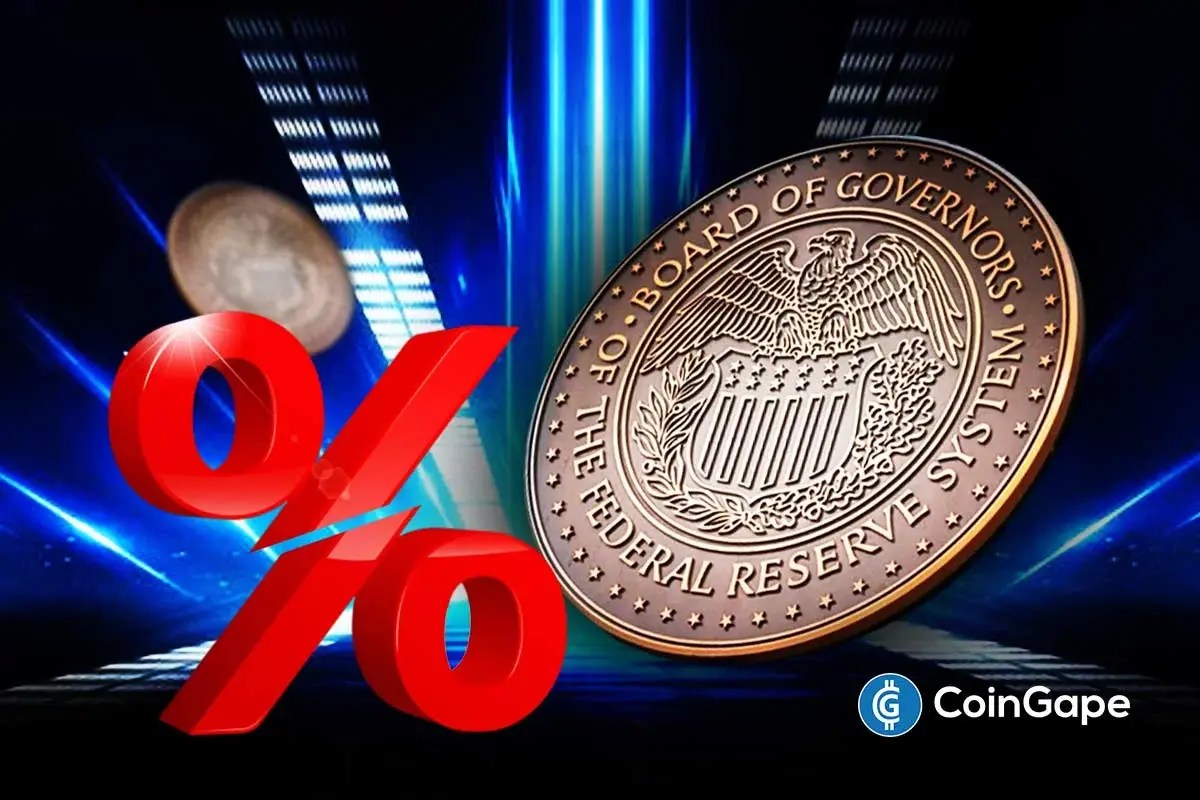
Federal Reserve Lowers Interest Rates Again

The Federal Reserve has made the decision to lower interest rates by 25 basis points, signaling the possibility of further reductions later this year. This move comes as Fed officials appear divided on the future rate path, a divergence not seen in prior economic cycles.Continue Reading:Federal Reserve Lowers Interest Rates Again
Share
Coinstats2025/09/18 02:38
Fed Makes First Rate Cut of the Year, Lowers Rates by 25 Bps

Fed Makes First Rate Cut of the Year, Lowers Rates by 25 Bps

The post Fed Makes First Rate Cut of the Year, Lowers Rates by 25 Bps appeared on BitcoinEthereumNews.com. The Federal Reserve has made its first Fed rate cut this year following today’s FOMC meeting, lowering interest rates by 25 basis points (bps). This comes in line with expectations, while the crypto market awaits Fed Chair Jerome Powell’s speech for guidance on the committee’s stance moving forward. FOMC Makes First Fed Rate Cut This Year With 25 Bps Cut In a press release, the committee announced that it has decided to lower the target range for the federal funds rate by 25 bps from between 4.25% and 4.5% to 4% and 4.25%. This comes in line with expectations as market participants were pricing in a 25 bps cut, as against a 50 bps cut. This marks the first Fed rate cut this year, with the last cut before this coming last year in December. Notably, the Fed also made the first cut last year in September, although it was a 50 bps cut back then. All Fed officials voted in favor of a 25 bps cut except Stephen Miran, who dissented in favor of a 50 bps cut. This rate cut decision comes amid concerns that the labor market may be softening, with recent U.S. jobs data pointing to a weak labor market. The committee noted in the release that job gains have slowed, and that the unemployment rate has edged up but remains low. They added that inflation has moved up and remains somewhat elevated. Fed Chair Jerome Powell had also already signaled at the Jackson Hole Conference that they were likely to lower interest rates with the downside risk in the labor market rising. The committee reiterated this in the release that downside risks to employment have risen. Before the Fed rate cut decision, experts weighed in on whether the FOMC should make a 25 bps cut or…
Share
BitcoinEthereumNews2025/09/18 04:36