By Michael Nadeau, The DeFi Report Compiled by: BitpushNews Cryptocurrency adoption cycles typically consist of a three-year period of growth expansion, followed by a bear market lasting about a year. If calculated from the BTC price low in November 2022, the current expansion period has lasted 1,044 days. For reference, the 2021 cycle expansion lasted 1,063 days, and the 2017 cycle was 1,065 days. By this measure, we are clearly in the “late cycle” of the current expansion phase. But how do the current data and key indicators compare to those in September 2021? We will answer this question in this report. Disclaimer: The views expressed in this article are the author's personal views and should not be used as investment advice. Realized profit and holding time destruction indicators Realized profit According to Glassnode data, BTC investors have realized $857 billion in profits in this cycle - 65% higher than the 2021 cycle. This phenomenon is within expectations, considering that the higher the BTC price, the more returns long-term investors will gain per cycle. A standardized way of comparison is to compare realized profits with market capitalization over each period. The market capitalization at the 2021 cycle peak was $1.26 trillion, with a realized profit-to-market capitalization ratio of 0.41. BTC’s current market capitalization is $2.28 trillion, and the realized profit to market capitalization ratio for this cycle is currently 0.38. The conclusion? From a wealth creation perspective, we are now at similar levels to the entire 2021 cycle. Realized profit data chart Coin holding time destruction indicator Another angle to examine profit taking is the "holding time destruction indicator". As defined by Glassnode, this metric measures the total number of days a token is held before being spent. As shown in the figure below, the total amount of "coin-day destruction" in this cycle is 15% higher than that in the 2021 cycle. This also fits the characteristics of the "late cycle". Bitian destruction data chart Long-term holder supply The behavior pattern of long-term holders in this cycle is similar to that in the previous cycle. Between October 2020 and March 2021, long-term holder supply fell by 13.5% (corresponding to the first price peak in April 2021). LT holder supply then rebounded and continued to rise for the remainder of the cycle. Similarly, from December 2023 to February 2025, the long-term holder supply fell by 12.4%, before recovering to the current level of 73%. Conclusion: Long-term holders tend to allocate tokens to new funds entering the market. In the 2021 cycle, this happened during the first price peak in April 2021. In the current cycle, this happened in the fourth quarter of last year and continued into the first quarter of this year. If we expect a breakout fourth quarter, we need to see new money flowing into the market – something we didn’t see during the same period last cycle. Long-term holder supply data chart Bitcoin dominance In the past two cycles, the market peaked when Bitcoin dominance fell to around 40%. We are nowhere near that level this cycle. We believe there are several reasons for this: This cycle of BTC financialization through ETFs and institutional participation The maturity of the cryptocurrency market. Last cycle, with the exception of Ethereum, every L1 was a "shiny new toy" for investors to speculate on. Furthermore, NFTs and DeFi were still in their early stages—investors likely significantly overestimated their maturity, use cases, and sustainability. This is no longer the case; the market has matured. The 2021 cycle saw significant fiscal and monetary policy support due to COVID, but this momentum is unlikely to repeat itself. When altcoins significantly outperformed BTC, there was little incentive to hold BTC. This is no longer the case, and asset selection is crucial. We still believe BTC dominance will decline further, but not to the levels seen in the past. Bitcoin dominance data chart 200-week moving average We pay close attention to the 200-week moving average for two reasons: In a bear market, Bitcoin tends to fall to its 200-week moving average; In the past two cycles, Bitcoin peaked when the 200-week moving average converged to the previous cycle high; The 200-week moving average is currently $53,100. Will we end up falling to $66,000 (previous cycle high) this year? This is unlikely, as our estimates suggest that even a sharp 40% rally in the coming months would place the 200-week moving average in the $57,000 range. Of course, a return to those levels is possible if the cycle continues into next year. Conclusion: As the cycle progresses, the law of diminishing returns is becoming apparent, as shown in the figure below. 200-week moving average data chart Realized Price and MVRV-Z Score Realized Price According to Glassnode data, Bitcoin’s realized price (which represents the cost basis of all coins on the network) is currently $53,800. Similar to the 200-week moving average, Bitcoin tends to revert to its realized price in bear markets, and cycles typically top out when realized price reaches a level consistent with the previous cycle high. Similar to the 200-week moving average, we do not expect the indicator to reach the previous cycle high this year - further highlighting the law of diminishing returns. Realized Price Data Chart MVRV-Z score The MVRV-Z score measures the extent to which Bitcoin’s market capitalization is “stretched” relative to its realized value via a z-score, adjusted for historical volatility. The current reading of 2.28 indicates that Bitcoin's market capitalization, relative to its cost basis, has deviated by approximately 2.28 standard deviations from its historical norm. Interestingly, we are now at a higher level than at the same point in the 2021 cycle, when Bitcoin rallied approximately 50% in October/November, ending the cycle with an MVRV-Z score of 3.49. If the indicator approaches 3 in this cycle, the BTC price may reach the $160,000 to $170,000 range (a 40-50% increase). MVRV-Z score data chart Fear and Greed Index Fear and Greed Index data chart If you think the market is jittery right now, it was even more panicky during the same period in 2021. In fact, we were in a state of extreme fear in September 2021. BTC had just corrected 20% to $43,000 before rallying to a peak of $66,000 (a 53% increase) over the next five weeks. Summary and Outlook There is no law that requires Bitcoin to continue on the “four-year cycle” path we have historically followed. But after carefully studying the data, it is difficult to deny the possibility of a peak in the fourth quarter. Why? We believe the four-year cycle framework is here to stay for several reasons: Narrative anchoring. Investors anticipate a "post-halving bull run," which influences investor positioning, crypto-native companies' marketing cycles, and media coverage. Reflexivity makes this pattern self-fulfilling. Liquidity and the credit cycle. The halving cycle has historically coincided with the global debt refinancing cycle, amplifying the liquidity needed to generate a crypto bull run. The mechanics of the four-year halving cycle and its impact on miner operations tightens supply just as demand tends to return to the market. Product/Innovation Cadence. Venture capital tends to fund the industry based on liquidity cycles that align with the four-year halving cycle. These projects take time to enter the market, while new innovations and narratives emerge in bursts, amplifying the cryptocurrency adoption cycle. Volatility. Investors anticipate a deep bear market in the crypto market, allowing them to purchase their desired assets at a discount. This naturally drives profit-taking, creating a self-reinforcing feedback loop. Based on the observed data and the entrenchment of these qualitative/behavioral factors, our base case is that BTC will peak again in Q4.By Michael Nadeau, The DeFi Report Compiled by: BitpushNews Cryptocurrency adoption cycles typically consist of a three-year period of growth expansion, followed by a bear market lasting about a year. If calculated from the BTC price low in November 2022, the current expansion period has lasted 1,044 days. For reference, the 2021 cycle expansion lasted 1,063 days, and the 2017 cycle was 1,065 days. By this measure, we are clearly in the “late cycle” of the current expansion phase. But how do the current data and key indicators compare to those in September 2021? We will answer this question in this report. Disclaimer: The views expressed in this article are the author's personal views and should not be used as investment advice. Realized profit and holding time destruction indicators Realized profit According to Glassnode data, BTC investors have realized $857 billion in profits in this cycle - 65% higher than the 2021 cycle. This phenomenon is within expectations, considering that the higher the BTC price, the more returns long-term investors will gain per cycle. A standardized way of comparison is to compare realized profits with market capitalization over each period. The market capitalization at the 2021 cycle peak was $1.26 trillion, with a realized profit-to-market capitalization ratio of 0.41. BTC’s current market capitalization is $2.28 trillion, and the realized profit to market capitalization ratio for this cycle is currently 0.38. The conclusion? From a wealth creation perspective, we are now at similar levels to the entire 2021 cycle. Realized profit data chart Coin holding time destruction indicator Another angle to examine profit taking is the "holding time destruction indicator". As defined by Glassnode, this metric measures the total number of days a token is held before being spent. As shown in the figure below, the total amount of "coin-day destruction" in this cycle is 15% higher than that in the 2021 cycle. This also fits the characteristics of the "late cycle". Bitian destruction data chart Long-term holder supply The behavior pattern of long-term holders in this cycle is similar to that in the previous cycle. Between October 2020 and March 2021, long-term holder supply fell by 13.5% (corresponding to the first price peak in April 2021). LT holder supply then rebounded and continued to rise for the remainder of the cycle. Similarly, from December 2023 to February 2025, the long-term holder supply fell by 12.4%, before recovering to the current level of 73%. Conclusion: Long-term holders tend to allocate tokens to new funds entering the market. In the 2021 cycle, this happened during the first price peak in April 2021. In the current cycle, this happened in the fourth quarter of last year and continued into the first quarter of this year. If we expect a breakout fourth quarter, we need to see new money flowing into the market – something we didn’t see during the same period last cycle. Long-term holder supply data chart Bitcoin dominance In the past two cycles, the market peaked when Bitcoin dominance fell to around 40%. We are nowhere near that level this cycle. We believe there are several reasons for this: This cycle of BTC financialization through ETFs and institutional participation The maturity of the cryptocurrency market. Last cycle, with the exception of Ethereum, every L1 was a "shiny new toy" for investors to speculate on. Furthermore, NFTs and DeFi were still in their early stages—investors likely significantly overestimated their maturity, use cases, and sustainability. This is no longer the case; the market has matured. The 2021 cycle saw significant fiscal and monetary policy support due to COVID, but this momentum is unlikely to repeat itself. When altcoins significantly outperformed BTC, there was little incentive to hold BTC. This is no longer the case, and asset selection is crucial. We still believe BTC dominance will decline further, but not to the levels seen in the past. Bitcoin dominance data chart 200-week moving average We pay close attention to the 200-week moving average for two reasons: In a bear market, Bitcoin tends to fall to its 200-week moving average; In the past two cycles, Bitcoin peaked when the 200-week moving average converged to the previous cycle high; The 200-week moving average is currently $53,100. Will we end up falling to $66,000 (previous cycle high) this year? This is unlikely, as our estimates suggest that even a sharp 40% rally in the coming months would place the 200-week moving average in the $57,000 range. Of course, a return to those levels is possible if the cycle continues into next year. Conclusion: As the cycle progresses, the law of diminishing returns is becoming apparent, as shown in the figure below. 200-week moving average data chart Realized Price and MVRV-Z Score Realized Price According to Glassnode data, Bitcoin’s realized price (which represents the cost basis of all coins on the network) is currently $53,800. Similar to the 200-week moving average, Bitcoin tends to revert to its realized price in bear markets, and cycles typically top out when realized price reaches a level consistent with the previous cycle high. Similar to the 200-week moving average, we do not expect the indicator to reach the previous cycle high this year - further highlighting the law of diminishing returns. Realized Price Data Chart MVRV-Z score The MVRV-Z score measures the extent to which Bitcoin’s market capitalization is “stretched” relative to its realized value via a z-score, adjusted for historical volatility. The current reading of 2.28 indicates that Bitcoin's market capitalization, relative to its cost basis, has deviated by approximately 2.28 standard deviations from its historical norm. Interestingly, we are now at a higher level than at the same point in the 2021 cycle, when Bitcoin rallied approximately 50% in October/November, ending the cycle with an MVRV-Z score of 3.49. If the indicator approaches 3 in this cycle, the BTC price may reach the $160,000 to $170,000 range (a 40-50% increase). MVRV-Z score data chart Fear and Greed Index Fear and Greed Index data chart If you think the market is jittery right now, it was even more panicky during the same period in 2021. In fact, we were in a state of extreme fear in September 2021. BTC had just corrected 20% to $43,000 before rallying to a peak of $66,000 (a 53% increase) over the next five weeks. Summary and Outlook There is no law that requires Bitcoin to continue on the “four-year cycle” path we have historically followed. But after carefully studying the data, it is difficult to deny the possibility of a peak in the fourth quarter. Why? We believe the four-year cycle framework is here to stay for several reasons: Narrative anchoring. Investors anticipate a "post-halving bull run," which influences investor positioning, crypto-native companies' marketing cycles, and media coverage. Reflexivity makes this pattern self-fulfilling. Liquidity and the credit cycle. The halving cycle has historically coincided with the global debt refinancing cycle, amplifying the liquidity needed to generate a crypto bull run. The mechanics of the four-year halving cycle and its impact on miner operations tightens supply just as demand tends to return to the market. Product/Innovation Cadence. Venture capital tends to fund the industry based on liquidity cycles that align with the four-year halving cycle. These projects take time to enter the market, while new innovations and narratives emerge in bursts, amplifying the cryptocurrency adoption cycle. Volatility. Investors anticipate a deep bear market in the crypto market, allowing them to purchase their desired assets at a discount. This naturally drives profit-taking, creating a self-reinforcing feedback loop. Based on the observed data and the entrenchment of these qualitative/behavioral factors, our base case is that BTC will peak again in Q4.

The halving narrative resonates with liquidity, will the fourth quarter of 2025 become the ultimate bull market carnival?

2025/10/09 14:00
7 min read

By Michael Nadeau, The DeFi Report

Compiled by: BitpushNews

Cryptocurrency adoption cycles typically consist of a three-year period of growth expansion, followed by a bear market lasting about a year.

If calculated from the BTC price low in November 2022, the current expansion period has lasted 1,044 days. For reference, the 2021 cycle expansion lasted 1,063 days, and the 2017 cycle was 1,065 days.

By this measure, we are clearly in the “late cycle” of the current expansion phase.

But how do the current data and key indicators compare to those in September 2021?

We will answer this question in this report.

Disclaimer: The views expressed in this article are the author's personal views and should not be used as investment advice.

Realized profit and holding time destruction indicators

Realized profit

According to Glassnode data, BTC investors have realized $857 billion in profits in this cycle - 65% higher than the 2021 cycle.

This phenomenon is within expectations, considering that the higher the BTC price, the more returns long-term investors will gain per cycle.

A standardized way of comparison is to compare realized profits with market capitalization over each period.

The market capitalization at the 2021 cycle peak was $1.26 trillion, with a realized profit-to-market capitalization ratio of 0.41.

BTC’s current market capitalization is $2.28 trillion, and the realized profit to market capitalization ratio for this cycle is currently 0.38.

The conclusion? From a wealth creation perspective, we are now at similar levels to the entire 2021 cycle.
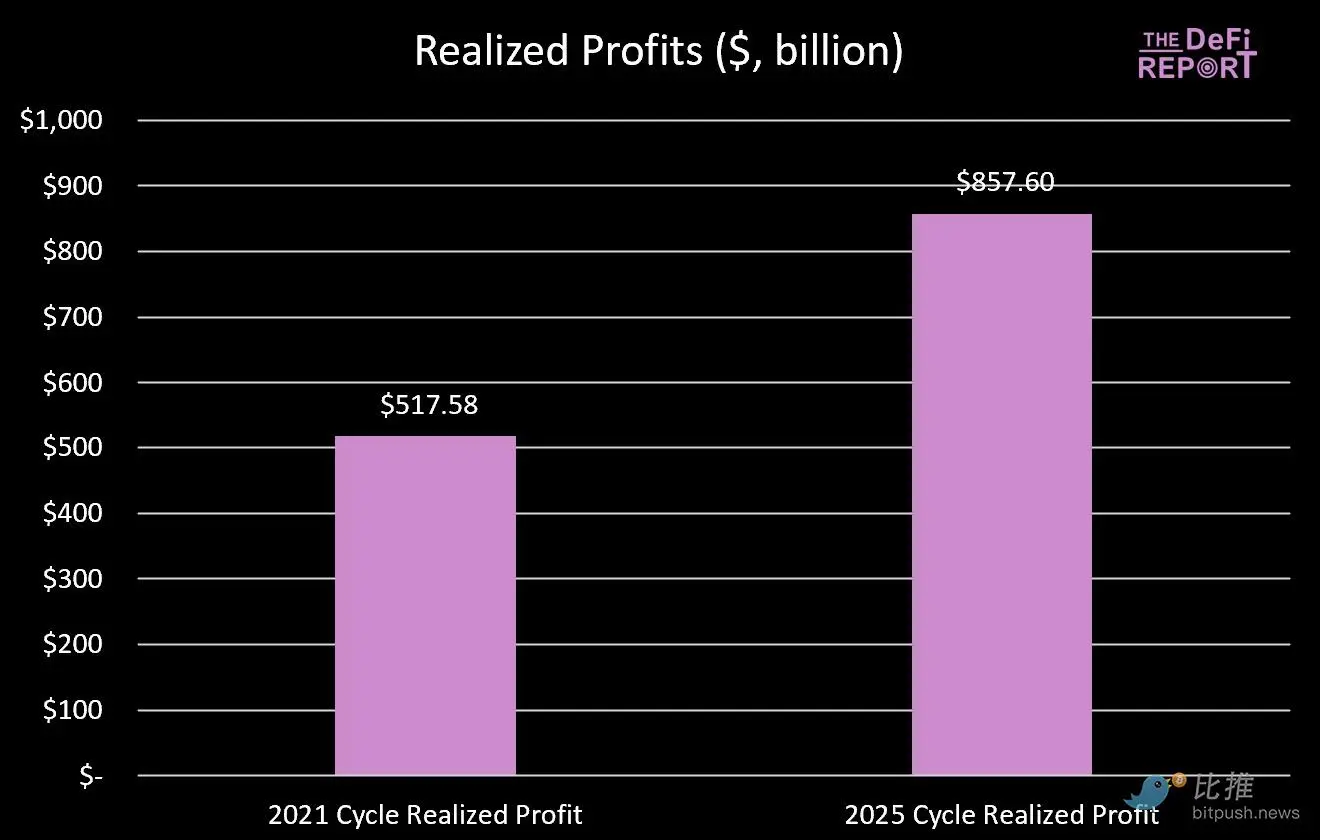
 Realized profit data chart

Coin holding time destruction indicator

Another angle to examine profit taking is the "holding time destruction indicator".

As defined by Glassnode, this metric measures the total number of days a token is held before being spent.

As shown in the figure below, the total amount of "coin-day destruction" in this cycle is 15% higher than that in the 2021 cycle.

This also fits the characteristics of the "late cycle".
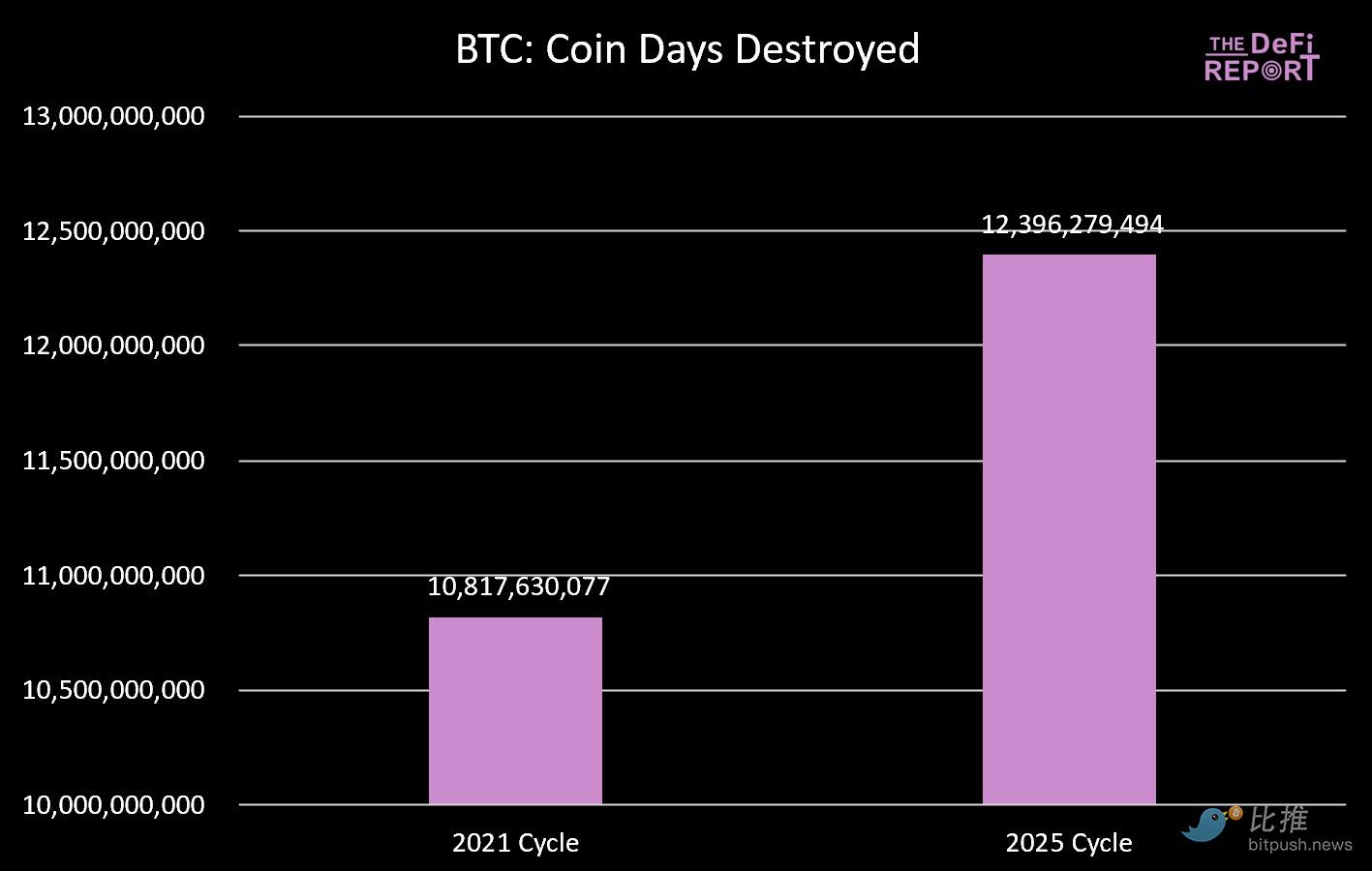
 Bitian destruction data chart

Long-term holder supply

The behavior pattern of long-term holders in this cycle is similar to that in the previous cycle.

Between October 2020 and March 2021, long-term holder supply fell by 13.5% (corresponding to the first price peak in April 2021). LT holder supply then rebounded and continued to rise for the remainder of the cycle.

Similarly, from December 2023 to February 2025, the long-term holder supply fell by 12.4%, before recovering to the current level of 73%.

Conclusion: Long-term holders tend to allocate tokens to new funds entering the market. In the 2021 cycle, this happened during the first price peak in April 2021.

In the current cycle, this happened in the fourth quarter of last year and continued into the first quarter of this year.

If we expect a breakout fourth quarter, we need to see new money flowing into the market – something we didn’t see during the same period last cycle.
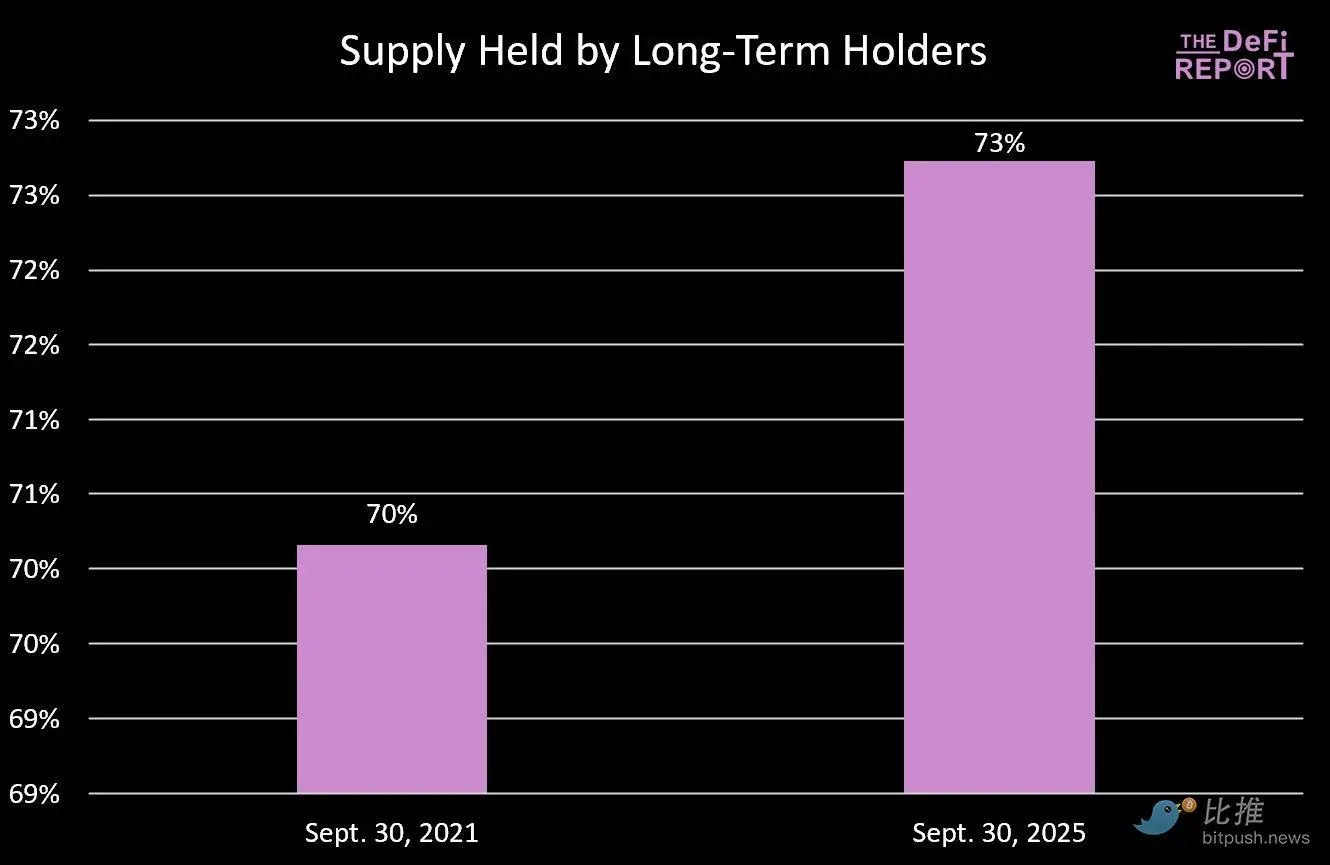
 Long-term holder supply data chart

Bitcoin dominance

In the past two cycles, the market peaked when Bitcoin dominance fell to around 40%.

We are nowhere near that level this cycle. We believe there are several reasons for this:

  • This cycle of BTC financialization through ETFs and institutional participation
  • The maturity of the cryptocurrency market. Last cycle, with the exception of Ethereum, every L1 was a "shiny new toy" for investors to speculate on. Furthermore, NFTs and DeFi were still in their early stages—investors likely significantly overestimated their maturity, use cases, and sustainability. This is no longer the case; the market has matured.
  • The 2021 cycle saw significant fiscal and monetary policy support due to COVID, but this momentum is unlikely to repeat itself. When altcoins significantly outperformed BTC, there was little incentive to hold BTC. This is no longer the case, and asset selection is crucial.

We still believe BTC dominance will decline further, but not to the levels seen in the past.
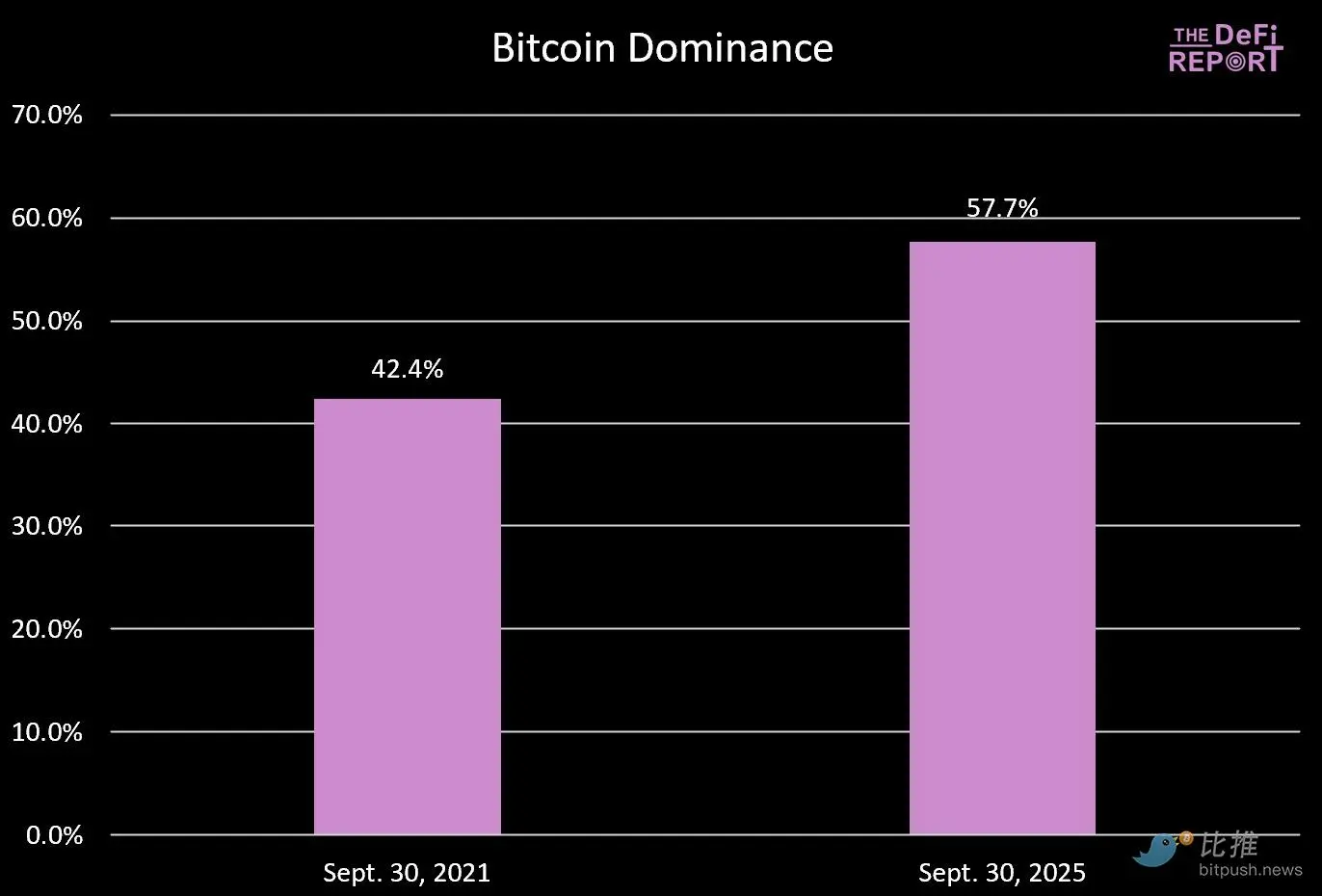
 Bitcoin dominance data chart

200-week moving average

We pay close attention to the 200-week moving average for two reasons:

  • In a bear market, Bitcoin tends to fall to its 200-week moving average;
  • In the past two cycles, Bitcoin peaked when the 200-week moving average converged to the previous cycle high;

The 200-week moving average is currently $53,100.

Will we end up falling to $66,000 (previous cycle high) this year?

This is unlikely, as our estimates suggest that even a sharp 40% rally in the coming months would place the 200-week moving average in the $57,000 range. Of course, a return to those levels is possible if the cycle continues into next year.

Conclusion: As the cycle progresses, the law of diminishing returns is becoming apparent, as shown in the figure below.
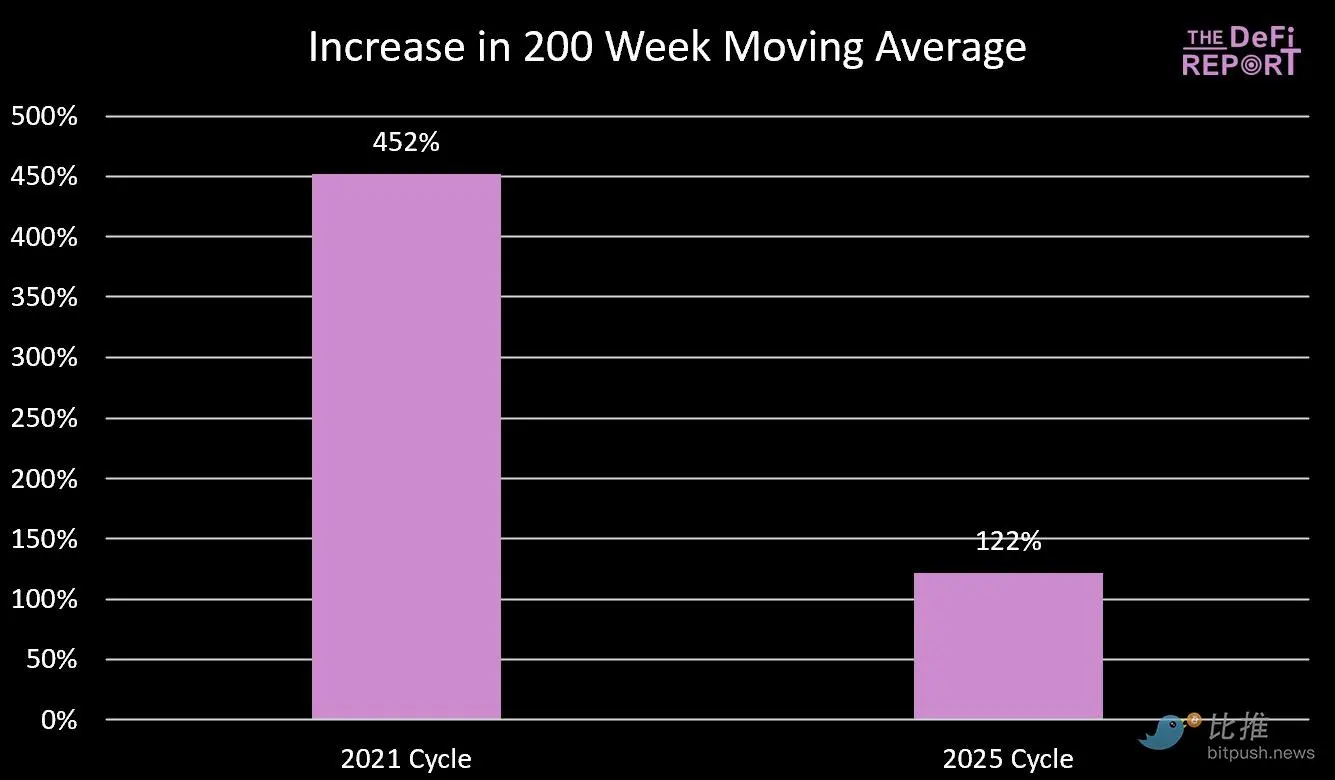
 200-week moving average data chart

Realized Price and MVRV-Z Score

Realized Price

According to Glassnode data, Bitcoin’s realized price (which represents the cost basis of all coins on the network) is currently $53,800.

Similar to the 200-week moving average, Bitcoin tends to revert to its realized price in bear markets, and cycles typically top out when realized price reaches a level consistent with the previous cycle high.

Similar to the 200-week moving average, we do not expect the indicator to reach the previous cycle high this year - further highlighting the law of diminishing returns.
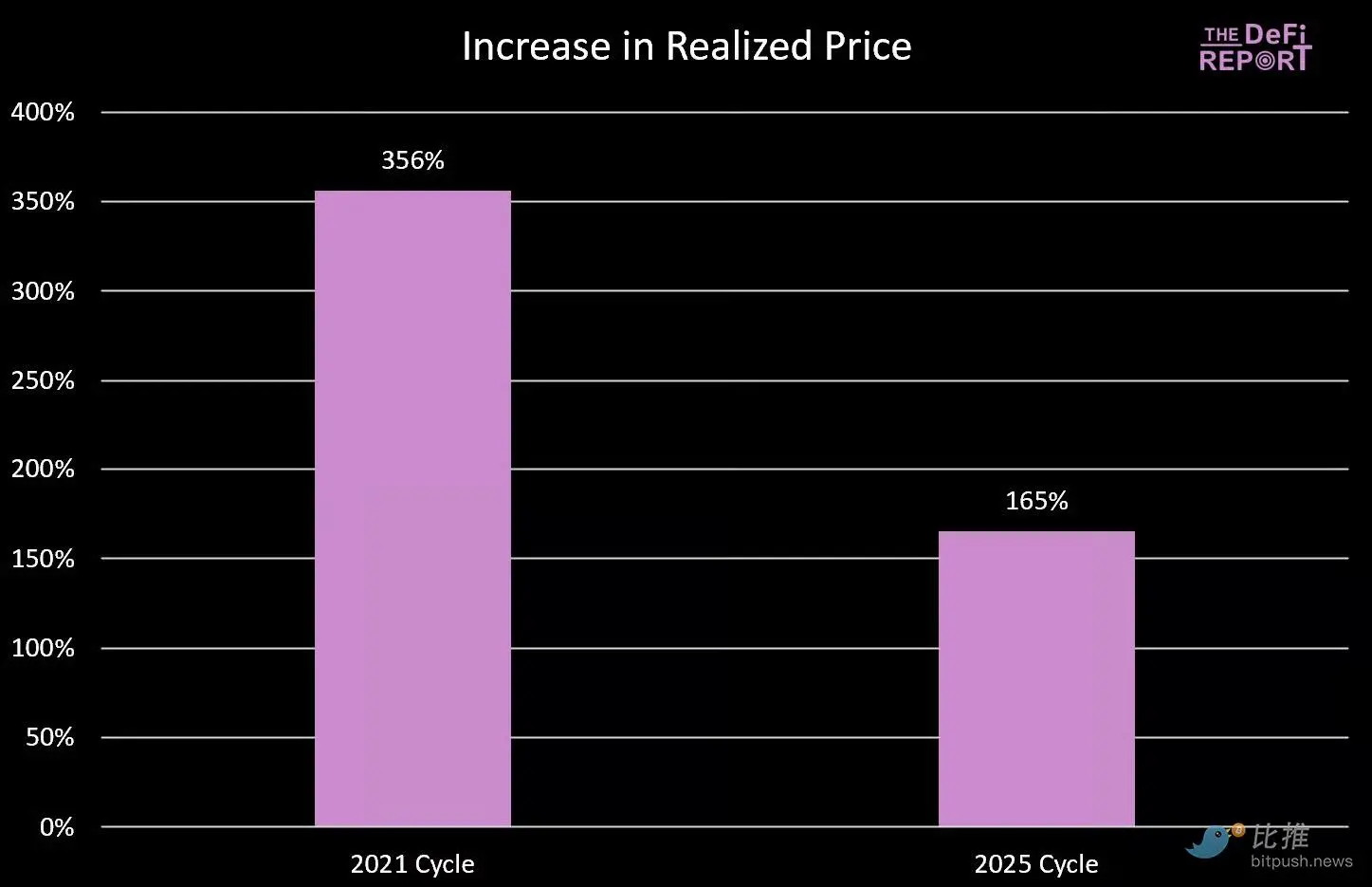
 Realized Price Data Chart

MVRV-Z score

The MVRV-Z score measures the extent to which Bitcoin’s market capitalization is “stretched” relative to its realized value via a z-score, adjusted for historical volatility.

The current reading of 2.28 indicates that Bitcoin's market capitalization, relative to its cost basis, has deviated by approximately 2.28 standard deviations from its historical norm.

Interestingly, we are now at a higher level than at the same point in the 2021 cycle, when Bitcoin rallied approximately 50% in October/November, ending the cycle with an MVRV-Z score of 3.49.

If the indicator approaches 3 in this cycle, the BTC price may reach the $160,000 to $170,000 range (a 40-50% increase).
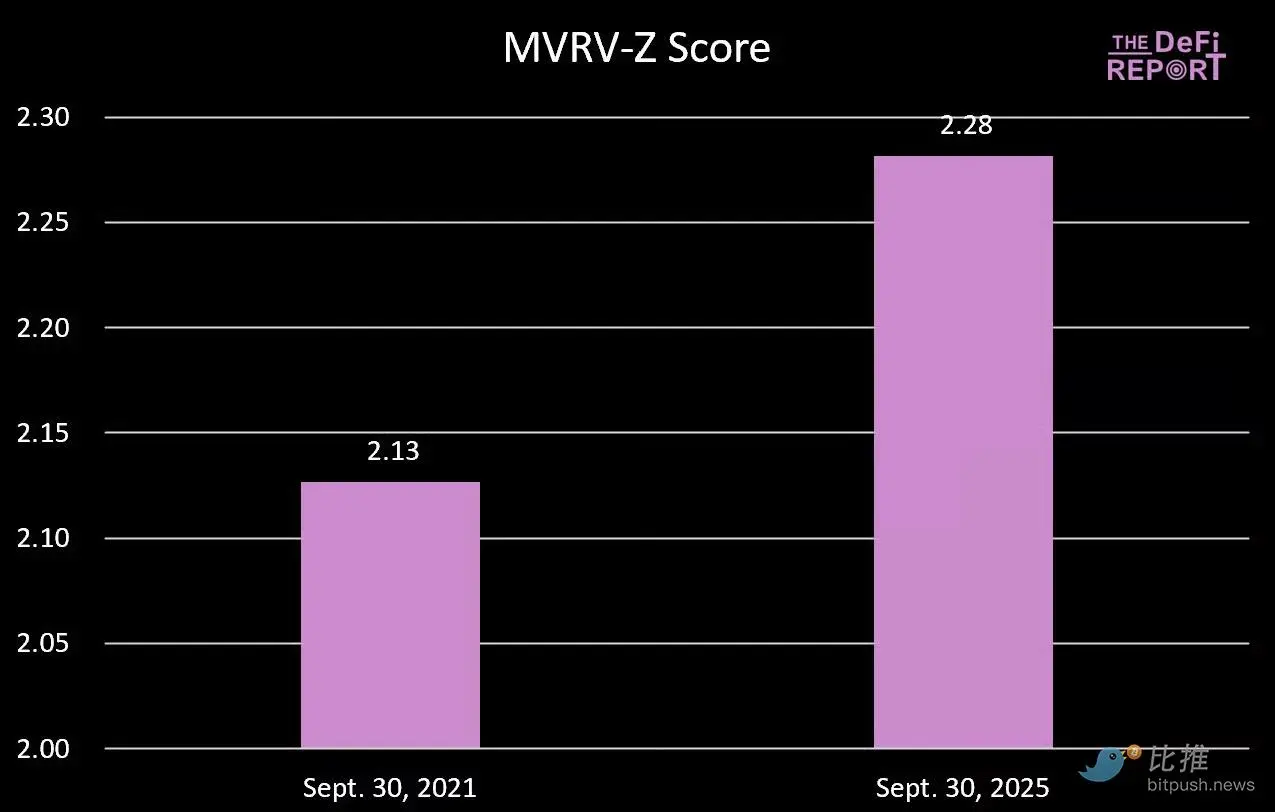
 MVRV-Z score data chart

Fear and Greed Index
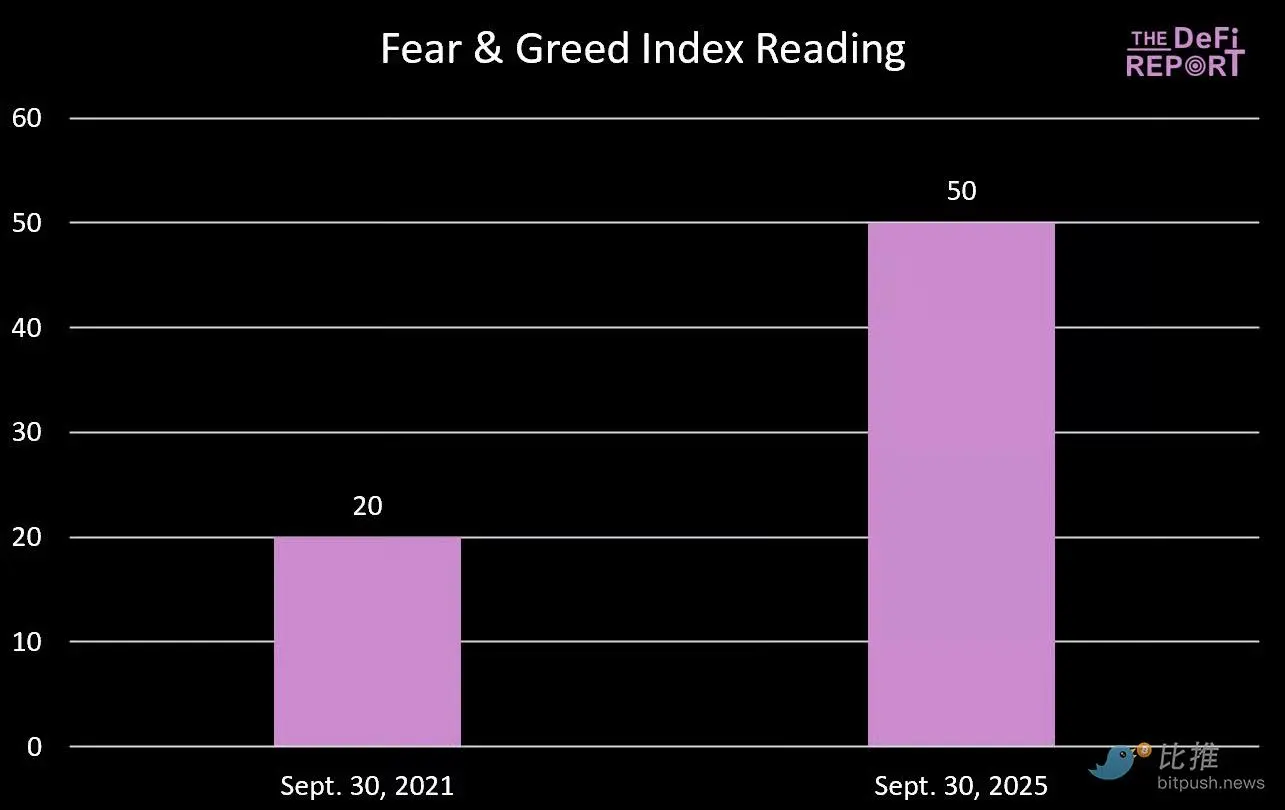
 Fear and Greed Index data chart

If you think the market is jittery right now, it was even more panicky during the same period in 2021. In fact, we were in a state of extreme fear in September 2021. BTC had just corrected 20% to $43,000 before rallying to a peak of $66,000 (a 53% increase) over the next five weeks.

Summary and Outlook

There is no law that requires Bitcoin to continue on the “four-year cycle” path we have historically followed.

But after carefully studying the data, it is difficult to deny the possibility of a peak in the fourth quarter.

Why?

We believe the four-year cycle framework is here to stay for several reasons:

  • Narrative anchoring. Investors anticipate a "post-halving bull run," which influences investor positioning, crypto-native companies' marketing cycles, and media coverage. Reflexivity makes this pattern self-fulfilling.
  • Liquidity and the credit cycle. The halving cycle has historically coincided with the global debt refinancing cycle, amplifying the liquidity needed to generate a crypto bull run.
  • The mechanics of the four-year halving cycle and its impact on miner operations tightens supply just as demand tends to return to the market.
  • Product/Innovation Cadence. Venture capital tends to fund the industry based on liquidity cycles that align with the four-year halving cycle. These projects take time to enter the market, while new innovations and narratives emerge in bursts, amplifying the cryptocurrency adoption cycle.
  • Volatility. Investors anticipate a deep bear market in the crypto market, allowing them to purchase their desired assets at a discount. This naturally drives profit-taking, creating a self-reinforcing feedback loop.
  • Based on the observed data and the entrenchment of these qualitative/behavioral factors, our base case is that BTC will peak again in Q4.
Market Opportunity
DeFi Logo
DeFi Price(DEFI)
$0.000348
$0.000348$0.000348
-6.95%
USD
DeFi (DEFI) Live Price Chart
Disclaimer: The articles reposted on this site are sourced from public platforms and are provided for informational purposes only. They do not necessarily reflect the views of MEXC. All rights remain with the original authors. If you believe any content infringes on third-party rights, please contact service@support.mexc.com for removal. MEXC makes no guarantees regarding the accuracy, completeness, or timeliness of the content and is not responsible for any actions taken based on the information provided. The content does not constitute financial, legal, or other professional advice, nor should it be considered a recommendation or endorsement by MEXC.

You May Also Like

Crucial ETH Unstaking Period: Vitalik Buterin’s Unwavering Defense for Network Security

Crucial ETH Unstaking Period: Vitalik Buterin’s Unwavering Defense for Network Security

BitcoinWorld Crucial ETH Unstaking Period: Vitalik Buterin’s Unwavering Defense for Network Security Ever wondered why withdrawing your staked Ethereum (ETH) isn’t an instant process? It’s a question that often sparks debate within the crypto community. Ethereum founder Vitalik Buterin recently stepped forward to defend the network’s approximately 45-day ETH unstaking period, asserting its crucial role in safeguarding the network’s integrity. This lengthy waiting time, while sometimes seen as an inconvenience, is a deliberate design choice with profound implications for security. Why is the ETH Unstaking Period a Vital Security Measure? Vitalik Buterin’s defense comes amidst comparisons to other networks, like Solana, which boast significantly shorter unstaking times. He drew a compelling parallel to military operations, explaining that an army cannot function effectively if its soldiers can simply abandon their posts at a moment’s notice. Similarly, a blockchain network requires a stable and committed validator set to maintain its security. The current ETH unstaking period isn’t merely an arbitrary delay. It acts as a critical buffer, providing the network with sufficient time to detect and respond to potential malicious activities. If validators could instantly exit, it would open doors for sophisticated attacks, jeopardizing the entire system. Currently, Ethereum boasts over one million active validators, collectively staking approximately 35.6 million ETH, representing about 30% of the total supply. This massive commitment underpins the network’s robust security model, and the unstaking period helps preserve this stability. Network Security: Ethereum’s Paramount Concern A shorter ETH unstaking period might seem appealing for liquidity, but it introduces significant risks. Imagine a scenario where a large number of validators, potentially colluding, could quickly withdraw their stake after committing a malicious act. Without a substantial delay, the network would have limited time to penalize them or mitigate the damage. This “exit queue” mechanism is designed to prevent sudden validator exodus, which could lead to: Reduced decentralization: A rapid drop in active validators could concentrate power among fewer participants. Increased vulnerability to attacks: A smaller, less stable validator set is easier to compromise. Network instability: Frequent and unpredictable changes in validator numbers can lead to performance issues and consensus failures. Therefore, the extended period is not a bug; it’s a feature. It’s a calculated trade-off between immediate liquidity for stakers and the foundational security of the entire Ethereum ecosystem. Ethereum vs. Solana: Different Approaches to Unstaking When discussing the ETH unstaking period, many point to networks like Solana, which offers a much quicker two-day unstaking process. While this might seem like an advantage for stakers seeking rapid access to their funds, it reflects fundamental differences in network architecture and security philosophies. Solana’s design prioritizes speed and immediate liquidity, often relying on different consensus mechanisms and validator economics to manage security risks. Ethereum, on the other hand, with its proof-of-stake evolution from proof-of-work, has adopted a more cautious approach to ensure its transition and long-term stability are uncompromised. Each network makes design choices based on its unique goals and threat models. Ethereum’s substantial value and its role as a foundational layer for countless dApps necessitate an extremely robust security posture, making the current unstaking duration a deliberate and necessary component. What Does the ETH Unstaking Period Mean for Stakers? For individuals and institutions staking ETH, understanding the ETH unstaking period is crucial for managing expectations and investment strategies. It means that while staking offers attractive rewards, it also comes with a commitment to the network’s long-term health. Here are key considerations for stakers: Liquidity Planning: Stakers should view their staked ETH as a longer-term commitment, not immediately liquid capital. Risk Management: The delay inherently reduces the ability to react quickly to market volatility with staked assets. Network Contribution: By participating, stakers contribute directly to the security and decentralization of Ethereum, reinforcing its value proposition. While the current waiting period may not be “optimal” in every sense, as Buterin acknowledged, simply shortening it without addressing the underlying security implications would be a dangerous gamble for the network’s reliability. In conclusion, Vitalik Buterin’s defense of the lengthy ETH unstaking period underscores a fundamental principle: network security cannot be compromised for the sake of convenience. It is a vital mechanism that protects Ethereum’s integrity, ensuring its stability and trustworthiness as a leading blockchain platform. This deliberate design choice, while requiring patience from stakers, ultimately fortifies the entire ecosystem against potential threats, paving the way for a more secure and reliable decentralized future. Frequently Asked Questions (FAQs) Q1: What is the main reason for Ethereum’s long unstaking period? A1: The primary reason is network security. A lengthy ETH unstaking period prevents malicious actors from quickly withdrawing their stake after an attack, giving the network time to detect and penalize them, thus maintaining stability and integrity. Q2: How long is the current ETH unstaking period? A2: The current ETH unstaking period is approximately 45 days. This duration can fluctuate based on network conditions and the number of validators in the exit queue. Q3: How does Ethereum’s unstaking period compare to other blockchains? A3: Ethereum’s unstaking period is notably longer than some other networks, such as Solana, which has a two-day period. This difference reflects varying network architectures and security priorities. Q4: Does the unstaking period affect ETH stakers? A4: Yes, it means stakers need to plan their liquidity carefully, as their staked ETH is not immediately accessible. It encourages a longer-term commitment to the network, aligning staker interests with Ethereum’s stability. Q5: Could the ETH unstaking period be shortened in the future? A5: While Vitalik Buterin acknowledged the current period might not be “optimal,” any significant shortening would likely require extensive research and network upgrades to ensure security isn’t compromised. For now, the focus remains on maintaining robust network defenses. Found this article insightful? Share it with your friends and fellow crypto enthusiasts on social media to spread awareness about the critical role of the ETH unstaking period in Ethereum’s security! To learn more about the latest Ethereum trends, explore our article on key developments shaping Ethereum’s institutional adoption. This post Crucial ETH Unstaking Period: Vitalik Buterin’s Unwavering Defense for Network Security first appeared on BitcoinWorld.
Share
Coinstats2025/09/18 15:30
XRP holders hit new high, but THIS keeps pressure on price

XRP holders hit new high, but THIS keeps pressure on price

The post XRP holders hit new high, but THIS keeps pressure on price appeared on BitcoinEthereumNews.com. Ripple [XRP] remains one of the top five cryptocurrencies
Share
BitcoinEthereumNews2026/02/17 08:49
Will Bitcoin Price Drop to $50,000 by March 2026?

Will Bitcoin Price Drop to $50,000 by March 2026?

The post Will Bitcoin Price Drop to $50,000 by March 2026? appeared on BitcoinEthereumNews.com. Bitcoin is trading around $68,700, down nearly 22% year to date
Share
BitcoinEthereumNews2026/02/17 08:59