The post Startups staying private longer with alternative capital appeared on BitcoinEthereumNews.com. Klarna Group Plc signage during the company’s initial public offering (IPO) at the New York Stock Exchange (NYSE) in New York, US, on Wednesday, Sept. 10, 2025. Michael Nagle | Bloomberg | Getty Images A version of this article appeared in CNBC’s Inside Alts newsletter, a guide to the fast-growing world of alternative investments, from private equity and private credit to hedge funds and venture capital. Sign up to receive future editions, straight to your inbox. Even as the IPO market is starting to rebound, startups are staying private for longer thanks in large part to alternative capital, according to new data. The median age of companies that have gone private so far this year is 13 years since founding, up from a median of 10 years in 2018, according to new data from Renaissance Capital. A separate, recent study by Jay Ritter at the University of Florida found that between 1980 and 2024, the average age of companies going public has more than doubled. Companies going public also have much larger revenue, since they’re maturing longer in private hands. In 1980, the median revenue for IPO companies was $16 million, or $64 million in inflation-adjusted 2024 dollars. By 2024, their median revenue had soared to $218 million, according to Ritter’s study. The number of so-called “unicorns,” or private companies with valuations of more than $1 billion, has swelled to over 1,200 as of July, according to CB Insights. OpenAI’s valuation of $500 billion, notched with last week’s sale of employee shares topped  SpaceX’s $400 billion valuation to become the world’s most highly valued private company. Analysts and economists largely blame the regulatory burden and short-term pressures associated with being a publicly traded company for the urge to stay private. Yet the surge in alternative investments and private capital – from sovereign wealth funds… The post Startups staying private longer with alternative capital appeared on BitcoinEthereumNews.com. Klarna Group Plc signage during the company’s initial public offering (IPO) at the New York Stock Exchange (NYSE) in New York, US, on Wednesday, Sept. 10, 2025. Michael Nagle | Bloomberg | Getty Images A version of this article appeared in CNBC’s Inside Alts newsletter, a guide to the fast-growing world of alternative investments, from private equity and private credit to hedge funds and venture capital. Sign up to receive future editions, straight to your inbox. Even as the IPO market is starting to rebound, startups are staying private for longer thanks in large part to alternative capital, according to new data. The median age of companies that have gone private so far this year is 13 years since founding, up from a median of 10 years in 2018, according to new data from Renaissance Capital. A separate, recent study by Jay Ritter at the University of Florida found that between 1980 and 2024, the average age of companies going public has more than doubled. Companies going public also have much larger revenue, since they’re maturing longer in private hands. In 1980, the median revenue for IPO companies was $16 million, or $64 million in inflation-adjusted 2024 dollars. By 2024, their median revenue had soared to $218 million, according to Ritter’s study. The number of so-called “unicorns,” or private companies with valuations of more than $1 billion, has swelled to over 1,200 as of July, according to CB Insights. OpenAI’s valuation of $500 billion, notched with last week’s sale of employee shares topped  SpaceX’s $400 billion valuation to become the world’s most highly valued private company. Analysts and economists largely blame the regulatory burden and short-term pressures associated with being a publicly traded company for the urge to stay private. Yet the surge in alternative investments and private capital – from sovereign wealth funds…

Startups staying private longer with alternative capital

Klarna Group Plc signage during the company’s initial public offering (IPO) at the New York Stock Exchange (NYSE) in New York, US, on Wednesday, Sept. 10, 2025.

Michael Nagle | Bloomberg | Getty Images

A version of this article appeared in CNBC’s Inside Alts newsletter, a guide to the fast-growing world of alternative investments, from private equity and private credit to hedge funds and venture capital. Sign up to receive future editions, straight to your inbox.

Even as the IPO market is starting to rebound, startups are staying private for longer thanks in large part to alternative capital, according to new data.

The median age of companies that have gone private so far this year is 13 years since founding, up from a median of 10 years in 2018, according to new data from Renaissance Capital.

A separate, recent study by Jay Ritter at the University of Florida found that between 1980 and 2024, the average age of companies going public has more than doubled.

Companies going public also have much larger revenue, since they’re maturing longer in private hands. In 1980, the median revenue for IPO companies was $16 million, or $64 million in inflation-adjusted 2024 dollars. By 2024, their median revenue had soared to $218 million, according to Ritter’s study.

The number of so-called “unicorns,” or private companies with valuations of more than $1 billion, has swelled to over 1,200 as of July, according to CB Insights. OpenAI’s valuation of $500 billion, notched with last week’s sale of employee shares topped  SpaceX’s $400 billion valuation to become the world’s most highly valued private company.

Analysts and economists largely blame the regulatory burden and short-term pressures associated with being a publicly traded company for the urge to stay private. Yet the surge in alternative investments and private capital – from sovereign wealth funds and family offices to venture capital, private equity and private credit – are providing more than enough capital for today’s tech startups.

Global private-equity assets under management have risen over 15% a year over the past decade to over $12 trillion, according to Preqin. Over the next decade, they’re expected to double to around $25 trillion.

Get Inside Alts directly to your inbox

Venture capital assets under management in North America are expected to increase from $1.36 trillion at the start of 2025 to $1.8 trillion in 2029, according to PitchBook.

“One of the main reasons for going public is to raise capital,” Ritter said. “Now there are a lot of good alternatives to raising capital without going public.”

Ritter said that the growth of new digital marketplaces for selling shares of private companies – like Forge Global and EquityZen – give employees liquidity for their equity instead of having to wait for an IPO.

Klarna, the Swedish fintech startup, was founded 20 years ago and experienced wild swings in valuation before going public last month. It was valued at $45.6 billion in 2021 thanks to a funding round led by SoftBank, but saw its valuation plunge to $6.7 billion in 2022. Its funding along the way came from Sequoia Capital, IVP, Atomico, GIC and Heartland, the family office of Danish billionaire Anders Holch Povlsen.

Klarna’s current market cap is $15 billion.

While private equity and venture capital firms argue that the fastest growth stage for startups is in the early years, with the best returns gone by the time they go public, Ritter said the evidence is more complicated. While returns for private equity and venture capital have outperformed public markets in the past, he said the rush of capital flowing into alternatives and the huge prices paid by private investors for assets in recent years could mark a turning point.

“Money flows into an asset class as long as there are abnormal returns,” he said. “But so much money has poured in, I don’t expect there to be abnormal returns in the future.”

Source: https://www.cnbc.com/2025/10/07/ipo-market-startups-staying-private-longer-alternative-capital.html

Market Opportunity
PUBLIC Logo
PUBLIC Price(PUBLIC)
$0.01498
$0.01498$0.01498
-0.13%
USD
PUBLIC (PUBLIC) Live Price Chart
Disclaimer: The articles reposted on this site are sourced from public platforms and are provided for informational purposes only. They do not necessarily reflect the views of MEXC. All rights remain with the original authors. If you believe any content infringes on third-party rights, please contact service@support.mexc.com for removal. MEXC makes no guarantees regarding the accuracy, completeness, or timeliness of the content and is not responsible for any actions taken based on the information provided. The content does not constitute financial, legal, or other professional advice, nor should it be considered a recommendation or endorsement by MEXC.
Tags:

You May Also Like

Ethereum unveils roadmap focusing on scaling, interoperability, and security at Japan Dev Conference

Ethereum unveils roadmap focusing on scaling, interoperability, and security at Japan Dev Conference

The post Ethereum unveils roadmap focusing on scaling, interoperability, and security at Japan Dev Conference appeared on BitcoinEthereumNews.com. Key Takeaways Ethereum’s new roadmap was presented by Vitalik Buterin at the Japan Dev Conference. Short-term priorities include Layer 1 scaling and raising gas limits to enhance transaction throughput. Vitalik Buterin presented Ethereum’s development roadmap at the Japan Dev Conference today, outlining the blockchain platform’s priorities across multiple timeframes. The short-term goals focus on scaling solutions and increasing Layer 1 gas limits to improve transaction capacity. Mid-term objectives target enhanced cross-Layer 2 interoperability and faster network responsiveness to create a more seamless user experience across different scaling solutions. The long-term vision emphasizes building a secure, simple, quantum-resistant, and formally verified minimalist Ethereum network. This approach aims to future-proof the platform against emerging technological threats while maintaining its core functionality. The roadmap presentation comes as Ethereum continues to compete with other blockchain platforms for market share in the smart contract and decentralized application space. Source: https://cryptobriefing.com/ethereum-roadmap-scaling-interoperability-security-japan/
Share
BitcoinEthereumNews2025/09/18 00:25
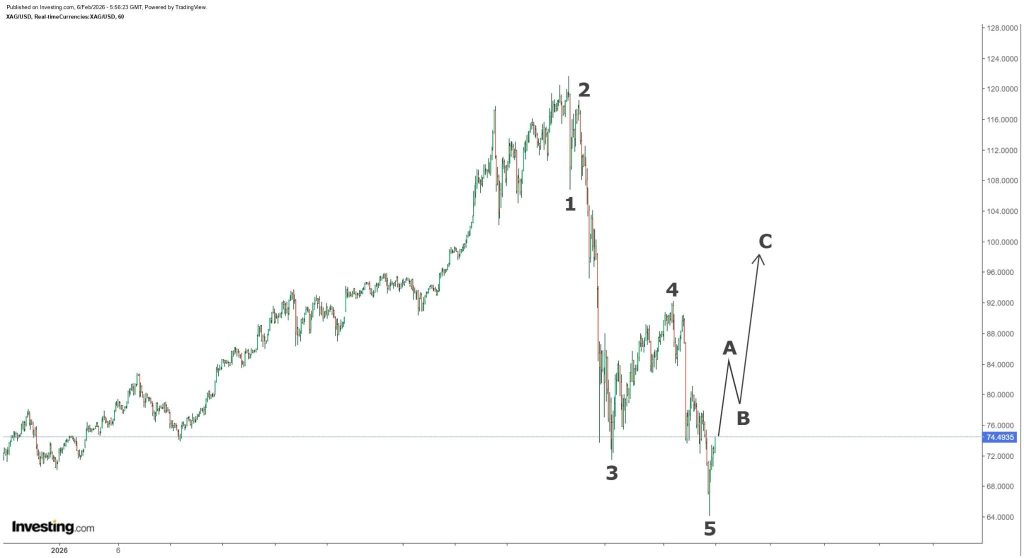
Silver Price Crash Is Over “For Real This Time,” Analyst Predicts a Surge Back Above $90

Silver Price Crash Is Over “For Real This Time,” Analyst Predicts a Surge Back Above $90

Silver has been taking a beating lately, and the Silver price hasn’t exactly been acting like a safe haven. After running up into the highs, the whole move reversed
Share
Captainaltcoin2026/02/07 03:15
Strategy, BitMine, Coinbase Shares Chart Major Rebound as Bitcoin Stabilizes

Strategy, BitMine, Coinbase Shares Chart Major Rebound as Bitcoin Stabilizes

The post Strategy, BitMine, Coinbase Shares Chart Major Rebound as Bitcoin Stabilizes appeared on BitcoinEthereumNews.com. In brief Strategy stock rose 18% to $
Share
BitcoinEthereumNews2026/02/07 02:49