

Buy, Hold, or Sell: PayPal Shed 46% as Wall Street Deserts Fintech. Is PYPL an Absolute Buy at $42?
The post Buy, Hold, or Sell: PayPal Shed 46% as Wall Street Deserts Fintech. Is PYPL an Absolute Buy at $42? appeared first on 24/7 Wall St..
- PayPal (PYPL) at $42.51 screens compelling; 8x trailing P/E undervalues growing payment volume.
- PayPal's buyback program compounds per-share value despite flat net income guidance.
- Act now: the analyst who called NVIDIA in 2010 just named his top 10 AI stocks — and PayPal didn't make the cut. Grab the names FREE today.
PayPal (NASDAQ:PYPL) at $42.51 looks compelling for research. The stock has lost 37.46% over the past year while the business kept generating cash, retiring shares, and growing payment volume, and that gap between price action and fundamentals is the trade.
PayPal runs the largest independent digital payments network outside the card schemes, anchored by branded checkout, Venmo, and Hyperwallet. A Q4 2025 earnings miss on revenue and EPS triggered a collapse from roughly $76 in October 2025 to about $42 in early February 2026, accompanied by securities class action lawsuits and the appointment of new CEO Enrique Lores.
Why The Selloff Created A Cash-Flow Bargain
The valuation has compressed to a 8 trailing P/E, an 8 forward P/E, and a 0.77 PEG ratio, levels usually reserved for businesses in structural decline, yet PayPal keeps growing. Total payment volume grew 11% to $463.95 billion in Q1 2026, and revenue rose 7.2% to $8.35 billion, beating estimates.
Capital return is doing real work. PayPal repurchased about 100 million shares for $6.0 billion over the trailing twelve months, cutting the diluted share count from 999 million to 920 million. 63 recent insider transactions with a net buying direction, including a 587,168-share performance grant to Lores, align leadership with a recovery.
Why The Bear Case Has Teeth
Margins are heading the wrong way. GAAP operating margin contracted 182 basis points to 17.8%, net income fell 13.5% year over year, and free cash flow slipped 6.33% to $903 million. Management guided FY 2026 non-GAAP EPS flat to slightly lower against $5.31, and Q2 EPS to decline about 9%.
Active accounts were essentially flat sequentially, branded checkout execution remains a known weakness, and Apple Pay, Shop Pay, and Stripe continue pressuring conversion. Prediction markets currently assign just a 21.5% probability to a PayPal acquisition before 2027, removing the takeout floor some bulls assume.
Why Patience Has A Real Cost Here
The hold argument leans on the Lores transition needing quarters to prove out, a beat-and-guide-down pattern that breeds skepticism, and buybacks that flatter EPS without fixing growth. Waiting for branded checkout reacceleration is reasonable, yet the cost of waiting is paying a higher multiple on the same cash flows after the rerating starts.
The Numbers Behind The Call
PYPL currently trades at $42.51 against a consensus analyst target of $51.54, implying roughly 19% upside, though targets are one input rather than a guarantee. Coverage spans 44 analysts: 3 Strong Buy, 5 Buy, 32 Hold, 4 Sell.
The stock is down 26.71% year to date and 41.27% since October 28, 2025, while the S&P 500 has posted a positive year by comparison. Market cap sits at $37.5 billion against $33.7 billion in trailing revenue and $6.57 billion of EBITDA.
The Verdict On PYPL At This Price
At $42.51, PayPal screens as compelling. Here is why.
The path to appreciation is mechanical. Buybacks at 8 times earnings compound per-share value even with flat net income, and 11% TPV growth protects the revenue base. A single quarter of branded checkout stabilization under Lores reframes the multiple toward peers, and the $51.54 consensus target becomes a floor.
Risk is bounded by valuation. With shares already at a 1.87 price-to-book and 5.02 EV/EBITDA, much of the bear narrative is priced in. The thesis fails if margin compression accelerates beyond guidance or active accounts decline outright. Quarterly checkpoints on transaction margin and branded volume will tell investors which way the stock moves.
PYPL looks mispriced because the market is pricing structural decline into a business still growing payment volume, generating multi-billion-dollar free cash flow, and shrinking its share count by single-digit percentages a year.
Act now: the analyst who called NVIDIA in 2010 just named his top 10 AI stocks — and PayPal didn’t make the cut. Grab the names FREE today.
The post Buy, Hold, or Sell: PayPal Shed 46% as Wall Street Deserts Fintech. Is PYPL an Absolute Buy at $42? appeared first on 24/7 Wall St..


You May Also Like

Google Searches Could Expose Users to Crypto Wallet Risks
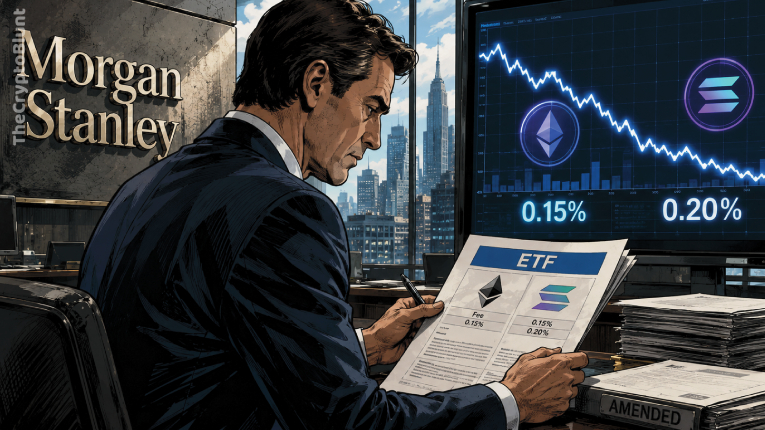
Morgan Stanley Revises Ethereum and Solana ETF Filings to Unveil Record-Low Fees

LIST: Bayanihan initiatives amid soaring oil prices


Trending News
More24/7 Live News
MoreQuick Reads
More
