

CLARITY Act Reaches Senate Calendar After Committee Approval
The CLARITY Act has advanced to the Senate Calendar after clearing committee approval, marking a significant procedural milestone for U.S. digital asset market structure legislation.
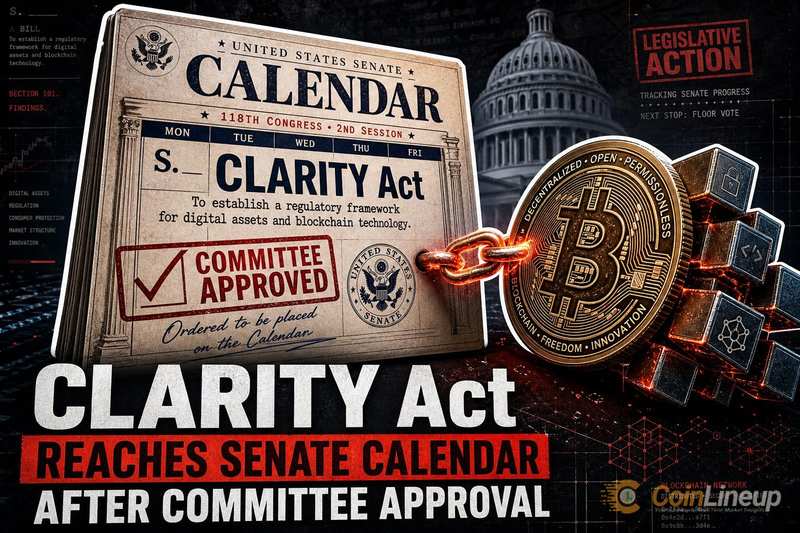
The Senate Banking Committee approved the CLARITY Act, formally known as H.R. 3633, in what Chairman Tim Scott described as a historic markup of digital asset market structure legislation. The bill’s placement on the Senate Calendar means it is now eligible for consideration by the full Senate.
Senate Calendar placement is a procedural step that follows committee approval. It does not guarantee a floor vote or passage, but it signals the bill remains active and has cleared a key gatekeeping stage in the legislative process.
Why this step matters for crypto regulation
The CLARITY Act aims to establish a regulatory framework for digital asset markets in the United States. The Senate Banking Committee’s passage of the bill reflects bipartisan support for moving forward on crypto market structure rules.
For the digital asset industry, procedural progress on legislation like the CLARITY Act shapes expectations around how tokens and protocols will be classified and regulated. Projects operating in areas like perpetual futures on crypto assets and decentralized finance stand to be directly affected by any framework Congress adopts.
Advancing beyond committee increases the bill’s visibility and puts pressure on Senate leadership to schedule further action. However, reaching the Calendar is far from the finish line. Bills can sit on the Calendar indefinitely if leadership does not prioritize them for floor time.
What to watch next
The next major checkpoint is whether Senate leadership schedules the CLARITY Act for debate and a floor vote. That decision depends on competing legislative priorities, available floor time, and whether enough senators signal support for the bill to clear procedural hurdles.
Amendments could still reshape key provisions before any final vote. The bill’s full action history shows the procedural path it has taken so far, and additional steps could introduce delays or changes.
The CLARITY Act’s progress comes alongside broader momentum in U.S. crypto policy, with developments ranging from institutional Bitcoin accumulation to large-scale ETF movements signaling growing market maturity. Whether Congress can translate committee-level progress into enacted law remains the central question for crypto policy watchers in 2026.
Disclaimer: This article is for informational purposes only and does not constitute financial or investment advice. Cryptocurrency and digital asset markets carry significant risk. Always do your own research before making decisions.


You May Also Like

NVIDIA Stock Rallied 8%, But 3 Signals Point to a Reversal

Factory-Built Housing Firm BOXABL Targets Public Markets via SPAC Merger, Analysts See Growth Potential

ARDR Price Soars 19.41%: Altcoin Rotation Fuels Momentum


Trending News
More24/7 Live News
MoreQuick Reads
More
