AI-driven momentum: why the Fed is slowing its rate cuts
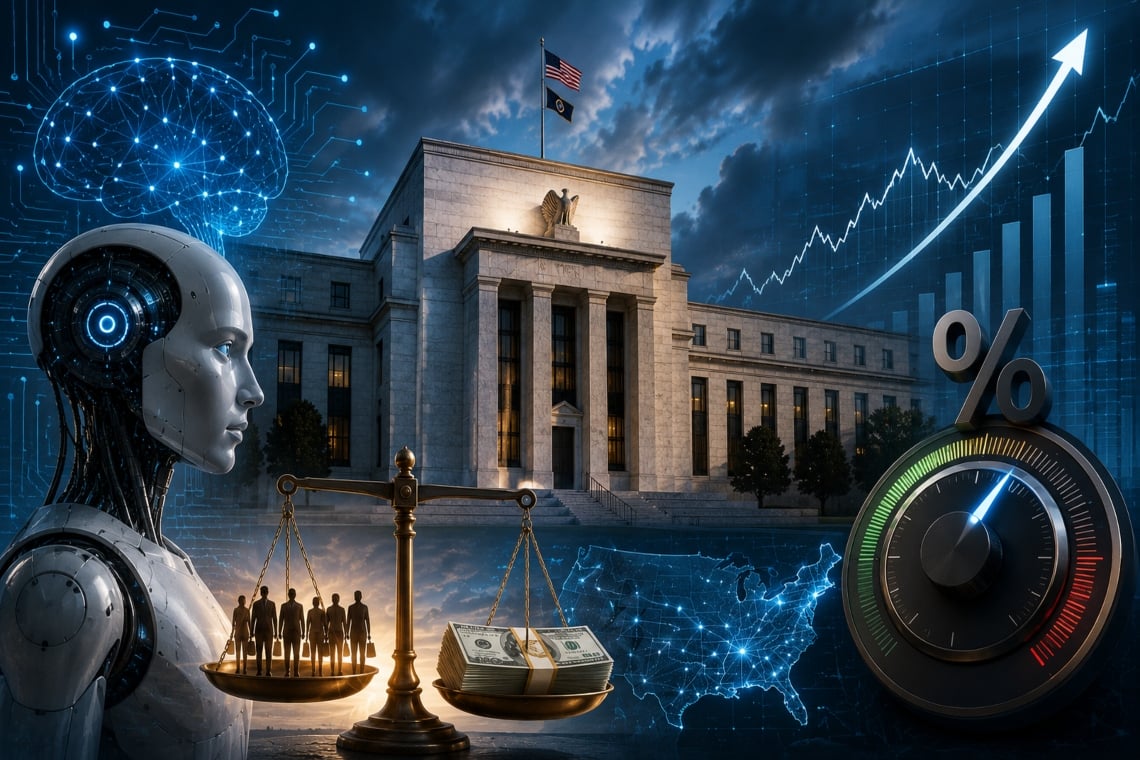
In the United States, the latest data on consumer confidence confirm a solid economic picture, far from the recession fears that had characterized previous months.
American consumers continue to show surprising resilience, supporting domestic demand and reinforcing the belief that economic growth can continue at a steady pace.
This scenario is also reflected in financial markets, where Treasury yields remain at high levels: the 10-year stays close to 4.5%, a sign that investors do not expect an imminent easing of monetary conditions.
Cautious Fed: rate cuts postponed
Expectations of a decisive intervention by the Federal Reserve on interest rates are gradually being pushed further into the future, with forecasts for significant cuts now looking to 2026.
This caution stems from a combination of factors: on the one hand, strong consumption and, on the other, the persistence of inflationary pressures. In this context, the Fed prefers to maintain a wait-and-see stance, avoiding easing financial conditions too early and thus risking further fueling inflation.
AI investment drives global capital
A key element influencing the current economic phase is the huge investment in infrastructure for artificial intelligence. The so-called hyperscalers – the major players in the tech sector – continue to allocate substantial resources to semiconductors, data centers, network infrastructure, and computing power.
“Investments in artificial intelligence infrastructure continue to represent one of the main drivers of global capital allocation. Hyperscalers continue to allocate substantial resources to semiconductors, data centers, network infrastructure, and computing power, supporting the strength of technology stocks and, more generally, of risk assets. The continued rallies in AI-related stocks also help maintain spending activity and overall market resilience, despite tighter financial conditions”, explains Ryan Lee, Chief Analyst Officer at Bitget Research.
This wave of investment not only supports the growth of major technology companies, but also helps keep demand for risky assets high in a context of tighter financial conditions.
The strength of AI-related stocks
Stocks linked to artificial intelligence are posting sustained performances, becoming a real driving force for the entire tech sector and for equity markets in general.
The continuous inflow of capital into these stocks supports spending and investor confidence, mitigating the effects of a less accommodative monetary policy. In other words, AI is confirmed not only as a driver of innovation, but also as a pillar of market resilience.
Cryptocurrencies: growing sensitivity to macro data
Another interesting phenomenon concerns the growing involvement of institutional investors in cryptocurrency markets. This participation is making the sector increasingly sensitive to macroeconomic dynamics, particularly data relating to consumer activity, Treasury yields, and technology investment cycles.
In the past, the crypto market was seen as relatively isolated from movements in traditional markets; today, however, correlations are strengthening.
BTC and ETH benefit from institutional flows
Despite high yields and expectations of a still cautious Fed, bitcoin and ethereum continue to benefit from flows coming from institutional investors.
These flows are fueled by the belief that, in the long term, cryptocurrencies can benefit from trends of expanding productivity and global liquidity.
In other words, even in a context of tighter financial conditions, the appeal of the main cryptos remains intact thanks to their ability to fit into the major structural trends of the economy.
A more complex market scenario
The current market phase is therefore characterized by a growing interconnection between macroeconomic factors, technological innovation, and capital allocation choices.
The resilience of consumers and the push from investments in artificial intelligence are delaying the need for aggressive intervention by the Fed, keeping bond yields at high levels and supporting demand for risky assets.
The central role of technology
Technology, and AI in particular, is confirmed as the real engine of this economic phase. Investments in digital infrastructure not only fuel the growth of companies in the sector, but also help strengthen investor confidence and support aggregate demand.
This phenomenon is reflected both in equity markets and in cryptocurrency markets, where institutional presence is increasingly pronounced.
Outlook for the coming months
Looking ahead, it is likely that the combination of resilient consumption, inflationary pressures, and investments in AI will continue to influence the Federal Reserve’s decisions and market trends.
Investors will therefore need to closely monitor both macroeconomic data and developments in the technology sector, aware that the situation remains fluid and subject to rapid change.
In summary, the current picture suggests that consumer resilience and the momentum of artificial intelligence are redefining the rules of the game, delaying monetary easing and supporting markets in a phase of major transformation.


You May Also Like

Crypto Markets Rise as Betting Odds Increase for US-Iran Agreement

Uphold’s Massive 1.59 Billion XRP Holdings Shocks Community, CEO Reveals The Real Owners

Iran’s army chief warns of ‘total destruction’ for ground invasion