Introduction Kalshi is a US-regulated exchange specializing in event contracts, where users can predict the outcomes of real-world events, such as elections, economic shifts, or even weatherIntroduction Kalshi is a US-regulated exchange specializing in event contracts, where users can predict the outcomes of real-world events, such as elections, economic shifts, or even weather
Learn/Cryptocurrency Knowledge/Hot Concepts/What is Kal...s Explained

What is Kalshi? US-Regulated Event Contracts Explained

Beginner
Mar 24, 2026Emma Williams
0m
Quack AI
Q$0.024311-3.47%

Introduction


Kalshi is a US-regulated exchange specializing in event contracts, where users can predict the outcomes of real-world events, such as elections, economic shifts, or even weather patterns. The platform offers simple Yes/No contracts that pay $1 for correct predictions and $0 for incorrect ones, making it accessible for both casual and professional traders. Kalshi’s CFTC regulation sets it apart from decentralized platforms like Polymarket, offering a legal and secure environment for U.S. traders.

TL;DR


  • Kalshi is a US-regulated exchange offering event contracts for predicting real-world outcomes.
  • Event contracts are Yes/No predictions with binary payouts: $1 if correct and $0 if wrong.
  • CFTC regulation ensures legal compliance and financial security for U.S. traders.
  • Unlike decentralized platforms, Kalshi provides a regulated, tax-compliant alternative with institutional-grade security.

What is an Event Contract?


An event contract is a financial instrument where users predict the outcome of a specific event. Each contract has a Yes/No proposition, and the price reflects the market's probability of that event occurring. For example, a contract asking, "Will the U.S. Federal Reserve cut interest rates by 2026?" will have a Yes price and a No price, reflecting the market’s belief in the probability of each outcome. The winning side pays out $1, and the losing side pays out $0.

For more details on how event contracts work, check out How Do Prediction Markets Work?.

Why Kalshi’s US-Regulated Status Matters


Unlike decentralized prediction markets, Kalshi’s CFTC regulation makes it a safer choice for U.S. traders, offering the benefits of a regulated environment:

  • Legal Security: U.S. residents can trade on Kalshi knowing that it’s governed by the Commodity Futures Trading Commission (CFTC), which ensures that it operates within the law and is subject to federal oversight.
  • Financial Protection: Funds are held in a regulated clearinghouse, offering financial security to traders.
  • Tax Compliance: Since Kalshi operates under U.S. law, traders can expect transparent tax reporting and easy access to tax-related documents.

This makes Kalshi a legal, secure, and tax-compliant platform for trading on future outcomes, something that decentralized platforms like Polymarket do not offer.

How Kalshi’s Event Contracts Work: The Mechanics


Kalshi’s event contracts are simple to understand but offer deep financial utility. You predict an event’s outcome (Yes/No), and the market adjusts the price based on how likely the event is to happen.

  • Binary Payout System: If the event occurs, the Yes contract pays out $1; if it doesn’t, it pays $0.
  • Market Prices Reflect Probability: For instance, if the Yes price for an event is $0.75, the market believes there’s a 75% chance of the event happening. The No price reflects the inverse (in this case, $0.25).

This binary structure simplifies the process for users to predict outcomes and manage risk. Unlike traditional markets, event contracts focus on specific outcomes, which makes them ideal for trading on news, political events, and economic trends.

Kalshi's regulated environment ensures transparency and safety for U.S. traders, while Polymarket offers a non-regulated, decentralized alternative that appeals to users looking for anonymity but lacks the same level of legal protections.
Feature
Kalshi (US-regulated)
Polymarket (Decentralized)
Regulation
Fully regulated by the CFTC
Operates without government oversight
Legal Compliance
Ensures tax and legal compliance in the U.S.
Legal grey area for U.S. residents
Onboarding
Requires KYC for U.S. users
No-KYC required, anonymous trading
Trading Fees
Relatively higher due to operational costs
Typically lower, but depends on platform
Payout Structure
Simple binary payouts ($1 if correct)
Similar, but decentralized mechanisms may vary

For more information about the differences between decentralized and centralized platforms, readPolymarket vs. MEXC Prediction Market.
Kalshi’s Role in Political and Economic Forecasting
Kalshi is playing a significant role in both political and economic forecasting. The platform allows users to trade on the outcomes of high-impact events, such as elections, inflation rates, and interest rate decisions.

Political Forecasting on Kalshi:


  • Election Markets: Kalshi offers prediction markets for U.S. elections, where users can trade on the likelihood of candidates winning, the passing of legislation, or other political outcomes.
  • Policy Predictions: Users can also predict policy changes, like tax reform or changes in healthcare policy. This makes Kalshi an essential tool for those who want to engage in political forecasting and understand the public's sentiment around political events.

Kalshi's legal victory in 2024 opened the door for regulated political trading, which was previously restricted in the U.S. This has made Kalshi a unique player in political markets compared to platforms like Polymarket, which operates in a decentralized, less regulated environment.

FAQ


Q1: How are Kalshi’s event contracts priced?

Event contracts on Kalshi are priced based on the market's perception of the event’s probability. The Yes price reflects the probability of the event happening, while the No price reflects the probability of it not happening.

Q2: What advantages does Kalshi offer over Polymarket?

Kalshi is CFTC-regulated, offering legal protection, tax compliance, and financial security. In contrast, Polymarket operates in a decentralized environment, offering more anonymity but less regulatory oversight.

Q3: Can I use Kalshi for political forecasting?

Yes, Kalshi offers prediction markets for political events, such as U.S. elections, legislation, and more, allowing users to trade on political outcomes legally.

Q4: How do I get started on Kalshi?

To start trading on Kalshi, simply sign up, complete the KYC process, and deposit funds. Then, you can start trading event contracts and predicting the outcomes of various events.

Conclusion

Kalshi is transforming the way people trade on future events, offering a regulated and secure platform for U.S. residents to participate in political, economic, and other event-based predictions. With its CFTC regulation, Kalshi ensures that users can trade with legal security and financial protection, something that decentralized platforms like Polymarket lack. Whether you’re hedging against macroeconomic risks, predicting political outcomes, or forecasting economic trends, Kalshi provides a compliant and transparent solution for all.
For more on how prediction markets work, see our article What is a Prediction Market?.


Disclaimer:

This information does not provide advice on investment, taxation, legal, financial, accounting, or any other related services, nor does it constitute advice to purchase, sell, or hold any assets. MEXC Learn provides information for reference purposes only and does not constitute investment advice. Please ensure you fully understand the risks involved and exercise caution when investing. The platform is not responsible for users' investment decisions.
Market Opportunity
Quack AI Logo
Quack AI Price(Q)
$0.024311
$0.024311$0.024311
-1.53%
USD
Quack AI (Q) Live Price Chart

Popular Articles

View More
U.S. Stocks Weekly Report Sep 04–Sep 11 | HOOD Surges Nearly 20% in a Single Week, Bitcoin Breaks $81,000—Did You Make Unrealized Gains in This U.S. Stock and Crypto Market Rally?

U.S. Stocks Weekly Report Sep 04–Sep 11 | HOOD Surges Nearly 20% in a Single Week, Bitcoin Breaks $81,000—Did You Make Unrealized Gains in This U.S. Stock and Crypto Market Rally?

This week, the main theme for U.S. stocks is not AI, but Liquidity. ADP private-sector employment in August increased by only 38,000, below the market expectation of 48,000; the ISM Manufacturing PMI
TSMC vs ASML: Foundry Manufacturing vs EUV Equipment in the AI Chip Cycle

TSMC vs ASML: Foundry Manufacturing vs EUV Equipment in the AI Chip Cycle

TSMC and ASML are both essential to advanced AI chips, but they monetize different points of the semiconductor cycle. TSMC earns when chip designers turn demand into wafer production and advanced

Dogecoin Security Basics: Common Scams Targeting DOGE Holders and How to Avoid Them

Dogecoin Security Basics: Common Scams Targeting DOGE Holders and How to Avoid Them

Dogecoin (DOGE) has transformed from an internet meme into a legitimate financial asset. However, its mainstream visibility is a double-edged sword: while it drives adoption, it also attracts
U.S. Stock Weekly | Aug. 28–Sep.03 | HOOD Surges Nearly 20% in a Week, Bitcoin Breaks $81,000: Did You Make a Paper Profit in This Rally of U.S. Stocks and Crypto?

U.S. Stock Weekly | Aug. 28–Sep.03 | HOOD Surges Nearly 20% in a Week, Bitcoin Breaks $81,000: Did You Make a Paper Profit in This Rally of U.S. Stocks and Crypto?

The main theme of U.S. stocks this week is not AI, but Liquidity. ADP private-sector employment in August increased by only 38,000, below the market expectation of 48,000; ISM Manufacturing PMI and

Hot Crypto Updates

View More

Nike Earnings Preview: Can NKE Stock Rebound From a 12-Year Low?

Nike Earnings Preview: Can NKE Stock Rebound From a 12-Year Low?

Key Takeaways Nike will report fiscal Q1 2027 results on October 1, 2026 after the U.S. market closes, with current expectations centered near $11.43 billion in revenue and $0.44 in earnings per

Adobe Earnings: Why Is Adobe Stock Down Despite 150% AI ARR Growth?

Adobe Earnings: Why Is Adobe Stock Down Despite 150% AI ARR Growth?

Summary: Adobe stock fell after Q3 FY2026 earnings despite record revenue and more than 150% growth in AI-first ARR. Adobe now has over 1 billion monthly active users, but Q4 revenue guidance showed

Oracle Earnings: Why Is ORCL Stock Up? AI Cloud Revenue Jumps 121%

Oracle Earnings: Why Is ORCL Stock Up? AI Cloud Revenue Jumps 121%

Oracle stock rose in extended trading on September 10 after the company reported stronger-than-expected fiscal first-quarter results, powered by accelerating demand for artificial intelligence cloud

Oracle Earnings Analysis: AI Demand Drives 121% Infrastructure Growth as Backlog Hits $664 Billion

Oracle Earnings Analysis: AI Demand Drives 121% Infrastructure Growth as Backlog Hits $664 Billion

Key Takeaways Oracle fiscal Q1 2027 revenue rose 30% year over year to $19.3 billion, while cloud infrastructure revenue jumped 121% to $7.4 billion. Remaining performance obligations reached $664

Trending News

View More
Tesla Q2 2026 Earnings Date: Release Time, Webcast and Key Metrics

Tesla Q2 2026 Earnings Date: Release Time, Webcast and Key Metrics

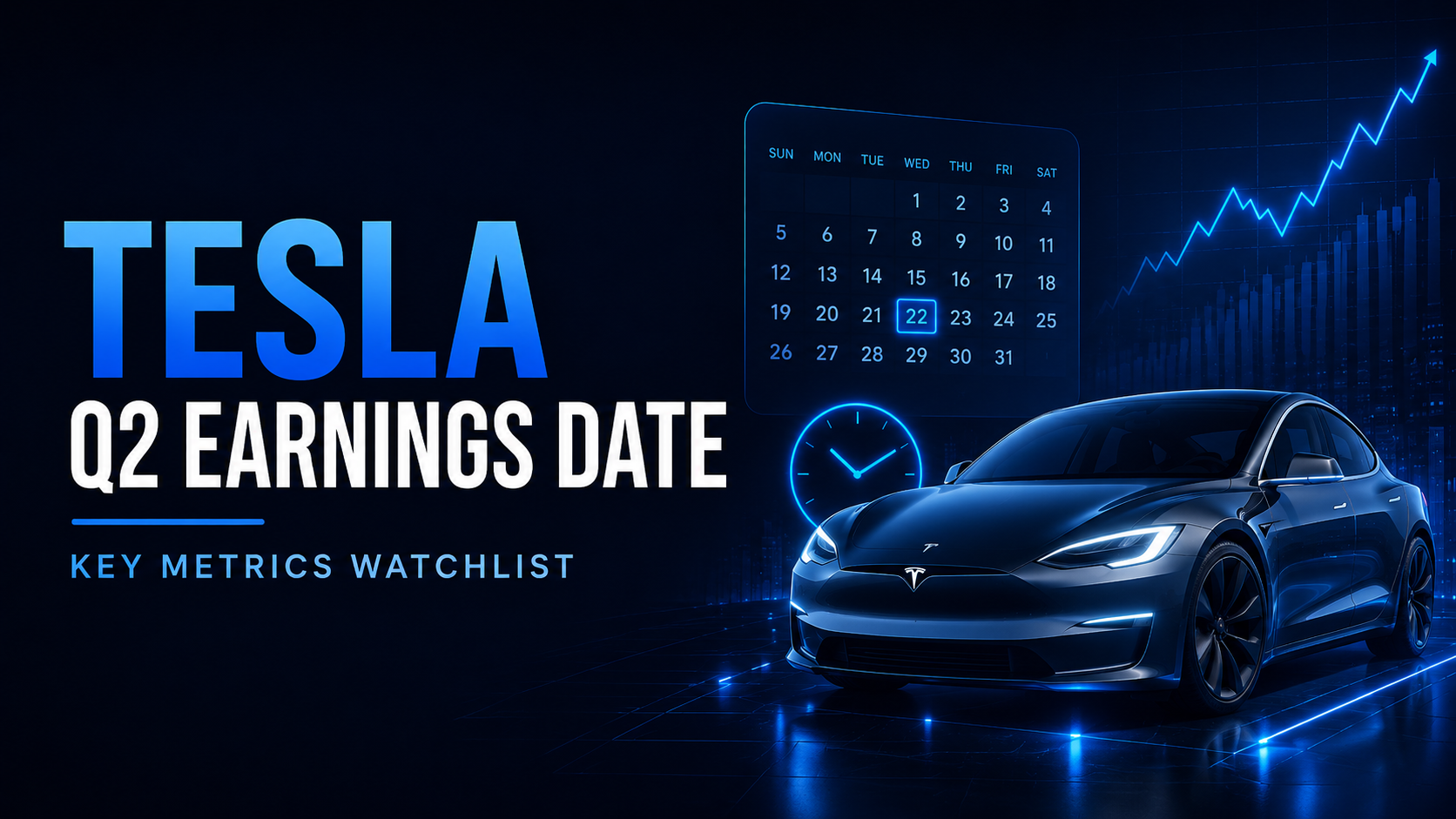
Tesla’s Q2 2026 earnings report is set for Wednesday, July 22, 2026, after market close, with management scheduled to host a live Q&A webcast at 4:30 p.m. Central Time / 5:30 p.m. Eastern Time. The Q2
BIKETYSON Coin Surges as Solana Traders Chase a New Absurd Meme

BIKETYSON Coin Surges as Solana Traders Chase a New Absurd Meme

BIKETYSON coin has surged on Solana as trading activity and meme attention accelerate. Here is what is driving the rally and where risks remain.


Strategic Bitcoin Reserve Bill: What H.R. 8957 Means Before the Committee Vote

Strategic Bitcoin Reserve Bill: What H.R. 8957 Means Before the Committee Vote

The U.S. Strategic Bitcoin Reserve is moving from an executive-policy framework toward a more formal legislative structure. H.R. 8957, the American Reserve Modernization Act of 2026, is scheduled for

What Is DIGY11? How the Bitcoin-Backed Digital Credit ETF Differs From a Spot Bitcoin ETF

What Is DIGY11? How the Bitcoin-Backed Digital Credit ETF Differs From a Spot Bitcoin ETF

DIGY11 introduces a different way for investors to gain exposure to the expanding Bitcoin corporate-finance ecosystem. Developed around securities issued by Bitcoin treasury companies, the ETF is desi

Related Articles

View More
Dogecoin Marketcap Explained: What It Means and How It Shapes DOGE's Value

Dogecoin Marketcap Explained: What It Means and How It Shapes DOGE's Value

Key TakeawaysMarket capitalization (market cap) measures the total dollar value of Dogecoin (DOGE), calculated as current price × circulating supply.As of December 2025, Dogecoin's market cap stands a

How Tether Maintains Its 1:1 Peg: Mechanics of USDT Reserves

How Tether Maintains Its 1:1 Peg: Mechanics of USDT Reserves

Tether (USDT) is a stablecoin pegged 1:1 to the US Dollar, meaning each USDT is backed by an equivalent amount of reserves. Tether maintains its peg by holding a mix of fiat assets, cash equivalents,

Dogecoin Security Basics: Common Scams Targeting DOGE Holders and How to Avoid Them

Dogecoin Security Basics: Common Scams Targeting DOGE Holders and How to Avoid Them

Dogecoin (DOGE) has transformed from an internet meme into a legitimate financial asset. However, its mainstream visibility is a double-edged sword: while it drives adoption, it also attracts sophisti


Can XRP Reach $1,000? The Math Says No, Here's Why

Can XRP Reach $1,000? The Math Says No, Here's Why

Every crypto rally brings the same question back: can XRP reach $1,000?It is one of the most-searched price targets in all of crypto, and the short answer is no — not at anything close to XRP's curren

Sign Up on MEXC
Sign Up & Receive Up to 10,000 USDT Bonus
Is Your Stablecoin Truly Safe?
Is Your Stablecoin Truly Safe?Is Your Stablecoin Truly Safe?
Know the risks of USDT, USDC, OpenUSD & USD1