What is Billions Network ($BILL)? The Human and AI Verification Layer Explained
- Billions Network is a decentralized identity protocol that lets humans and AI agents verify who they are without exposing personal data, using ZK proofs and verifiable credentials.
- The $BILL token powers the entire ecosystem — covering verification fees, staking, reputation, and future governance.
- Billions reached 2.3M+ users within its first eight months, with backing from Polychain Capital, Polygon, and Coinbase Ventures.
- Unlike competitors such as Worldcoin, Billions requires no proprietary hardware and is the only protocol extending verifiable identity to AI agents via its DeepTrust (KYA) framework.
- $BILL has a fixed supply of 10 billion tokens with zero inflation, and approximately 24.28% entered circulation at TGE.
What is Billions Network Crypto?
Billions Network vs. $BILL Token: What's the Difference?
Billions Network | $BILL | |
What it is | The full identity and verification protocol | The native ERC-20 utility token of the network |
Function | Issues, stores, and verifies credentials for humans and AI agents | Powers verification fees, staking, governance, and ecosystem rewards |
Layer | Infrastructure (Ethereum L2, chain-agnostic SDKs) | Economic layer (incentives, reputation, access) |
Analogy | Like Ethereum (the platform) | Like ETH (the token that runs it) |
What Problem Does Billions Network Crypto Solve?
1. The Bot and Sybil Crisis
2. AI Agents Without Verifiable Identity
3. Fragmented, Siloed KYC
The Story Behind Billions Network
Key Features of Billions Network and the $BILL Token
Progressive Verification: No Hardware Required
DeepTrust Framework: Identity for AI Agents (KYA)
Privacy-First by Design (ZK Proofs)
Chain-Agnostic and W3C Compliant
Billions Network Real-World Use Cases
- Proof of Humanity (PoH) — distinguishing real users from bots for airdrops and faucets
- Reusable KYC/AML — one verification that works across exchanges, fintech, and RWA tokenization platforms
- Age Verification — privacy-preserving "18+" proof without revealing birth date
- Know Your Agent (KYA) — verifiable AI agent identity for autonomous commerce and AI marketplaces
- Secure Token Distribution — ensuring rewards go to genuine, unique humans only
$BILL Tokenomics and Distribution
- Community — 40% Staking rewards, airdrops, hackathons, and growth incentives. ~6.28% unlocked at TGE; remainder distributed over 4 years with front-loaded emissions.
- Foundation — 32% Liquidity, operations, and ecosystem stability. 16% unlocked at TGE; 16% locked until Year 2, then released linearly through Year 4.
- Contributors — 20% Core team and builders. 1-year cliff, followed by 3-year linear vesting (Years 2–4).
- Investors — 6% Strategic backers. 12-month cliff, 4-year vesting. Unlock timing varies by investment round.
- Creators Program — 2% Long-term contributor rewards for ecosystem builders.
- TGE: ~24% enters circulation (community programs, foundation operations, ecosystem growth)
- End of Year 1: ~45% circulating
- Year 2: ~62% (first investor and contributor unlocks begin)
- Year 3: ~83%
- Year 4: 100% — full distribution complete
Functions of the $BILL Token
Verification & Credential Fees
Staking for Reputation and Access
Governance (Future Phase)
Collateral for AI Agents
Anti-Spam for Decentralized Identifiers (DIDs)
The Future of Billions Network
Billions Network vs. Worldcoin: Key Differences
Where to Buy $BILL Token
How to Buy $BILL on MEXC
- Create a MEXC account — Visit mexc.com and register with your email address.
- Complete KYC verification — Submit the required identity documents to unlock full trading access.
- Deposit funds — Transfer USDT or other supported cryptocurrencies into your MEXC wallet.
- Search for BILL — In the trading section, search for "BILL" and select the BILL/USDT trading pair.
- Place your order — Choose a market order (buy at current price) or a limit order (set your target price).
- Secure your tokens — After purchase, your $BILL will appear in your MEXC wallet; consider withdrawing to a personal wallet for long-term storage.
Conclusion

Popular Articles
View More
Oura Competitors: Samsung, Apple and the Smart Ring Market
Oura's competitors fall into three groups, according to its IPO prospectus: smartwatch makers such as Apple, Google and Samsung; fitness wearables such as Garmin, Coros and Whoop; and software-only

Is Oura Profitable? Revenue, Business Model and Valuation
Yes, Oura is profitable on a net income basis. Its IPO prospectus shows net income of $60.8 million on revenue of $1.21 billion in the nine months to June 30, 2026. The $924.3 million loss in some

Bitget Review 2026: 3.8 Out of 5, the Deepest Copy-Trading Shelf, and a Japan Exit With Three Dates You Need
Bitget scores 3.8 out of 5 on our six-dimension scorecard as of 25 September 2026, leading on derivatives, holding a provisional 3.5 on security after the hot-wallet incident of about $351.6 million
Hot Crypto Updates
View More
Red Sea Tensions Return as Houthi Threats Put Oil Shipping Costs at Risk
Overview Red Sea tensions have returned to the centre of global market attention because the risk is no longer confined to isolated attacks on individual vessels. Investors are now considering the

What Is GRVT? A Hybrid Exchange Powered by the ZK Stack
Traditional Perp DEXs often face several limitations, including low liquidity, slower execution speeds, and a trading experience that struggles to handle large orders efficiently. GRVT was developed

What Is Lighter (LIT)? A Guide to the Zero-Fee ZK Perp DEX
Overview Lighter (LIT) is one of the more closely watched names in the decentralized derivatives market. According to the Lighter official documentation, Lighter is a decentralized trading platform

StarkWare Launches Private KYC: The Era of Identity Verification Without Exposing Personal Data Is Getting Closer
StarkWare has unveiled a Private KYC demonstration on Starknet, introducing a fundamentally new approach to identity verification in digital finance. Instead of requiring users to submit full
Trending News
View More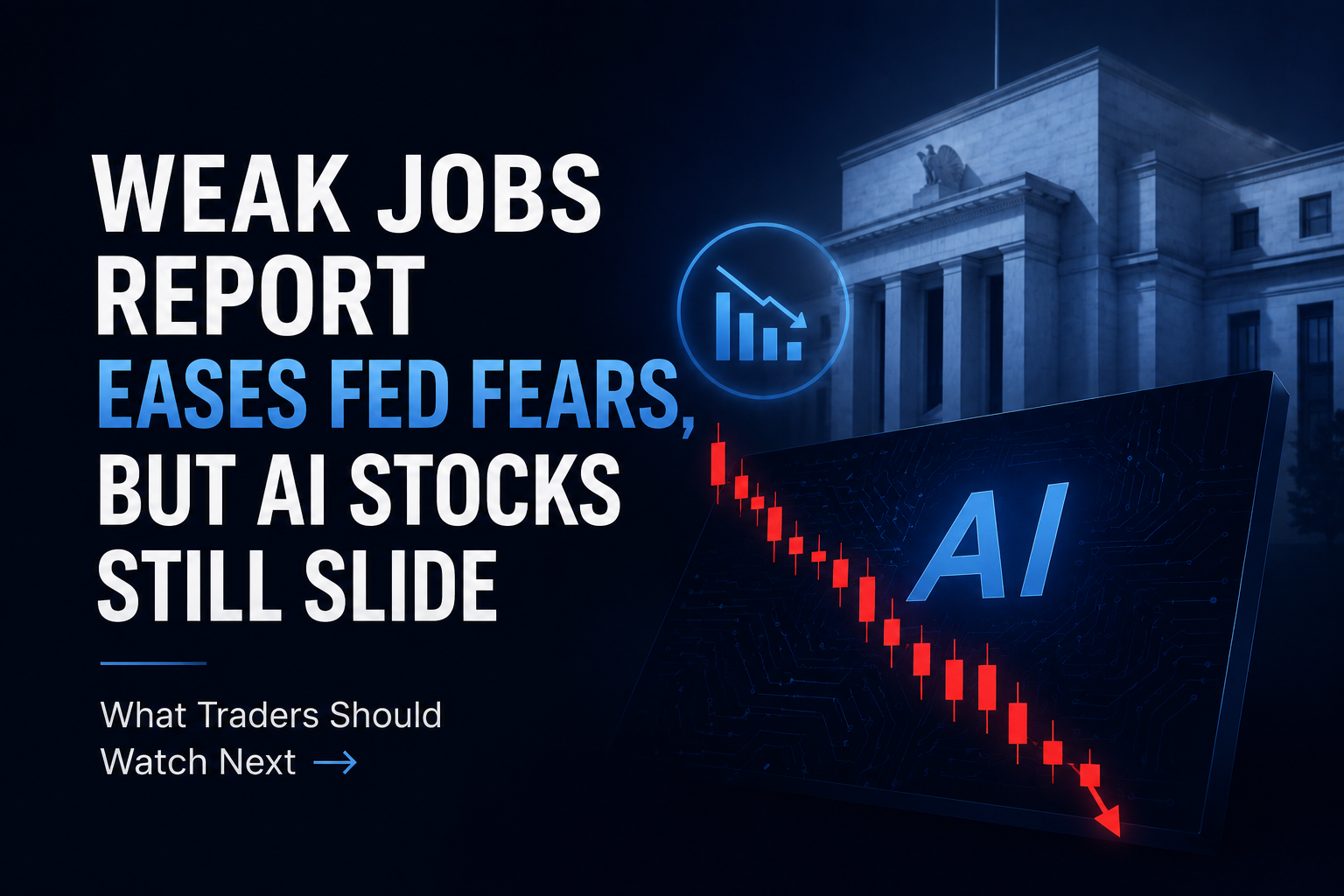
Weak Jobs Report Eases Fed Fears, But AI Stocks Still Slide: What Traders Should Watch Next
The U.S. June jobs report signaled a clear economic slowdown, missing expectations and lowering Federal Reserve rate hike fears. Despite lower Treasury yields, AI and tech stocks slid, proving that ma

OpenAI Revenue Gap: Why Is the Latest Figure $20 Billion Lower?
OpenAI’s reported annualized revenue is $20 billion below earlier headlines. Here is what caused the gap and why it matters for its valuation.

Related Articles
View More
What Is Concrete Crypto (CT)? CT Coin Tokenomics, Airdrop and How to Buy on MEXC
The Concrete crypto project runs on one simple idea: make a single deposit, and let curated strategies put it to work.Built by Blueprint Finance, Concrete runs ERC-4626 vaults that spread each deposit

What Is Anonymous Cat (ZCAT)? The Solana Meme Coin Paying ZEC
Most meme coins on Solana trade against SOL or a stablecoin.Anonymous Cat (ZCAT) trades against Zcash, and that single design choice defines the entire token.ZCAT is a Solana meme coin built on the Zc

What Is HAJIMI? Meaning, Contract Address, and How to Buy
哈基米 (HAJIMI) is a meme coin on BNB Chain built around one of the most widely shared cat memes in Chinese internet culture.The token has no whitepaper, no named founding team, and no technical roadmap.