

MEXC Card Fees and Limits: Global Card and MEXC Card (APAC) Compared
Many crypto card pages lead with the cashback number.
The fee page is where you find out what the card actually costs to use.
From August 31, 2026, MEXC offers two Visa cards under its own name on the same landing page.
They cost the same at home, but not abroad — and their daily spending limits are twenty times apart.
Key Takeaways
- The MEXC Global Card charges a 1% transaction fee; the MEXC Card (APAC) charges a 1% crypto conversion fee instead.
- On purchases in USD, the two cards cost exactly the same once the Global Card's 0% promotion ends on September 30, 2026.
- On non-USD purchases, the Global Card adds no markup to the Visa exchange rate, while the MEXC Card (APAC) adds a 1% cross-border fee.
- The Global Card's 1% transaction fee is waived from August 31 through September 30, 2026.
- Annual, top-up, inactivity, and termination fees are all zero on both cards.
- The Global Card allows 1,000,000 USD in spending per day, while the MEXC Card (APAC) allows 50,000.
Two MEXC Cards, One Fee Page
The MEXC Global Card is a Visa Platinum virtual card that MEXC launches on August 31, 2026.
It joins two cards MEXC already offers: the MEXC Card (APAC), available in selected Asia-Pacific markets, and the MEXC × ether.fi co-branded card.
The Global Card is a separate product, not a new version of the MEXC Card (APAC).
Both stay available, and each person can generally hold one card of each type.
The Global Card works with Apple Pay and Google Pay, while the MEXC Card (APAC) works with Google Pay.
The co-branded card runs on a different program and is not covered here.
A list of restricted countries applies to card applications, so check the application page for your region before you start.
MEXC Card Fees at a Glance
The two cards charge the same amount at home and different amounts abroad.
Each charges a single 1% under a different label, and only one of them adds a cross-border fee.
- Card issuance fee — 0 on both cards; the Global Card's standard USD 20 fee is waived for a limited time (as of August 2026).
- Annual fee — 0 on both cards.
- Top-up fee — 0 on both cards.
- Transaction fee — 1% on the Global Card, waived from August 31 through September 30, 2026; 0% on the MEXC Card (APAC).
- Crypto conversion fee — 0% on the Global Card; 1% on the MEXC Card (APAC), applied when USDT converts to fiat for a purchase.
- Foreign exchange fee — the Visa exchange rate with no markup on the Global Card; the Visa exchange rate plus a 1% cross-border fee on the MEXC Card (APAC).
- Inactivity fee — none on either card.
- Termination fee — none on either card.
Every line above is zero or a single stated percentage.
That matches the full fee schedule MEXC publishes for these two cards.
Refunds after settlement are the one edge case with a fee of their own, covered further down.
The MEXC Card Fee Is 1% — a Fee, Not a Spread
Each MEXC card charges exactly one 1% fee on a purchase.
The Global Card labels it a transaction fee, calculated on the value of each purchase.
The MEXC Card (APAC) labels it a crypto conversion fee, charged when the USDT in your account converts to fiat to complete the payment.
Different labels, same result at home: a 100 USD purchase deducts 101 USDT on either card.
Either way, it is a stated fee rather than a markup folded into the exchange rate, which matters because a stated fee is one you can check against your own transaction record afterward.
On the Global Card, the 1% is waived from the August 31, 2026 launch through September 30, 2026.
When the fee applies, it is added on the MEXC side, so the amount taken from your Fiat account is slightly higher than the merchant's price.
Visa's Exchange Rate Spread — and Who Charges It
Both MEXC cards are denominated in USD.
When you spend in another currency, Visa handles the conversion.
Visa's rate already contains Visa's own spread, typically around 0.1% to 0.3% depending on the currency pair.
Spending in Singapore dollars, for example, typically sits inside that range.
What each card adds on top of Visa's rate is where the two differ.
The Global Card adds nothing.
The MEXC Card (APAC) adds a 1% cross-border foreign exchange fee on non-USD purchases.
If you pay in USD, Visa has nothing to convert, and no cross-border fee applies on either card.
When the Terminal Asks, Choose the Local Currency
The cost of any card purchase abroad is set in three places, by three different parties.
The card issuer sets its own fees, and the payment network sets the conversion rate and the spread inside it.
The third one is set at the counter, by you.
That third one has a name: dynamic currency conversion.
It is what happens when a payment terminal asks whether you want to be charged in US dollars instead of the local currency.
If you accept, the merchant's payment processor picks the exchange rate rather than Visa, and that rate is usually the worse of the two.
Choosing the local currency keeps the conversion where it belongs, on Visa's side, at Visa's published rate.
Of the three layers, this is the only one you decide in the moment.
The other two are already fixed before you tap.
What a $100 Purchase Actually Costs — at Home and Abroad
The two examples below follow the structure of MEXC's own fee examples, taking the Visa exchange rate as given.
- A 100 USD purchase at a USD merchant — 101 USDT deducted on either card, and 100 USDT flat on the Global Card during the launch promotion.
- A 100 EUR purchase abroad, assuming 1 EUR ≈ 1.08 USD at Visa's rate — about 109.08 USDT on the Global Card, or 108.00 during the promotion, and about 110.17 USDT on the MEXC Card (APAC).
The gap abroad is the APAC card's 1% cross-border fee, plus its conversion fee applying to the grossed-up amount.
The euro rate here is an assumption for illustration, not a quote, and your actual figure moves with the currency.
One timing note: the amount shown at authorization uses an estimated rate, and the final charge settles at the exchange rate on the settlement date, usually within one to three business days.
MEXC Card Spending Limits
- Per transaction — 80,000 USD on the Global Card, 50,000 USD on the MEXC Card (APAC).
- Per day — 1,000,000 USD on the Global Card, 50,000 USD on the MEXC Card (APAC).
- Per year — 1,000,000 USD on the MEXC Card (APAC); MEXC lists no annual limit for the Global Card.
- Transactions per day — 50 on the MEXC Card (APAC); no listed limit for the Global Card.
- Transactions per year — 1,040 on the MEXC Card (APAC); no listed limit for the Global Card.
No monthly cap appears in MEXC's published limits for either card.
One comparison does most of the work here.
The Global Card's daily ceiling and the MEXC Card (APAC)'s annual ceiling are the same number: 1,000,000 USD.
Put differently, a Global Card holder can spend in a single day what an APAC cardholder can spend in a year.
The APAC card also caps transaction count at 1,040 per year, which works out to about twenty purchases a week.
For ordinary daily spending neither ceiling comes close to binding.
For travel bookings, tuition, or equipment purchases, the gap starts to matter.
MEXC Card Inactivity Fee, Annual Fee, Top-Up Fee: All Zero
Four fees are zero on both cards, and a fifth is waived for a limited time.
There is no annual fee.
There is no fee to move USDT into your Fiat account to fund the card.
There is no inactivity fee, so leaving either card unused costs you nothing and draws down no balance while it sits idle.
There is no termination fee if you ever decide to close the card.
Card issuance is also free for a limited time: the Global Card's standard USD 20 issuance fee is waived as of August 2026, and the MEXC Card (APAC) lists its issuance fee at zero.
How Cashback Interacts With Fees
Cashback and fees are calculated separately.
Cashback is based on your monthly spending amount, so the fees above do not shrink what you earn back.
Your rate runs from 4% to 10% depending on your membership tier, and each tier carries a monthly cap.
Cashback is credited only after a transaction has settled, and is distributed by the 15th day of the following month.
Refunded and reversed transactions are the exception.
They do not count toward your tier, and any cashback already paid on them is taken back.
Some merchant categories do not earn cashback at all, and MEXC publishes a list of the excluded category codes.
One thing to keep in mind: cashback rates, caps, and the 7% APR available through the MEXC Card exclusive Earn product are campaign benefits.
MEXC states these apply during the campaign period and may be adjusted or ended afterward.
Refund and Dispute Fees: The Two Edge Cases
Refunds are free on either card as long as the transaction has not yet settled.
After settlement, the two cards differ.
The MEXC Card (APAC) applies a 1% foreign exchange fee to refunds of non-USD transactions.
The Global Card has no standard refund fee, though a USD 0.50 charge per refund can apply if your refund rate is excessively high.
Disputes are free to file, but MEXC may charge a review fee if a dispute is rejected for incomplete information or insufficient evidence.
Neither of these touches ordinary spending — they only exist at the edges.
What Makes Up the Total Cost of Any Crypto Card
A crypto card's cost is never one number.
It is assembled from separate layers, and different cards charge on different ones.
- Issuance — a one-time charge for creating the card.
- Maintenance — an annual or monthly charge for holding it.
- Top-up — a charge for moving funds onto the card.
- Issuer fee — the card provider's own charge on each purchase, sometimes stated as a fee, sometimes built into the rate it converts at.
- Network conversion — the spread Visa or another network applies when the purchase currency differs from the card's.
- Dynamic currency conversion — the rate a merchant's processor uses if you let the terminal charge you in your home currency, as described above.
- Inactivity — a recurring charge some cards apply after a period without transactions.
A card can advertise no transaction fee and still cost you money on the top-up layer, on the conversion layer, or at the terminal.
So the question worth asking is not how low the headline number is.
It is whether every layer is published as a figure you can check against your own transaction record afterward.
The Launch Promotion and What Comes After
MEXC will run a 0% transaction fee promotion on the Global Card from its August 31, 2026 launch through September 30, 2026.
During that window, the Global Card's 1% transaction fee is waived.
Visa's currency conversion still applies, because MEXC does not control it and cannot waive it.
The Global Card's standard USD 20 issuance fee is also waived for a limited time, on a separate clock from the September 30 date.
From October 1, 2026, the 1% transaction fee applies to Global Card purchases as normal.
Nothing else on this page changes on that date.
Frequently Asked Questions
Is there a fee to apply for or activate the MEXC Global Card?
Not right now — the Global Card's standard USD 20 issuance fee is waived for a limited time as of August 2026, and the MEXC Card (APAC) lists card issuance at zero.
Is there an inactivity fee?
No — neither MEXC card charges an inactivity fee, so an unused card costs nothing to hold.
Is the 1% spending fee charged during the launch promotion?
No — the Global Card's 1% transaction fee is waived from August 31 through September 30, 2026.
Do USD purchases have any fee?
Yes, one: a 100 USD purchase deducts 101 USDT on either card — the Global Card's 1% transaction fee, waived through September 30, 2026, or the APAC card's 1% crypto conversion fee — with no Visa conversion and no cross-border fee involved.
What are the spending limits?
The Global Card allows 80,000 USD per transaction and 1,000,000 USD per day, while the MEXC Card (APAC) allows 50,000 USD per transaction and per day, with 1,000,000 USD and 1,040 transactions per year.
Does MEXC add a markup to the exchange rate?
The Global Card adds no markup to the Visa exchange rate, while the MEXC Card (APAC) adds a 1% cross-border fee on non-USD purchases.
What is Visa's FX fee and who charges it?
Visa's rate typically carries a spread of roughly 0.1% to 0.3% depending on the currency, and Visa charges it, not MEXC.
Do fees reduce my cashback?
No — cashback is calculated on your spending amount, independently of any fee.
Can I hold both MEXC cards at the same time?
Generally you can hold one card of each type, and the two cards share a single cashback allocation rather than earning it twice.
Conclusion
The MEXC Card fee picture splits cleanly in two.
At home, the two cards cost exactly the same after September 30, 2026: one stated 1%, and nothing else.
Abroad, the Global Card is the cheaper card, because it adds no markup to the Visa exchange rate while the MEXC Card (APAC) adds a 1% cross-border fee.
Annual, top-up, inactivity, and termination fees are zero on both, and issuance is free for a limited time.
So the choice comes down to where you live, which wallet you use, how often you spend outside USD, and how much you need to move in a single day.
More MEXC Card Guides
- What Is the MEXC Global Card? Cashback, 7% APR, Fees, Limits and How to Apply
- MEXC Card Cashback: 4% to 10% Back in USDT — Here's How It Works
- How to Use the MEXC Card: Pay With Crypto Anywhere Visa Is Accepted
- Best Crypto Card: Full Comparison of MEXC, Bybit, Bitget, Binance, Crypto.com, OKX & Krak
- Is the MEXC Card the Best Crypto Card for you? A Honest Decision Guide
- MEXC Global Card vs MEXC Card (APAC) vs MEXC Ether.Fi Card: Which Crypto Visa Card Is Right for You?
- MEXC Card: Supported Countries, Restricted Regions & What KYC Actually Requires
- Earn 7% APR With the MEXC Card: Crypto Card Benefits, Cashback & More
- What Is a Crypto Card? How It Works, Types, and How to Choose One

Popular Articles
View More
Oura Competitors: Samsung, Apple and the Smart Ring Market
Oura's competitors fall into three groups, according to its IPO prospectus: smartwatch makers such as Apple, Google and Samsung; fitness wearables such as Garmin, Coros and Whoop; and software-only

Is Oura Profitable? Revenue, Business Model and Valuation
Yes, Oura is profitable on a net income basis. Its IPO prospectus shows net income of $60.8 million on revenue of $1.21 billion in the nine months to June 30, 2026. The $924.3 million loss in some

Bitget Review 2026: 3.8 Out of 5, the Deepest Copy-Trading Shelf, and a Japan Exit With Three Dates You Need
Bitget scores 3.8 out of 5 on our six-dimension scorecard as of 25 September 2026, leading on derivatives, holding a provisional 3.5 on security after the hot-wallet incident of about $351.6 million

Trending News
View More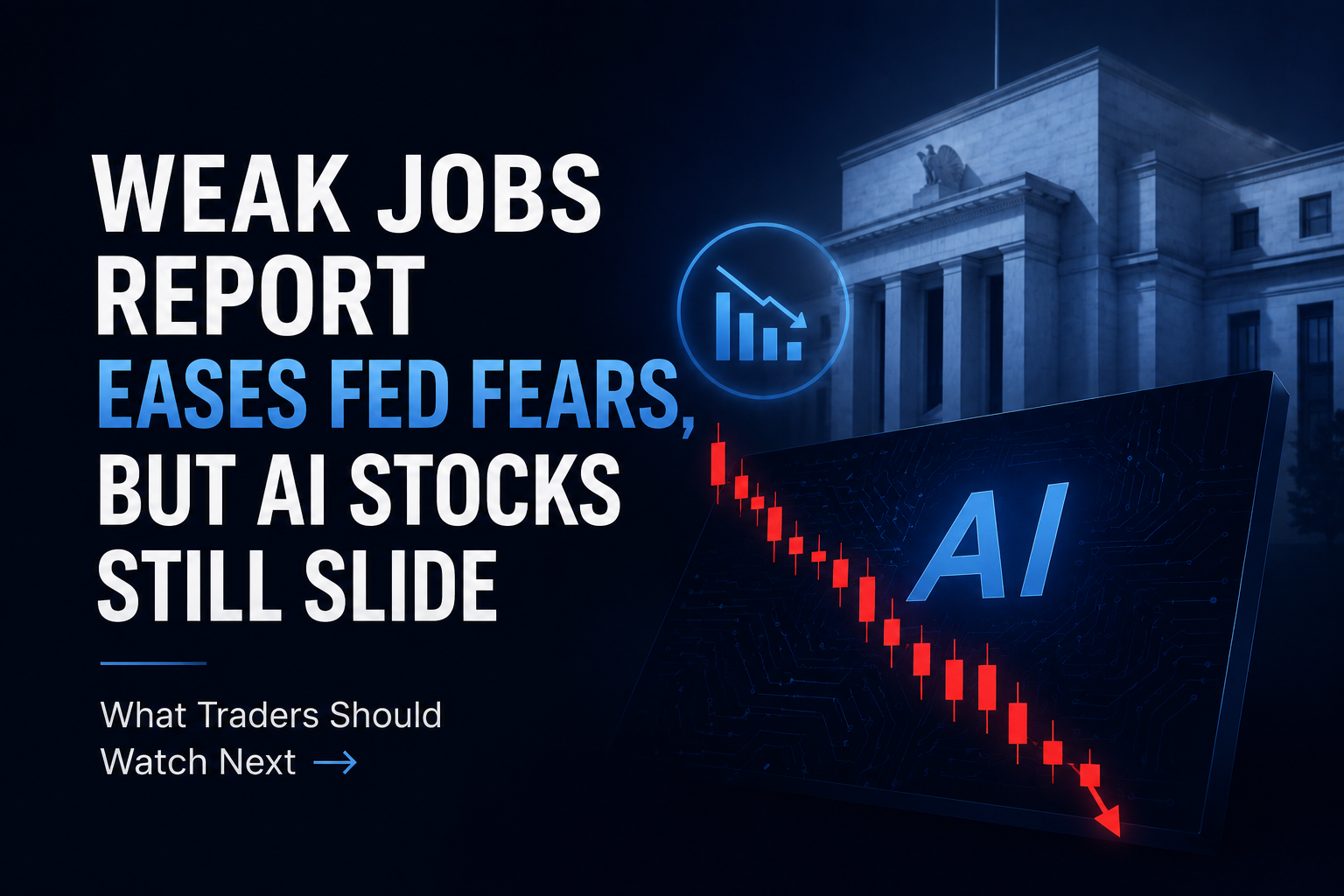
Weak Jobs Report Eases Fed Fears, But AI Stocks Still Slide: What Traders Should Watch Next
The U.S. June jobs report signaled a clear economic slowdown, missing expectations and lowering Federal Reserve rate hike fears. Despite lower Treasury yields, AI and tech stocks slid, proving that ma

OpenAI Revenue Gap: Why Is the Latest Figure $20 Billion Lower?
OpenAI’s reported annualized revenue is $20 billion below earlier headlines. Here is what caused the gap and why it matters for its valuation.

Related Articles
View More
PONS, AIINU, USELESS: What's Driving This Meme Rally?
MEXC Meme Trading Contest The competition for the three-tier prize pool continues to heat up. But rather than staring at the trading volume numbers on the leaderboard, a more fundamental question is w

MEXC Meme Token Trading Battle Guide: How to Get the Triple-tier Prize Pool and How to Charge the Leaderboard
On September 18th, 2026 at 16:00 (UTC + 8), the MEXC Meme Token Trading Contest officially kicked off. The total prize pool is 200,000 USDT , and the event will last until September 27th at 16:00

MEXC Card Security Guide: 3DS Codes, Freezing Your Card, Risk Controls and Declined Payments
A card that exists only inside an app and a phone wallet raises a different set of questions from a piece of plastic in your pocket.The MEXC Global Card is MEXC's second Visa card, launched on August

How to Pay for Subscriptions With Crypto? Using the MEXC Global Card for Streaming, AI Tools and SaaS
Add up what leaves your account each month without you touching it: a streaming plan, an AI assistant, cloud storage, a design tool you keep meaning to cancel.When the money you hold is USDT, paying t






