Ripple Payments has gone live in 60+ markets and has handled more than $100 billion in transaction volume on fiat and stablecoin rails. The platform merges managedRipple Payments has gone live in 60+ markets and has handled more than $100 billion in transaction volume on fiat and stablecoin rails. The platform merges managed

Ripple Payments Goes Live in 60+ Markets, Surpasses $100B in Processed Volume

2026/03/04 20:42
3분 읽기
이 콘텐츠에 대한 의견이나 우려 사항이 있으시면 crypto.news@mexc.com으로 연락주시기 바랍니다
  • Ripple Payments has gone live in 60+ markets and has handled more than $100 billion in transaction volume on fiat and stablecoin rails.
  • The platform merges managed custody and state-of-the-art liquidity tools into a single regulated model.

Ripple has extended Ripple Payments to a full-stack fiat and stablecoin infrastructure as adoption increases. The company announced that its payment solution is now available in over 60 markets and has already processed over $100 billion in transaction volume. The growth brings new custody, liquidity, and single-collection services into its operations framework.

Ripple Payments helps companies receive, store, and transfer funds on both traditional and digital rails. The site incorporates controlled custody, named virtual accounts, wallet provisioning, computerized conversion, and settlement applications. Ripple stated that the system removes the need for institutions to coordinate multiple vendors across different regions.

The company’s recent acquisitions of Palisade and Rail contributed to the integration of custody and treasury automation with virtual account infrastructure. Customers can now open and control wallets at scale, manage transaction authorization, and sweep balances into operational accounts through one interface. The system also supports fiat and stablecoin pay-ins with automatic reconciliation.

This week, Ripple Prime was registered in the National Securities Clearing Corporation MPIDs directory, and earlier in February, it expanded collaboration with UAE-based Zand to explore stablecoin custody and liquidity initiatives on the XRP Ledger.

Ripple Enterprise Adoption Expands Across Global Markets

According to Ripple, fintech companies and banks are increasingly turning to stablecoins to overcome cross-border liquidity and settlement inefficiencies. Industry statistics quoted by the company reveal that over $33 trillion was processed in stablecoin transactions last year; stablecoins also account for a large portion of on-chain transactions. As adoption continues, Ripple Payments has registered over $100 billion in processed volume.

Several financial institutions have incorporated Ripple infrastructure in their payment systems. One of them, Alfred, facilitates cross-border stablecoin-to-fiat transfers in the United States, Latin America, and China through the platform. AltPayNet, a licensed payment systems operator in the Philippines, uses Ripple to support currencies like EUR, AED, CAD, and THB.

Swiss lender AMINA Bank uses Ripple Payments to provide near-real-time cross-border transactions between institutional clients. Banco Genial in Brazil has also implemented the platform for outbound international payouts. In addition, CambioReal incorporated the Ripple settlement layer into its payment network, which serves businesses and individuals along various corridors.

Elsewhere, Corpay uses managed custody and liquidity products to finance and redeem positions in Asia-Pacific in RLUSD, while MassPay uses Ripple Payments for payouts to over 100 countries.

Ripple says it has received over 75 global licenses from local, national and regional watchdogs, allowing it to operate within regulated financial frameworks and offering protection for users. 

The company confirmed last week that it will continue investment in the XRP Ledger ecosystem, including a fintech builder program and the launch of the XAO DAO. 

The XRP price has soared, rebounding from a low of $1.34. At press time, it was trading at $1.41, a 4.90% jump today.

]]>
면책 조항: 본 사이트에 재게시된 글들은 공개 플랫폼에서 가져온 것으로 정보 제공 목적으로만 제공됩니다. 이는 반드시 MEXC의 견해를 반영하는 것은 아닙니다. 모든 권리는 원저자에게 있습니다. 제3자의 권리를 침해하는 콘텐츠가 있다고 판단될 경우, crypto.news@mexc.com으로 연락하여 삭제 요청을 해주시기 바랍니다. MEXC는 콘텐츠의 정확성, 완전성 또는 시의적절성에 대해 어떠한 보증도 하지 않으며, 제공된 정보에 기반하여 취해진 어떠한 조치에 대해서도 책임을 지지 않습니다. 본 콘텐츠는 금융, 법률 또는 기타 전문적인 조언을 구성하지 않으며, MEXC의 추천이나 보증으로 간주되어서는 안 됩니다.

추천 콘텐츠

Vitalik Buterin Admits Ethereum Hasn’t Meaningfully Improved People’s Lives
Vitalik Buterin Admits Ethereum Hasn’t Meaningfully Improved People’s Lives

The post Vitalik Buterin Admits Ethereum Hasn’t Meaningfully Improved People’s Lives appeared first on Coinpedia Fintech News In the recent downtrend, as crypto
공유하기
CoinPedia2026/03/05 12:41
Moove.xyz Launches KYC-Free Cross-Chain Crypto Payment Platform
Moove.xyz Launches KYC-Free Cross-Chain Crypto Payment Platform

moove.xyz, a global Web3 fintech platform focused on enabling seamless cryptocurrency transactions, has officially introduced its next-generation permissionless
공유하기
CoinTrust2026/03/05 12:00
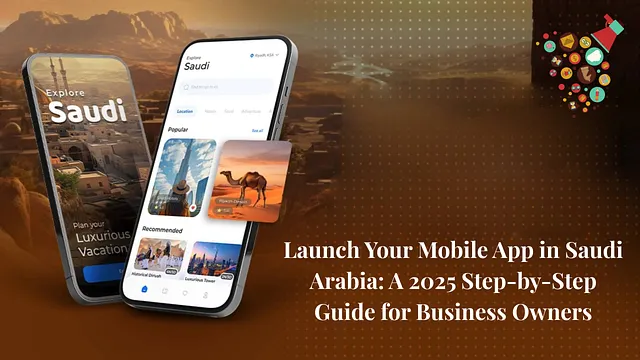
From Idea to App Store: The Complete Guide to Mobile App Development in Saudi Arabia

From Idea to App Store: The Complete Guide to Mobile App Development in Saudi Arabia

Saudi Arabia is at the forefront of digital transformation. With Vision 2030 driving innovation and a rapidly growing population of tech-savvy users, mobile apps have become a core driver of business growth in the Kingdom. From e-commerce and fintech to healthcare, logistics, and on-demand services, Saudi businesses are embracing mobile apps to connect with customers and scale faster. But how do you take a mobile app idea and turn it into a successful launch on the App Store or Google Play? This guide breaks down the complete mobile app development process in Saudi Arabia — step by step. Step 1: Validate Your App Idea for the Saudi Market Before you start building, ask: What problem does my app solve for Saudi users? Is there a cultural or market gap my app can fill? How do local competitors approach the same challenge? For example, apps related to digital payments, e-learning, delivery services, and healthcare are in high demand across Saudi Arabia. Conducting market research and aligning your app idea with local user behavior is critical. Step 2: Plan Features with Local Needs in Mind Your app should start with an MVP (Minimum Viable Product) — a core version that solves the main problem. Later, you can scale with advanced features. In Saudi Arabia, consider adding: Arabic language support (essential for user adoption) Integration with local payment gateways like STC Pay, Mada, or Apple Pay Regulatory compliance (especially for fintech and health apps) Localization for user preferences (Hijri calendar, cultural UI elements) Step 3: Select the Right Development Approach You can choose: Native Apps (Swift for iOS, Kotlin for Android) — Great for scalability and performance. Cross-Platform Apps (Flutter, React Native) — Cost-effective for startups targeting both iOS and Android simultaneously. Hybrid Apps — Suitable for simpler apps with limited features. For Saudi startups and enterprises, cross-platform development is often preferred to reach a wider audience quickly and efficiently. Step 4: Design With a Local Touch The design must balance global usability standards with local cultural relevance. UI (User Interface): Clean, modern visuals that align with Saudi branding. UX (User Experience): Simple navigation, clear Arabic text support, and intuitive flows. Wireframing & Prototyping: Test early with Saudi users to ensure adoption. A user-friendly design is one of the top reasons apps succeed in the Kingdom’s competitive market. Step 5: Develop Your Mobile App Once the design is ready, the coding begins. Saudi app development companies often follow Agile methodology, ensuring flexibility and faster delivery. Front-End Development: Interface and user interactions. Back-End Development: Databases, servers, and APIs. Integration: Secure connections between front-end and back-end. Strong collaboration between developers, designers, and business analysts ensures your app aligns with Saudi market needs. Step 6: Testing Across Devices and Networks Saudi users rely on different devices and network speeds. That’s why rigorous testing is critical: Functionality Testing: Features work as expected. Performance Testing: The app runs smoothly on both 4G and 5G networks. Localization Testing: Arabic text displays correctly, without alignment issues. Security Testing: Data protection compliance with Saudi cybersecurity standards. Step 7: App Store & Google Play Launch in Saudi Arabia To publish your app: Apple App Store (iOS): Requires an Apple Developer account and strict guideline compliance. Google Play Store (Android): Faster approval but still requires detailed app info. You’ll also need metadata in both English and Arabic — titles, descriptions, and screenshots — to maximize visibility among Saudi users. Step 8: Market Your App in Saudi Arabia Launching an app is only the beginning. You need a marketing strategy tailored to the Kingdom: App Store Optimization (ASO): Use Arabic and English keywords. Social Media Campaigns: Leverage platforms like Snapchat, Twitter (X), and Instagram, which are highly popular in Saudi Arabia. Influencer Marketing: Collaborate with Saudi influencers for early traction. Paid Ads: Google Ads and Saudi-focused Facebook/Instagram ads. Partnerships: Collaborate with local businesses to reach a wider audience. Step 9: Gather Feedback and Optimize Once your app is live, monitor: User reviews on app stores Analytics on engagement, retention, and churn rates Suggestions from Saudi users for culturally relevant features Continuous updates and improvements are vital to stay competitive. Step 10: Scale With Advanced Features Once your MVP gains traction, you can expand with advanced features such as: AI and machine learning for personalization Blockchain-based payments for fintech apps AR/VR features for retail and gaming apps IoT integration for smart home and mobility solutions Saudi Arabia’s digital ecosystem is growing rapidly — apps that adapt quickly will thrive. Conclusion Mobile app development in Saudi Arabia is not just about building an app — it’s about aligning with Vision 2030, cultural needs, and user expectations. By following a clear process — from idea validation to launch and beyond — you can transform your concept into a profitable digital product. Whether you’re a startup or an enterprise in Saudi Arabia, the opportunity is massive. With the right strategy, you can move from idea to App Store and create an app that truly resonates with Saudi users. From Idea to App Store: The Complete Guide to Mobile App Development in Saudi Arabia was originally published in Coinmonks on Medium, where people are continuing the conversation by highlighting and responding to this story
공유하기
Medium2025/09/18 14:46