

How an Oil Shock Could Trigger Bitcoin’s Next Liquidity Selloff
Rising tensions around the Strait of Hormuz are once again forcing crypto traders to look beyond blockchain fundamentals and toward global macro risk.
Roughly 20% of the world’s oil supply passes daily through the narrow maritime corridor between Iran and Oman. While no full closure has been confirmed, escalating military activity in the region has already pushed war-risk insurance premiums sharply higher.
Oil, Yields, and $2 Trillion in Liquidity: Why Crypto Could Be First to Crack
Premiums on oil tankers have surged more than 50%. At the same time, insurance costs for a $100 million vessel jumped from approximately $250,000 to $375,000 per voyage.
The spike in shipping risk alone, even without a formal blockade, has been enough to raise fears of supply disruption. Several analysts have suggested that crude oil could surge to $120–$130 per barrel under a prolonged disruption scenario.
For crypto markets, the implications go far beyond energy.
The Inflation-to-Liquidity Transmission
An oil spike of that magnitude would likely reignite inflation expectations just as markets have been positioning for policy easing.
Higher crude prices feed directly into transportation, manufacturing, and consumer goods costs, putting upward pressure on CPI data globally.
If inflation expectations rise, central banks, including the US Federal Reserve, may be forced to delay or scale back anticipated rate cuts. That repricing would likely push Treasury yields higher.
And yields are where crypto risk begins.
Rising yields tighten global liquidity conditions. When government bonds offer increasingly attractive returns, capital often rotates away from speculative assets. Trillions in rate-sensitive capital across bonds and equities could be repriced if yields rise materially amid renewed inflation fears.
Bitcoin has historically traded as a high-beta liquidity asset during tightening cycles. During prior periods of rising real yields, digital assets have tended to underperform as leverage unwinds and funding costs climb.
In other words, crypto does not need a geopolitical catastrophe to fall. It only needs liquidity to tighten.
Social Media Warnings Amplify Volatility
Several prominent crypto commentators have warned of an imminent spike in volatility. Posts from accounts such as DeFiTracer and 0xNobler framed the Strait of Hormuz situation as a potential macro “turning point,” outlining a chain reaction:
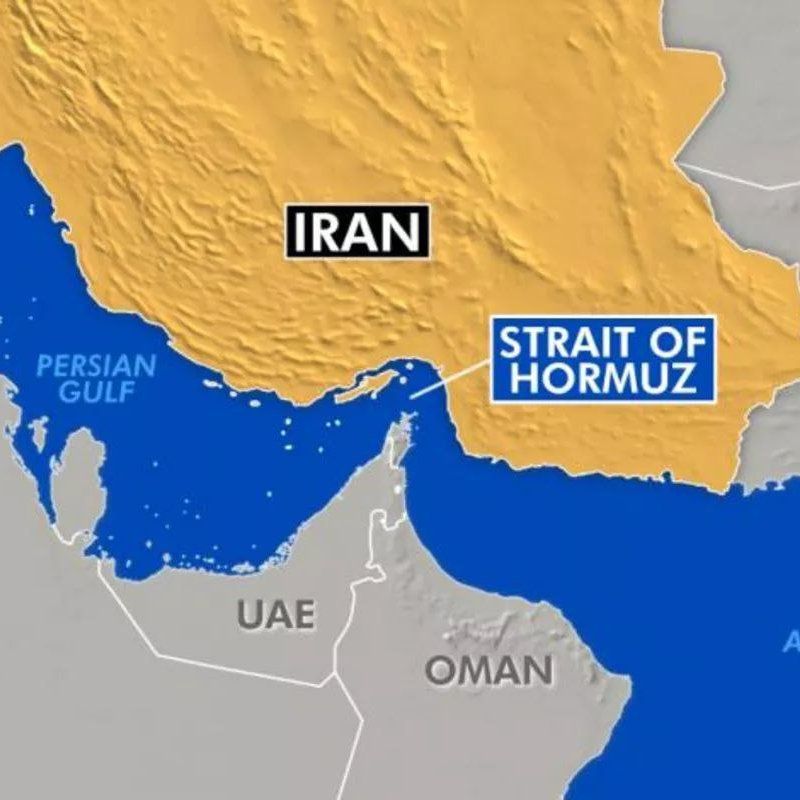 The Strait of Hormuz between Iran and Oman represents a critical chokepoint for global energy supplies (CryptoRover)
Meanwhile, Merlijn the Trader introduced a secondary risk. The analyst cites a potential hashrate shock if energy infrastructure in Iran, reportedly a hub for low-cost Bitcoin mining, were disrupted.
While speculative, such narratives add to broader uncertainty around supply dynamics and network stability.
Still, not all political voices share the alarm. President Donald Trump publicly commented that he is “not concerned” about the Strait of Hormuz situation.
Markets, however, tend to respond more directly to bond yields than to political reassurance.
Crypto’s Deleveraging Risk
The structure of crypto derivatives markets adds another layer of fragility. Leverage tends to build during periods of calm, and sudden macro shocks can trigger cascading liquidations.
If Treasury yields spike alongside oil, leveraged positions across Bitcoin and altcoins could unwind quickly.
High-risk assets, including small-cap equities, high-growth tech stocks, and cryptocurrencies, are typically the first to feel pressure when liquidity tightens.
Unlike traditional markets, crypto trades 24/7, meaning reactions can be immediate and amplified.
It explains why traders are already watching crude futures and bond markets as leading indicators. A temporary de-escalation could stabilize oil and restore risk appetite.
A sustained disruption, however, could transform what begins as an energy shock into a broader liquidity event.
The coming sessions, starting Monday, may determine whether this remains geopolitical noise or becomes crypto’s next macro-driven selloff.
추천 콘텐츠

Qatar pushes tokenization with launch of QCD money market fund

Siren Token Sheds 16.4% After 54% Retreat From All-Time High
