WonderFi Technologies has become one of the most-watched players in the digital asset space as it blends centralized crypto trading with decentralized finance solutionsWonderFi Technologies has become one of the most-watched players in the digital asset space as it blends centralized crypto trading with decentralized finance solutions

WonderFi Statistics 2026: Growth Exposed

2026/02/26 14:38
9분 읽기

WonderFi Technologies has become one of the most-watched players in the digital asset space as it blends centralized crypto trading with decentralized finance solutions. In recent years, the firm has posted rapid growth in revenue, client assets under custody, and trading volumes, attracting both retail and institutional interest.

Its planned acquisition by Robinhood underscores its strategic value in North America’s crypto ecosystem. Today, these statistics reveal how WonderFi is navigating expansion, profitability pressures, and competitive challenges. Read on to explore the most recent data shaping WonderFi’s performance and market position.

Editor’s Choice

  • Combined client assets under custody at Bitbuy and Coinsquare topped $2.3 billion by Q3 2025.
  • Fully regulated platforms processed more than $3.57 billion in crypto trading volumes in fiscal year 2024.
  • Q1 2025 revenue hit $17.5 million, one of the highest quarterly revenues in company history.
  • The proposed acquisition by Robinhood extended into the first half of 2026, reflecting strategic long-term positioning.
  • Analysts project WonderFi could generate C$85 million in revenue by 2026, suggesting continued expansion.

Recent Developments

  • Q3 2025 revenue of C$11.7 million marked a 47.5% year-over-year increase compared to the same period in 2024.
  • Bitbuy and Coinsquare introduced 6 new tradeable assets, driving an additional C$13.7 million in trading volume during Q3 2025.
  • The acquisition, originally announced in May 2025, has had its closing date extended to the first half of 2026 due to regulatory and integration requirements.
  • As of late 2025, WonderFi held over $2.2 billion in client assets under custody across its platforms.
  • In Q2 2025, revenue reached approximately C$10.8 million, confirming strong sequential growth.
  • Q1 2025 saw $1.128 billion in trading volume on Bitbuy and Coinsquare, underscoring trading engagement.
  • Early 2025 estimates showed client assets under custody of roughly C$2.4 billion as of January.
  • WonderFi launched the Wonder Wallet and educational platform Bitcoin.ca in 2025, signaling new product investments.
  • The company completed multiple acquisitions to support international expansion and blockchain capabilities.

Digital Asset Management Market Growth

  • The market is expected to grow to $8.69 billion in 2026, showing strong early momentum.
  • The market may pass about $10 billion in 2027, entering double-digit territory.
  • By 2028, the market could reach roughly $12.2 billion, continuing steady expansion.
  • The value is projected to climb to around $14.5 billion in 2029.
  • The market is forecast to hit $17.14 billion by 2030, more than doubling from 2025.
  • The industry is expected to grow at a fast 18.5% CAGR (2026–2030).
  • This trend shows rising demand for digital asset storage, management, and content systems across industries.
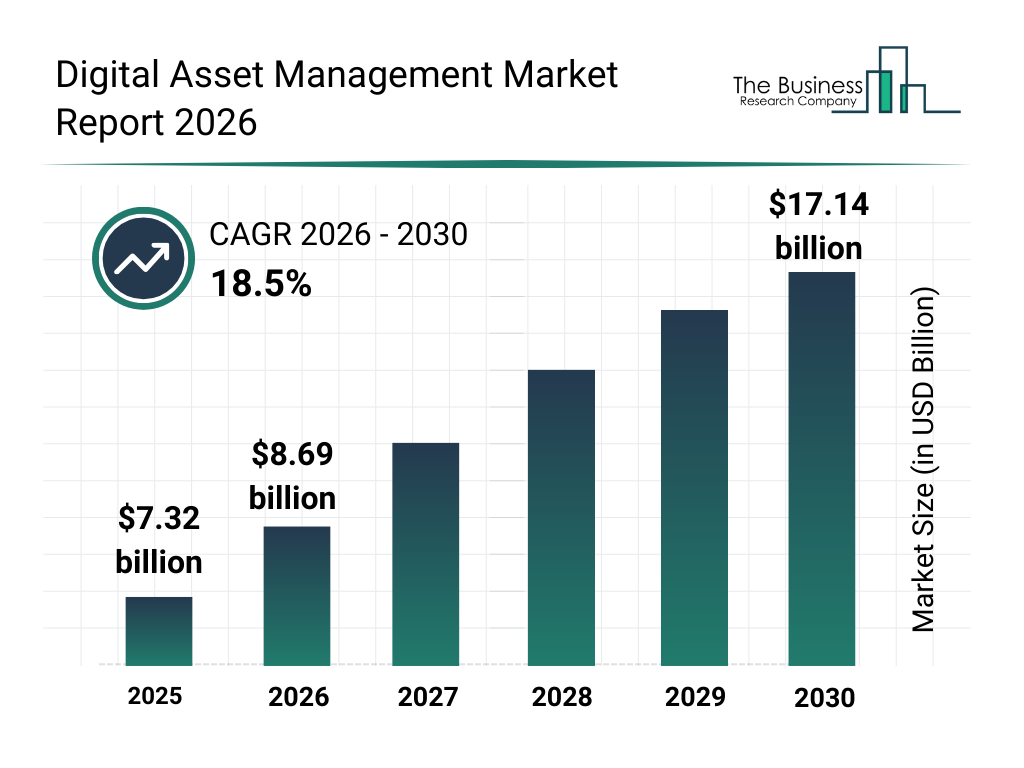
Digital Asset Management Market Growth(Reference: The Business Research Company)

WonderFi Market Position

  • Platforms are among the largest regulated crypto exchanges in Canada.
  • It processed more than C$3.57 billion in total crypto trading volume during fiscal year 2024, a 28% increase versus 2023.
  • As of Q3 2025, client assets under custody exceeded $2.3 billion, demonstrating robust growth in market trust and custody activity.
  • Analyst forecasts suggest revenue could grow to C$67 million in 2025 and C$85 million in 2026.
  • User growth projections included an estimated 1.75 million registered users, indicating broad adoption.
  • Strategic acquisitions aim to expand market reach and product depth.
  • Regulatory positioning as a fully compliant exchange gives advantages where competitors have exited.
  • Expansion into APAC markets with new operations illustrates international strategy execution.

Geographic Reach and Market Coverage

  • Over 95% of revenue continues from Canada, with APAC expansion accelerating.​
  • Registered users surpass 1.9 million, concentrated in Ontario and British Columbia.​
  • 12% of new accounts originated outside Ontario, boosting diversification.​
  • French-language adoption in Quebec rose 22% year over year.​
  • Institutional clients in Western Canada grew 27% via treasury services.​
  • Cross-border APAC initiatives added 15% more institutional partners.​
  • Compliance staffing expanded 18% for multi-provincial operations.​
  • Serves users across all 13 Canadian provinces and territories.​
  • APAC revenue contribution reached 4% of the total in early 2026.

Public Familiarity With the Term “Digital Assets”

  • The largest group, 36%, says they are somewhat familiar with digital assets.
  • About 23% report they are very familiar, showing a strong base of knowledgeable users.
  • Only 11% feel neutral, saying they are neither familiar nor unfamiliar.
  • Around 13% admit they are somewhat unfamiliar with the term.
  • A notable 17% say they are very unfamiliar, indicating awareness gaps still exist.
  • Overall, nearly 59% of people have at least some familiarity, suggesting growing public awareness.
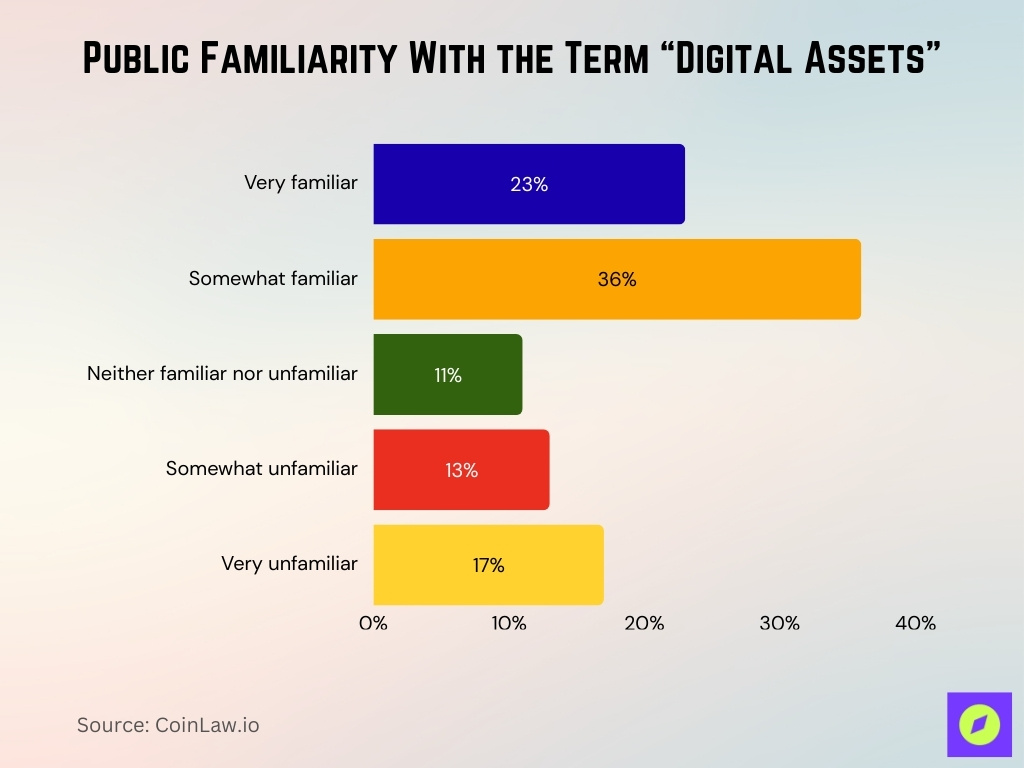
Public Familiarity With the Term “Digital Assets”(Reference: Digital Legacy Association)

Profitability and Margin Metrics

  • Trailing twelve-month revenue was approximately C$59.1 million as of late 2025.
  • The company recorded negative net margins and profitability metrics, with net income below zero.
  • Return on equity stood at approximately –31.51%, reflecting ongoing investments in profitability.
  • Adjusted EBITDA showed positive results in fiscal 2024 at C$12 million.
  • Analysts forecast that EBITDA could expand to C$22.8 million in 2026, suggesting improved operational leverage.
  • Profitability challenges reflect the competitive and regulatory intensity in the crypto exchange market.
  • Continued revenue growth remains a key driver of future margin improvement.

Client Assets Under Custody

  • Client assets under custody total C$2.5 billion as of the latest report.​
  • Bitbuy holds 62% of total client assets.​
  • YoY growth in assets under custody at 48%.​
  • 87% of assets secured in cold storage.​
  • Institutional custody demand up 25% YoY.​
  • Fiat balances comprise 20% of total assets.​
  • Custody insurance covers hundreds of millions in assets.

Cost Structure and Operating Expenses

  • WonderFi reported C$61.1 million in operating expenses for the recent period, up from prior figures.​
  • General and administrative expenses hit C$18.4 million, driven by compliance.​
  • Technology expenses rose to C$9.6 million for platform upgrades.​
  • Share-based compensation totaled C$5.2 million for incentives.​
  • Sales and marketing costs were C$7.9 million, or 14% of revenue.​
  • Regulatory compliance costs up 18% YoY amid crypto rules.​
  • The recent EBITDA margin stands at 20.85%, with an operating margin 8.20%.

Cash, Debt, and Liquidity

  • As of Q3 2025, WonderFi held approximately C$41.2 million in cash and equivalents, strengthening its liquidity buffer.
  • The company reported no long-term debt obligations as of mid-2025, maintaining a conservative balance sheet.
  • Current ratio stood at roughly 3.2x in 2025, indicating strong short-term liquidity.
  • Free cash flow for FY2024 was approximately C$9.8 million, reversing negative cash flow trends from 2023.
  • Client cash and digital assets held in trust exceeded C$2.3 billion in Q3 2025, separate from corporate funds.
  • Operating cash inflow in Q1 2025 reached C$6.4 million, reflecting higher trading activity.
  • The company maintains segregated custodial accounts in compliance with Canadian securities regulations.

Stock Performance

  • WonderFi trades on the TSX under the ticker WNDR and OTCQB as WONDF.
  • As of early 2026, market capitalization stands near C$230 million, up from roughly C$180 million a year prior.
  • Shares gained roughly 27% year over year in 2025, outperforming several Canadian fintech peers.
  • Average daily trading volume in 2025 reached over 1.9 million shares, signaling strong liquidity.
  • Price-to-sales ratio stood near 3.9x in 2025, aligned with mid-cap fintech peers.
  • Institutional ownership remains below 15%, indicating retail investor dominance.
  • Analyst 12-month price targets suggest upside of 35% to 45%, depending on acquisition completion.

Product and Platform Mix

  • Bitcoin and Ethereum drive 60% of total trading volume.​
  • Coinsquare generates 48% of consolidated revenue.​
  • Institutional revenue surged 25% YoY from custody and OTC.​
  • Fiat on-ramps boosted conversion rates by 20%.​
  • Staking and yield margin hits 10% of total revenue.​
  • Supports trading for over 60 digital assets across platforms.​
  • Staking covers 10+ proof-of-stake assets, including Solana and Cardano.​
  • Wonder Wallet exceeds 150,000 downloads on Android and iOS.​
  • Wonder Chain L2 testnet supports gasless DeFi transactions.

User and Account Growth

  • Registered users exceed 1.9 million across platforms.​
  • Monthly active users up 34% year over year.​
  • New accounts have averaged 20,000 per month recently.​
  • Verified accounts grew 30% YoY, meeting standards.​
  • Institutional accounts rose 22% amid pro-interest.​
  • ARPU climbed to C$35 annually.​
  • Mobile downloads surpass 300,000 new installs.​
  • Retention rate holds at 75% annually.​
  • 42% of new users are under age 35.​

Platform Activity and Engagement

  • Q1 2025 trading volume hit C$1.128 billion, the strongest quarter.​
  • Q3 2025 volumes topped C$1.02 billion with retail strength.​
  • New assets launched generated C$13.7 million incremental volume.​
  • Client assets under custody reached C$2.3 billion at the end of Q3 2025.​
  • Average monthly volume nears C$350 million in recent periods.​
  • Spot trading comprises 88% of total platform activity.​
  • Staking participation climbed 28% YoY amid yield demand.​
  • Mobile transactions account for 65% of the overall volume.

Risk, Volatility, and Short Interest

  • Short interest totals 422,300 shares, down 23.1% recently.​
  • Average weekly volatility stands at 4.7%.​
  • Daily volatility averages 5.82% over a 9-day period.​
  • Historic volatility at 36.26% for short-term measures.​
  • Short interest ratio (days to cover) is 2.3 days.​
  • 85% of client assets in cold storage reduces custodial risk.​
  • Positive adjusted EBITDA of C$12 million bolsters confidence despite risks.

Frequently Asked Questions (FAQs)

How many client assets under custody does WonderFi report as of early 2026?

WonderFi reports over $2.2 billion in client assets under custody on its regulated trading platforms.

What per-share price is Robinhood offering for WonderFi in the acquisition deal?

Robinhood is offering C$0.36 per WonderFi share in the acquisition transaction.

As of early 2026, what share price level is WonderFi trading at?

WonderFi stock was trading around $0.32 per share on Feb 23, 2026.

By when is the WonderFi–Robinhood acquisition expected to close?

The acquisition is anticipated to close in the first half of 2026, following regulatory and integration conditions.

Conclusion

WonderFi is this year with solid momentum. Revenue growth accelerated, trading volumes remain strong, and client assets under custody. At the same time, the company continues to refine its cost structure, improve adjusted EBITDA margins, and maintain a debt-light balance sheet.

However, volatility remains part of the crypto exchange business model. Trading activity fluctuates with digital asset prices, and regulatory requirements continue to evolve. The proposed acquisition could reshape WonderFi’s trajectory, potentially unlocking capital, liquidity, and international scale.

Overall, the data shows a company that has moved beyond early-stage volatility and into structured, regulated growth. As crypto adoption deepens in North America, WonderFi’s ability to balance compliance, liquidity, and user engagement will determine its long-term position in the digital asset market.

The post WonderFi Statistics 2026: Growth Exposed appeared first on CoinLaw.

시장 기회
Spacecoin 로고
Spacecoin 가격(SPACE)
$0.008563
$0.008563$0.008563
-3.51%
USD
Spacecoin (SPACE) 실시간 가격 차트
면책 조항: 본 사이트에 재게시된 글들은 공개 플랫폼에서 가져온 것으로 정보 제공 목적으로만 제공됩니다. 이는 반드시 MEXC의 견해를 반영하는 것은 아닙니다. 모든 권리는 원저자에게 있습니다. 제3자의 권리를 침해하는 콘텐츠가 있다고 판단될 경우, crypto.news@mexc.com으로 연락하여 삭제 요청을 해주시기 바랍니다. MEXC는 콘텐츠의 정확성, 완전성 또는 시의적절성에 대해 어떠한 보증도 하지 않으며, 제공된 정보에 기반하여 취해진 어떠한 조치에 대해서도 책임을 지지 않습니다. 본 콘텐츠는 금융, 법률 또는 기타 전문적인 조언을 구성하지 않으며, MEXC의 추천이나 보증으로 간주되어서는 안 됩니다.

추천 콘텐츠

Bitwise CEO: In the next 6 to 12 months, the focus of the crypto field will be on the credit and lending market

Bitwise CEO: In the next 6 to 12 months, the focus of the crypto field will be on the credit and lending market

PANews reported on September 18 that Bitwise CEO Hunter Horsley tweeted that over the next six to 12 months, the focus of the cryptocurrency sector will shift to credit and lending. This sector is expected to experience explosive growth in the next few years. He pointed out that the current cryptocurrency market capitalization is approaching $4 trillion and continues to grow. When people can borrow against cryptocurrency, they will choose to borrow rather than sell. Furthermore, the market capitalization of publicly traded stocks in the United States exceeds $60 trillion. With the tokenization of assets, individuals holding $7,000 worth of stocks will be able to borrow against them on-chain for the first time. Horsley believes that cryptocurrency is redefining capital markets, and this is just the beginning.
공유하기
PANews2025/09/18 17:00
Nvidia (NVDA) Stock Rises After Q4 Earnings and Guidance Beat – Data Center Revenue Up 75%

Nvidia (NVDA) Stock Rises After Q4 Earnings and Guidance Beat – Data Center Revenue Up 75%

TLDR Nvidia beat Q4 earnings estimates with EPS of $1.62 adjusted vs $1.53 expected Total revenue hit $68.13 billion, up 73% year-over-year Data center revenue
공유하기
Coincentral2026/02/26 17:12
Summarize Any Stock’s Earnings Call in Seconds Using FMP API

Summarize Any Stock’s Earnings Call in Seconds Using FMP API

Turn lengthy earnings call transcripts into one-page insights using the Financial Modeling Prep APIPhoto by Bich Tran Earnings calls are packed with insights. They tell you how a company performed, what management expects in the future, and what analysts are worried about. The challenge is that these transcripts often stretch across dozens of pages, making it tough to separate the key takeaways from the noise. With the right tools, you don’t need to spend hours reading every line. By combining the Financial Modeling Prep (FMP) API with Groq’s lightning-fast LLMs, you can transform any earnings call into a concise summary in seconds. The FMP API provides reliable access to complete transcripts, while Groq handles the heavy lifting of distilling them into clear, actionable highlights. In this article, we’ll build a Python workflow that brings these two together. You’ll see how to fetch transcripts for any stock, prepare the text, and instantly generate a one-page summary. Whether you’re tracking Apple, NVIDIA, or your favorite growth stock, the process works the same — fast, accurate, and ready whenever you are. Fetching Earnings Transcripts with FMP API The first step is to pull the raw transcript data. FMP makes this simple with dedicated endpoints for earnings calls. If you want the latest transcripts across the market, you can use the stable endpoint /stable/earning-call-transcript-latest. For a specific stock, the v3 endpoint lets you request transcripts by symbol, quarter, and year using the pattern: https://financialmodelingprep.com/api/v3/earning_call_transcript/{symbol}?quarter={q}&year={y}&apikey=YOUR_API_KEY here’s how you can fetch NVIDIA’s transcript for a given quarter: import requestsAPI_KEY = "your_api_key"symbol = "NVDA"quarter = 2year = 2024url = f"https://financialmodelingprep.com/api/v3/earning_call_transcript/{symbol}?quarter={quarter}&year={year}&apikey={API_KEY}"response = requests.get(url)data = response.json()# Inspect the keysprint(data.keys())# Access transcript contentif "content" in data[0]: transcript_text = data[0]["content"] print(transcript_text[:500]) # preview first 500 characters The response typically includes details like the company symbol, quarter, year, and the full transcript text. If you aren’t sure which quarter to query, the “latest transcripts” endpoint is the quickest way to always stay up to date. Cleaning and Preparing Transcript Data Raw transcripts from the API often include long paragraphs, speaker tags, and formatting artifacts. Before sending them to an LLM, it helps to organize the text into a cleaner structure. Most transcripts follow a pattern: prepared remarks from executives first, followed by a Q&A session with analysts. Separating these sections gives better control when prompting the model. In Python, you can parse the transcript and strip out unnecessary characters. A simple way is to split by markers such as “Operator” or “Question-and-Answer.” Once separated, you can create two blocks — Prepared Remarks and Q&A — that will later be summarized independently. This ensures the model handles each section within context and avoids missing important details. Here’s a small example of how you might start preparing the data: import re# Example: using the transcript_text we fetched earliertext = transcript_text# Remove extra spaces and line breaksclean_text = re.sub(r'\s+', ' ', text).strip()# Split sections (this is a heuristic; real-world transcripts vary slightly)if "Question-and-Answer" in clean_text: prepared, qna = clean_text.split("Question-and-Answer", 1)else: prepared, qna = clean_text, ""print("Prepared Remarks Preview:\n", prepared[:500])print("\nQ&A Preview:\n", qna[:500]) With the transcript cleaned and divided, you’re ready to feed it into Groq’s LLM. Chunking may be necessary if the text is very long. A good approach is to break it into segments of a few thousand tokens, summarize each part, and then merge the summaries in a final pass. Summarizing with Groq LLM Now that the transcript is clean and split into Prepared Remarks and Q&A, we’ll use Groq to generate a crisp one-pager. The idea is simple: summarize each section separately (for focus and accuracy), then synthesize a final brief. Prompt design (concise and factual) Use a short, repeatable template that pushes for neutral, investor-ready language: You are an equity research analyst. Summarize the following earnings call sectionfor {symbol} ({quarter} {year}). Be factual and concise.Return:1) TL;DR (3–5 bullets)2) Results vs. guidance (what improved/worsened)3) Forward outlook (specific statements)4) Risks / watch-outs5) Q&A takeaways (if present)Text:<<<{section_text}>>> Python: calling Groq and getting a clean summary Groq provides an OpenAI-compatible API. Set your GROQ_API_KEY and pick a fast, high-quality model (e.g., a Llama-3.1 70B variant). We’ll write a helper to summarize any text block, then run it for both sections and merge. import osimport textwrapimport requestsGROQ_API_KEY = os.environ.get("GROQ_API_KEY") or "your_groq_api_key"GROQ_BASE_URL = "https://api.groq.com/openai/v1" # OpenAI-compatibleMODEL = "llama-3.1-70b" # choose your preferred Groq modeldef call_groq(prompt, temperature=0.2, max_tokens=1200): url = f"{GROQ_BASE_URL}/chat/completions" headers = { "Authorization": f"Bearer {GROQ_API_KEY}", "Content-Type": "application/json", } payload = { "model": MODEL, "messages": [ {"role": "system", "content": "You are a precise, neutral equity research analyst."}, {"role": "user", "content": prompt}, ], "temperature": temperature, "max_tokens": max_tokens, } r = requests.post(url, headers=headers, json=payload, timeout=60) r.raise_for_status() return r.json()["choices"][0]["message"]["content"].strip()def build_prompt(section_text, symbol, quarter, year): template = """ You are an equity research analyst. Summarize the following earnings call section for {symbol} ({quarter} {year}). Be factual and concise. Return: 1) TL;DR (3–5 bullets) 2) Results vs. guidance (what improved/worsened) 3) Forward outlook (specific statements) 4) Risks / watch-outs 5) Q&A takeaways (if present) Text: <<< {section_text} >>> """ return textwrap.dedent(template).format( symbol=symbol, quarter=quarter, year=year, section_text=section_text )def summarize_section(section_text, symbol="NVDA", quarter="Q2", year="2024"): if not section_text or section_text.strip() == "": return "(No content found for this section.)" prompt = build_prompt(section_text, symbol, quarter, year) return call_groq(prompt)# Example usage with the cleaned splits from Section 3prepared_summary = summarize_section(prepared, symbol="NVDA", quarter="Q2", year="2024")qna_summary = summarize_section(qna, symbol="NVDA", quarter="Q2", year="2024")final_one_pager = f"""# {symbol} Earnings One-Pager — {quarter} {year}## Prepared Remarks — Key Points{prepared_summary}## Q&A Highlights{qna_summary}""".strip()print(final_one_pager[:1200]) # preview Tips that keep quality high: Keep temperature low (≈0.2) for factual tone. If a section is extremely long, chunk at ~5–8k tokens, summarize each chunk with the same prompt, then ask the model to merge chunk summaries into one section summary before producing the final one-pager. If you also fetched headline numbers (EPS/revenue, guidance) earlier, prepend them to the prompt as brief context to help the model anchor on the right outcomes. Building the End-to-End Pipeline At this point, we have all the building blocks: the FMP API to fetch transcripts, a cleaning step to structure the data, and Groq LLM to generate concise summaries. The final step is to connect everything into a single workflow that can take any ticker and return a one-page earnings call summary. The flow looks like this: Input a stock ticker (for example, NVDA). Use FMP to fetch the latest transcript. Clean and split the text into Prepared Remarks and Q&A. Send each section to Groq for summarization. Merge the outputs into a neatly formatted earnings one-pager. Here’s how it comes together in Python: def summarize_earnings_call(symbol, quarter, year, api_key, groq_key): # Step 1: Fetch transcript from FMP url = f"https://financialmodelingprep.com/api/v3/earning_call_transcript/{symbol}?quarter={quarter}&year={year}&apikey={api_key}" resp = requests.get(url) resp.raise_for_status() data = resp.json() if not data or "content" not in data[0]: return f"No transcript found for {symbol} {quarter} {year}" text = data[0]["content"] # Step 2: Clean and split clean_text = re.sub(r'\s+', ' ', text).strip() if "Question-and-Answer" in clean_text: prepared, qna = clean_text.split("Question-and-Answer", 1) else: prepared, qna = clean_text, "" # Step 3: Summarize with Groq prepared_summary = summarize_section(prepared, symbol, quarter, year) qna_summary = summarize_section(qna, symbol, quarter, year) # Step 4: Merge into final one-pager return f"""# {symbol} Earnings One-Pager — {quarter} {year}## Prepared Remarks{prepared_summary}## Q&A Highlights{qna_summary}""".strip()# Example runprint(summarize_earnings_call("NVDA", 2, 2024, API_KEY, GROQ_API_KEY)) With this setup, generating a summary becomes as simple as calling one function with a ticker and date. You can run it inside a notebook, integrate it into a research workflow, or even schedule it to trigger after each new earnings release. Free Stock Market API and Financial Statements API... Conclusion Earnings calls no longer need to feel overwhelming. With the Financial Modeling Prep API, you can instantly access any company’s transcript, and with Groq LLM, you can turn that raw text into a sharp, actionable summary in seconds. This pipeline saves hours of reading and ensures you never miss the key results, guidance, or risks hidden in lengthy remarks. Whether you track tech giants like NVIDIA or smaller growth stocks, the process is the same — fast, reliable, and powered by the flexibility of FMP’s data. Summarize Any Stock’s Earnings Call in Seconds Using FMP API was originally published in Coinmonks on Medium, where people are continuing the conversation by highlighting and responding to this story
공유하기
Medium2025/09/18 14:40
