

How do I teach myself real estate? A practical self-study roadmap
The aim is to help everyday readers move from concepts to hands-on analysis without jargon or sales pressure. Use official consumer and housing agency guides as your primary references, pair national data with local records, and verify licensing or legal questions with state regulators before taking paid roles.
What learning real estate yourself really means
Learning real estate for beginners starts with clear goals: understanding market fundamentals, financing mechanics, valuation methods, and the basics of transactions and legal processes. Public consumer guides and industry education frame these core areas and can serve as primary references while you study, which helps keep learning practical and verifiable CFPB buying a house.
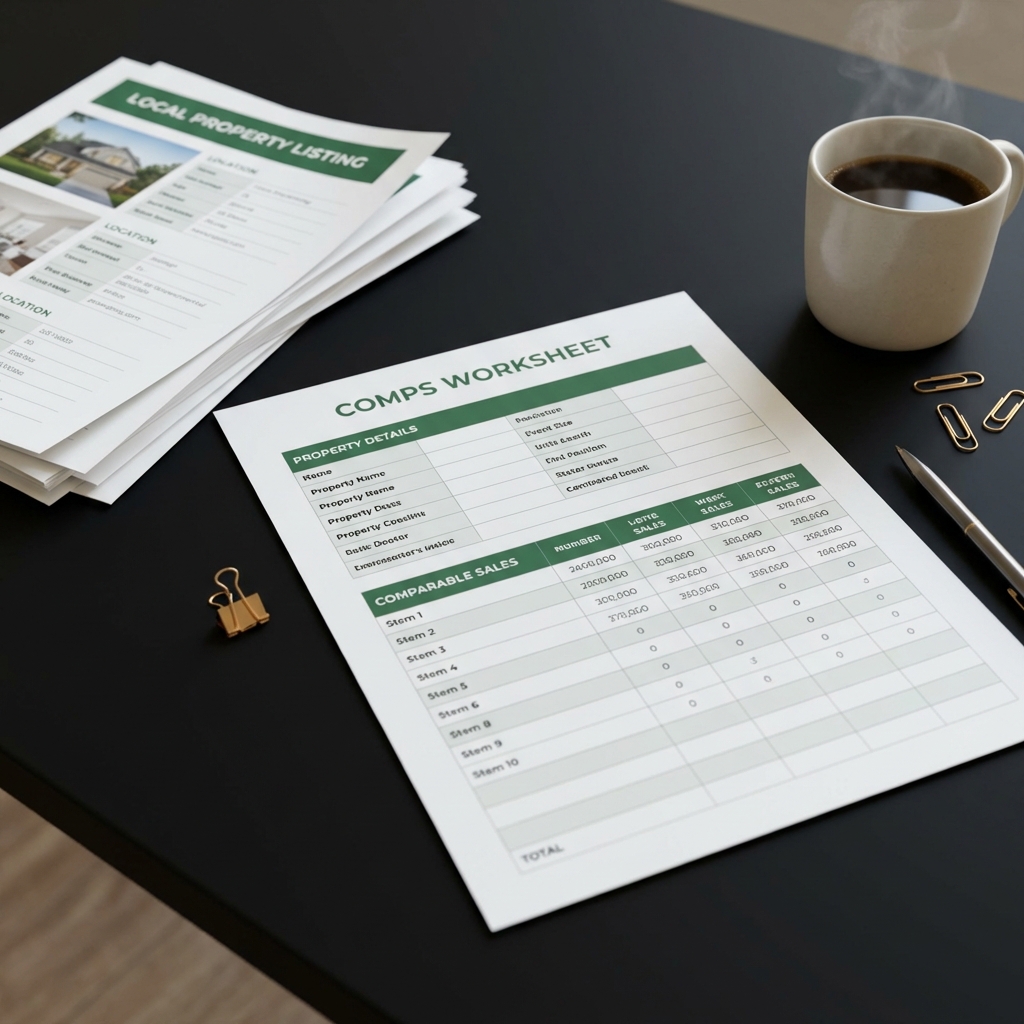
Self-study can work because many real estate skills combine conceptual knowledge with repeated practice, for example building comparable sales sets or running simple affordability checks. A focused plan can teach concepts and give hands-on experience, but it does not replace licensed professional advice or the need to verify state licensing and local rules before offering paid services HUD buying a home.
In practical terms, use official consumer and housing agency guides as your baseline references, then add national data and local records for practice. The National Association of Realtors supplies structured courses and education recommendations that are useful when you want a curriculum backbone during a self-directed program NAR education.
Why self-study can work
Self-study works when it combines a reliable course or textbook with deliberate practice: weekly data drills, mini valuation projects on nearby properties, and regular review of primary sources. That mix helps transform book knowledge into usable skills and can be adjusted to your schedule and goals NAR education.
Self-study teaches concepts and practice but is not a substitute for licensed services when the work requires legal or regulated authority, such as acting as a listing agent, performing licensed appraisals, or offering binding legal advice. Verify licensing pathways and local rules with state regulators or local associations before pursuing paid roles HUD buying a home.

A practical 6 to 12 week study plan you can follow
This 6 to 12 week roadmap balances a single structured curriculum, weekly data drills, and two to three mini valuation projects. Aim for three to six hours per week in a 6 week plan or four to eight hours per week in a 12 week plan, split across reading, data work, and project time. Use one accredited course as your conceptual backbone, then layer weekly exercises using national indices and local records NAR education.
Weekly structure: example milestones for a 6 week plan. Week 1: market fundamentals and where to find primary data. Week 2: mortgage basics and simple affordability checks. Week 3: how to build comps and the comparable sales approach. Week 4: income approach basics and rental estimates. Week 5: cost approach and replacement cost concepts. Week 6: consolidation project and review. For a 12 week plan, expand each topic with an extra week of drills and one additional mini project per major valuation approach Freddie Mac PMMS.
Choosing a single structured course or curriculum matters because it reduces conflicting definitions and gives a consistent sequence. Look for courses from accredited sources, community college real estate programs, or professional association education modules that align with the four core areas: market fundamentals, financing, valuation, and transaction basics NAR education. You can also review short-term certification options for finance and real estate to build a clear curriculum short-term certification courses.
Checklist: pick one course, set a weekly schedule, set aside two to three local properties for mini projects, and subscribe to FHFA, Case-Shiller, and Freddie Mac data updates. After the checklist, run your first week drills and keep a short log of data sources and assumptions for each mini project.
Start the 6 week study template from the FinancePolice guide
Download or create a simple week-by-week template, start with week one drills, and track the time you spend on study, data, and projects to measure progress.
Download study-week template
Core topics to study: market fundamentals, financing, valuation, transaction basics
Market fundamentals: supply, demand, local vs national trends
Start with market fundamentals: why supply and demand drive prices, how inventory and days on market affect negotiations, and why local job and demographic trends matter more than national averages for many decisions. National indices offer context but do not replace local checks FHFA HPI.
Use FHFA and Case-Shiller to watch national trends and to spot broad turning points; then compare those signals to county or MLS sales records to understand your local market. This pairing helps you see when national single-digit price changes are or are not reflected locally Case-Shiller index. See additional analysis from the St. Louis Fed for historical context St. Louis Fed analysis. Also compare local records with nearby listing collections such as local listings.
Financing basics: mortgage types and underwriting
Learn common mortgage products, including fixed-rate and adjustable-rate mortgages, government-backed options, and basic underwriting principles such as credit, income, and debt-to-income ratios. Regularly consult primary mortgage surveys and consumer guides to stay current on rate context and loan features Freddie Mac PMMS.
Use CFPB consumer guidance to understand loan costs, closing disclosures, and common borrower protections. That consumer-facing perspective helps you spot fees, required documents, and the items lenders consider during underwriting CFPB buying a house.
Valuation basics: the three appraisal approaches
Study the three standard appraisal approaches: comparable sales, income capitalization, and cost or replacement cost. Each approach has different uses: comparable sales for many owner-occupied properties, income approach for rental and investment properties, and cost approach when unique improvements or new construction matter NAR education.
Practice each approach on actual local listings and recorded sales. Start with comps for nearby sales within a short timeframe, apply a basic income estimate for rentals, and use cost guides and local contractor estimates for replacement cost checks Case-Shiller index.
Transaction and legal basics: contracts, title, closing
Learn the standard transaction flow: offer, contract, inspection, title work, financing contingency, and closing. Use consumer guides to understand key buyer protections and common closing costs, and keep a checklist of documents to expect during a transaction CFPB buying a house.
Remember that state laws affect contract terms, disclosures, and timing. Before you act in a paid capacity or draft legal documents, verify state licensing requirements and consult a licensed attorney for binding legal questions HUD buying a home.
How to practice valuation: three appraisal approaches and mini projects
Comparable sales approach: how to build comps
Mini-project template for comps: pick one nearby sale within six months, identify three to five comparable properties with similar size and features, adjust for obvious differences like lot size or condition, and derive an adjusted price range. Record each adjustment and why you made it, then compare your range with the actual sale price NAR education.
Tips for local sales records: use county recorder or assessor databases and local MLS or public portals to find sale prices and descriptions. When your comp set produces a range that differs from national trends, check national indices as a sanity check but treat local records as the primary input FHFA HPI.
Income approach: basics for rental properties
Income mini-project: estimate potential gross rental income from comparable rentals, subtract expected vacancy and operating expenses to get net operating income, then divide by a simple cap rate to estimate value. Document assumptions for vacancy, expenses, and cap rate so you can test sensitivity to each input Case-Shiller index.
Simple cap rate check: cap rate equals net operating income divided by price. Use a conservative vacancy and expense estimate for early projects so your results are robust to variation in rents and costs NAR education.
Cost approach: when replacement cost matters
Cost approach mini-project: estimate replacement cost using local contractor or published cost estimators, subtract depreciation, and add land value from recent land sales. This approach is most useful when a property is new, unique, or when few comps exist FHFA HPI.
Document your depreciation and contractor assumptions and run sensitivity checks. If the cost approach gives a materially different number than comparables or income methods, note why and which inputs are most uncertain NAR education.
Using national data and weekly drills to understand local markets
Which national indices to follow: FHFA HPI measures single-family repeat-sales and can show broader price movement, while Case-Shiller provides a national and metropolitan perspective; Freddie Mac PMMS shows weekly mortgage rate trends. Use them to spot macro moves, then test the signals locally FHFA HPI. For a snapshot of recent housing and mortgage trends, see the Housing Chartbook Housing Chartbook.
Weekly drill example: each week download the latest FHFA or Case-Shiller release, record the headline change, then compare it to three recent local sales or MLS metrics. Ask whether local inventory and demand match the national signal and note any structural local differences such as job gains or new supply Case-Shiller index.
How to convert national trends into local checks: when national indices show modest single-digit changes, do not assume your town will mirror that pattern. Instead, use national trends as context and prioritize county-level sales, permit activity, and local employment trends for decisions that depend on price direction FHFA HPI. For research on mobility and market tightness see relevant Federal Reserve research Federal Reserve research.
Financing fundamentals to master: mortgages, rates, and underwriting checks
Common mortgage types to learn include fixed-rate, adjustable-rate, FHA, VA, and conventional loans. Study how interest rate moves change monthly payments and how lenders treat credit scores and debt-to-income ratios during underwriting. For current rate context, consult Freddie Mac PMMS and learn how weekly rate shifts affect affordability calculations Freddie Mac PMMS.
Underwriting basics: lenders look at credit history, documented income, assets, and debt-to-income ratios when deciding loan terms. CFPB consumer materials explain typical borrower disclosures and closing costs so you can factor those elements into affordability and deal analysis CFPB buying a house.
Affordability check you can run: estimate payment using the loan type and rate, add estimated taxes and insurance, and ensure the resulting housing payment fits your target debt-to-income range. Keep these checks conservative for early practice and document each assumption for later review Freddie Mac PMMS.
Decision criteria: when to keep learning, get licensed, or consult a pro
Compare roles to decide next steps: if you want to advise clients, understand licensing requirements for agents and appraisers; if you plan to invest or analyze deals for yourself, deeper valuation and financing skills may suffice. Use local regulator sites and realtor or appraiser associations to confirm exact licensing pathways in your state HUD buying a home. If you are exploring side income or gig options tied to property work, review relevant real-estate side hustles as background.
Checklist to decide: Do you intend to represent others for a fee? Do you need MLS access? Are you aiming to be a licensed appraiser? If yes to any, verify state rules and training requirements. If your goal is analysis for personal investing, continue self-study and use licensed professionals for transactions and legal documents NAR education.
Teach yourself real estate by following a structured 6 to 12 week plan that uses one reliable course for concepts, weekly national data drills using FHFA, Case-Shiller, and Freddie Mac, and hands-on mini valuation projects on local properties; verify licensing and local rules before offering paid services.
Local verification: check state real estate licensing boards, county assessor and recorder offices, and local realtor association membership rules before offering services or relying on nonpublic MLS information. When in doubt about contract terms or title issues, consult a licensed attorney or title professional for binding guidance HUD buying a home.
Common mistakes beginners make and how to avoid them
Overrelying on national trends is common. National indices can mask local variation, so pair any headline from FHFA or Case-Shiller with local sales checks and permit data to avoid drawing incorrect conclusions for a specific neighborhood Case-Shiller index.
Skipping sensitivity checks in valuation can lead to fragile conclusions. Always record your assumptions for rent, vacancy, expenses, and cap rate, then vary them to see how the estimated value changes. This identifies which assumptions most affect your result and where to focus verification NAR education.
Ignoring financing details and fees is another frequent error. Closing costs, prepayment penalties, and loan-related fees change affordability. Use CFPB guides and Freddie Mac rate releases to ensure your deal analysis includes realistic financing costs CFPB buying a house.
Sample exercises and two downloadable mini projects you can do locally
Mini project A, comps worksheet: choose a target property, gather three to five recent sales within the same neighborhood and similar characteristics, note sale dates and prices, apply simple adjustments for size or condition differences, and produce a final adjusted price range. Record your sources and compare your range to the recorded sale price for a reality check NAR education.
Mini project B, rental income and cap rate: find comparable rental listings, estimate gross rent, apply a conservative vacancy and operating expense percentage to reach net operating income, then divide NOI by the listed price to compute a simple cap rate. Compare your cap rate to local investor listings and note disagreements for follow up FHFA HPI.
worksheet to run comps and cap rate checks
Save assumptions for future review
How to record findings: keep a short spreadsheet with the property address, data source link, date, and each assumption you used. When results diverge from national trends, note whether the difference is driven by price, time window, or property characteristics and seek additional local records to resolve the gap Case-Shiller index.
Next steps, verification, and trusted primary sources
Verify local licensing, zoning, and tax rules by contacting your state real estate licensing board, local planning or zoning office, and county assessor. Do this before taking paid roles or offering services that could be regulated at the state or local level HUD buying a home.
Keep monitoring these primary sources after your study plan: CFPB and HUD for consumer guidance, NAR for education and local association contacts, FHFA and Case-Shiller for price trends, and Freddie Mac PMMS for mortgage-rate context. Treat these resources as the backbone of ongoing learning rather than a final authority on local rules CFPB buying a house NAR education FHFA HPI.
As a next step, decide whether you want to pursue licensing, deeper coursework, or continued project-based practice. Continue documenting assumptions, keep running weekly drills, and consult licensed professionals for binding decisions or when local rules are uncertain NAR education.
A focused 6 to 12 week plan can build practical skills for basic valuation and financing analysis, but mastery takes longer and depends on practice and local data work.
No, self-study builds knowledge and practical skills but does not replace state licensing or licensed legal and appraisal advice for regulated activities.
Follow CFPB and HUD for consumer guidance, NAR for education, FHFA and Case-Shiller for price trends, and Freddie Mac PMMS for mortgage rate context.
If your aim is a paid role in real estate, verify state licensing rules and local association requirements early so you know which formal steps to take next.
References
- https://www.consumerfinance.gov/owning-a-home/buying-a-house/
- https://www.hud.gov/topics/buying_a_home
- https://www.nar.realtor/education
- https://www.fhfa.gov/DataTools/Downloads/Pages/House-Price-Index.aspx
- https://us.spglobal.com/spdji/en/indices/indicators/sp-corelogic-case-shiller-us-national-home-price-nsa-index/
- https://www.freddiemac.com/pmms
- https://financepolice.com/advertise/
- https://financepolice.com/short-term-certification-courses-in-finance/
- https://financepolice.com/real-estate-side-hustles/
- https://financepolice.com/homes-for-sale-under-100k/
- https://www.americanactionforum.org/chartbook/housing-chartbook-q1-2025/
- https://www.stlouisfed.org/Publications/Regional-Economist/January-2011/Have-the-Trends-in-Housing-Bottomed-Out
- https://www.federalreserve.gov/econres/feds/files/2024088r1pap.pdf
추천 콘텐츠

Why Was Coinbase’s Brian Armstrong Snubbed by Top US Bank CEOs at Davos?

Visa and Mastercard Say Stablecoins Aren’t Ready for Everyday Payments in Developed Markets
