

How Betaling turned a student FX crisis in Kenya into an African cross-border payments business
It was December 2013: Oluwatomisin Ashimolowo had just arrived in Kenya as an 18-year-old preparing to commence his studies in the university in January 2014. Within one year of studies, a basic expectation collapsed: his parents in Nigeria could not wire his tuition fees.
What should have been routine, paying school fees, became a logistical dead end. ATM withdrawal limits back home made it difficult for families to access cash. International transfers were either delayed for weeks or blocked outright. For Nigerian students in Kenya at the time, the financial system had quietly stopped working.
Desperation forces innovation. Initially, the students crowdsourced liquidity by asking inbound travellers from Lagos to carry US dollars in cash. Ashimolowo, however, spotted a more sustainable arbitrage opportunity. He mapped the pay cycles of expatriates working in multinational corporations who urgently needed Naira. By exchanging their dollars for local currency, he built a bespoke, trust-based remittance pipeline. It was a scrappy, WhatsApp-and-spreadsheet operation; crucially, it worked.
What began as an undergraduate’s survival tactic has matured into Betaling, a formidable infrastructure player in Africa’s fragmented cross-border payments sector. Today, the platform settles millions in volume, resolving deep liquidity bottlenecks for multinationals, regional importers, and local SMEs. The fintech origin story serves as a stark reminder of an uncomfortable truth regarding the African payment ecosystem: the most resilient settlement networks are rarely engineered from theoretical models imported from London or Silicon Valley. They are forged by founders who have intimately lived the friction.
Before Betaling evolved into a formalised B2B payments engine, it operated as a vital side channel whilst Ashimolowo cut his teeth in the corporate sector. His early observations of legacy banking provided a foundational thesis on customer retention and market reality.
When Ecobank launched its RapidTransfer service, it briefly appeared to solve the students’ liquidity crisis. The relief, however, was fleeting. The rates proved commercially unviable. Users completed one transaction and immediately returned to Ashimolowo’s informal desk.
 Oluwatomisin Ashimolowo, co-founder and CEO of Betaling
That incident cemented his core business philosophy. “Consistency in pricing beats competitive entry pricing every time,” Ashimolowo notes. He watched successive waves of African fintechs launch with aggressively subsidised rates to artificially inflate user acquisition. The inevitable price hikes destroyed the trust they had bought. The entire premise of building financial technology to optimise speed and cost evaporates the moment operators unilaterally change the terms.
While running his exchange network, Ashimolowo immersed himself in the mechanics of SME finance. He joined one of Kenya’s first mobile financing companies, issuing credit for digital devices to blue-collar workers and small businesses. He subsequently moved into broader SME lending, financing local purchase orders to keep enterprises operational. By 2022, a move to London for a master’s degree led him to Intuit QuickBooks, where he designed partnerships empowering SMEs with robust financial management tools.
This dual life, operating a cross-border liquidity network whilst navigating the corporate machinery of lending, highlighted a universal truth. Capital flow is the absolute lifeblood of emerging market enterprises.
Betaling is formalising the architecture of trust
By 2019, the macroeconomic landscape was shifting. Betaling’s user base mutated. The platform ceased being a conduit for tuition fees; commercial entities had discovered the network. Importers in Kenya and Ghana were utilising the service to settle with suppliers and fund cross-continental operations. The marginal profit generated as students had morphed into verifiable proof of a massive, underserved B2B market.
Recognising the necessity to scale, Ashimolowo brought in Emmanuel Abiodun Oladepo. Oladepo had been independently constructing his parallel settlement network. In 2020, they officially incorporated as Betaling Africa. Incorporation, Ashimolowo insists, was never about legitimacy; it was about moving from solving a personal pain point to addressing a multi-billion-dollar market failure.
The final piece of the founding triad was Seye Obadeyi, an industry veteran who understood the opaque plumbing of traditional banking. Obadeyi knew exactly where legacy institutions failed and how Betaling could route around those blockages.
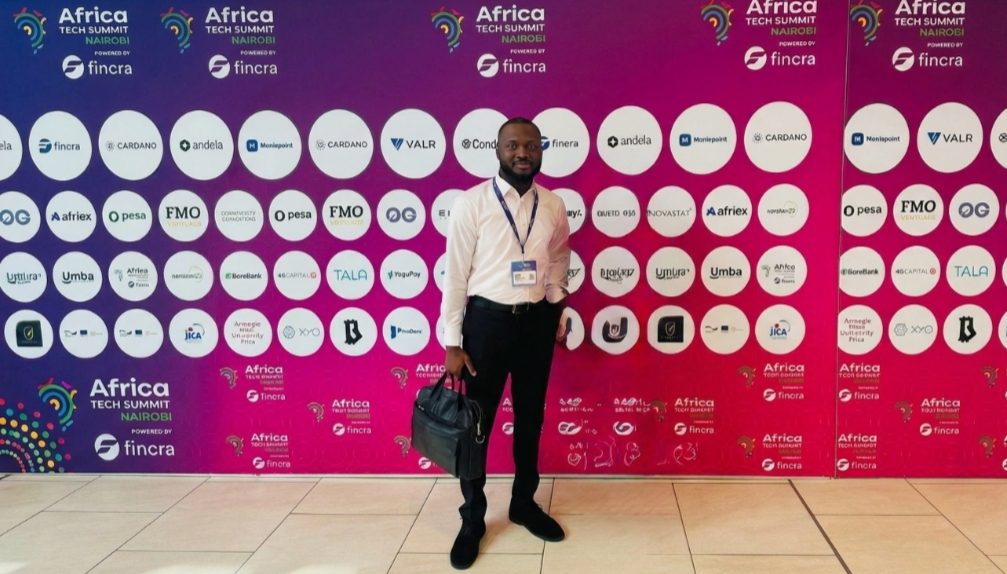 Oluwatomisin Ashimolowo, co-founder and CEO of Betaling
As transaction volumes swelled past the £100,000 monthly mark, eventually processing millions in bootstrapped volume, the founders realised their informal networks were reaching their operational ceiling. Scale forced structural upgrades. They integrated enterprise-grade CRM systems to manage institutional client relationships. They established direct connections with over-the-counter (OTC) trading desks. Most critically, they integrated stablecoins to facilitate instantaneous, borderless settlements across their supported corridors.
Yet, they remained highly disciplined, avoiding the temptation to overbuild. They adopted enterprise-grade infrastructure only when transaction volume strictly demanded it, transitioning methodically from students to SMEs and eventually to regional importers and multinational corporations.
The reality of scaling African fintech
The African continent frequently serves as a testing ground for foreign business models. Ashimolowo is sharply critical of the tendency to force-fit external playbooks into highly nuanced markets like Lagos or Nairobi.
The assumption that regulatory fragmentation is the primary hurdle misses the point entirely. The real bottleneck is a fundamental misunderstanding of local market dynamics. Pricing strategies engineered in European tech hubs routinely fail across Africa. The hyper-focus on transaction speed often matters less to a merchant than the reliability, certainty, and underlying cost of moving funds through complex channels.
Betaling’s upward trajectory bypassed venture capital vanity metrics. The team maintained strict honesty regarding margins and scaled strictly in tandem with verifiable commercial demand. Execution remained paramount. Doing exactly what was promised, maintaining static pricing, and ensuring settlement deadlines never slipped formed the bedrock of their early growth.
 Oluwatomisin Ashimolowo, co-founder and CEO of Betaling
Today, Betaling operates at an institutional level. The firm collaborates directly with liquidity providers, regional fintechs, and multinational companies navigating the dense complexities of multi-country payroll and supplier settlements. They tackle the core friction choking the continent’s commercial growth: the devastating loss of capital to exorbitant fees and prolonged settlement times via offshore intermediary banks.
Despite matching settlement needs directly within the Betaling Treasury Network and reducing correspondent banking dependence, the operational ethos remains remarkably unchanged from the early days in Nairobi.
For aspiring operators eyeing emerging markets, Ashimolowo’s advice is brutally pragmatic. The greatest opportunities in African fintech do not lie in the next algorithmic breakthrough. They reside with the companies willing to execute the unglamorous, painstaking work of understanding commercial friction and delivering a solution with absolute consistency.


추천 콘텐츠

Bitcoin Price Wave Down To $40,000 Shows When The Bottom Will Begin

UK FCA May Exempt Crypto Firms from Key TradFi Rules — What’s at Stake?




